He immediately names three players who wanted him gone — and he didn’t stop there!🤯 Shame on the fans

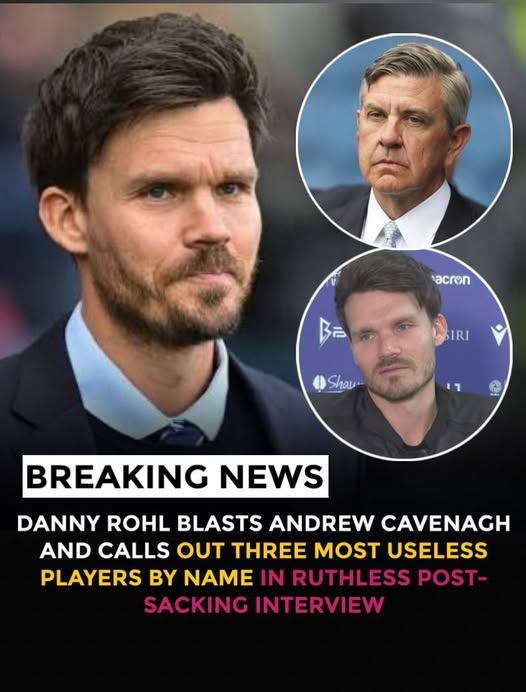
Monday, June 15, 2026 started like a normal breaking news day for football fans in Scotland, but it quickly turned into something far more dramatic than anyone expected. Social media was already buzzing in the early hours after reports emerged of a strange and confusing scene at Molineux Stadium, where CCTV footage allegedly showed a secret meeting involving football figures that nobody could clearly explain. Fans were already trying to understand what they had seen, but just as that conversation was growing, another story dropped that completely took over the football world.
This time it was about Danny Röhl.
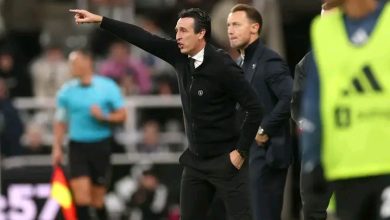
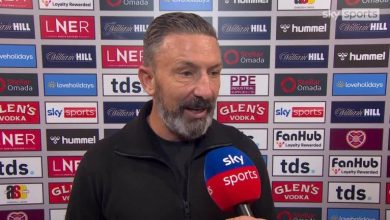
The former Rangers manager had broken his silence after being sacked, and what followed shocked even those who thought they had seen everything in modern football. Röhl did not just speak calmly about his time at the club. Instead, he launched a full and emotional attack on the club’s ownership, specifically Andrew Cavenagh, and went even further by calling out three senior players he described in the harshest terms of his career.
For Rangers supporters, it felt like a storm had just hit from nowhere.
Röhl’s interview came just hours after his exit from Glasgow was confirmed. Normally, when a manager leaves a club, especially a big one like Rangers, there is a short statement, a few polite words, and maybe a thank you message. But Röhl chose a completely different path. He decided to speak openly about what he claimed was happening behind the scenes for months, and in doing so, he opened a door that many believed should have stayed closed.
He insisted that he had tried his best to remain professional throughout his time in charge. According to him, the public only saw the results on the pitch, but the real problems were happening far away from the cameras. He said supporters deserved to know the truth, even if it was uncomfortable.
And once he started speaking, he did not hold back.
Röhl explained that his relationship with club owner Andrew Cavenagh had slowly broken down as the season went on. At the beginning, things were apparently positive. There was excitement, shared ideas, and a belief that Rangers could be rebuilt into a stronger force. Röhl felt he had been trusted with a long-term project, one that would allow him to reshape the squad and develop a clear identity.
But according to his version of events, that trust began to disappear.
He claimed that disagreements started over recruitment decisions. Players he wanted were not signed, while others he did not request were brought in. He also suggested that contract decisions created confusion inside the club, especially when it came to senior players whose futures were unclear. Röhl described it as a constant battle between football planning and financial control.
At first, these were small issues. But over time, they grew into something much bigger. The manager said that every transfer window discussion became a struggle. Every plan for the future seemed to be questioned or delayed. Instead of building stability, he felt the club was moving in different directions at the same time.
Röhl’s words painted a picture of a manager trying to build something on unstable ground. He said that when leadership above him was not fully aligned with football decisions, it became impossible to create consistency on the pitch. According to him, the team suffered not only because of performance issues, but because of confusion behind the scenes.
“The manager can only control what happens on the training ground,” he reportedly said. “Everything else became a constant battle.”
That single sentence quickly spread across social media and became one of the most talked-about quotes of the day.
But the most explosive part of the interview was still to come.
Röhl then turned his attention to the squad. While many expected him to speak generally about “lack of consistency” or “team mistakes,” he went much further. He directly criticised three senior players, although he did not name them publicly in the full report, they were clearly described as key figures in the dressing room.
He accused them of failing the club on multiple levels. According to Röhl, these players were meant to lead by example, but instead they did the opposite. He said they showed poor leadership during difficult moments in the season. When results started to drop, instead of stepping up, he claimed they became inconsistent and unreliable.
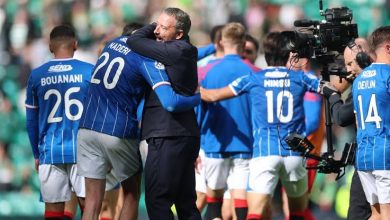
He also accused them of creating negative energy inside the dressing room. This, according to him, affected younger players who were trying to learn and improve. Röhl suggested that the academy graduates, some of whom were still adapting to first-team football, showed more commitment than experienced players earning the highest wages at the club.
One of the most serious claims was that these senior players failed to take responsibility. Röhl suggested that when the team lost matches, blame was shifted around instead of being accepted. He felt that this attitude damaged the culture of the squad and made it harder for the coaching staff to rebuild confidence.
He described it as a situation where younger players were being forced to carry standards that should have already been set by experienced professionals.
That comment divided supporters immediately.
Some fans felt Röhl was finally telling the truth about what they had suspected for months. They believed the team had lacked leadership and that senior players had not delivered consistent performances. For them, Röhl’s honesty was refreshing, even if it was harsh.
But other supporters saw it very differently. They felt that a former manager publicly attacking players after leaving the club was dangerous and unnecessary. They argued that dressing room issues should remain private and that naming individuals could harm their careers and the club’s reputation.
Within hours, social media platforms were flooded with arguments, debates, and emotional reactions. Rangers fans were split down the middle. Some defended Röhl as a manager who had been left alone to deal with a difficult situation. Others accused him of trying to shift blame after being sacked.
Outside Scotland, the story also gained attention. Football fans across Europe began discussing whether modern managers should ever publicly criticise players after leaving a club. Nigerian supporters, who closely follow European football, also joined the debate online, comparing Röhl’s approach to other managers who had chosen silence after dismissal.
As the discussion grew, more details from Röhl’s interview began to circulate.
He also spoke about tactical issues that had affected the team throughout the season. According to him, one of the biggest problems was the lack of balance in midfield. He claimed the team often struggled to protect the defence, which left them exposed in key matches. Opponents were able to break through too easily, and Rangers lost control in important moments.
He also mentioned injuries as a major setback. Several first-team players missed important games, and according to Röhl, the squad did not have enough depth to replace them properly. This forced him to make tactical changes that were not part of his original plan.
Röhl believed the recruitment strategy had not matched his football philosophy. He wanted a team capable of playing a high-energy pressing system, but instead he felt the squad was built for a slower and more reactive style of football. This mismatch, he argued, created confusion on the pitch and made it difficult to achieve consistency.
In simple terms, he was saying that the players he had were not fully suited to the way he wanted to play.
This added another layer to the debate.
Some analysts agreed with him, pointing out that coaching systems only work when the right players are available. Others believed that good managers adapt to the squad they have instead of blaming recruitment.
As the story developed, attention turned to Andrew Cavenagh, the club owner who was directly criticised by Röhl. While Cavenagh did not respond immediately, many fans began questioning the internal structure of the club. Was there too much interference in football decisions? Were managers being supported properly? Or was the project simply not aligned from the start?
These questions became even louder as pundits joined the discussion.
Some former players and analysts suggested that modern football clubs need clear separation between ownership and coaching responsibilities. Others argued that owners have every right to be involved in recruitment because of financial risk. The disagreement only added more fuel to an already heated situation.
For Rangers, the timing of the interview could not have been worse. The club was already trying to recover from a disappointing campaign, and now the focus had shifted away from football and onto internal conflict. Instead of talking about transfers or pre-season plans, the entire football world was discussing dressing room problems and management breakdowns.
The biggest concern for many supporters was the long-term impact.
A public fallout between a manager and the club often leaves scars that are not easy to heal. Players can become unsettled, trust between departments can break down, and new managers can inherit uncertainty before they even begin.
Röhl’s comments raised questions about whether the squad itself would now be divided. Some players might agree with his criticism, while others might feel targeted and unfairly blamed. That kind of environment can make rebuilding extremely difficult.
Despite the controversy, Röhl’s future was also a major talking point. Even after such a dramatic exit, many still see him as a young and talented coach with modern tactical ideas. His honesty, while controversial, may not completely damage his reputation in the long term. Some clubs may even see him as a manager who speaks directly and demands high standards.
However, others may view the interview as a risk. Football clubs often prefer managers who handle internal issues privately, especially when it comes to player criticism.
For Rangers, the next steps were now critical. The club would need to appoint a new manager who could restore stability quickly. But more importantly, they would need to rebuild trust within the squad and between the supporters and the leadership.
Replacing a manager is always difficult, but replacing broken confidence is even harder.
As the day continued, the football world kept reacting. Clips, quotes, and opinions spread across every platform. The story became bigger than just Rangers or Danny Röhl. It became a wider discussion about modern football pressure, ownership influence, player accountability, and how much truth should be shared publicly after a manager is sacked.
And at the centre of it all remained one simple reality.
Football is no longer just about what happens on the pitch during ninety minutes. It is also about relationships, power, communication, and trust behind the scenes. When those elements break down, the effects always find their way into the public.
Röhl’s interview was not just an exit statement. It was a signal of deeper issues that many clubs face but rarely admit openly.
And now, Rangers had to deal with the consequences.