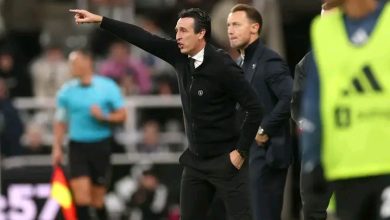
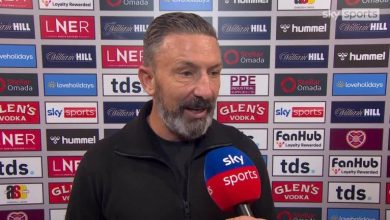
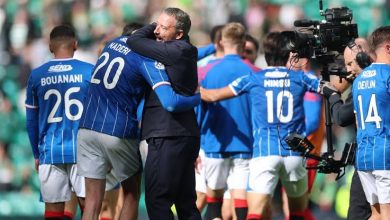
McInnes set to land a Hearts star as his FIRST signing at Ibrox! 💥 New era already taking shape at Rangers

Danny Rohl’s time at Rangers has come to an end in a way that few inside Ibrox would have expected only a few weeks earlier, with the German coach now set to move on quickly after what many fans will describe as a frustrating and inconsistent spell that never truly reached its full potential. The timing of his exit has only added more noise around the club, especially as it comes during a period when Rangers were already preparing for another major summer rebuild.
Rohl had arrived with a growing reputation and a sense that he could bring fresh ideas and a modern approach to a squad that had struggled for consistency. There were moments during his time in charge where optimism grew, where supporters believed a new identity was forming, and where performances suggested that Rangers were beginning to find stability again. But football rarely moves in straight lines, and the final stretch of the 2025/26 campaign brought more questions than answers.
Results dipped at a crucial moment, performances lost their sharpness, and the momentum that had been slowly building began to fade. By the time the season reached its conclusion, the mood around the club had shifted dramatically. What once looked like progress began to feel uncertain again, and the conversation quickly turned to whether Rangers needed another change to reset their direction.
That change has now arrived sooner than expected.
Reports linking Rohl to a move away had been circulating quietly, but few expected things to develop so quickly. The interest from the Red Bull football structure, combined with the influence of figures such as Jürgen Klopp within that network, made the opportunity in Austria appear attractive to the German coach. The promise of a highly structured system, clear development pathways, and a long-term project was enough to tempt him away from Glasgow, even though many would argue that managing Rangers remains one of the most intense and high-profile jobs in European football.
For some supporters, the decision raises obvious questions. Is moving from Ibrox to the Austrian Bundesliga really a step forward in footballing terms, or simply a different kind of challenge? Rangers remain a club with huge expectations, European nights, and a fanbase that demands success every single season. Leaving that environment is never a simple decision, even if the pull of a wider footballing project can sometimes outweigh immediate pressure.
But regardless of opinion, Rangers now find themselves once again at a crossroads.
The focus immediately shifts to what comes next, and in typical fashion, the club have not taken long to act. Derek McInnes is now expected to take charge, returning to Glasgow with a reputation built on consistency, organisation, and the ability to get the most out of his squads even when resources are limited compared to his biggest rivals.
McInnes’ arrival is seen by many as a stabilising appointment. He knows the Scottish game inside out, understands the pressure that comes with Old Firm expectations, and has spent years proving that he can build competitive teams capable of challenging even when not considered favourites. His time at Hearts in particular strengthened his reputation further, with a strong title challenge that pushed right to the final stages of the season and earned widespread recognition across Scottish football.
There is also an emotional connection to Ibrox. McInnes is not just another outsider coming in to manage Rangers. He is a former player who wore the shirt during his playing career, and that history gives him an understanding of what the club represents beyond tactics and transfers. For many supporters, that connection matters just as much as any coaching philosophy.
The expectation now is clear. Rangers want a squad capable of winning the league, competing in Europe, and rebuilding a sense of authority that has sometimes wavered in recent seasons. McInnes is stepping into a role where immediate impact is not just desired, but required.
Early signs suggest the club are already preparing to support him in the transfer market, with several targets being discussed as potential additions. One of the key themes of the summer is expected to be continuity and smart recruitment rather than a full-scale overhaul. The idea is to build a balanced squad that can compete immediately while still offering value and long-term stability.
That approach has already started to take shape with the arrival of Lawrence Shankland earlier in the window, a move that many see as a statement of intent. Shankland’s experience in Scottish football, combined with his goal-scoring record, gives Rangers a proven attacking option and adds familiarity to McInnes’ system.
But even with that signing completed, the conversation around further attacking additions continues to grow, especially with Claudio Braga emerging as one of the most talked-about names in Scottish football following his impressive season with Hearts.
Braga’s rise has been one of the standout stories of the campaign. Arriving with relatively little fanfare from Scandinavian football, he quickly established himself as a key figure in Hearts’ attack. His ability to score goals, create chances, and operate between the lines made him one of the most effective attacking midfielders in the league.
By the end of the season, his performances had not gone unnoticed. Interest from rival clubs began to surface, and Rangers were quickly linked with a potential move. The idea of reuniting him with McInnes is seen as an attractive one, particularly given the strong understanding already developed between player and manager during their time together.
However, Braga is not the only forward being considered.
Another name that continues to generate serious discussion is Vaclav Černý, a player who already has a history at Ibrox and left a strong impression during his previous spell in Glasgow. Unlike many short-term loan signings who come and go without leaving a lasting mark, Černý managed to establish himself as a key attacking threat during his time at the club.
His numbers speak for themselves. Goals, assists, consistent performances in big matches, and a clear ability to influence games from wide areas made him a fan favourite during his previous stint. Even in a season where Rangers as a team struggled for consistency, Černý remained one of the few players capable of producing decisive moments.
That previous experience is now shaping the debate around his potential return.
From a tactical perspective, he offers something slightly different to Braga. While Braga has impressed with his creativity and link-up play, Černý brings directness, proven output in a Rangers shirt, and a track record that already includes success in this environment. That familiarity reduces risk, something that becomes increasingly important in high-pressure transfer windows.
Statistically, his previous spell at Rangers stands out. His contribution from wide areas was significant, combining goals and assists at a level that placed him among the club’s most productive attackers that season. Beyond that, his performances in major fixtures, including Old Firm matches, demonstrated his ability to handle pressure on the biggest stage in Scottish football.
This is where the comparison becomes more interesting.
Braga’s season at Hearts was undeniably impressive, and his goal output reflected his importance to the team. But questions remain about whether that level can be repeated consistently, especially as opponents begin to adapt to his style. There is always a challenge when evaluating players who have had one standout season compared to those who have already proven themselves in multiple environments.
Černý, meanwhile, has already shown consistency across different leagues, including strong numbers during his time in Turkey and earlier spells in European football. His ability to produce goals and assists over a larger sample size gives him a level of reliability that clubs often prioritise when making major investment decisions.
From Rangers’ perspective, this creates a difficult but important decision.
Do they invest in a rising talent like Braga, who could potentially grow further under McInnes and develop into a long-term asset? Or do they return to a proven performer like Černý, whose impact at Ibrox is already documented and who would require less adaptation time?
Financially, both options come with different implications. Braga represents potential growth, resale value, and a long-term project. Černý represents immediate impact, familiarity, and reduced risk, but perhaps less future resale potential.
This balance between strategy and certainty is something Rangers must now carefully manage as they prepare for a crucial summer window.
McInnes will likely have a significant say in the final decision, and his preference for players who understand the Scottish Premiership could play a major role. He has always valued mentality, discipline, and players who can handle pressure, particularly in environments where expectations are extremely high from the first day of the season.
That is why the debate around Černý versus Braga is more than just a transfer story. It represents two different approaches to squad building.
One focuses on potential and long-term development.
The other focuses on proven quality and immediate performance.
As Rangers prepare for another title challenge, both options remain on the table, and the final decision could help define the early direction of the McInnes era.
What is already clear is that the club are not standing still. With Rohl gone, McInnes arriving, and transfer discussions already accelerating, this is shaping up to be one of the most important summers at Ibrox in recent years.
And in the middle of it all, the question remains the same.
Do Rangers gamble on potential, or trust experience when it matters most?
:::