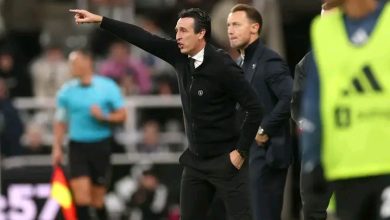
HE’S GONE Danny Rohl leaves Rangers for RB Salzburg as Ibrox club break silence with Derek McInnes on the brink

Danny Rohl’s time at Rangers has come to a sudden and dramatic end, with the German coach now officially set to leave Ibrox and take up a new challenge at RB Salzburg, bringing an abrupt twist to a managerial situation that had already been surrounded by uncertainty, pressure, and growing speculation in recent weeks. The news has sent shockwaves through Scottish football, especially among Rangers supporters who had only recently begun to settle into the idea of Rohl leading the club into a new era.
The timing of the departure has made the situation even more intense. Rangers are in a period where stability was supposed to be the priority, with the club preparing for a crucial summer rebuild and trying to close the gap on their rivals. Instead, they now find themselves once again searching for answers at the very top of the football structure, with another managerial change arriving at a moment when continuity was badly needed.
Rohl’s decision to accept the RB Salzburg role is being described as part of a wider project within the Red Bull football network, which continues to attract young, ambitious coaches looking for structured environments, clear development pathways, and long-term planning. Salzburg, in particular, have built a strong reputation for developing both players and managers, often acting as a stepping stone into even bigger roles in European football.
For Rohl, the opportunity appears to represent exactly that kind of progression. While Rangers offer tradition, pressure, expectation, and a massive fanbase, Salzburg offer a different kind of challenge, one that is deeply rooted in modern football structure and long-term tactical development. For a coach with growing ambition, the move may have been too difficult to refuse.
However, from the perspective of Rangers supporters, the departure feels like another disruption in a long line of managerial changes that have prevented the club from finding consistent identity and rhythm. Just when it seemed like progress might be forming, the situation has shifted again, leaving fans frustrated and uncertain about what comes next.
The club have now broken their silence on the situation, confirming Rohl’s departure and acknowledging the need to move quickly to stabilise the football operation. Behind the scenes, discussions had already been taking place regarding potential replacements, and as soon as the news became official, attention immediately turned to the man widely believed to be next in line.
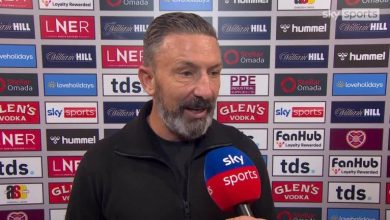
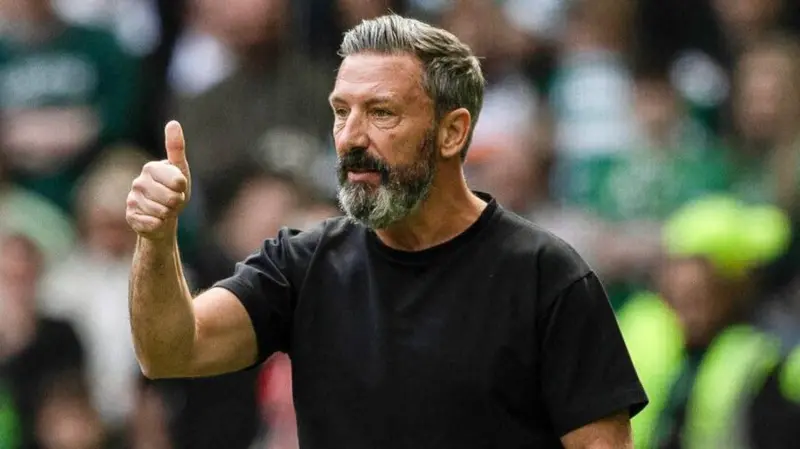
Derek McInnes.
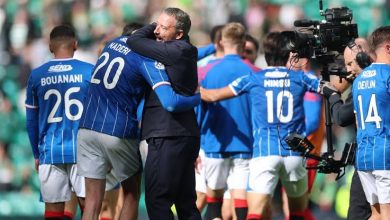
McInnes is now on the brink of returning to Ibrox, a move that carries both emotional weight and tactical expectation. A former Rangers player himself, McInnes is no stranger to the club’s environment, pressure, and demands. His managerial career has been built on consistency, organisation, and the ability to extract strong performances from teams that are often not the most expensive or star-studded in their league.
That profile has made him a strong candidate for Rangers at a time when the club are looking for structure and stability rather than experimentation. McInnes is known for building disciplined teams, with clear defensive organisation and a strong work ethic, qualities that many feel have been inconsistent at Rangers in recent seasons.
His success in Scottish football has also strengthened his reputation. Across spells with clubs such as Aberdeen, Kilmarnock, and Hearts, he has consistently managed to compete against stronger financial opposition, often finishing near the top of the table or pushing elite teams close in title races. That experience is seen as crucial for a Rangers job where the expectation is always to challenge for trophies immediately.
The Ibrox hierarchy are understood to be moving quickly to finalise the appointment, with negotiations already at an advanced stage. Reports suggest that McInnes has been given strong assurances about his role, squad control, and transfer direction, which has helped push discussions forward at speed.
For Rangers, the focus now shifts entirely to rebuilding confidence and preparing for the next phase. The club are aware that managerial instability can have a direct impact on performance, recruitment, and long-term planning, so the aim is to settle the situation as quickly as possible before the start of pre-season.
The reaction from supporters has been mixed. Some feel disappointed that Rohl’s project has ended so abruptly, believing he needed more time to fully implement his ideas. Others, however, see McInnes as a safer and more experienced option, someone who understands Scottish football and can immediately handle the pressure of Old Firm expectations.
What cannot be denied is the urgency of the situation. Rangers are entering a critical transfer window, and decisions made now will shape the direction of the club for the entire season. A new manager arriving at this stage will have limited time to assess the squad, identify weaknesses, and implement tactical changes before competitive football returns.
Behind the scenes, recruitment planning has already been ongoing, but the change in management could alter priorities. Different managers often have different ideas about player profiles, tactical systems, and squad structure, meaning some transfer targets may now be reassessed depending on McInnes’ preferences.
There is also the emotional element of the transition. Rohl’s departure leaves behind players who had begun adapting to his methods, training style, and tactical instructions. Any managerial change requires a period of adjustment, and that transition period will now fall directly into a crucial phase of pre-season preparation.
McInnes, however, is expected to bring clarity quickly. His reputation is built on organisation and communication, and he is known for setting clear expectations for players from the moment he takes over. That approach is often valued in high-pressure environments where immediate results are demanded.
The wider context of Scottish football also adds more weight to the situation. With Celtic continuing to set a high standard domestically, Rangers are under constant pressure to respond and remain competitive. Managerial decisions at this level are never just about the short term, but about the ability to build a team capable of sustaining a title challenge over an entire season.
For McInnes, the opportunity represents one of the biggest challenges of his career. Returning to Ibrox as manager carries enormous expectation, especially given his history as a player and his experience in the Scottish game. The task ahead will not be easy, but it is one that he is believed to be willing to accept.
As things stand, the club are expected to finalise the appointment quickly and move into the next phase of planning. Once confirmed, attention will immediately shift to squad evaluation, transfer activity, and pre-season structure.
Rohl’s exit marks the end of one chapter, but for Rangers, the bigger story is only just beginning.
The coming days will determine how smoothly the transition is handled, how quickly McInnes is installed, and how effectively the club can reset ahead of a season that already feels full of pressure and expectation.