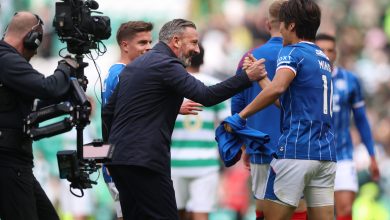
The 28-year-old defender has agreed a three-year deal, with the option of a further year

In the sprawling, emotionally charged, and deeply tribal landscape of Scottish football, few narratives resonate as profoundly as the return of a local hero. It is a storyline steeped in romanticism, fraught with the weight of expectation, and undeniably captivating for the supporters who crave a connection between the shirt and the soul wearing it. On June 25, 2026, the BBC Sport homepage delivered exactly this kind of narrative to the Glaswegian blue half of the city. Under the stark, uncompromising glare of the summer transfer window, Rangers Football Club announced the return of Ross McCrorie from Bristol City. It was a move that transcended the mere acquisition of a versatile footballer; it was a statement of intent, a reunion of manager and protégé, and the symbolic closing of one turbulent chapter to usher in another.
To truly understand the gravity of McCrorie’s return to Ibrox, one must first trace the contours of his initial journey away from the club. McCrorie was not just another academy graduate; he was a boyhood Rangers supporter, a local lad who had bled the famous blue from his formative years. Making his debut in September 2017, amidst a period of profound transition and reconstruction at the club following their return to the top flight, McCrorie was billed as the future. He possessed a raw, untamed athleticism, a fierce competitive streak, and an inherent understanding of what it meant to pull on the light blue jersey. Yet, as is so often the case in the unforgiving crucible of the Old Firm, the pathway from promising academy graduate to established first-team stalwart is littered with obstacles. Over the course of more than fifty appearances, McCrorie showcased his undeniable talent but also his limitations. He was a jack of all trades, deployed in midfield, at center-back, and occasionally at right-back, but perhaps as a result of this versatility, he struggled to nail down a singular, undisputed position.
Recognizing the need for regular first-team football to continue his development, McCrorie made the difficult decision to seek pastures new, embarking on a three-season loan spell at Aberdeen. It was there, in the unforgiving northeast of Scotland, that he would cross paths with a manager who would fundamentally alter the trajectory of his career: Derek McInnes. McInnes, a man who had established a formidable reputation at Pittodrie for building resilient, well-organized, and aggressively competitive teams, saw in McCrorie the exact archetype of player he coveted. Under McInnes’s tutelage, McCrorie evolved from a raw, erratic talent into a disciplined, tactically astute professional. He learned the dark arts of Scottish Premiership football—when to press, when to hold, when to commit the tactical foul, and how to dictate the tempo of a game from a deeper lying position. McInnes didn’t just coach McCrorie; he forged him. He took the malleable clay of the Rangers academy product and sculpted him into a hardened professional ready for the rigors of senior football.
This metamorphosis at Aberdeen did not go unnoticed south of the border. In the summer of 2023, Bristol City, a Championship side with a reputation for progressive recruitment and an attractive brand of football, came calling. A reported £2 million fee was enough to prise McCrorie away from Ibrox permanently. For many Rangers supporters, it was a bittersweet departure. There was an understanding that McCrorie needed to step out of the colossal shadow cast by the Ibrox juggernaut to find his true level, but there was also a lingering sense of “what if.” What if he had stayed? What if he had been given a prolonged run in his natural position? The Championship, however, provided the perfect amphitheater for McCrorie to answer these questions. Over three years at Ashton Gate, culminating in 89 appearances—with 41 of those coming in a grueling 2025/2026 campaign—McCrorie proved his mettle. He adapted seamlessly to the unique physical and tactical demands of English football’s second tier. While he was frequently deployed at right-back by the Robins, his intrinsic understanding of midfield dynamics allowed him to invert and influence play from deep positions, a trait highly valued in modern football systems.
His performances in the West Country were characterized by a newfound maturity. Gone was the erratic youth who occasionally rushed into challenges; in his place stood a calculated, composed operator. This elevation in performance levels was mirrored on the international stage. McCrorie’s ascent culminated in him earning his second Scotland cap in a 1-0 friendly loss to the Ivory Coast in March 2026, a testament to his standing within the national setup. Furthermore, his inclusion in the squad for Euro 2024, experiencing the cauldron of a major international tournament, provided him with a psychological armor that only elite-level exposure can forge. By the time Bristol City exercised their option to extend his contract by a further year in May 2026, McCrorie had established himself as a highly respected Championship operator, a full international, and a man entering the prime of his career.
Meanwhile, the landscape at Ibrox had shifted dramatically. The departure of James Tavernier, the talismanic, record-breaking captain who had served the club with distinction for eleven years, left a cavernous void. Tavernier was not merely a player; he was the embodiment of Rangers’ recent successes, a man with an insatiable appetite for goals from the right flank. Replacing him was an impossible task for any single individual, requiring not just positional replacement but a recalibration of the team’s entire attacking structure from the right side. When Derek McInnes was appointed as the new Rangers manager, succeeding the outgoing regime, it was a decision that elicited a mixture of surprise, skepticism, and pragmatic acceptance from the Ibrox faithful. McInnes was a known entity, a man deeply versed in the Scottish game, but his historical ties to Aberdeen made his arrival at Rangers a complex narrative. However, McInnes understood the monumental task ahead of him. He needed players who understood the toxic, high-pressure environment of the Scottish Premiership, players who possessed an unshakeable mental fortitude, and, crucially, players he could implicitly trust.
Enter Ross McCrorie. McInnes’s first signing as Rangers manager was a masterstroke of pragmatic recruitment. It was a move devoid of the glamorous, high-risk signings that had frequently backfired at Ibrox in recent years. Instead, it was a grounded, logical acquisition. The BBC Sport report detailing the transfer highlighted the symmetry of the move: McInnes had signed McCrorie for Aberdeen from Rangers years prior, and now he was bringing him back. The financial details remained undisclosed, a common practice in the opaque world of Scottish football transfers, but the structural details of the contract spoke volumes. A three-year deal, with the option of a further year, signaled a long-term commitment. Rangers were not merely patching a hole; they were integrating a player into the foundational core of the McInnes era.
Perhaps the most poignant detail of the entire announcement was the allocation of the squad number. McCrorie was handed the number two jersey—the very shirt vacated by James Tavernier. It was a bold, unequivocal statement of intent from the Rangers hierarchy and the managerial staff. It placed the weight of legacy directly onto McCrorie’s shoulders. For a supporter, seeing a local boy, a former academy graduate, step into the boots of a club legend is a powerful symbolic gesture. It bridges the gap between the often-disconnect corporate nature of modern football and the romantic ideal of “one of our own.” McCrorie was acutely aware of the magnitude of this gesture. In his interview with Rangers’ in-house media, he articulated his return with a refreshing blend of humility and ambition. “It is a dream come true to come back up the road to the team I support,” he stated, his words undoubtedly resonating with the thousands of fans who had watched him grow up in the academy system.
However, McCrorie was careful to frame his return not as a nostalgic trip down memory lane, but as a pragmatic, forward-looking career move. “I am not that little kid who was at Rangers back in the day,” he asserted. “I have changed a lot character-wise and player-wise. I feel like I am ready now and I want to come back here and win trophies.” This self-awareness is crucial. The Rangers of 2026 is a vastly different entity from the one McCrorie left in 2023. The expectations are higher, the tactical demands more nuanced, and the margin for error practically non-existent. McCrorie’s time in the Championship, his exposure to international football, and his maturation under different coaching philosophies have equipped him with a toolkit he previously lacked. He is returning not as a boy hoping to make a mark, but as a man determined to leave a legacy.
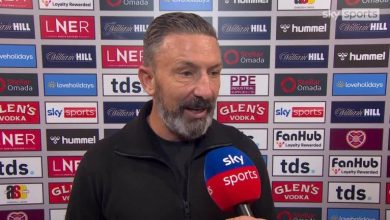
McInnes’s own quotes, provided to the BBC, further elucidate the strategic thinking behind the signing. “Ross is someone I signed for Aberdeen from Rangers, and at that time he wanted to go out and prove himself, which I think says a lot for him,” McInnes noted, highlighting the integral character trait that makes McCrorie an ideal fit for the intensity of Rangers. The manager continued, “He has developed and improved as a player, he has got that added experience, he is a full international now and he knows the club inside out.” This familiarity cannot be overstated. In an era where managers frequently bemoan the lack of pre-season time to instill tactical philosophies, acquiring a player who requires zero acclimatization to the club’s culture, the media scrutiny, and the geographical realities of Glasgow is an invaluable asset. McInnes astutely pointed out the alignment of visions: “In the conversations I have had with him, a lot of things I am saying are things he wants from the club as well, so he’s a determined and competitive boy on the pitch,