Steve Clarke had not even left the team hotel in Charlotte when the conversation started. The resignation statement was barely an hour old, the pain of a third consecutive group stage exit still raw and unprocessed, and already Scottish football supporters were doing what they do best — arguing passionately, creatively, and with enormous conviction about who should come next.
That conversation, playing out across social media, phone-in programmes, and BBC Sport Scotland’s own feedback channels, reveals something genuinely fascinating about the state of Scottish football and the expectations of the people who follow it most closely. Because this is not a fan base demanding the impossible or living in fantasy. This is a fan base that has waited patiently through three major tournaments, that has celebrated qualifying heroics and suffered group stage exits in equal measure, and that now has a very clear and very specific idea of what they want from the next chapter.
They want attacking football. They want courage. They want someone who will trust the talent in the squad and let it flourish rather than managing it cautiously. And they have some very strong opinions about who can deliver that.
Here is what the Tartan Army is actually saying — and why their instincts deserve to be taken seriously by the Scottish FA as they begin the most important recruitment process they have undertaken in years.
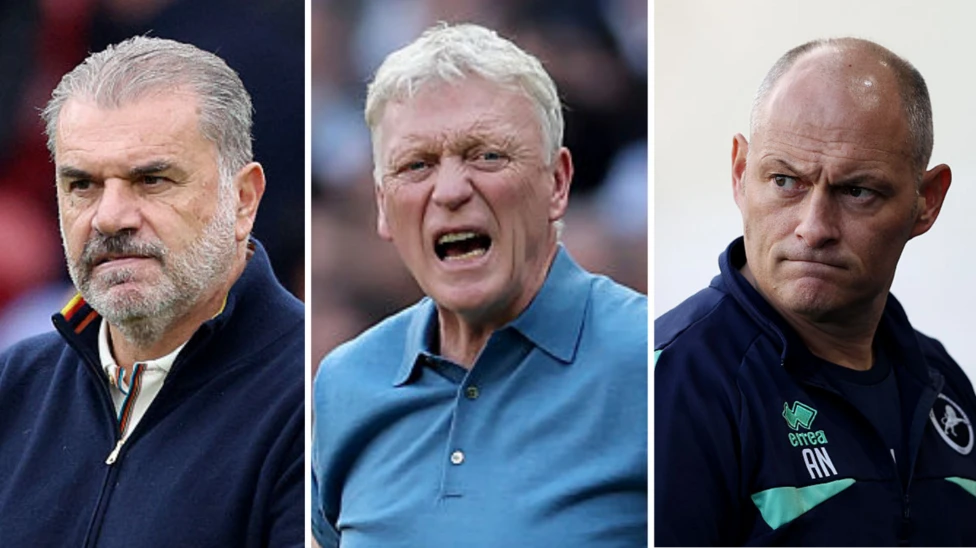
If you asked a thousand Scotland supporters to name their ideal next manager, a significant majority would give you the same answer. Ange Postecoglou. The Australian-Greek coach who spent two transformative years at Celtic, won back-to-back Scottish Premiership titles, and played a brand of football so exciting and so different from anything Scottish fans had seen in recent years that it genuinely changed the conversation about what was possible in Scottish football.
The supporter feedback collected by BBC Sport Scotland reflected that consensus overwhelmingly. “Postecoglou would be the perfect fit,” wrote one fan. “He would get the players playing with swagger and confidence, and he can be pragmatic when needed.” Another was equally direct: “Postecoglou. Let’s get the ball forward at pace and put teams under pressure. It’s time to leave behind the ‘let’s keep it tight’ philosophy we’ve followed since the 1990s.”
The frustration embedded in that last comment is important. Scottish football supporters have watched their national team play cautiously at three consecutive major tournaments — conceding goals early, failing to create enough chances, and ultimately failing to score the goals needed to progress. The statistics from Clarke’s tournament reign are damning: four goals scored across nine games at Euro 2020, Euro 2024, and the 2026 World Cup. Sixteen conceded. One win. Three group stage exits.
Postecoglou represents the clearest possible antidote to that approach. His football is aggressive, high-pressing, front-footed, and built on the belief that the best form of defence is winning the ball back quickly and attacking with speed and purpose. “Postecoglou, a serial winner, who knows the Scottish game, has had great success as the Australian national coach and, most of all, knows how to get his players to score goals,” wrote another supporter. That phrase — knows how to get his players to score goals — captures exactly what Scotland supporters feel has been missing.
The complications around Postecoglou’s candidacy are real but not necessarily insurmountable. His recent Tottenham record — a promising first season that delivered a trophy followed by a more difficult second year — has tempered some of the initial enthusiasm. “I think Ange Postecoglou is a consideration but his recent record is poor,” acknowledged one honest supporter. “Whatever happens we have to accept this is no quick fix. The players let us down big time.”
That balanced assessment reflects a maturity in the fan base that is sometimes underestimated. Scotland supporters want Postecoglou’s philosophy. They are not blind to his recent difficulties. And they understand that even the perfect appointment does not guarantee immediate transformation.
The question — as it always is with high-profile candidates for the Scotland job — is whether Postecoglou sees international management at Scotland’s level as an appropriate next step, or whether he is waiting for another elite club opportunity. One supporter offered perhaps the most enthusiastic version of the case: “He has the CV, having managed at a World Cup and in Australia. His style will get the team back on the front foot and he has charisma and authority.” All of that is true. Whether it is enough to attract him to the role is the £20 million question.
If Postecoglou is the dream, David Moyes is the consensus — the name that comes up time and again when Scotland supporters discuss realistic candidates who could make an immediate and significant impact on the national team.
“We need to do everything to ensure David Moyes is the next Scotland manager,” wrote one supporter with evident passion. “Even if that means an interim until he’s available. He has the right experience and passion for Scotland.” Another was characteristically direct: “There’s only one outstanding Scottish candidate — David Moyes. Way better tactically and equally as grumpy.”
That second comment generated a smile, but it also captures something genuine about Moyes’s appeal to the Scottish football public. He is not a man who generates warm, fuzzy feelings. He is demanding, exacting, sometimes difficult, and utterly uncompromising in his standards. Those are, in the context of managing a national team that has repeatedly underperformed at tournaments, actually desirable qualities.
“Moyes has to be the first call,” wrote another supporter. “I’m sure he would be tempted. It feels like we’ve been calling for Moyes for 15 years but it’s never worked out. Great foundations laid by Clarke, Moyes is the calibre of coach to take us to the next level.” That last line is significant — the acknowledgment that Clarke’s work has value, combined with the belief that a different calibre of manager is needed to take the next step.
The practical challenge with Moyes is straightforward — he is currently employed at Everton and entering the final year of his contract. Approaching him formally while he is under contract would require Everton’s cooperation, which is unlikely to be freely given. The Scottish FA would need to decide whether they are prepared to wait for Moyes to become available or whether the timeline — with competitive football resuming in September — makes that patient approach impractical.
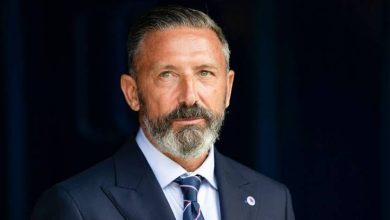
One fan offered a nuanced view: “The dream would be Moyes but he’s enjoying life at Everton. Derek McInnes went to Rangers too soon as he would have been great too. I’d take a punt on passion and try out Scott Brown.” That reference to McInnes is interesting — the recognition that Scotland may have lost one strong domestic candidate to club management at exactly the wrong moment adds another layer of complexity to the
Beyond Moyes, the debate about Scottish candidates reveals a genuine tension in what supporters want from the appointment — between the desire for someone with the right passport and background, and the recognition that the job’s demands may require looking further afield.
Alex Neil received significant support. “Alex Neil probably,” wrote one fan. “Think it would have been McInnes if he hadn’t gone to Rangers.” Neil’s track record — promotion campaigns, solid Championship management, an ability to organise teams defensively while developing attacking play — suggests a competent manager with genuine credentials. Whether those credentials are sufficient for the specific demands of the Scotland job is a more difficult question.
Darren Fletcher, Scott Brown, and Callum Davidson were all mentioned by supporters as options worth considering. “I think Darren Fletcher, Scott Brown, and Callum Davidson are my favourites for the Scotland job. They all know international football as players. And have some coaching experience,” wrote one fan. The logic is clear — players who have worn the Scotland shirt at major tournaments bring an understanding of the environment and the expectations that coaching qualifications alone cannot provide.
John McGlynn emerged as an interesting left-field option that clearly resonates with a section of the support. “McGlynn seems to be in the same mould as Clarke, but everyone absolutely loves McGlynn-ball. He could be a brilliant left-field option for us,” suggested one supporter. McGlynn’s reputation as a manager who produces technically disciplined, attractive football at clubs without enormous resources has won him admirers across Scottish football, and his relative profile outside the main conversation could work in his favour if the SFA want to make an unexpected appointment.
Steven Naismith’s name also featured prominently, reflecting his position as the current assistant manager and the obvious internal candidate. “Maybe Steven Naismith should step up?” suggested one supporter. “Otherwise I think they’ll go abroad.” Naismith’s insider knowledge of the squad and his personal history as a Scotland international give him natural advantages in the role. The question is whether the Scottish FA believe his managerial experience at this stage of his career justifies the appointment to a job of this magnitude.
One of the most interesting threads in the supporter feedback is the growing appetite for a foreign manager — a genuine departure from the pattern of Scottish or British appointments that has defined the national team’s recent history.
“I’d prefer the SFA to do a proper recruitment process, instead of trotting out the usual candidates,” wrote one supporter with evident frustration. “I don’t see why we can’t have a foreign coach in place. Scottish coaches are too fearful and pragmatic. I’d happily see a Scandinavian coach come in. They seem to have a bold approach and aren’t fearful to be on the front foot.”
That view — that the cautious, pragmatic approach associated with Scottish and British management culture is itself part of the problem — is gaining traction among supporters who have watched three consecutive tournament exits defined by exactly those qualities. The perception that Scandinavian football has produced a distinctive, forward-thinking coaching culture that produces brave, technically sophisticated national teams resonates with a fan base hungry for exactly that approach.
Kasper Hjulmand was the most frequently mentioned foreign candidate, and his credentials are genuinely impressive. His work with Denmark — taking them to the semi-finals of Euro 2020 in circumstances of almost unimaginable emotional difficulty following Christian Eriksen’s cardiac arrest — demonstrated exactly the kind of tournament management quality that Scotland have lacked. His subsequent spell at Bayer Leverkusen ended disappointingly, but his international track record remains the most directly relevant experience of any candidate in this conversation.
“If it had to be a foreigner, then Kasper Hjulmand is a good shout,” acknowledged one supporter who would prefer a Scottish appointment. Roberto Martinez — whose work with Belgium and Portugal has produced consistent tournament progression — was also mentioned as a potential outside option if he becomes available.
The most eyebrow-raising suggestion in the entire feedback collection came from a supporter who simply wrote: “Pep is available.” The reference to Pep Guardiola — who is, at the time of writing, arguably the greatest club manager in the history of football — generated significant amusement. But it also captures, in its own way, the ambition and the frustration of a fan base that has spent 28 years watching Scotland fail to progress at major tournaments and is now simply demanding the best.
Reading through the full sweep of supporter opinion, a remarkably coherent picture emerges of what Scotland fans actually want from their next manager — and it goes beyond any individual name.
They want attacking philosophy. The desire for a manager who will “get the ball forward at pace,” who will produce a team that “plays with swagger and confidence,” and who will move away from the cautious approach that has defined the national team for a generation is the single most consistent theme across every piece of supporter feedback. Whether that manager is Postecoglou, Moyes, Hjulmand, or someone else entirely, the tactical identity they want is clear.
They want someone who knows what the environment demands. “Need someone who has experience of Scottish football and international football,” wrote one supporter — a view that reflects the understanding that managing Scotland is a specific and unusual challenge that requires both tactical quality and cultural understanding. The intense scrutiny, the passionate but demanding fanbase, the media pressure, and the specific qualities of the Scottish player pool are all things that a manager needs to understand before they can effectively work within them.
They want a proper process. “I’d prefer the SFA to do a proper recruitment process, instead of trotting out the usual candidates,” wrote one supporter. That sentiment — the desire for rigour and ambition in the appointment rather than a default to familiar names — reflects a maturity in the fan base that the Scottish FA would do well to heed. Euro 2028 on home soil is too significant an opportunity to approach with anything less than the most thorough and ambitious recruitment process the organisation has ever undertaken.
And they want, above all else, someone who can finally get Scotland through a group stage. After nine World Cups without a knockout stage appearance, after three consecutive exits at the group stage of major tournaments despite qualifying heroics that promised so much more, the patience of the Tartan Army is not infinite. They have followed their team to the ends of the earth — to Miami, to Munich, to the streets of Boston in the small hours of the morning — and they deserve a manager who can take them one step further.
The Scottish FA have a significant decision to make, and they have approximately three months to make it before competitive football returns in September. The Nations League campaign in League B — trips to Slovenia and Switzerland — will be the new manager’s first tests, and arriving at those games without having had adequate preparation time would be a significant disadvantage.
The fan feedback, for all its diversity and all its passion, points toward a few clear conclusions. There is enormous appetite for Postecoglou if he can be convinced. There is strong support for Moyes as the most credible Scottish candidate. There is genuine openness to a foreign appointment if the right candidate can be identified and attracted. And there is a powerful, unified demand for a manager who will trust the players, attack with intent, and give Scotland the attacking identity they have been searching for across an entire generation of major tournament football.
The Tartan Army has spoken. The Scottish FA now needs to listen — and then act with the ambition and the urgency that this moment demands.
The next chapter of Scotland’s football story is about to be written. The only question is who holds the pen.