Steve Clarke’s Scotland Legacy: The Manager Who Restored Belief to the Tartan Army

For much of the 21st century, Scottish football supporters endured more disappointment than celebration. Qualification campaigns ended in heartbreak, promising generations failed to reach major tournaments, and belief slowly faded among one of football’s most passionate fan bases. Every new campaign began with hope, but too often ended with frustration.
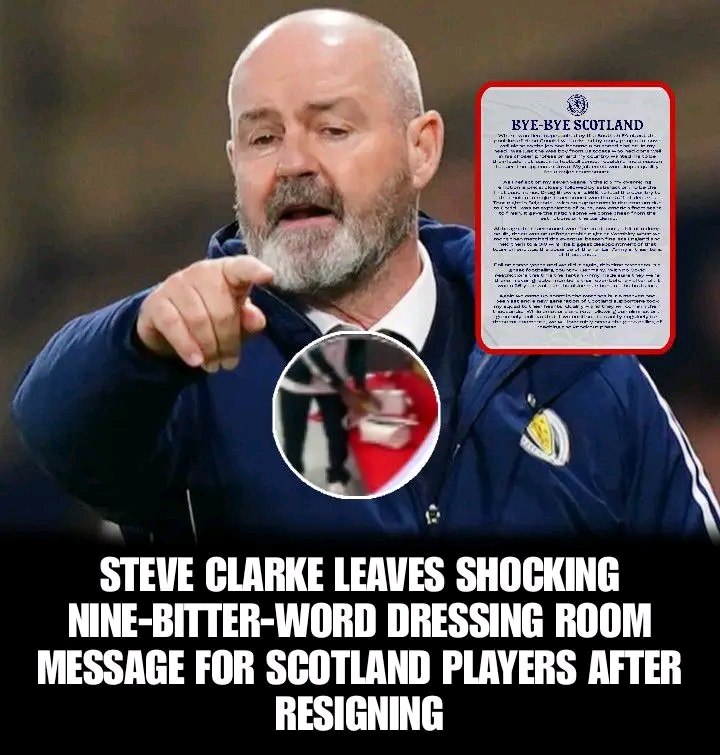
When Steve Clarke accepted the role of Scotland head coach in 2019, he inherited a national team carrying the weight of more than two decades of missed opportunities. Expectations were cautious. While Clarke had earned widespread respect for his achievements in club football, particularly after guiding Kilmarnock F.C. to one of the best seasons in the club’s modern history, international management presented an entirely different challenge.
Over the years that followed, Clarke would oversee one of the most significant periods in modern Scottish football. His reign was not defined solely by results or tournament appearances but by a broader transformation in mentality. Under his leadership, Scotland rediscovered its competitive identity, restored confidence among supporters, and proved once again that the national team could compete on the international stage.
When Clarke was appointed, Scotland’s recent history was filled with near misses. The national side had failed to qualify for a major tournament since the 1998 FIFA World Cup, leaving generations of supporters without the experience of following their country at football’s biggest events.
The challenge facing the new manager extended beyond tactics. He needed to rebuild confidence within the squad while convincing supporters that better days were possible.
Drawing on decades of coaching experience in both England and Scotland, Clarke introduced a clear philosophy from the beginning. Organisation, discipline and collective responsibility became central to the team’s identity. Rather than relying on individual brilliance, Scotland would compete as a well-drilled unit capable of frustrating stronger opponents.
One of Clarke’s greatest strengths was his ability to maximise the resources available to him. Scotland did not possess the depth of talent enjoyed by many of Europe’s traditional powers, making tactical organisation essential.
The manager focused on creating a structure that allowed every player to understand their role. Defensive discipline became a hallmark of the team, while midfielders and attackers were expected to contribute without possession as much as they did with the ball.
This collective approach helped Scotland compete against higher-ranked opponents and made the national side significantly harder to beat.
Players frequently spoke about the clarity of Clarke’s instructions and the confidence they gained from understanding exactly what was expected of them.
Perhaps the defining achievement of Clarke’s tenure came with Scotland’s return to major tournament football.
After more than two decades without qualification, Scotland secured a place at UEFA Euro 2020 through the play-offs. Although the tournament was delayed because of the COVID-19 pandemic, qualification itself represented a historic moment for Scottish football.
Scenes of celebration across the country reflected the significance of the achievement. For many younger supporters, it was the first opportunity to watch Scotland compete at a major international tournament.
The accomplishment also validated Clarke’s methods. His emphasis on teamwork, discipline and resilience had produced tangible success.
Another important aspect of Clarke’s reign was his trust in emerging talent.
While experienced figures remained central to the squad, younger players gradually received opportunities to establish themselves at international level.
Leaders such as Andrew Robertson, John McGinn Kieran Tierney, and Scott McTominay became the backbone of the team, combining experience with commitment and consistency.
Around them, younger players found an environment that encouraged development while maintaining high standards.
Clarke’s willingness to reward form and commitment helped create healthy competition throughout the squad.
Although Clarke was often associated with defensive organisation, his teams demonstrated greater tactical flexibility than critics sometimes acknowledged.
Depending on the opposition, Scotland adapted its approach. Against stronger nations, the team remained compact and disciplined, seeking opportunities to counterattack quickly.
Against teams expected to defend deeply, Scotland attempted to control possession and apply sustained pressure.
The manager also adjusted formations when necessary, showing a willingness to adapt rather than remain tied to one system.
That flexibility became increasingly important as Scotland faced a variety of opponents across qualification campaigns and tournament football.
Success in international football cannot always be measured by trophies.
For Scotland, reconnecting supporters with the national team represented an achievement in itself.
Attendances improved, optimism returned and belief gradually replaced the pessimism that had characterised previous years.
The atmosphere surrounding Scotland matches changed noticeably.
Supporters travelled in large numbers, creating memorable occasions both at home and abroad.
Players frequently acknowledged the role of fans in inspiring performances, while supporters appreciated the visible commitment shown by the squad.
This renewed relationship between team and fans became one of Clarke’s most enduring accomplishments.
Managing a national team brings unique challenges.
International managers have limited time with players, making preparation more difficult than at club level.
Clarke successfully navigated these challenges through meticulous planning and effective communication.
He consistently projected calmness during difficult moments, refusing to allow setbacks to derail the team’s long-term objectives.
That measured approach helped create stability within the national setup, allowing players to focus on performances rather than external pressure.
While qualification for major tournaments will always remain central to Clarke’s legacy, his broader contribution may prove even more significant.
He helped change expectations surrounding Scottish football.
Instead of entering qualification campaigns hoping merely to compete, Scotland increasingly approached matches believing qualification was achievable.
That shift in mentality cannot be measured easily, yet it may influence future generations of players.
Young footballers growing up today have witnessed Scotland competing at major tournaments rather than watching from home.
Every managerial era eventually comes to an end, but its influence often continues long afterwards.
Whoever leads Scotland in the years ahead will inherit a national team with a stronger foundation than the one Clarke found upon his arrival.
The challenge will be to build upon that progress while continuing to develop emerging talent and maintain Scotland’s competitiveness on the international stage.
Clarke’s tenure demonstrated that disciplined organisation, clear leadership and unwavering belief can transform a national team.
His legacy is therefore about far more than individual matches or tournament appearances. It is about restoring confidence to Scottish football and reminding players and supporters alike that Scotland belongs on the international stage.