Ballon d’Or Winner, Contract Standoff, and the Transfer Saga That Could Define This Summer: The Full Ousmane Dembélé Story

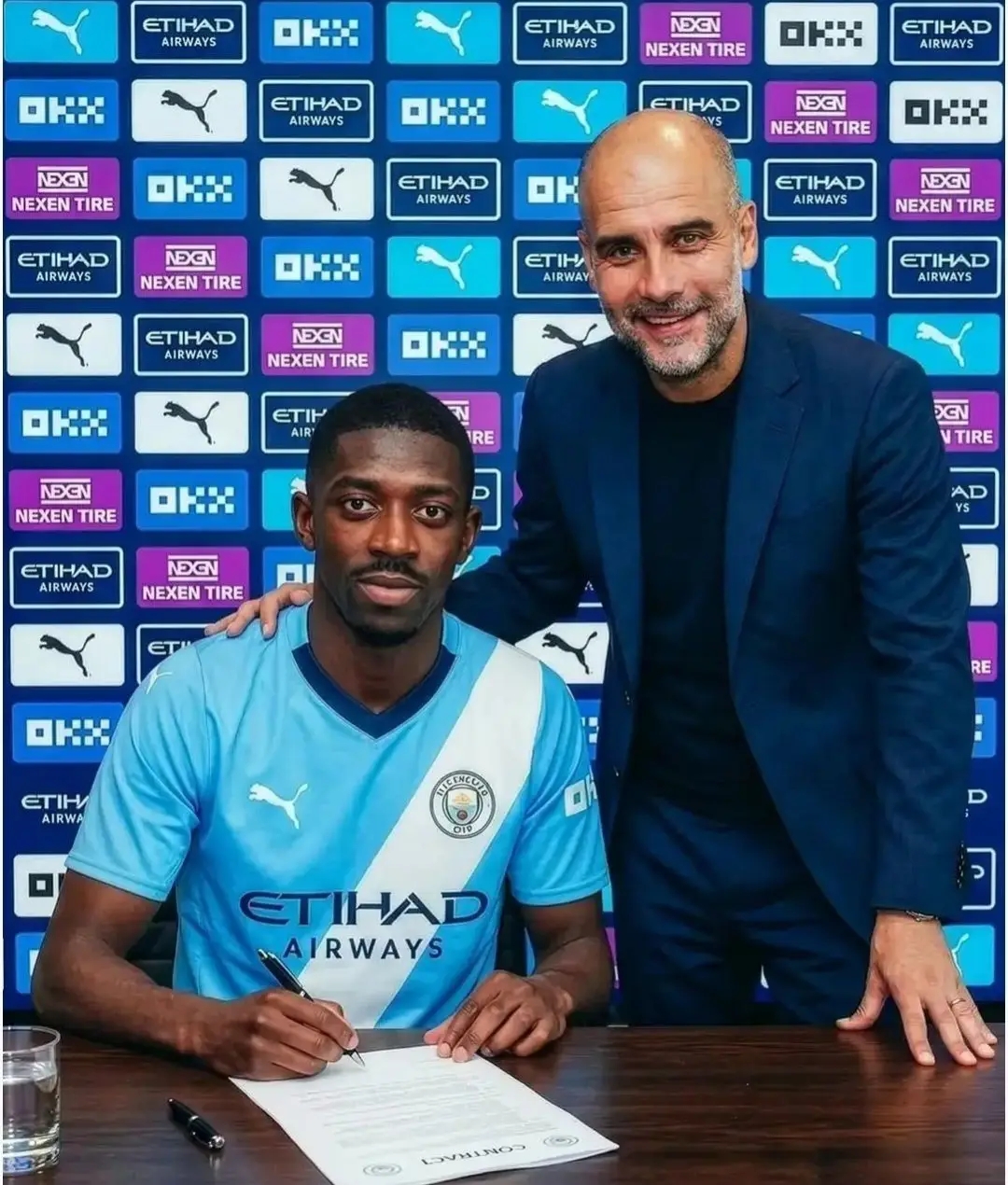
Few transfer sagas in modern football carry quite the dramatic weight of the one slowly unfolding around Ousmane Dembélé. The reigning Ballon d’Or winner. The cornerstone of Paris Saint-Germain’s back-to-back European champions. A player worth close to €100 million on the open market. And yet, as the summer of 2026 unfolds, the question of where Dembélé will be playing his football beyond this season remains genuinely, fascinatingly open.
To understand what’s at stake in this saga, it helps to understand just how dramatically Dembélé’s career has transformed since his move to PSG from Barcelona in the summer of 2023. For years, the Frenchman was defined as much by his injury record and inconsistency as by his undeniable quality. At Dortmund and then Barcelona, flashes of brilliance were too often interrupted by lengthy spells on the sidelines and questions about his professionalism and focus. The talent was never in doubt — the application and availability were.
Paris changed all of that. Under manager Luis Enrique at the Parc des Princes, Dembélé evolved from a mercurial talent into arguably the most decisive player in world football, becoming indispensable to the reigning European champions. The transformation was remarkable to watch. A player who had spent so much of his career being discussed in terms of what he might become was suddenly, decisively, the finished article — the kind of forward who could single-handedly alter the course of a match with a single burst of acceleration, a precise cross, or an arrival in the penalty area at exactly the right moment.
The individual recognition followed accordingly. Dembélé was named Ballon d’Or winner in September 2025, following an extraordinary campaign that saw PSG claim Ligue 1, the Coupe de France, and the UEFA Champions League. It was a clean sweep at domestic and European level, and Dembélé was widely acknowledged as the player most responsible for making it happen. For a footballer who had spent years being labelled a nearly man and a wasted talent, lifting football’s most prestigious individual award represented the ultimate vindication.
A significant factor in his development has been a positional evolution under Luis Enrique, with Dembélé finding a new lease of life playing in a more central role. This flexibility has made him even more dangerous and allowed him to slot in seamlessly alongside Desire Doue, Khvicha Kvaratskhelia, and Bradley Barcola in a formidable PSG attack.
Yet here is where the story takes its complicated turn. Despite Dembélé’s Ballon d’Or triumph and PSG’s unparalleled success, the question of his long-term future at the club has been anything but settled. His current deal is set to expire in 2028, and following his outstanding 2024/25 campaign, contract discussions were expected. However, those discussions have so far proved difficult.
The sticking point is straightforward: money. PSG put a three-year extension on the table worth approximately €30 million per year back in January 2026. Dembélé’s camp said no. Their counter was roughly €60 million annually. The gap between those two figures is enormous, and bridging it has proven far more complicated than either side might have anticipated when negotiations first began.
PSG president Nasser Al-Khelaifi went on record to say that no player would be exempt from the club’s internal salary cap, no matter how important they are. This is part of his strict “no one is bigger than the club” policy. The Parisian hierarchy are acutely aware of the dangers of allowing a single player’s wage demands to distort the club’s entire financial structure — they lived through exactly that dynamic during the years of Neymar, Kylian Mbappé, and Lionel Messi, a period of lavish spending that delivered relatively little in terms of sustained European success and significant strain on the club’s finances.
PSG fears that giving in to Dembélé’s massive wage demands could set a dangerous precedent for future negotiations with players like Warren Zaïre-Emery and Vitinha, both seen as key to the club’s future. It’s a delicate balancing act between rewarding their best player appropriately and maintaining the kind of wage structure that allows the club to function sustainably at the top of the game.
Throughout the months of speculation and negotiation, Dembélé himself has consistently projected calm and commitment publicly. Speaking to RMC Sport, Dembélé said he would be at PSG next season, effectively silencing rumours of a summer exit. That’s as clear a public statement as a player can make, and it’s one that Dembélé has not walked back despite the ongoing uncertainty around his long-term future.
The player has indicated he does not intend to engage in serious contract discussions before the season ends and the World Cup concludes, wanting to see how the Champions League campaign unfolds, what the club’s salary cap will be for next season, and what options present themselves after the tournament. It’s a strategy that keeps his options open while allowing him to focus on international duty with France without the distraction of ongoing negotiations pulling at his attention.
According to L’Equipe, all parties are now said to be confident about the Ballon d’Or winner eventually signing a long-term contract, with PSG and the Dembélé camp described as close to an agreement that will not be a symbolic short-term extension. That’s an encouraging update for PSG supporters who have spent months anxiously monitoring every development in this saga, but it’s important to note that “close” and “confirmed” remain two very different things in football transfer business.
## What Happens If Talks Collapse?
For all the growing optimism around an eventual resolution, it’s worth taking seriously what a breakdown in negotiations would actually mean — both for PSG and for the wider transfer market. L’Equipe confirmed that should Dembélé leave PSG, the two most likely destinations would be the Premier League and the Saudi Pro League. Those are two very different paths for a 29-year-old at the peak of his powers, and the choice between them would say a great deal about where Dembélé sees his career heading.
The Premier League link has been building quietly for months. Arsenal have been told that Dembélé is leaving PSG, with the Gunners being set up for a potential blockbuster move worth around €100 million. Dembélé has most frequently been linked with a move to Arsenal, where manager Mikel Arteta could deploy him on the left wing — a role in which he first made his name — with both Leandro Trossard and Gabriel Martinelli potentially moving on this summer.
The Arsenal connection makes a certain amount of tactical sense. Arteta has spent years building one of the Premier League’s most exciting attacking sides, and the addition of a player of Dembélé’s calibre — a Ballon d’Or winner with Champions League experience and the ability to operate across the front line — would represent a transformative piece of business for the Gunners. Sky Sport transfer expert Sacha Tavolieri reported that PSG are already tracking Monaco youngster Maghnes Akliouche as a potential replacement for Dembélé in their squad, which suggests at least some within the Paris hierarchy are taking the possibility of his departure seriously enough to plan for it.
The Saudi Pro League option is a more complicated proposition, and one that would be greeted with mixed feelings in French football circles. While a move to the Saudi Pro League can’t be ruled out, Dembélé would prefer to remain in Europe. However, he has noted that playing in the Saudi league has not prevented call-ups to the French national team, pointing to N’Golo Kanté’s experience at Al-Ittihad as evidence that the move doesn’t necessarily mean international exile.
The financial rewards on offer in Saudi Arabia would likely dwarf anything the European market could provide, potentially resolving the salary gap at a stroke. But for a player who has just won the Ballon d’Or and is widely regarded as the best footballer in the world at this particular moment, the competitive level of the Saudi Pro League represents a significant step down, and the reputational implications of making that move at 29 — rather than in the latter years of a career — would be considerable.
The Dembélé situation also needs to be understood within the context of PSG’s broader ambitions and financial strategy. PSG’s club focus in terms of future investment has shifted toward younger players like Senny Mayulu and Bradley Barcola, reflecting a longer-term approach to squad building that doesn’t necessarily depend on retaining Dembélé at any price.
That doesn’t mean PSG are relaxed about the prospect of losing their best player — far from it. Dembélé’s performances have convinced PSG’s hierarchy of his importance to the team’s long-term plans, and the club’s leadership is determined to keep their talisman. But it does mean the club is unlikely to simply abandon its wage structure to meet Dembélé’s demands, regardless of how important he is to the current setup.
Reports from mid-June 2026 suggest both sides are now aligned on sporting ambitions, with the expectation that a finalised agreement will come together once the World Cup concludes, with both parties expected to move quickly once the tournament ends. The timing makes sense from multiple perspectives — Dembélé gets the clarity he wanted about the club’s Champions League ambitions and next season’s salary cap, while PSG avoid the distraction of ongoing negotiations during a major international tournament.
Ballon d’Or Winner, Contract Standoff, and the Transfer Saga That Could Define This Summer: The Full Ousmane Dembélé Story
What makes the Dembélé story so compelling beyond the transfer politics is the broader narrative arc it represents. This is a player who spent years being written off as a footballing cautionary tale — a generational talent squandered by injuries, agent disputes, and a reportedly cavalier attitude toward professionalism. The version of Dembélé that wore out the patience of Barcelona’s hierarchy was a very different proposition to the one who now stands as the game’s most individually decorated player.
The medical department at PSG has worked closely with Dembélé to manage his workload during congested campaigns, and that careful management of his fitness has paid dividends in terms of sustained availability and performance. The injury-hit autumn of the current season was a reminder that the old vulnerabilities haven’t entirely disappeared, but the club’s measured approach to his workload has minimised those risks considerably compared to the frequency of setbacks that plagued his Barcelona years.
His tactical evolution has also translated meaningfully to his international career, where he is now regarded as one of the leaders of the French national team, with his ability to influence games from central areas giving Les Bleus a different dimension as they pursue further World Cup success. That international standing adds another layer to the transfer saga — any club signing Dembélé isn’t just acquiring a PSG player, they’re bringing in a figure who sits at the very centre of French football’s present and future ambitions.
The most likely outcome, based on the weight of evidence from credible French and European football media, is that Dembélé and PSG eventually find common ground and announce an extension once the World Cup wraps up. The expectation from those close to the negotiations is that a finalised agreement will come together in the post-tournament period, with Dembélé wanting to stay and PSG wanting to keep him — the only real question being finding a number between €30 million and €60 million that both sides can live with.
Bridging a gap of that magnitude is far from straightforward, but the tone from both camps has become increasingly positive as the weeks have passed, and the mutual desire to make it work appears genuine on both sides. L’Equipe’s position, based on their reporting close to the situation, is that all parties are now confident about seeing the Ballon d’Or winner sign a long-term contract. That level of confidence from a publication as well-sourced on French football as L’Equipe carries real weight.
But football is football, and until pen meets paper and a contract is officially announced, the possibility of a dramatic late twist can never be entirely discounted. If PSG’s resolve on the salary cap holds firm and Dembélé’s camp refuses to move significantly from their position, the dominoes could fall quickly — and clubs across the Premier League and beyond will be watching those developments with very close interest indeed.
For now, the world watches, and waits. And Ousmane Dembélé, currently representing France on the World Cup stage, continues to remind everyone watching exactly why his signature is worth fighting over.