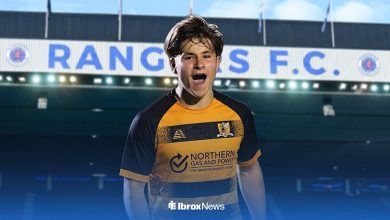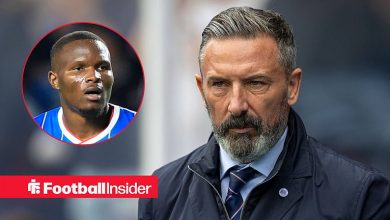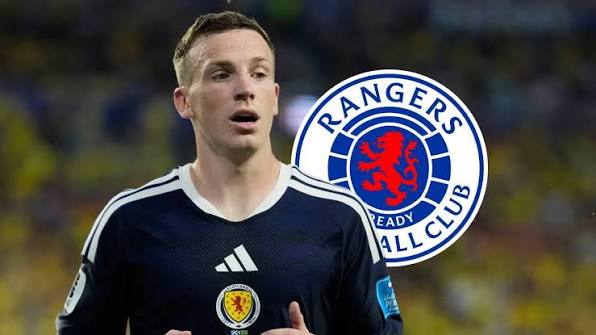
Rangers have opened contact with Bologna over Lewis Ferguson, and on paper it looks like the kind of transfer story that writes itself: a homegrown Scottish talent, raised in a Rangers family, being pursued by a manager who launched his career. But the closer you look at the details emerging from Italy and the UK, the more complicated — and expensive — this pursuit becomes.
A deal Bologna don’t want to do
The Rossoblu have made their position clear to Rangers: this will not be an easy sale. Ibrox sources have conceded as much themselves, acknowledging that landing Ferguson would be a genuine challenge rather than a formality built on sentiment and old ties. Reports from Italy have suggested fees in the region of £17 million, a figure that puts real strain on what Rangers can realistically offer in the current transfer market.
That reluctance from Bologna isn’t just posturing. Ferguson has become one of the most important figures at the club — not a squad player being moved on to balance the books, but a captain the club built recent history around.
From Hamilton to the San Siro: how Ferguson got here
Ferguson’s route to Serie A started a long way from Bologna. Born in Hamilton in 1999, he came through the Rangers academy as a boy before switching to Hamilton Academical’s youth setup at 14, going on to make his senior debut for the Accies in January 2018. That form was enough to earn him a pre-contract move to Aberdeen later that year, and it was at Pittodrie that Ferguson first built his reputation as a tenacious, high-energy box-to-box midfielder.
His four years in Aberdeen colours were formative in more ways than one. It was there that Derek McInnes — now Rangers’ manager — worked with him and effectively launched his senior career, giving him regular first-team football and shaping him into a player capable of a move abroad. Ferguson repaid that early trust with a moment that has become part of his own family folklore: a late winner against Rangers in a League Cup semi-final at Hampden in October 2018. It’s a result his own relatives still haven’t quite let him forget — his father Derek later recalled on the Open Goal podcast that Lewis was given “pelters” by his own family in the away end that night, and that his two brothers blanked him when he arrived home, unimpressed that he’d struck the winning blow against the club they all support.
That anecdote says a lot about the Ferguson household. Lewis is the son of Derek Ferguson, who made more than 100 appearances for Rangers in the 1980s before spells at Hearts, Sunderland and several other clubs, and the nephew of Barry Ferguson, one of the most decorated captains in the club’s modern history with over 400 appearances across two spells at Ibrox. His cousin Kyle Ferguson is also a professional footballer, and the two were youth-team teammates at Rangers as children. In short: Ferguson isn’t just a player Rangers admire from a distance — he’s a player who grew up inside the club’s own extended football family, even if his own path took him elsewhere before he ever broke into the first team.
The move to Italy and the rise to captain
Ferguson left Aberdeen for Bologna in the summer of 2022, a transfer that marked a serious step up in level. It wasn’t a smooth, uninterrupted rise from there. An ACL injury in early 2024 kept him out for an extended period, and Bologna were understandably cautious about rushing him back into a heavy workload once he recovered — a caution reflected in game-time figures that, even in a strong season, saw him fall short of the 3,000-minute mark in Serie A.
Despite that setback, Ferguson’s standing at the club has only grown. He is now one of Bologna’s captains, and in the 2024–25 season he led the side to their first major trophy in 51 years, lifting the Coppa Italia after a 1–0 win over AC Milan in the final. Along the way, Bologna also qualified for the Champions League — a remarkable achievement for a club of their size — and Ferguson was named Serie A’s midfielder of the year in 2024, recognition that underlined how far he’d come from his days breaking into the Hamilton first team.
That trophy-winning captaincy is central to why this transfer is so complicated. Bologna aren’t trying to offload a fringe player; they’re being asked to sell the man who led them to silverware, with two years still left on his contract.
The World Cup effect
Ferguson’s stock has risen further still over the course of the 2026 World Cup. Scotland’s tournament form was mixed, but Ferguson himself was a consistent performer, and that visibility has done exactly what it always does in the transfer market — pushed his value up and widened the list of clubs paying attention. Reports suggest his World Cup performances have directly enhanced his reputation and, in turn, increased interest from elsewhere in Europe, which is not good news for a Rangers side hoping competition might stay limited.
Rangers’ interest — and Ferguson’s own stance
What makes this more than a straightforward piece of transfer speculation is that Ferguson himself appears open to the move. Sources close to the player have indicated he would be receptive to a return to Scottish football and to Ibrox specifically, with suggestions that he is even eager to pull on a Rangers shirt after growing up supporting the club. Reuniting with McInnes, a manager he already trusts and has worked under, is being framed as a significant pull factor.
There’s also a smaller, human thread running alongside the football logic: Ferguson is understood to be close friends with Ross McCrorie, his former Aberdeen teammate, who has just completed his own move to Ibrox this summer. Having a close friend already inside the building is the sort of detail that rarely decides a transfer on its own, but it’s the kind of thing that can tip a player’s preference when several suitors are otherwise evenly matched.
McInnes’s own arrival at Rangers has been sold partly on the back of this kind of relationship-driven recruitment. When he was confirmed as manager on a three-year contract, the club pointed to his experience, his five years as an Ibrox player, and his understanding of what winning at Rangers requires. A reunion with Ferguson would fit neatly into that narrative — the manager who gave a player his big break, now able to hand him a route back into the game that shaped him.
But none of that changes the financial reality Bologna have put in front of Rangers.
The £17m problem
Bologna’s valuation, reported at around €17 million (roughly £14.7 million), is a serious stretch for a Rangers squad being rebuilt over a single summer window. It’s a figure that would represent a significant outlay even before wages are factored in, and it sits well above what Rangers have typically spent on individual signings in recent history.
To try to bridge that gap, there has been talk of a more creative structure to any deal — most notably a possible swap arrangement involving Nicolas Raskin, the Belgian midfielder who has been persistently linked with a move away from Ibrox. The idea would see Raskin head to Bologna as Ferguson moves the other way, likely structured as two connected but technically separate transfers rather than a direct swap. On the surface, it looks like an elegant solution: Rangers replace a player they’re at risk of losing anyway with a like-for-like alternative who happens to want to join them.
In practice, sources briefed on the situation suggest agreeing such a deal will be difficult. Swap arrangements are notoriously hard to align — both clubs need to agree not just on player valuations but on timing, structure, and what happens if one side of the deal collapses. Bologna, for their part, are not desperate sellers. They have other options if Rangers can’t meet their number, and Ferguson’s rising profile means they’re unlikely to feel pressure to discount him.
Competition from within Serie A — and beyond
If Rangers were hoping Ferguson’s contract situation might make this a two-horse race between themselves and Bologna’s reluctance to sell, recent reporting suggests otherwise. Atalanta have emerged as a serious threat, reportedly operating with a substantial transfer budget after two big-money sales of their own to Premier League clubs. That kind of financial firepower makes them a dangerous rival for a club like Rangers working with far tighter resources. Roma have also been mentioned in connection with Ferguson, adding to the sense that this is now a genuinely competitive market rather than a race Rangers can expect to win on sentiment alone.
There’s an added layer of uncertainty on Bologna’s side, too. The club have appointed Domenico Tedesco as their new head coach, and it isn’t yet clear how Ferguson fits into his plans for the coming season. A new manager can change a club’s willingness to sell a key player almost overnight — either by deciding a captain is undroppable, or by deciding the fee on offer is too good to turn down as part of a wider rebuild.
Adding to the complication is a report suggesting Ferguson himself has indicated to Bologna that he wants his future resolved this summer, with his priority — at least according to some Italian reporting — being a move to the Premier League rather than a return to Scotland. If accurate, that would put Rangers in the position of competing not just against Serie A clubs with bigger transfer kitties, but against the pull of English football, generally considered a step up from the Scottish Premiership even for a player with Ferguson’s family ties to Ibrox.
His agent’s view
Ferguson’s representation has already weighed in publicly on where his career should go next. Speaking earlier this year, his agent Bill McMurdo indicated that his client would only consider a move to a club in one of Europe’s top five leagues, which — taken at face value — would rule out a return to Scotland altogether. McMurdo also noted that discussions with Bologna about a possible contract extension were still to be had, underlining that Ferguson’s future was, at that point, still genuinely open rather than leaning toward any one destination.
That stance may have softened since, given the more recent reporting suggesting Ferguson is open to Rangers and even eager for a return. Transfer situations shift quickly over the course of a single window, and public positioning from agents early in the year doesn’t always match how things play out by the time a deal is actually struck. But it’s a reminder that this is not a case of Ferguson quietly waiting for Rangers to come and get him — his camp has been actively managing a market with several interested parties.
What Rangers are building around this pursuit
The Ferguson chase isn’t happening in isolation. Rangers have been active all summer under their new manager. They moved early to sign Hearts captain Lawrence Shankland, brought in goalkeeper Ivor Pandur, added Ben Godfrey and Dan Neil, and have now completed the signing of Ross McCrorie — Ferguson’s former Aberdeen teammate — to kickstart the McInnes era. Jack Butland’s departure has also been confirmed, tidying up the goalkeeping situation. Taken together, it’s a squad being reshaped with real intent, not simply patched up around the edges.
Against that backdrop, Ferguson represents something different from the other business Rangers have done this summer. Shankland, Pandur, Godfrey, Neil and McCrorie were all obtainable within a normal transfer budget. Ferguson, at a reported £14.7–17 million valuation, would be a statement signing — arguably the most expensive and most symbolically loaded piece of business Rangers could complete this window, given his family history with the club and his current status as a Coppa Italia-winning captain and full Scotland international.
The Raskin question
Much of whether this deal happens may come down to what Rangers can do with Raskin. He’s been persistently linked with a move away from Ibrox, and his numbers — particularly his defensive work rate — have been held up as a rough statistical match for what Ferguson offers going the other way. If Rangers can convert Raskin’s exit into hard cash, or into a workable exchange with Bologna, it becomes much easier to close the gap on Ferguson’s valuation. If they can’t, this pursuit risks becoming a familiar story for Rangers fans: a genuine, mutual interest between player and club that ultimately founders on financial reality.
Where things stand
As things stand, Rangers have made contact, Bologna have made clear this won’t be straightforward, and Ferguson himself appears — at least by recent reporting — open to a return to Ibrox. But the fee being discussed, the competition from wealthier Serie A clubs, the uncertainty introduced by Bologna’s coaching change, and the complexity of any Raskin-linked structure all mean this is far from close to being resolved.
For Rangers, the appeal is obvious: a versatile, prime-age Scotland international with Champions League and Coppa Italia pedigree, a manager who already knows how to get the best out of him, and a family story that would make for one of the more sentimentally satisfying signings the club could complete this summer. But sentiment has never been enough on its own to get a deal like this over the line, and Bologna — even amid a coaching change and a captain reportedly angling for a move — are in no rush to give up one of their most important players cheaply.