Manny Fernandez and Rangers: The £25m Question That Could Define McInnes’ First Summer

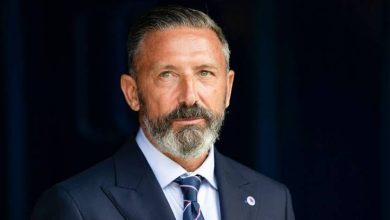
Rangers have spent the early weeks of this transfer window moving with real purpose under new manager Derek McInnes — signings arriving, a settled goalkeeping situation, defensive reinforcements through the door. But underneath all of that incoming business sits a decision that could shape the entire rebuild: what to do about Manny Fernandez.
Bayer Leverkusen have made fresh contact over the 24-year-old centre-back, and Rangers are understood to be holding out for at least £25 million. It’s a number that, if reached, would not just be another summer sale. It would be the single biggest transfer fee in the club’s history — and a very public test of how the new Ibrox hierarchy values its best players.
From non-league obscurity to Rangers’ prize asset
Fernandez’s story is one of the more unlikely rises in recent Scottish football. He came through Brentford’s youth academy before starting his senior career at Gillingham, where he couldn’t force his way into the first team. What followed was a spell in the football wilderness by professional standards: loan moves to non-league sides Sheppey United and Margate, before he ended up at Ramsgate of the Isthmian League South East Division in 2020 — several rungs below the Football League.
Peterborough United were the club who spotted something worth developing. They brought him back into the professional pyramid, loaned him out again to Spalding United and then Barnet, before he finally broke into Peterborough’s first team and made 42 appearances in a breakthrough season. That was enough to convince Rangers to move for him last summer, for a fee reported at around £3.5 million.
It was not, by all accounts, a smooth start in Glasgow. Fernandez struggled for game time initially and drew criticism from supporters who felt the signing hadn’t worked. Former Peterborough scout Mark Fry, who had pushed for the club to sign him, later recalled being unpopular with Rangers fans in the early months, insisting at the time that Fernandez would eventually be sold for £30 million or even £40 million and would score goals along the way. It’s the kind of prediction that looked bold at the time and considerably less so now.
The turning point came with the arrival of Danny Rohl as head coach in October. Since then, Fernandez has been a near-ever-present in the heart of the Rangers backline, developing into exactly the kind of commanding, two-way centre-back that clubs across Europe pay serious money for — good in the air, physically imposing at 6ft 4in, and increasingly comfortable contributing at the other end of the pitch too.
The numbers behind the rise
The statistical case for Fernandez’s transformation is straightforward. Across last season he made 33 appearances in all competitions and contributed to Rangers securing a third-place league finish, with reports crediting him with between five and seven goals from centre-back depending on the count used — an unusually productive return for a defender, and part of what has caught the eye of recruitment departments across Europe.
That form was recognised domestically with a place in the PFA Scotland Team of the Year, and it also opened the door to full international recognition. Fernandez earned his first cap for Nigeria earlier this year and has now made three appearances for the Super Eagles. Former Arsenal and Everton forward Alex Iwobi, closing in on his own century of caps for Nigeria, was full of praise after playing alongside him, saying he was excellent on debut and showed real composure against a physically demanding opponent.
A genuinely crowded market
What makes this more than a straightforward two-club negotiation is just how many sides are now credited with interest. Bayer Leverkusen’s renewed contact is the most recent development, but they are far from alone. Borussia Dortmund have been long-term admirers and were credited with interest as far back as the January transfer window. Arsenal have at various points been reported as leading the race, with Everton, Chelsea and West Ham United also named as Premier League clubs monitoring the player. Club Brugge have been credited with interest too.
That breadth of interest matters for Rangers’ negotiating position. A single suitor can be played patiently or walked away from; five or six clubs from three different leagues chasing the same player creates the kind of competitive tension that tends to drive fees upward rather than allow one side to dictate terms cheaply. It’s also the reason valuations attached to Fernandez in various reports have varied so widely — from figures as low as £15.5 million up to suggestions Rangers could ultimately push for £35 million once add-ons are factored in.
What Rangers are actually asking for
The clearest recent figure comes from the report of Leverkusen’s fresh contact: Rangers holding firm at a minimum of £25 million, with the structure of any deal — add-ons, sell-on clauses, payment schedule — potentially pushing the overall value as high as £30 million or £35 million. Even at the lower end, that would comfortably eclipse the club’s existing transfer record, the £20 million received from Ajax for Calvin Bassey back in 2022.
Set against the £3.5 million originally paid to Peterborough, a fee anywhere near £25 million would represent one of the most dramatic value increases in recent Scottish transfer history — a player’s valuation multiplied roughly sevenfold inside twelve months. There is also a Peterborough sell-on clause built into the original transfer, meaning not all of any headline fee would land as pure profit for Rangers, a detail that adds further complexity to how the club structures the numbers it’s prepared to accept.
Fernandez’s contract situation gives Rangers real leverage here. He signed a four-year deal on arrival and still has three years remaining, meaning the club is under no obligation to sell at a discount simply because a big name comes calling. That contractual security is precisely why Rangers have been able to hold out for record-breaking figures rather than accept the first serious offer that arrives.
Why this sale would be different from the rest
Most of Rangers’ business so far this summer has followed a familiar pattern: sensible signings within a normal working budget, adding depth and experience around a new manager settling into the job. Fernandez is a different category of decision entirely. He isn’t a fringe player being moved on to balance the books — he’s arguably the club’s single most valuable asset, and the fee on the table would represent a genuine statement about how Rangers intend to operate financially going forward.
That’s part of why the timing feels awkward. Rangers have just added senior reinforcements in Dan Neil and Ivor Pandur, with Ben Godfrey arriving on loan to provide further defensive cover. Losing Fernandez now would pull the rebuild in the opposite direction to everything else the club has been doing this summer — unless the fee received is large enough to fund a reshaping of multiple positions at once rather than simply plugging the gap he leaves behind.
Godfrey’s arrival is a useful illustration of the distinction at play. His loan gives McInnes extra experience and athleticism at the back, but it’s a short-term solution with an option attached, not a like-for-like replacement for a player of Fernandez’s ceiling. If Rangers sell Fernandez and replace him with a cheaper stop-gap, the defence risks looking well-stocked on paper while actually growing thinner at its top end. Sell high and reinvest in two starting-level additions, though, and the calculation changes considerably — potentially strengthening the squad in more than one area from a single departure.
The ownership test
There’s a broader context to this decision beyond one player and one fee. Rangers owner Andrew Cavenagh has been vocal about the scale of his ambition for the club, including funding commitments designed to back McInnes’ rebuild. That kind of public promise raises expectations — and elite squad-building isn’t just about how much money goes into the club. It’s equally about how disciplined Rangers are when the market comes calling for one of their prize assets.
Holding out for a genuine record fee, rather than accepting a good-but-not-great offer to move business along quickly, is the kind of test that will say a lot about how the new-look Ibrox hierarchy actually operates under pressure. Bundesliga clubs in particular, of the type Leverkusen and Dortmund represent, tend to buy with development upside and resale value in mind as much as immediate first-team need — which is exactly the profile of buyer Rangers should be well placed to extract a serious fee from, if they’re prepared to be patient.
Reasons for caution
Not everything about this story should be taken as settled fact. The reported opening figure of £25 million from Leverkusen has itself been questioned, with some suggesting the true starting point of negotiations may be more modest than the headline number implies. Transfer reporting in a busy window, particularly stories built on a single source, can shift quickly as clubs posture publicly to strengthen their own negotiating hand.
There’s also no guarantee, whatever the eventual fee, that this deal completes before the new SPFL season gets under way. Rangers’ Premiership campaign is set to begin on 31 July at Tannadice, and a transfer of this size and complexity — spanning multiple interested clubs, add-on structures and a sell-on clause to account for — could easily run right up against that deadline, or beyond it, depending on how quickly a buyer is willing to meet Rangers’ valuation.
Where it leaves McInnes
For a manager only just starting to shape his own Rangers side, this is about as significant a decision as a first summer in the job can present. Fernandez, on his current trajectory, is exactly the sort of homegrown-in-Scotland success story a manager wants to build a defence around — young, improving, already delivering goals from the back and now a full international. Losing him would be a blow in pure footballing terms, whoever ends up replacing him.
But football finance rarely allows sentiment to override opportunity. If Rangers can convert twelve months of remarkable improvement from a £3.5 million signing into a fee approaching £25–35 million, it hands McInnes resources to reshape multiple areas of his squad rather than just one. Whether that outweighs keeping hold of one of the best young centre-backs to come through Scottish football in recent years is a judgement call the Ibrox hierarchy now has to make — and, going on the noise from Germany this week, one they may not be able to put off for very much longer.