Allan McGregor Seals Sensational Rangers Return: Ibrox Icon Joins Derek McInnes’ Coaching Revolution as Goalkeeping Standards Bearer

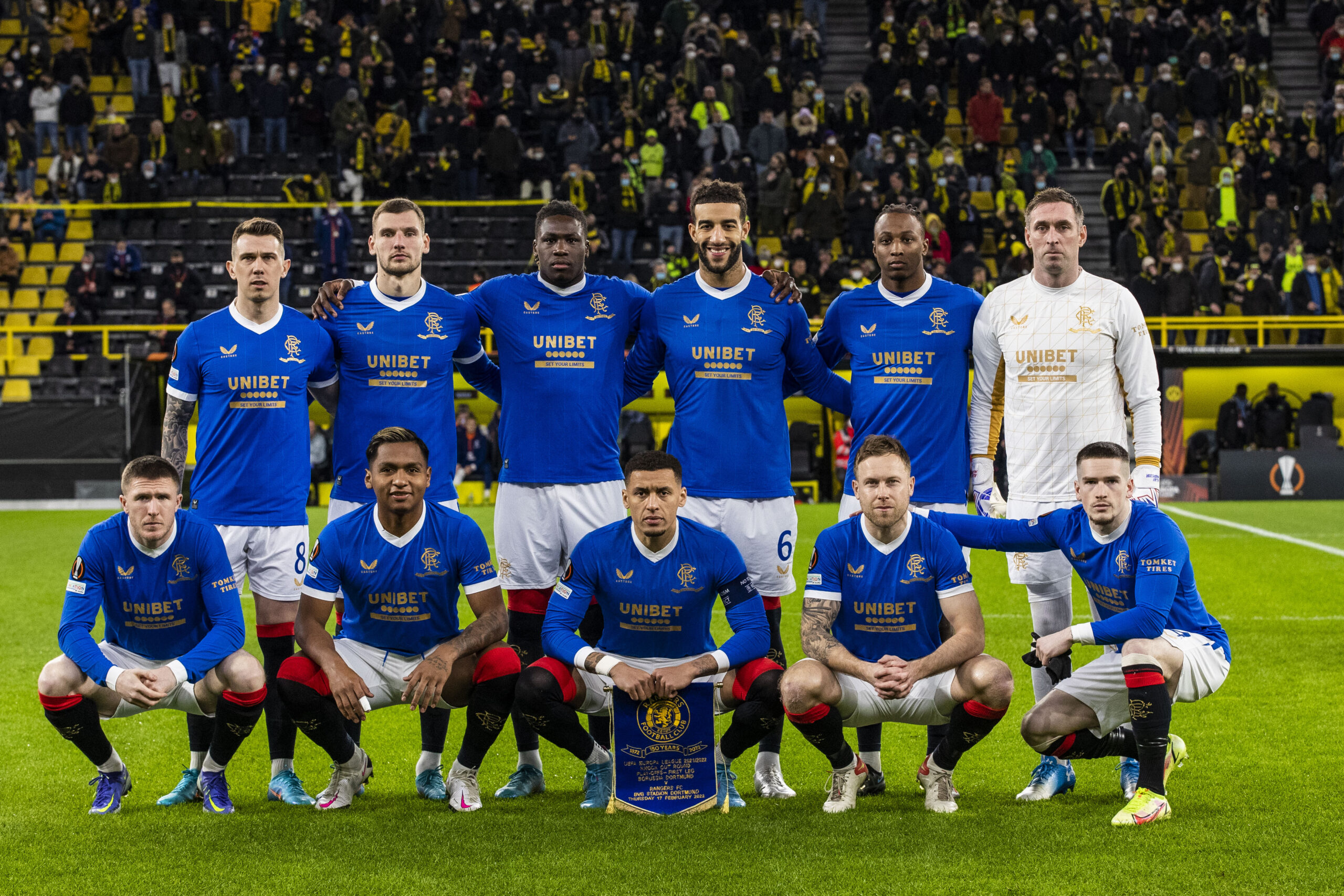
Some appointments feel like paperwork. Others feel like destiny finally catching up with itself. Allan McGregor’s return to Ibrox as Rangers’ new lead goalkeeping coach belongs firmly in the second category — a move that has been quietly building in the background for weeks, confirmed at last as part of Derek McInnes’ sweeping reconstruction of the club’s backroom operation for the 2026/27 season.
For a support that has watched McGregor patrol the width of the Ibrox goalmouth across two separate spells, hoisting trophies and marshalling defences with a snarl that became as much a part of matchday folklore as the goals themselves, this is not simply a coaching hire. It is the reinstallation of a value system. McInnes, still assembling the pieces of his own regime after taking permanent charge of the Light Blues, has reached for a figure who does not need to be taught what Rangers demands of the people who wear its jersey — because for the better part of two decades, McGregor embodied that demand better than almost anyone else in the building.
The Announcement
Rangers confirmed the appointment this week, with the club statement crediting McGregor as the man to lead the goalkeeping department following the exit of Sal Bibbo, who left Ibrox to join Frank Lampard’s staff at Coventry City. According to reporting from the Rangers Review, McGregor was on the training pitch working with the squad within days of the arrangement being finalised, taking his place alongside Alan Archibald, Paul Sheerin and Craig Clark in a reshaped technical team built around McInnes’ vision for the club.<cite index=”6-1,5-1″>McGregor started work as part of McInnes’ staff alongside Paul Sheerin, Alan Archibald and Craig Clark, following the Rangers Review’s earlier reporting that he would be returning to lead the coaching department for the current crop of keepers.</cite>
Speaking after the move was confirmed, McGregor did not attempt to disguise what the return meant to him personally:
“I’m really excited to be back and to be joining the club’s coaching staff. Everyone knows what this club means to me, so to have the opportunity to return and help the club in the present and future is a real privilege. Rangers is a club that demands the very highest standards, and I’m looking forward to getting started, working with the players and staff, and seeing what we can achieve together in this next chapter.”
McInnes, for his part, made clear that this was no ceremonial appointment designed to placate a fanbase nostalgic for a bygone era. He views McGregor as an active, functional piece of the plan he is building at Ibrox:
“Allan is a fantastic addition to our coaching staff and brings with him a wealth of experience. He knows exactly what it takes to be successful at Rangers and understands the standards that are required every day. His knowledge, expertise and winning mentality will be a huge asset to the group, and I am looking forward to working closely with him as we continue our preparations for the season ahead.”
Not McGregor’s First Time Back in the Building
This is not the first occasion since hanging up his gloves that McGregor has found his way back into an Ibrox coaching bib. He performed a similar role during Barry Ferguson’s interim spell in charge across the closing months of the 2024/25 campaign, working in tandem with Neil McCann and Billy Dodds as the club searched for stability following a turbulent period in the dugout. That stint offered a glimpse of what McGregor could bring in a structured coaching capacity — someone with an instinctive understanding of the pressures facing a Rangers goalkeeper, delivered without the filter that an outsider might apply.
What is different this time is permanence. Where the Ferguson-era role was a short-term solution to an immediate problem, McInnes has installed McGregor as a fixture of his long-term project, tasked with overseeing the entire goalkeeping department rather than simply lending a hand during a difficult run of fixtures. Reporting from the Rangers Review indicates the search to replace Bibbo briefly touched on other candidates before McInnes settled on his eventual choice.<cite index=”7-1″>Bibbo’s exit initially prompted links with Kilmarnock goalkeeping coach Fraser Stewart, who had previously worked under McInnes at Rugby Park and is the son of former Rangers player and long-serving goalkeeping coach Jim Stewart, making him an outwardly logical candidate given his relationship with the Rangers manager.</cite> Ultimately, though, the pull of a club legend with an intimate understanding of Ibrox’s unique pressures proved decisive.
A Playing Career Measured in Trophies and Longevity
To understand why this appointment resonates so deeply with the Ibrox support, it helps to revisit exactly what McGregor achieved as a player. Across two spells at the club, he made <cite index=”4-1″>more than 500 appearances for Rangers before retiring in 2023</cite>, a number that places him among an elite handful of players to have worn the jersey with such consistency across such a demanding stretch of years. Longevity of that kind, particularly for a goalkeeper operating under the relentless scrutiny that comes with playing for one of Scottish football’s two dominant institutions, is a rare and telling achievement in itself.
The trophy haul that accompanied those appearances only reinforces the picture. <cite index=”3-1″>McGregor won four league titles across his two spells at Rangers, along with four Scottish Cups and five League Cups, while also representing Scotland, Cardiff City, Hull City and other clubs during an accomplished playing career.</cite> Among the crowning moments of that trophy collection was his role in helping deliver Rangers’ landmark 55th league title, a triumph that ended a period of Celtic dominance and remains one of the defining achievements of the modern Ibrox era. He was, by numerous accounts, a central and steadying presence throughout that title-winning campaign, producing the kind of decisive performances between the posts that swing tight title races.
McGregor’s standing in the club’s history extends beyond silverware, too. He is recognised as the holder of the record for the most appearances by a goalkeeper in Rangers’ history, and alongside long-serving captain James Tavernier, he also holds the distinction of having made the most European appearances of any player to represent the club. Such marks are not accumulated by accident. They are the product of a player who consistently made himself undroppable, season after season, through a combination of shot-stopping ability, command of his box and an uncompromising personality that set the tone for the players around him.
That personality, more than any single statistic, appears to be exactly what McInnes is hoping to import into his current squad. Throughout his career, McGregor developed a reputation for demanding excellence from teammates as fiercely as he demanded it of himself, refusing to accept anything less than total effort from the players stationed in front of him. It is a mentality that, by widespread agreement among those who worked with him, became inseparable from what it meant to play in goal for Rangers during his era at the club.
Filling the Vacancy Left by Sal Bibbo
McGregor’s arrival closes a chapter that opened when Sal Bibbo departed Ibrox after a single season in the role, leaving to join former Chelsea and Everton manager Frank Lampard’s new coaching setup at Coventry City in the English Championship. Bibbo’s exit left Rangers needing to identify a replacement quickly, particularly given the scale of change already underway in the goalkeeping department this summer. In the interim period between Bibbo’s departure and McGregor’s confirmation, first-team goalkeepers had been working with existing staff member Conor Brennan, who stepped in to provide continuity while the club finalised its search.
The goalkeeping restructure has not been limited to the coaching staff. Rangers have also overhauled their playing options between the posts, confirming the signing of Ivor Pandur from Hull City in a deal reported to be worth around £6 million. The Croatian arrives as the club’s new first-choice option, with reporting from multiple outlets suggesting he is set to claim the number one jersey ahead of long-serving stopper Liam Kelly. Pandur’s arrival has coincided with a departure in the opposite direction, with Jack Butland reportedly heading to Hull City himself in a switch worth in the region of £3 million, bringing an end to his time at Ibrox.
It means McGregor inherits a goalkeeping department in the midst of significant transition — a fresh number one just arriving from English football, an experienced deputy in Kelly adjusting to a reduced role, and a clutch of promising younger prospects, including academy talents such as Rydnn McGuire and Mason Munn, waiting for their own opportunities to develop under the new regime. For a coach with McGregor’s depth of experience navigating exactly these kinds of competitive dynamics during his own playing days — vying with contemporaries for the gloves across nearly two decades at the top level — it is a challenge he appears well equipped to handle.
Part of a Bigger McInnes Blueprint
McGregor’s appointment cannot be viewed in isolation. It arrives as part of a broader reshaping of the Ibrox backroom staff under McInnes, who has moved swiftly since taking permanent charge to surround himself with figures who share both his football philosophy and his understanding of what representing Rangers requires. Alongside McGregor, McInnes has brought in former Hearts assistants Paul Sheerin and Alan Archibald, while Craig Clark also features prominently in the reshaped technical setup.
There is a clear and deliberate pattern emerging in how McInnes has gone about constructing his staff and, by extension, his squad. Time and again this summer, the new manager has shown a preference for individuals who carry an inherent understanding of the standards and scrutiny that come with the Rangers job, rather than reaching purely for outside expertise untested by the unique demands of Scottish football’s fiercest rivalry. That theme has extended well beyond the technical staff and into the playing squad itself, with figures such as Lawrence Shankland and Ross McCrorie — both viewed as characters who intimately understand what Scottish football, and Rangers specifically, expects of its leading men — brought into the fold as part of the club’s summer rebuild.
McGregor’s arrival fits neatly, and perhaps not coincidentally, into that same emerging identity. His greatest value to McInnes’ project may ultimately extend well beyond simply sharpening the technical attributes of the goalkeepers on the training pitch. It is entirely plausible that his most significant contribution will be cultural: reinforcing, day after day, exactly the kind of relentless standard-setting that defined his own two decades at the club, and transmitting that mentality not just to the goalkeepers he directly coaches but to the wider dressing room around them.
The Weight of the Ibrox Badge
There is something fitting about the timing of McGregor’s return. Rangers enter the new season under a manager still establishing his authority and identity at a club synonymous with pressure, expectation and an almost suffocating demand for success. Few voices inside the building are better positioned to help a new manager communicate exactly what that pressure feels like — and how to thrive under it — than a player who spent the best part of his career absorbing precisely that scrutiny between the posts.
McGregor’s testimonial against Newcastle United in 2023, staged shortly before his eventual retirement, offered a preview of just how central he had become to the club’s modern identity by the time he hung up his gloves. The occasion drew a huge outpouring of affection from supporters who had watched him grow from a raw, occasionally combustible young goalkeeper into one of the most respected and trusted figures to represent the club in the modern era. That evolution — from talented but unpolished shot-stopper to elder statesman entrusted with marshalling a title-winning defence — is itself an instructive case study for any young goalkeeper looking to make a similar journey under his tutelage now.
It also underlines exactly why McInnes was so keen to bring him back into the fold on a permanent basis rather than leaving the door open for an outside hire with no direct connection to Ibrox. Coaching goalkeeping technique is a specialised discipline that can, in theory, be taught by any suitably qualified professional. But instilling an unshakeable belief in what it takes to succeed specifically at Rangers — surviving the weight of history, negotiating the relentless media glare, and performing under a level of scrutiny that few clubs outside the Old Firm can replicate — requires lived experience that cannot be manufactured. McGregor has that experience in abundance.
What Comes Next for the Goalkeeping Department
With McGregor now settled into his new role and preseason preparations well underway, attention turns to how quickly the new voice in the goalkeeping department can make an impact on a squad that has changed considerably over the summer. Pandur’s transition from English football to the unique intensity of Scottish Premiership goalkeeping — and specifically the demands of playing for Rangers — will be one of the first major tests of McGregor’s coaching methods. Early indications from those inside the club suggest McGregor has wasted no time getting to work, engaging directly with the group within days of the appointment being finalised rather than easing in gradually.
There remains further business for Rangers to complete in reshaping their wider coaching staff. The club is still working to identify a replacement for set-piece coach Scott Fry, who departed to join Birmingham City, suggesting further additions to McInnes’ backroom team may follow before the new campaign gets fully underway. Whether any further appointments follow the same template as McGregor’s — trusted figures with deep-rooted connections to the club — will offer another clue as to the identity McInnes is trying to build heading into his first full season at the helm.
For now, though, the headline belongs to McGregor. His return represents far more than a simple coaching reshuffle buried in a summer of transfer activity involving the likes of Nicolas Raskin, Lewis Ferguson and Youssef Chermiti. It is the reinsertion of a genuine club legend into the daily fabric of Ibrox life, tasked not just with sharpening reflexes and positioning but with reminding an evolving Rangers squad exactly what wearing that jersey is supposed to mean. Given everything McGregor achieved across sixteen years and two spells in a Rangers shirt, there are few figures better placed to deliver that message — or more likely to be believed when he delivers it.
Reading the Room: Why Fans Have Embraced the Appointment
Supporter reaction to the news has been overwhelmingly positive, and it is not difficult to understand why. Rangers fans have spent recent seasons watching a succession of managerial and coaching changes ripple through Ibrox, many of them involving names with little prior connection to the club or its history. Against that backdrop, the return of a figure as universally respected as McGregor lands as something closer to reassurance than novelty. He is a known quantity, trusted implicitly by a fanbase that watched him grow from a combustible young shot-stopper into arguably the most reliable goalkeeper of the club’s modern era.
There is also a symbolic dimension to the appointment that should not be understated. McGregor’s Hall of Fame induction already cemented his place among the club’s most revered figures, but coaching appointments of this nature carry a different kind of weight than ceremonial recognition. Handing him genuine, day-to-day responsibility for shaping the next generation of Rangers goalkeepers is an active vote of confidence, not a nostalgic nod to the past. It tells the current squad, and any future signings who come through the door, that the standards McGregor embodied as a player are not relics to be admired from a distance but living expectations that will be enforced from within the coaching staff itself.
For McInnes, who is still in the process of winning over a fanbase understandably cautious after a turbulent spell in the Ibrox dugout, aligning himself so visibly with a figure of McGregor’s stature is also a shrewd piece of relationship-building. It signals continuity with the club’s proudest recent history even as he attempts to chart a fresh course, and it gives supporters a familiar face to rally behind during what promises to be a period of significant transition both on and off the pitch.
The Technical Demands of the Role
Beyond the sentiment and symbolism, there is a genuinely demanding technical job for McGregor to get right. Modern goalkeeping coaching has evolved considerably since McGregor’s own early years as a player, with far greater emphasis now placed on distribution under pressure, sweeping behind a high defensive line, and the kind of positional intelligence that allows a goalkeeper to function almost as an auxiliary outfield player when his team is in possession. Pandur, arriving fresh from English football, will need to adapt quickly to the specific tactical demands McInnes wants to implement at Ibrox, and it will fall to McGregor to bridge that gap.
McGregor’s own playing career offers useful context here. Although he came through the game in an era less obsessed with ball-playing goalkeepers than the present day, his longevity at the top level meant he was forced to adapt his own game substantially as tactical trends shifted around him. A goalkeeper who survived and thrived across sixteen years in a Rangers jersey did so in part because he refused to let his methods stagnate, continually sharpening his distribution and command of the box as the demands of the position evolved. That adaptability, as much as his raw shot-stopping quality, is likely to inform how he now approaches developing Pandur, Kelly and the club’s promising academy prospects.
There is also a mental and psychological component to the role that arguably matters just as much as the technical coaching itself. Goalkeeping is widely regarded as one of the most psychologically demanding positions in football, with individual errors magnified in a way rarely experienced by outfield players. A single mistake between the posts can define a match, a headline, or in the most painful cases, a career. Few coaches are better equipped to help a young goalkeeper process that pressure than someone who spent the better part of two decades absorbing it himself at one of the most scrutinised clubs in Britain.
A Squad in Transition
McGregor’s return arrives at a moment when almost every department of the Rangers squad is being reshaped under McInnes. The goalkeeping overhaul sits alongside a wider summer rebuild that has already brought significant incoming and outgoing activity across the pitch. Midfield reinforcements, defensive additions and forward-line adjustments have dominated the transfer headlines throughout the window, with McInnes clearly intent on constructing a squad capable of competing on multiple fronts domestically and in Europe.
Against that backdrop of wholesale change, the stability McGregor can offer within his own department takes on added significance. While other areas of the squad continue to bed in new arrivals and adjust to shifting tactical demands, the goalkeeping unit now has continuity of leadership in the form of a coach who does not need time to understand the club’s culture, its expectations, or the unique pressures that come with representing Rangers on the biggest occasions. That kind of stabilising presence could prove valuable as McInnes works to build cohesion across a squad still finding its feet under a new management structure.
Looking Ahead to the New Campaign
As preseason friendlies continue and the new Scottish Premiership campaign draws closer, all eyes will turn to how quickly McGregor’s influence becomes visible on the pitch itself. Early performances from Pandur in particular will offer the clearest indication yet of whether the new coaching relationship is bearing fruit, with supporters keen to see the £6 million signing hit the ground running after replacing the departing Butland as first-choice option.
Whatever unfolds over the coming months, McGregor’s return already feels like one of the more significant off-field stories of Rangers’ summer rebuild — not because of transfer fees or headline-grabbing signings, but because of what it represents about the direction McInnes is trying to steer the club. In bringing back a figure who lived and breathed the standards Ibrox demands for the better part of two decades, McInnes has sent an unmistakable message about the culture he intends to build. For a club still searching for consistency after a turbulent period, that message may prove just as valuable as anything achieved out on the training pitch