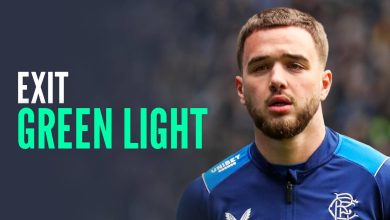
A Rangers star has taken the FIFA World Cup by storm with a sensational performance that’s got everyone talking! Now, top Premier League clubs are reportedly lining up a move

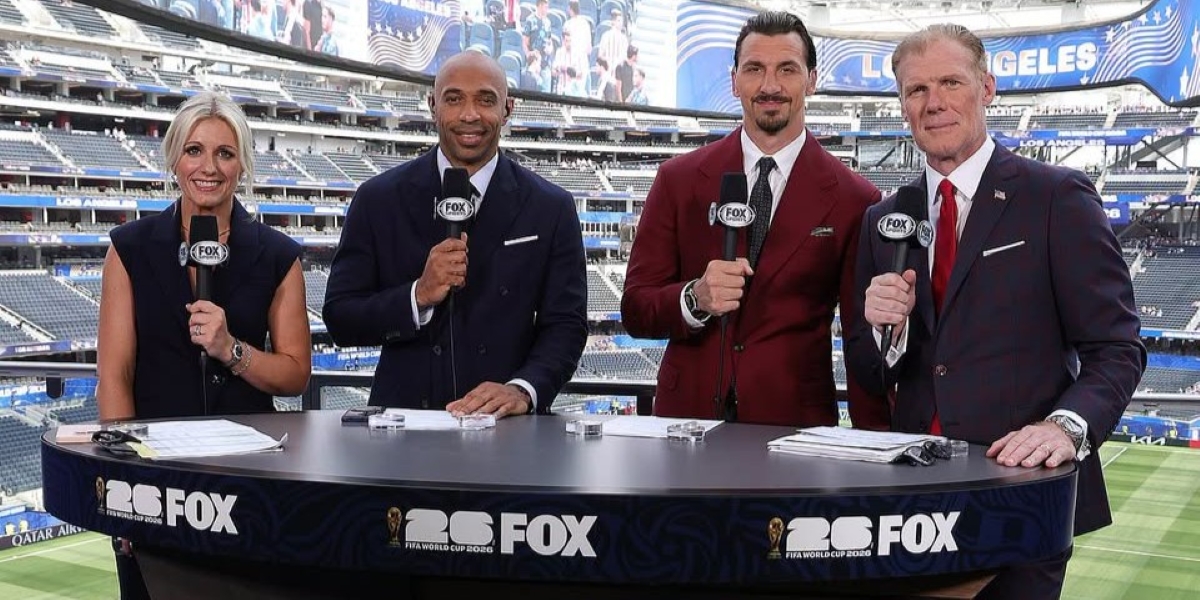
The knockout stages of the World Cup in North America produced moments of genuine drama and heartbreak, with Belgium’s quarter-final encounter against Spain providing both sublime football and devastating conclusion. Nicolas Raskin, the Rangers midfielder who has become increasingly integral to his club’s midfield operations, delivered a performance that encapsulated the modern football paradox: individual brilliance proving insufficient against collective setback. As Spain claimed a dramatic 2-1 victory with an 88th-minute winner, Raskin’s commanding display ensured that while Belgium departed the tournament prematurely, their Scottish-based midfielder emerged with considerable personal credit, thereby significantly complicating matters for Rangers’ managerial hierarchy facing critical transfer window decisions
Belgium’s journey to the World Cup quarter-finals represented a considerable achievement for the Red Devils, particularly given the squad’s evolution and the emergence of fresh talent alongside established names. Spain, meanwhile, arrived in Los Angeles as the tournament’s defending European Champions, representing perhaps the most challenging possible opponent in the knockout stages. The European powerhouse brought technical excellence, positional intelligence, and competitive pedigree accumulated through successive major tournament successes and consistent excellence across multiple seasons of competitive international football.
The Los Angeles setting provided an intriguing backdrop for this confrontation between two footballing philosophies: Belgium’s blend of technical quality and directness against Spain’s possession-based approach and positional dominance. For Raskin, operating in a Belgian midfield requiring both defensive solidity and contribution to transitional play, the assignment presented substantial challenges requiring focus, intelligence, and physical application throughout ninety minutes of testing examination
The contest began with Spain establishing possession and attempting to impose their stylistic blueprint on proceedings, a familiar pattern reflecting their traditional approach to international football. Fabian Ruiz’s opening goal after half an hour suggested Spain’s early dominance would prove decisive, with the midfielder finishing clinically to provide the European Champions with an apparent platform for controlling the match’s progression. However, Belgium responded with characteristic resilience, with Charles De Ketelaere equalizing before the interval and creating genuine hope that the Red Devils might upset the tournament favorites.
The second half witnessed an increasingly competitive encounter, with both teams creating legitimate opportunities and Belgium appearing well-positioned to progress further in the competition. However, in the cruelly decisive 88th minute, Arsenal’s Mikel Merino provided an agonizing conclusion, scoring the winner that extinguished Belgium’s World Cup ambitions and sent Spanish supporters into celebratory eruption. The timing of the decisive goal—arriving so late in proceedings when Brazil appeared resigned to progression—magnified the sense of devastation permeating the Belgium squad.
Despite the disappointing outcome, Nicolas Raskin’s individual contribution throughout the ninety minutes merited substantial recognition and praise from observers across European football. Operating as a central midfielder in Belgium’s formation, Raskin demonstrated the qualities that have increasingly established him as Rangers’ most consistently valuable performer: positioning sense, defensive intelligence, technical composure, and relentless work ethic.
Throughout the match, Raskin positioned himself intelligently to disrupt Spanish attacks, using his body effectively to shield possession and break up the European Champions’ rhythm. His reading of the game—the almost intuitive understanding of where threats would develop and how to position himself to minimize their danger—proved particularly impressive when considering the caliber of opposition attempting to penetrate Belgium’s defensive lines. Against Spanish technicians attempting to manipulate space and create opportunities through intricate passing sequences, Raskin’s stability proved invaluable.
In transition, the Belgian midfielder demonstrated eagerness to support attacking play, consistently seeking forward passing options and positioning himself to receive possession in advantageous areas. These contributions, though perhaps not generating headlines or statistical prominence, proved fundamental to Belgium’s capacity to generate counter-attacking opportunities against opposition possessing the ball with such frequency and control.
The response from Belgian media outlets reflected near-universal recognition of Raskin’s exceptional performance despite the match’s disappointing conclusion. Such reactions prove particularly significant given the tendency for national media to assess players representing their countries with considerable scrutiny and occasional bias toward domestically-based colleagues or those performing in more prominent leagues.
Nieuwsblad, one of Belgium’s most prominent sports publications, awarded Raskin an eight out of ten rating—a substantial mark reflecting genuine appreciation for his contribution. The publication’s commentary specifically highlighted his positioning intelligence, noting that “he was in the right place on several occasions to nip Spanish threats in the bud,” while also crediting his contribution to Belgium’s transitional play, stating that he “consistently looked to play forward during transitions.” Such assessment speaks to the complete midfielder, one combining defensive responsibility with constructive contribution rather than defensive mediocrity masking deficiency in possession.
DH Les Sports provided a rating of seven and a half, reflecting only marginally lower appreciation while acknowledging occasional imperfection in Raskin’s performance. The assessment noted a potentially dangerous moment in the 20th minute when Raskin “lost the ball just outside his own penalty area, allowing Yamal to get a first shot off,” demonstrating the honest evaluation that characterizes serious football analysis. However, the outlet emphasized his broader contribution, stating he “covered a lot of ground to plug every gap” and ultimately “put in another massive performance.” The use of the term “massive” proves particularly significant, as it reflects recognition of substantial, meaningful contribution transcending mere competent execution.
VoetbalNieuws provided a comparatively lower rating of six, suggesting some critics felt Raskin’s performance, while solid, perhaps fell short of exceptional. Their assessment noted he “was able to recover some balls occasionally, but also struggled in the first half,” before acknowledging that he “had to work very hard, but played a good second half.” This evaluation represents a fairer critique, recognizing that perfection proves elusive even for elite performers and that the first half contained moments warranting criticism.
The near-universal acclaim accompanying Raskin’s World Cup display arrives at a particularly crucial moment for Rangers and their midfielder’s future. Multiple European clubs—reportedly including Hull City, Real Betis, Bologna, and Atalanta—have expressed genuine interest in acquiring Raskin’s services. Each club represents a distinct category of opportunity: Hull City represents a Premier League alternative within British football; Real Betis and Bologna offer established European leagues with competitive standing; Atalanta represents one of Serie A’s most progressive and tactically innovative institutions.
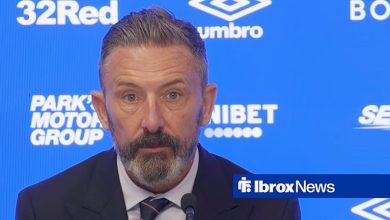
For Derek McInnes and Rangers’ hierarchy, such interest creates a complex calculus requiring careful evaluation. Raskin’s World Cup performances, while not generating headlines equivalent to players operating in more prominent positions, have nonetheless ensured that his stock within European football has risen substantially. European clubs monitoring the tournament would have observed a midfielder functioning at elite level against genuine championship-quality opposition, thereby confirming assessments from their scouting departments and potentially intensifying pursuit.
The timing of such interest proves particularly significant given contractual realities. Raskin’s current Rangers contract situation means that his value will diminish measurably as contract expiration approaches. Should the Belgian midfielder enter the final year of his contract without committing to a renewal, his market value would decrease substantially, even if his performances remain consistent. Consequently, the summer of 2026 may represent Rangers’ final genuine opportunity to capitalize on his market value through a substantial transfer fee, as subsequent transfer windows would likely involve negotiating from a weaker position.
New Rangers manager Derek McInnes inherited a squad containing genuine quality but also requiring strategic reinforcement across multiple positions. The question of Raskin’s future represents perhaps the defining decision McInnes must make early in his tenure, as the outcome will significantly influence the squad’s composition, available financial resources, and the message conveyed regarding the club’s competitive ambitions.
Retaining Raskin would provide McInnes with a midfielder of established quality, proven consistency, and international recognition. Such retention would create midfield stability that could prove fundamental to Rangers’ championship aspirations, particularly if other squad additions prove successful. A midfielder of Raskin’s quality and experience provides a platform upon which more attacking players can operate with confidence, knowing that defensive responsibility receives adequate attention.
Conversely, accepting a substantial offer for Raskin would generate significant transfer funds that could be deployed across multiple positions. Rangers’ squad contains numerous areas requiring enhancement, and the financial proceeds from Raskin’s sale could theoretically address multiple deficiencies simultaneously. However, the critical question remains whether available replacements would genuinely improve the squad or whether their acquisition would simply represent financial transaction rather than genuine squad enhancement.
McInnes’s experience at Aberdeen demonstrated his capacity to operate effectively within financial constraints while maximizing squad efficiency. However, his tenure in the north of Scotland also illustrated the challenge of competing against wealthier Scottish rivals when squad quality gaps exist. The prospect of further depleting a squad that already faces competitive challenges from Celtic and other clubs possessing substantial resources represents a genuine concern that must factor into McInnes’s deliberations.
The contractual dimension of Raskin’s situation adds additional complexity to the decision-making process. Should Raskin currently be in a contract situation providing Rangers with extended security, the club could afford to negotiate from greater strength with potential suitors. Conversely, if his contract contains elements providing him with leverage—such as approaching expiration or containing clauses permitting unilateral action under specific circumstances—Rangers’ negotiating position weakens considerably.
Contract renewal discussions become particularly significant in such circumstances. Should Raskin commit to an extended Rangers contract, it would demonstrate genuine commitment to the club’s project and provide McInnes with stability in midfield. Improved financial terms accompanying such commitment would reward the midfielder appropriately for his performances while securing Rangers’ midfielder for an extended period. However, convincing Raskin to commit exclusively to Rangers when European clubs offer competing opportunities represents a substantial challenge requiring both financial commitment and conviction regarding the club’s competitive trajectory
The Raskin situation transcends individual player considerations and speaks to fundamental questions regarding Rangers’ strategic positioning within Scottish and European football. Ownership structures, financial capabilities, and competitive ambitions all intersect in determining whether the club can retain elite talent or whether financial constraints necessitate sales enabling club operations.
The involvement of 49ers Enterprises and Andrew Cavenagh provides Rangers with ownership possessing substantial financial resources and serious competitive ambitions. The question becomes whether such ambitions translate into genuine commitment to retaining quality players or whether financial pragmatism ultimately determines transfer decisions. If Rangers demonstrate commitment to keeping Raskin despite external interest, it signals genuine championship intent and players’ confidence in the club’s trajectory. Conversely, if financial temptation proves irresistible and Raskin departs, questions will inevitably arise regarding whether Rangers truly possess the ambition to compete consistently at elite levels
Perhaps the most significant complication facing McInnes involves identifying genuinely suitable replacements should Raskin’s departure become necessary. Midfielders combining defensive intelligence, technical composure, and physical presence represent increasingly scarce commodities in contemporary football. Those available at price points justified by Raskin’s sale would likely represent lateral moves rather than improvements—players of equivalent quality replacing departing colleagues without necessarily enhancing squad capability.
The market for midfielders of Raskin’s caliber requires either substantially elevated financial investment beyond realistic transfer fees or accepting appointments of players requiring development periods before delivering consistent performance. Neither scenario provides McInnes with optimal solutions, and both create genuine risk of squad deterioration rather than improvement
Raskin’s World Cup display gains additional significance when considering the broader context of Belgian football and midfielder quality within international competition. Belgium possesses a tradition of producing technically gifted midfielders, yet not all achieve the consistency and reliability that characterizes Raskin’s performances. His capacity to perform at elite level against genuine championship opposition, while maintaining defensive responsibility and positional discipline, distinguishes him from colleagues who perhaps possess greater technical flamboyance but inferior positional awareness.
Nicolas Raskin’s commanding display against Spain, despite Belgium’s devastating World Cup exit, has transformed a difficult summer into a considerably more complicated one for Rangers and Derek McInnes. The Belgian midfielder’s stock has risen substantially through his performances on the world stage, making him increasingly attractive to European clubs possessing financial resources and competitive ambitions. Simultaneously, his continued presence at Rangers could prove fundamental to the club’s championship aspirations and long-term trajectory.
The decision McInnes must navigate involves evaluating financial opportunity against competitive necessity, contract security against employment stability, and short-term financial gain against long-term competitive implications. Whatever conclusion emerges from such deliberations will significantly influence not only Rangers’ immediate squad composition but also the broader message conveyed regarding the club’s competitive ambitions and confidence in its strategic direction.
For Raskin himself, the World Cup experience has clarified his continued trajectory at the highest level of international football, with his performances ensuring that European football’s elite clubs remain attentive to his development. Whether Rangers can convince him to remain committed to their project through contracts reflecting his genuine value and involvement representing genuine leadership within McInnes’s tactical framework remains the crucial question determining outcomes for all parties involved.