The Elliot Watt Question: Can Rangers Secure the SPFL’s Best Midfielder Alongside Cammy Devlin?

In contemporary football, there exists a pervasive obsession with young, up-and-coming talent and the concept of ‘resale value’. Transfer discussions frequently revolve around acquiring players at a young age, developing them at a club, and subsequently selling them for substantial profits. This philosophy has become deeply embedded in how many clubs approach recruitment, with the long-term financial perspective sometimes superseding the immediate competitive imperative.
However, Derek McInnes’ approach to managing Glasgow Rangers represents a deliberate rejection of this philosophy in favor of something altogether more compelling: winning immediately. At a club of Rangers’ stature and tradition, where expectations are consistently sky-high and second place is considered a failure, the primary motivation for recruitment must necessarily be acquiring players capable of delivering success now, not players who might represent profitable assets in several years.
McInnes’ track record suggests he understands this fundamental principle. Throughout his managerial career, he has demonstrated a willingness to assemble squads comprising experienced, proven performers capable of making immediate impacts. This philosophical orientation has become increasingly evident in Rangers’ transfer strategy during the summer of 2026. Rather than prioritizing youth and development exclusively, McInnes and the Ibrox recruitment team are pursuing a mixed strategy: acquiring some established, experienced players while simultaneously bringing in younger talent with proven potential.
This balanced approach represents sophisticated recruitment strategy. By combining immediate quality with long-term potential, Rangers is attempting to construct a squad capable of competing effectively now while also maintaining flexibility for the future. The pursuit of Cammy Devlin exemplifies this strategy—the Australian midfielder brings immediate experience and proven defensive capability, while his age (28) still permits several years of high-level contribution.
## The Midfield Transformation: Context and Necessity
The acquisition of Cammy Devlin represents part of a broader midfield overhaul at Ibrox. The Australian midfielder joins Dan Neil, who was brought in on a free transfer from Sunderland during the summer window. Previously, Tochi Chukwuani arrived in January, adding further depth to the midfield department. However, despite these additions, Derek McInnes remains focused on further strengthening this area of the squad.
The need for midfield depth at Rangers extends beyond simply acquiring additional bodies. The club faces genuine challenges regarding player availability and uncertainty about the futures of several established midfielders. Mohamed Diomande, a midfielder who has been at the club, managed only 20 Premier Division appearances during the previous season, raising questions about his suitability for the demands of regular first-team football at Ibrox. His future at the club remains in genuine doubt.
More significantly, both Connor Barron and Nicolas Raskin are currently attracting substantial interest from other European clubs. Barron faces potential departure to Bologna, the Italian Serie A institution, while Raskin is being pursued by Hull City in the English Championship. If either player departs—let alone both—Rangers would suffer significant losses of established midfield quality. The combined departure of Raskin and Barron would represent a decimation of the club’s midfield depth and would necessitate substantial reinforcement to compensate.
This context provides crucial understanding for why McInnes is pursuing multiple midfield signings. The club is not simply looking to add marginal improvements to an already adequate midfield; rather, it is attempting to mitigate against potential significant departures by acquiring replacement talent and depth alternatives. In this context, the acquisition of not merely Devlin but potentially additional midfielders becomes not a luxury but a necessity.
## Understanding Cammy Devlin’s Profile
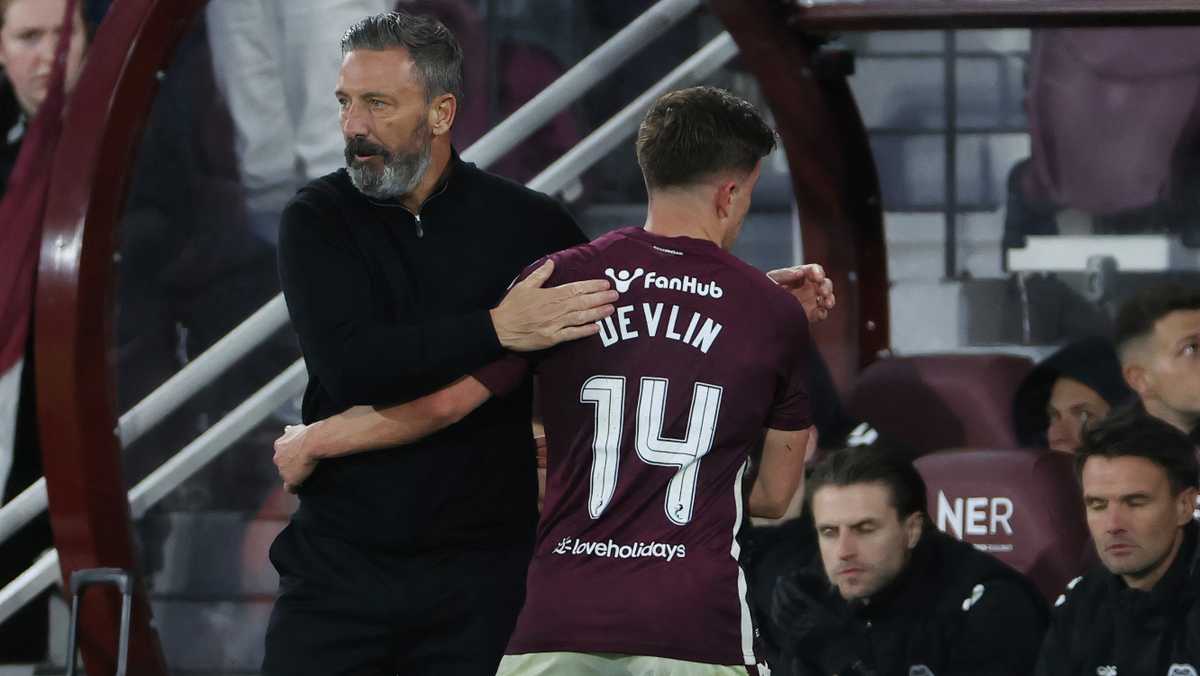
The recruitment of Cammy Devlin from Hearts represents an astute acquisition that capitalizes on his established familiarity with Derek McInnes. During the previous season at Hearts, Devlin flourished under McInnes’ management, demonstrating the specific qualities that McInnes values in midfield performers. The decision to bring Devlin to Ibrox allows McInnes to reunite with a player he knows thoroughly and trusts implicitly.
However, understanding exactly what Devlin brings to Rangers requires detailed examination of his statistical profile during the previous season. The Australian midfielder made 28 league appearances for Hearts, starting most of them. The sheer number of appearances demonstrates his availability and consistency—qualities that are essential in modern professional football.
Yet where Devlin truly distinguished himself was in his defensive contribution. The Australian midfielder recorded precisely 113 tackles during the 2025-26 Premiership season—the most of any player in the entire division. This extraordinary statistic places Devlin among the most industrious and combative midfielders in Scottish football, a player who fundamentally disrupts opposition attacking play through relentless defensive effort.
Beyond raw tackle numbers, Devlin’s broader defensive metrics tell an impressive story. He averaged 6.1 tackles and interceptions per game—a remarkable figure that speaks to his relentless activity and constant involvement in his team’s defensive organization. Furthermore, he won an average of 8.1 total duels per game, suggesting he consistently beats opposition players in physical contests. These statistics collectively paint a picture of a midfielder whose primary value lies in defensive disruption and the prevention of opposition creativity.
However, Devlin’s profile also reveals clear limitations. During the entire 2025-26 season, he scored only twice in 28 league appearances and failed to register a single assist. He created only one ‘big chance’ for his teammates throughout the season, demonstrating limited offensive contribution. His key passes averaged just 0.7 per game—a relatively low figure suggesting he rarely provides the incisive through balls or creative moments that characterize attacking-minded midfielders.
This profile renders Devlin perfectly suited to a specific tactical role: a defensive midfielder whose primary responsibility involves breaking up opposition play, recovering possession, and providing the kind of defensive stability that allows more creative teammates to flourish. For a team requiring defensive protection and possession reclamation, Devlin is precisely the type of midfielder valued.
## The Case for Elliot Watt: An Alternative Profile
Yet the question that has emerged following Devlin’s acquisition is whether Rangers should also pursue a complementary signing that addresses the areas in which Devlin is weak. This is where Elliot Watt, the Motherwell midfielder, enters the conversation as a potential acquisition.
Earlier in the summer, reports circulated regarding discussions between Rangers and Motherwell regarding a potential deal for Watt. The 26-year-old Scottish midfielder enjoyed an exceptionally impressive season at Fir Park during 2025-26, establishing himself as one of the Scottish Premiership’s most complete midfielders. While rumors subsequently suggested Watt might be heading to Turkey instead, the door remains potentially open for Rangers to pursue the Motherwell player.
The case for Watt becomes more compelling when examining how his profile complements Devlin’s. Writer and analyst Kai Watson described Watt as the “best midfielder in the league”—praise that, while potentially hyperbolic, carries genuine merit when examined through detailed statistical analysis. Watt represents a fundamentally different midfield profile compared to Devlin: a composed, controlled figure operating in deep-lying positions, someone who provides tactical balance through his distribution and pass completion.
To illustrate this distinction, the comparative statistics are particularly revealing. Across the entire Scottish Premiership during 2025-26, Watt ranked second only to Celtic’s Liam Scales in terms of accurate passes, completing 2,347 passes throughout the season. By contrast, Devlin ranked only sixteenth in this metric, a stark differential that speaks to their divergent approaches to midfield play. Where Devlin prioritizes defensive intensity and possession reclamation, Watt emphasizes possession retention and creative distribution.
This distinction extends into attacking contribution as well. During the previous season, Watt scored and assisted nine goals collectively—an impressive figure for a midfielder of his profile. He created five ‘big chances’ for teammates and averaged 1.1 key passes per game. By comparison, Devlin’s attacking statistics appear remarkably modest: two goals, no assists, one big chance created, and just 0.7 key passes per game.
## Defensive Capability: Watt’s Underrated Strength
A common misconception regarding Watt’s profile is that his creative capabilities come at the expense of defensive responsibility. This misreading of the Motherwell midfielder fails to appreciate the genuine completeness of his game. While Watt is certainly more creative than Devlin, he is not merely a creative midfielder who neglects defensive duties.
Consider the comparative defensive statistics. Watt averaged 3.3 tackles and interceptions per game throughout the season, a figure substantially lower than Devlin’s 6.1, yet still respectable and meaningful. Furthermore, Watt averaged 7.1 ball recoveries per game—actually exceeding Devlin’s 6.7 in this metric. Across the entire division, Watt ranked tenth in total tackles made, a position that definitively demonstrates his willingness and capability to involve himself in defensive actions.
What this statistical analysis reveals is that Watt should not be characterized as a midfielder who sacrifices defensive contribution for creative flair. Rather, Watt represents a balanced profile—a midfielder who excels creatively and in distribution while simultaneously maintaining sufficient defensive responsibility to protect his team. This completeness is precisely what distinguishes truly elite midfielders from specialists who excel in one area while neglecting others.
## The Complementary Partnership: Devlin and Watt
The prospect of Rangers acquiring both Devlin and Watt simultaneously represents a strategic approach that would create midfield balance addressing multiple dimensions of the game. Together, these two midfielders would provide Derek McInnes with the kind of tactical flexibility and complete coverage that characterizes the most successful football teams.
In a midfield pairing, Devlin’s relentless defensive intensity and possession reclamation would work in perfect concert with Watt’s composed distribution and creative contribution. Devlin would provide the platform for Watt to operate effectively—recovering possession, disrupting opposition play, and allowing Watt the freedom to focus on constructive play and creating attacking opportunities. Simultaneously, Watt’s retention of possession would reduce the burden on Devlin, requiring fewer desperate interventions and desperate defensive actions.
Such partnerships have historically proven among the most effective midfield combinations in football. The dynamic between a destroyer and a creator, a defensive specialist and a tempo-setter, provides both defensive solidity and attacking contribution. Teams possessing this type of balanced midfield pairing typically enjoy both stability and creativity—they defend effectively while simultaneously creating attacking opportunities.
Consider the comparison to other leagues and clubs. Manchester City’s pairing of Rodri (the pass master and tempo controller) with other midfielders who provide defensive cover exemplifies this principle. In the Premier League, such balanced midfield partnerships are increasingly common among successful clubs, with the recognition that modern football demands both defensive solidity and creative capability simultaneously.
## Watt’s Experience and Readiness
A further advantage of pursuing Watt alongside Devlin is that the Motherwell midfielder brings established experience in Scottish football. At 26 years old, Watt is entering the prime years of his career, the period during which defenders typically deliver their most consistent and highest-level performances.
Watt’s experience in the Scottish Premiership means he requires no adaptation period. He understands the demands of Scottish football, the tactical sophistication required at the highest level of the domestic league, and the intensity and physicality that characterize Scottish football. This established familiarity would allow Watt to contribute immediately upon joining Rangers without the settling-in period that players from other leagues or countries often require.
Furthermore, Watt’s profile as a Scottish midfielder carries additional appeal. The recruitment of Scottish talent sends an important message to supporters and observers—Rangers is not simply acquiring foreign talent but is also recognizing and recruiting Scottish football’s existing quality. A player of Watt’s caliber remaining in Scottish football while joining Rangers contributes to the domestic league’s profile and competitiveness.
## The Departure Question: Planning for Eventualities
The discussion of potentially acquiring both Devlin and Watt becomes particularly relevant when considering the likely departures from Ibrox. Should both Raskin and Barron depart, as current reports suggest, Rangers would lose two established midfielders. While Nicolas Raskin in particular represents a player of genuine quality and Premier League experience, both departures would significantly deplete the club’s midfield depth.
In this context, acquiring both Devlin and Watt represents not excessive recruitment but rather prudent planning. By bringing in two additional midfielders whose profiles complement each other and address different aspects of midfield play, Rangers would effectively replace both the quality and depth that would be lost through departures.
This approach demonstrates sophisticated squad building. Rather than pursuing panic recruitment in response to departures, McInnes and the recruitment team are proactively building depth and quality. By securing new midfielders before departures are finalized, Rangers ensures continuity and avoids the risk of being forced into desperate decisions or accepting unfavorable terms for departing players due to insufficient replacement options.
## Derek McInnes’ Tactical Requirements
Understanding McInnes’ tactical approach provides important context for why the signing of both Devlin and Watt makes sense. McInnes is known for his emphasis on defensive organization and tactical discipline. He has consistently built successful teams around defensive stability, from which attacking play can flourish.
However, McInnes is not a manager who solely prioritizes defensive football. Rather, he seeks balance—he wants his teams to defend effectively while also creating attacking opportunities. The acquisition of both Devlin (defensive disruption) and Watt (creative distribution) would provide McInnes with the tools to implement this balanced philosophy.
Devlin would provide the defensive platform, the “breaking glass” approach that protects the team and reclaims possession. Watt would then provide the constructive element, using the possession that Devlin reclaims to create attacking movements and generate scoring opportunities. Together, they would embody McInnes’ tactical philosophy in midfield.
## Market Opportunities and Timeframe
The question of whether Rangers can successfully acquire Watt remains open. Reports suggest that Watt might be heading to Turkey, which could complicate Rangers’ pursuit. However, the fact that these reports suggest the door remains open indicates that Watt’s departure to Turkey is not yet certain or finalized.
In the dynamic world of football transfers, circumstances change constantly. A proposed deal can fall apart for numerous reasons—financial disagreements, personal circumstances, changes in management or club direction. Rangers’ willingness to pursue Watt even while understanding other options exist represents a reasonable approach. If Watt becomes available, Rangers would be positioned to move quickly.
Furthermore, McInnes has demonstrated throughout the summer that he is not reluctant to pursue multiple targets in the same position. The pursuit of both Devlin and Watt follows this established pattern. By maintaining interest in multiple targets, McInnes ensures that if one deal falls through or becomes unavailable, alternative options remain available.
## Building the Complete Midfield
What is emerging from Rangers’ transfer strategy is a picture of Derek McInnes attempting to build a genuinely competitive midfield capable of addressing both defensive and attacking requirements. The combination of Devlin’s defensive intensity, Watt’s creative capability, and the younger talent like Dragojevic and Hjerto-Dahl would create a midfield with exceptional depth and quality across multiple profiles.
Such comprehensive midfield construction represents precisely the approach necessary for a club attempting to compete at the highest level. Rather than placing excessive reliance on a single midfield pairing or hoping younger players will develop rapidly, McInnes is assembling multiple experienced performers who can work together to achieve immediate success.
## Supporters’ Perspective and Excitement
Rangers supporters, accustomed to their club competing for major honors, would likely welcome the acquisition of both Devlin and Watt. The recruitment of two Scottish Premiership-proven performers would represent a clear statement of intent regarding the club’s ambitions.
The construction of a squad combining Devlin’s defensive solidity, Watt’s creative capability, and the other signings made during the summer would provide genuine grounds for optimism. While no recruitment strategy guarantees success, the assembled talent would unquestionably place Rangers among the genuine contenders for domestic honors.
## Conclusion: The Promise and Possibility
Rangers’ potential acquisition of Elliot Watt alongside Cammy Devlin represents an intriguing possibility that would fundamentally address the club’s midfield requirements. While the pursuit of every available target is impossible, McInnes appears willing to pursue multiple options in this area, recognizing its fundamental importance.
Should Rangers succeed in acquiring both midfielders, the club would possess a midfield pairing capable of addressing both defensive and attacking requirements. Devlin would provide the defensive platform and possession reclamation, while Watt would provide creative distribution and attacking contribution. Together, they would embody Derek McInnes’ tactical philosophy and provide the balance necessary for competitive success.
As the summer transfer window continues, the question of whether Rangers will pursue Watt remains open. However, the mere consideration of such an acquisition demonstrates McInnes’ ambition and his understanding of what is necessary to compete at the highest level. In a league where winning is the only acceptable outcome, Rangers is attempting to assemble a squad capable of delivering precisely that outcome. The potential acquisition of Watt would represent a significant step toward realizing that ambitious objective.