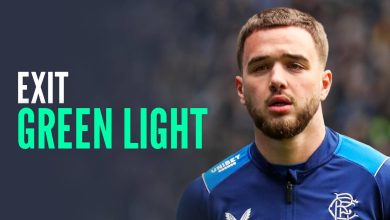
Nicolas Raskin’s Rangers Future in Doubt: Has Derek McInnes’ Midfield Revolution Made the Belgian Superfluous?


Tynecastle Park has experienced a remarkable transformation over recent weeks, with Glasgow Rangers systematically identifying and acquiring some of Hearts’ most valuable and influential players. This coordinated recruitment strategy represents far more than coincidental transfers; it reflects a deliberate and comprehensive effort by the Rangers hierarchy to acquire proven performers from a rival Scottish institution.
The exodus began with Lawrence Shankland, the Scotland international striker whose move to Ibrox felt like an inevitability by the time it was finally confirmed. The 30-year-old forward has been consistently linked with Rangers throughout the previous summer window, making his eventual arrival at the club feel like the culmination of a prolonged pursuit rather than a surprise acquisition. Shankland’s goalscoring record speaks for itself—88 goals in 171 games for Hearts, alongside an additional 66 goals in 162 games at Scottish Premiership level. These statistics represent an extraordinarily productive scoring record that has made Shankland one of the league’s most consistently dangerous forwards.
Following Shankland’s departure, the exodus continued with Derek McInnes himself moving to Glasgow to assume the managerial position at Ibrox. After years of speculation regarding his future, the 54-year-old finally accepted the top job at Rangers, ending a period of uncertainty and anticipation. McInnes’ appointment came loaded with significance—he was not merely a new manager, but rather a manager who understood Hearts intimately and possessed established relationships with the club’s best performers.
Most recently, the Rangers acquisition of Cammy Devlin has added another chapter to this remarkable story of Hearts being depleted of their finest talent. Devlin’s move to Ibrox, following the expiry of his Hearts contract, represents the third significant departure from Tynecastle to Glasgow in recent weeks. The cumulative effect of these departures is striking—Hearts has lost a world-class striker, its manager, and a midfielder of genuine quality, all within a remarkably short timeframe.
This pattern naturally raises the question: who might be next on Rangers’ agenda? The answer, according to speculation and informed observation, could well be Claudio Braga, the Portuguese forward who has shone at Tynecastle. Someone at Hearts might justifiably want to place Braga under lock and key, given the apparent predatory nature of Rangers’ recruitment strategy directed toward the Edinburgh institution.
To properly understand the significance of recent arrivals and departures at Rangers, it is essential to examine the complete roster of summer signings and assess their relative value and impact. Each acquisition represents a considered decision by Derek McInnes and the recruitment team, yet not all signings carry equal significance or promise.
Lawrence Shankland remains the marquee acquisition of the summer window. The 30-year-old striker represents precisely the type of proven goalscorer that Rangers have been pursuing for years. His career goalscoring record—88 goals in 171 Hearts appearances alongside 66 in 162 Premiership outings—represents an extraordinary level of productivity. At a club constantly searching for reliable finishing power, Shankland’s arrival addresses a genuine long-standing need. However, his age is worth noting; at 30 years old, Shankland enters the later stages of his career, meaning Rangers has acquired a proven performer without the long-term development potential that younger signings offer.
Ivor Pandur, the goalkeeper brought in from Hull City, could prove to be a genuine coup if his performances meet expectations. The English goalkeeper represents a clear upgrade from Jack Butland, whose performance last season was undermined by persistent errors. Butland made four errors leading directly to goals during the previous campaign, a concerning statistic for a club attempting to compete at the highest level. Pandur’s metrics from the 2025-26 Championship season are significantly more impressive—he made only two errors in 48 games while preventing 5.28 goals, a substantial improvement over Butland’s 2.29 goals prevented. This represents precisely the kind of upgrade in goalkeeper quality that can meaningfully impact a team’s defensive organization and results.
Dan Neil, the free transfer arrival from Sunderland, presents an intriguing acquisition. The midfielder notably captained Sunderland to promotion during the 2024-25 season, demonstrating the kind of leadership qualities that mature midfielders bring to squad environments. However, Neil’s own individual performance during that season was somewhat disappointing, raising questions about whether he has the requisite quality to perform consistently at the highest level of Scottish football. His leadership credentials are beyond question, but his individual football ability remains an area requiring close monitoring.
Ben Godfrey represents a more speculative signing in certain respects. The English centre-back was previously a highly-rated performer during his time at Everton and in the Premier League. However, recent seasons have seen Godfrey’s career disrupted by a succession of loan spells away from his parent club Atalanta. While loan moves can be valuable for players seeking regular football, the sheer number of loans Godfrey has undertaken raises questions about whether he is undergoing a genuine career revival or is instead a player in decline seeking to rebuild his reputation. His performances at Ibrox will provide crucial evidence regarding which scenario is closer to reality.
Ross McCrorie, the 28-year-old returned midfielder, represents a safe and steady option who should provide capable backup and potential replacement for James Tavernier. McCrorie enjoyed a solid 2025-26 campaign with Bristol City, scoring and assisting nine goals from his wing-back position. However, McCrorie is not Tavernier—he offers less attacking verve and creative spark than the departing Rangers captain, instead providing defensive solidity and consistency.
Finally, Cammy Devlin occupies a middle position in terms of overall value. The Australian midfielder provides proven ability at Scottish Premiership level and has already flourished under McInnes’ management. His statistics from the previous season are impressive in certain respects—he ranked first in the division for total tackles made with 113. Yet he offers limited goalscoring or creative contribution, making him a specialist defensive midfielder whose value is somewhat dependent on the overall midfield composition surrounding him.
The successive arrivals of Tochi Chukwuani (in January), Dan Neil, and now Cammy Devlin have created a fundamental transformation in Rangers’ midfield department. This comprehensive overhaul has created a clear hierarchy of value, with some existing players elevated and others marginalized.
Mo Diomande appears to be one of the significant casualties of this midfield revolution. The midfielder’s reduced role last season—in which he managed only limited appearances—appears likely to be superseded entirely by the incoming talent. With Neil, Devlin, and other midfielders now at the club, Diomande’s future at Ibrox appears increasingly tenuous. A departure appears likely, with the midfielder potentially seeking opportunities at a club where he might receive more regular first-team football.
Connor Barron represents another player whose position has been substantially compromised. The young Scottish midfielder, despite showing genuine promise, faces intense competition from established performers. Growing interest in Barron from other clubs, with some sources suggesting fees of around £8-10 million, indicates that his departure is increasingly probable. Rather than fighting for position against established competition, Barron appears likely to seek a move that offers greater opportunity.
However, the most significant casualty of this midfield overhaul appears to be Nicolas Raskin, the Belgian midfielder who has been widely regarded as Rangers’ “best player.” Raskin’s situation represents the most consequential and concerning element of this midfield revolution for Rangers supporters and observers.
To properly understand the implications of Rangers’ recent midfield signings for Nicolas Raskin, it is essential to examine his profile, performances, and the current trajectory of his career. Raskin has developed into a genuinely exceptional midfielder, representing precisely the type of player that most clubs would desire to build around rather than allow to depart.
The 25-year-old Belgian has recently enjoyed an extraordinary World Cup tournament, established himself as one of Belgium’s most important midfield players, and demonstrated the kind of performance at the highest level that confirms his elite status. In six World Cup appearances for Belgium, Raskin registered two assists, with three of his six appearances coming from the start. These statistics, while not extraordinary in isolation, understate his importance to his national team. Throughout Belgium’s World Cup campaign, Raskin has been recognized as a genuinely influential figure in the midfield, a player whose absence would significantly impact his team’s tactical organization and capabilities.
This World Cup performance represents the culmination of an impressive 2026 campaign for Raskin under Danny Rohl’s management at Rangers. For much of the season, Raskin struggled to find consistency and confidence, with various difficulties affecting his performances and integration. However, following Rohl’s arrival as manager, Raskin appeared to discover his optimal form and contribution level. The Belgian midfielder ended the season with 13 goals and assists in the Premiership alone, while creating 12 “big chances” for teammates. These are genuinely exceptional statistics for a midfielder, indicating both direct goalscoring contribution and creative provision for teammates.
Raskin’s defensive contributions further emphasize his overall value. During the previous season, Raskin ranked third in the division for total tackles made, demonstrating that alongside his attacking and creative contributions, he maintains the defensive intensity necessary for modern midfield play. This combination of attacking contribution, creative provision, and defensive solidity establishes Raskin as perhaps the most complete midfielder in Scottish football—a player who affects the game in multiple dimensions.
It is precisely this multidimensional excellence that led Chris Sutton to describe Raskin as Rangers’ “best player.” While some might quibble with this specific assessment, the general recognition of Raskin as an elite performer is difficult to dispute. At 25 years old, Raskin remains in the prime of his career, with the potential for many more years of elite-level football ahead of him. Most clubs would regard such a player as untouchable, someone around whom the team structure is built and whose long-term future is secured.
Yet the recent signings of Dan Neil and Cammy Devlin suggest a very different outlook at Ibrox regarding Raskin’s future with the club.
The acquisition of Dan Neil and Cammy Devlin, alongside the anticipated arrivals of Vanja Dragojevic and Jens Hjerto-Dahl, creates a clear strategic signal regarding Rangers’ midfield planning. Rather than maintaining Raskin as the cornerstone of the midfield around which other players are built, Rangers appears to be constructing an alternative midfield composition that potentially reduces or eliminates the requirement for Raskin’s specific qualities.
Both Neil and Devlin provide defensive intensity and work-rate that partially overlaps with Raskin’s defensive contributions. Devlin, in particular, ranked highly in the division for tackles made, suggesting that he and Raskin offered somewhat similar defensive profiles. Yet neither Neil nor Devlin appears to match Raskin’s creative and attacking contributions. Devlin in particular offers limited goalscoring and creative output, while Neil’s statistics from his time at Sunderland, while respectable, do not approach Raskin’s level of creative provision.
This apparent mismatch—acquiring defensive-minded midfielders while potentially allowing a creative, attacking-minded midfielder to depart—might initially seem counterintuitive. However, it reflects a specific strategic vision regarding midfield composition and tactical approach. Derek McInnes may be constructing a midfield that emphasizes defensive organization and possession reclamation over creative flair and attacking thrust. Such an approach would explain why Neil and Devlin’s arrivals could be compatible with Raskin’s departure.
The increasing likelihood of Raskin’s departure has become apparent through mounting external interest in the Belgian midfielder. Hull City, the English Championship club, has emerged as the most prominent suitor for Raskin’s signature. The Yorkshire club’s interest in a player of Raskin’s caliber speaks to his genuine quality and marketability, as well as Hull’s apparent ambitions to compete effectively in English football’s second tier.
Hull’s pursuit of Raskin would offer the midfielder an opportunity to test himself in the English Championship, a league that presents different tactical and physical demands compared to Scottish football. For Raskin, the prospect of playing in England could represent an attractive opportunity for further career development, particularly given the higher profile and financial resources typically associated with English football compared to Scottish football.
The fact that Hull City is willing to pursue Raskin seriously suggests that Rangers may be willing to sanction his departure, either for a specific fee or potentially even on a free transfer if the club’s strategic direction has genuinely shifted away from Raskin-centric midfield play. Such an outcome would represent a remarkable reversal of circumstances—a year ago, Raskin was perceived as a cornerstone of Rangers’ future; now, his departure appears increasingly probable.
Raskin’s outstanding World Cup performances have simultaneously elevated his profile and created an ideal moment for potential transfer activity. His displays in Qatar have not only impressed supporters and observers but have also captured the attention of European clubs seeking to recruit quality midfield talent.
The timing of World Cup tournaments creates unique circumstances in the transfer market. Players who perform well at international tournaments experience elevated interest from clubs, as their quality has been demonstrated against the strongest international opposition. Raskin’s performances have made him a more attractive proposition to potential suitors, likely increasing the transfer fee Rangers might command for his services.
However, this same elevation of profile and increased external interest may also strengthen Raskin’s hand in negotiations. A player who has just impressed at the World Cup and who recognizes that his current club may be preparing to move in a different strategic direction has significant leverage in transfer negotiations. Raskin could potentially demand both a substantial transfer fee and favorable terms, knowing that clubs are interested and that Rangers may be receptive to offers.
What emerges from the recent transfer activity and announcements is a picture of Derek McInnes implementing a specific strategic vision for Rangers’ midfield. Rather than building around Raskin’s creative and attacking contributions, McInnes appears to be constructing a midfield emphasizing defensive organization, possession reclamation, and tactical discipline.
This approach is not necessarily inferior to one built around Raskin’s attacking contributions; rather, it represents a different strategic choice. Teams can compete effectively and win championships through defensive solidity and organization just as effectively as through attacking flair. The emphasis on defensive midfielders like Devlin, combined with McInnes’ known defensive philosophy, suggests a manager seeking to build a team that defends effectively and creates attacking opportunities through rapid transitions and set-pieces rather than through sustained midfield creativity.
Within this strategic framework, Raskin’s specific qualities—creative passing, attacking contributions, advanced positioning—become less central to the tactical plan. A midfielder whose primary value lies in creative distribution and attacking thrust may be viewed as less essential in a system prioritizing defensive stability and organization.
Should Raskin indeed depart, Rangers would suffer a genuine loss of quality. The Belgian midfielder’s ability to affect games across multiple dimensions—defensively, creatively, and in terms of direct goal contribution—means that his absence would leave a meaningful gap that would require substantial compensation through alternative means.
The arrivals of Neil and Devlin go some way toward addressing the defensive elements that Raskin provides, but neither player offers his creative and attacking contributions at a comparable level. This means Rangers would essentially be trading offensive capability for additional defensive options. Such a trade-off might enhance defensive stability but would likely reduce the team’s attacking potential and creativity.
For a club attempting to compete for multiple trophies and to challenge Celtic’s dominance in Scottish football, the loss of such a complete and talented midfielder represents a significant sacrifice. While McInnes may believe that the defensive benefits outweigh the offensive costs, most observers would recognize Raskin’s departure as detrimental to Rangers’ overall competitive prospects.
From a financial perspective, Raskin’s departure could prove valuable to Rangers. A player of his quality and age—still at 25 years old, in the prime of his career—would command a substantial transfer fee. The Scottish club could potentially receive a significant financial windfall that could be reinvested in alternative acquisitions or used to strengthen other squad areas.
However, the question of whether any replacement could provide equivalent value to Raskin remains questionable. Few midfielders in the market combine his level of complete performance across defensive, creative, and attacking dimensions. Any replacement would likely come with significant expense, meaning that while Rangers might receive a large fee for Raskin, matching that value in a replacement would be extraordinarily difficult.
As Rangers continues to raid Hearts for quality players, the Edinburgh club finds itself in an increasingly precarious position. The departures of Shankland, McInnes, and Devlin represent the loss of some of Hearts’ most valuable assets. The club now faces the challenge of rebuilding while also potentially losing additional players to Rangers or other suitors.
The prospect of Claudio Braga also departing to Rangers, as some observers have speculated, would represent another significant blow to Hearts’ competitive capacity. The Portuguese forward has been an important performer for the Edinburgh club, and his loss would further deplete Hearts’ attacking options.
Hearts’ current predicament illustrates the challenges faced by Scottish clubs outside the traditional Glasgow establishment. Rangers’ financial resources and ability to attract both players and established managers allows them to recruit freely from other Scottish institutions, creating an imbalance in the competitive landscape.
While nothing is confirmed regarding Nicolas Raskin’s future, the cumulative evidence suggests his departure from Rangers is increasingly probable. The strategic direction being implemented through recent signings, the mounting external interest from Hull City and potentially other clubs, the elevated profile following his World Cup performances, and the apparent shift in Rangers’ tactical philosophy all point toward an imminent departure.
Whether Raskin departs voluntarily seeking fresh challenges, or whether Rangers makes a deliberate decision to facilitate his exit as part of a broader strategic reorientation, the outcome appears likely to be the same: the Belgian midfielder’s time at Ibrox appears to be entering its final chapter.
Such an outcome would represent a remarkable reversal of circumstances from just months earlier, when Raskin appeared to be an integral part of Rangers’ future. Yet transfer football operates under unique pressures and logic, and circumstances change rapidly. Raskin’s combination of elite performance, World Cup exposure, and apparent superfluity within McInnes’ emerging tactical system has created conditions conducive to his departure.
Rangers’ midfield revolution—characterized by the departures of experienced players and the arrivals of multiple new signings—represents a bold strategic gamble by Derek McInnes. The implications for Nicolas Raskin are significant and concerning for supporters hoping to build around the Belgian midfielder’s exceptional qualities.
Whether McInnes’ strategic vision proves correct—with a defensively organized midfield outperforming a more creatively-focused alternative—remains to be seen. What is certain is that should Raskin depart, Rangers would lose one of Scottish football’s most talented and complete midfielders. The transition from Raskin-centric midfield play to alternative approaches represents a significant change with consequences that could take seasons to fully evaluate.
For now, Raskin must prepare for the possibility that his Rangers career may be approaching its conclusion, regardless of his undoubted quality and recent excellence. In modern football, even a club’s best players are not immune to strategic shifts and tactical reorientations. Raskin’s fate appears likely to reflect this harsh reality.