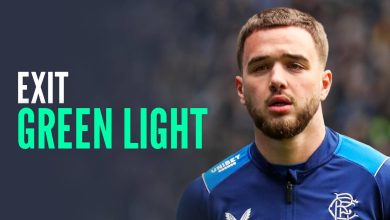
Lewis Ferguson: Can Rangers Finally Seal Their Most Transformative Signing Since Hamza Igamane?


Glasgow Rangers enters the 2026/27 season with clear, unambiguous objective that has eluded the club for five years: winning the Scottish Premiership title and ending Celtic’s recent dominance of Scottish football’s top division. The appointment of Derek McInnes as manager represents significant step toward achieving this objective, bringing experienced leadership and tactical sophistication to Ibrox. However, McInnes’ success in mounting genuine title challenge depends substantially on whether Rangers can strengthen squad sufficiently to compete convincingly against increasingly competitive domestic landscape.
The challenge facing Rangers extends beyond simply adding depth to squad; rather, the club requires genuinely transformational additions—players possessing proven elite quality capable of immediately elevating team performance and raising competitive ceiling. Scottish football’s financial constraints mean Rangers cannot spend lavishly across multiple positions, necessitating strategic targeting of specific players whose arrivals would meaningfully impact competitive capability.
In this context, examination of Lewis Ferguson emerges as particularly significant. The Bologna midfielder represents precisely the type of transformational addition Rangers requires: an established performer operating at elite level in major European league, demonstrating genuine quality through consistent performances at highest competitive levels, and possessing exactly the profile typically unavailable to Scottish clubs. Ferguson’s potential arrival would represent most significant statement signing since Hamza Igamane’s successful Ibrox period, potentially elevating Rangers’ competitive capabilities to levels necessary for genuine title contention.
To properly appreciate the significance of potential Lewis Ferguson signing, one must first understand why Hamza Igamane represents benchmark against which Rangers measures transformational additions. The Moroccan forward’s Rangers tenure, though relatively brief, provided meaningful evidence of how genuinely talented players can immediately impact club performance and subsequently achieve success at elite levels.
Igamane’s arrival at Ibrox in 2024 represented relatively modest investment from financial perspective. Rangers secured his services from FAR Rabat for approximately £1.7 million, a modest fee suggesting player was not yet recognized universally as elite talent commanding substantial transfer investment. However, the Moroccan immediately demonstrated quality justifying Rangers’ recruitment decision.
The forward hit ground running from his Rangers debut, producing impressive cameos against elite Scottish opposition. His early performances—particularly against Celtic and Dundee United—established immediate impression that Rangers had secured genuinely talented attacking player capable of competing effectively at highest domestic level. Rather than requiring extended adaptation period, Igamane displayed confidence and technical capability suggesting immediate integration into competitive systems.
Over his Premiership tenure at Rangers, Igamane accumulated twelve goals and ten big chances created across twenty-three starts, demonstrating consistent attacking contribution and regular involvement in chance creation. These statistics reflected more than simple goal-scoring; they indicated midfielder capable of both finishing opportunities and creating chances for teammates, representing complete attacking midfielder profile.
However, Igamane’s most impressive performances emerged in European competition. Across four Europa League starts, the forward accumulated four goals and six big chances created, an extraordinary return suggesting elite-level capability. In European context where quality opposition increases substantially compared to domestic competition, Igamane demonstrated sustained excellence impossible to attribute to domestic opposition weakness. His performances against European competition indicated genuine quality operating at levels far exceeding typical Scottish club standards.
Igamane’s subsequent move to Lille in summer 2025 for approximately £10.4 million provided further vindication of Rangers’ assessment. Rather than struggling adapting to French football or failing to replicate previous performances, Igamane performed effectively for the Ligue 1 club, confirming that his Rangers success reflected genuine capability rather than temporary form or domestic competition limitations. His ability to perform in top-five European league validated assessment that Rangers had identified genuinely talented player.
The Igamane precedent matters significantly because it demonstrated several crucial principles regarding how Rangers can compete despite financial constraints. Firstly, the club can identify undervalued talent operating outside immediate attention of wealthier clubs. Secondly, genuinely talented players can be acquired for modest fees if identified before universal recognition drives valuations upward. Thirdly, players with genuine elite quality can immediately impact competitive performance rather than requiring extended development periods. Finally, success at Rangers can serve as launching point for subsequent transfers to elite European clubs, validating both player and club’s judgment.
To appreciate the significance of potential Lewis Ferguson signing, one must understand Rangers’ typical recruitment philosophy and how substantially it differs from pursuing established major-league performers. Rangers has historically operated according to specific recruitment model reflecting both financial constraints and strategic preferences evolved over years of competitive operations.
Rangers typically pursues three distinct player categories: unproven young talent with development potential; players operating at respectable levels outside major leagues; and veterans attempting career revivals at elite level. This approach reflects realistic assessment of financial capabilities relative to Premier League and other elite league clubs that can simply purchase established stars commanding premium fees.
The club’s recruitment history demonstrates this pattern clearly. Rangers frequently identifies promising young players from European regions with less comprehensive elite club scouting presence, invests modest fees in their acquisition, and develops them systematically at Ibrox before either establishing them as first-team contributors or selling them for substantial profit to wealthier clubs. This development-focused approach maximizes return on investment while building squad through strategic player development.
Alternatively, Rangers pursues players from Scottish football or second-tier leagues—players demonstrating quality at respectable levels yet operating outside economic mainstream of elite football. These acquisitions provide established quality at modest fees, offering squad strengthening without requiring extraordinary financial investment.
The third category—veterans seeking career revivals—typically involves players whose careers have stalled at elite level or who have experienced diminished opportunities elsewhere. Rangers provides platform for redemption while acquiring established experience.
This tripartite recruitment approach reflects financial reality: Rangers cannot compete for established stars operating at peak within elite leagues. The club lacks financial resources to outbid Premier League competitors or to offer wages matching elite club standards. Therefore, Rangers must identify alternative talent sources, which means overlooking players already recognized by wealthier clubs and instead focusing on undervalued or underappreciated talent.
Lewis Ferguson represents profound departure from Rangers’ typical recruitment approach in almost every meaningful dimension. The Bologna midfielder operates as established performer within Serie A, Italy’s elite league, having accumulated substantial experience at highest competitive levels. At twenty-six years old, Ferguson exists in prime years when players typically command highest valuations and when established elite clubs actively pursue talent.
Ferguson’s profile—proven Serie A performer with genuine elite qualities demonstrated consistently at highest levels—represents exactly the type of player Rangers typically cannot attract or afford. Established major-league performers operating at peak usually remain available exclusively to clubs with resources enabling substantial investment. Rangers’ historical inability to attract such players reflects financial constraint rather than strategic preference.
The fact that Ferguson apparently interests Rangers therefore signals either major financial investment from club ownership or alternatively, specific circumstances making Ferguson available despite typical unavailability to Scottish clubs. Either scenario would represent significant development regarding Rangers’ competitive ambitions and financial capacity.
Ferguson’s availability at reportedly £17 million valuation, while substantial by Scottish football standards, represents relatively modest investment for elite-level midfielder. This pricing suggests either Bologna willingness to facilitate departure, depreciation of Ferguson’s market value, or combination of both factors. Regardless, the pricing creates unprecedented opportunity for Rangers to acquire genuinely elite midfielder at cost potentially manageable within club’s budget parameters.
Lewis Ferguson’s credentials for consideration as transformational talent rest substantially on demonstrated quality at elite competitive levels. Rather than representing promising young talent requiring development, Ferguson brings proven capability having operated successfully within Serie A—Europe’s third-most prestigious league—across multiple seasons.
Ferguson’s World Cup performances during Scotland’s recent tournament campaign provided compelling demonstration of his elite-level capability. Competing against world-class opposition, the midfielder averaged remarkable 4.3 tackles and interceptions per match across three appearances, an extraordinary defensive contribution rate exceeding what any Rangers player managed during previous Premiership campaign. This statistical excellence emerging against elite opposition strongly suggests genuine quality rather than numbers generated against modest competition.
The midfielder’s specific World Cup performances revealed distinctive characteristics supporting assessment of genuine elite quality. His ground duel success rate of 67%—winning approximately two of every three physical challenges—demonstrates physical capability and competitive intensity necessary for elite football. His aerial duel success rate of 50%, while lower than ground duel performance, confirms he competes effectively in all physical dimensions. His average of 8.7 duels won per match across World Cup campaign confirmed Ferguson as genuinely physical midfielder capable of dominating possession contests.
Perhaps most significantly, Ferguson’s 93% pass accuracy during World Cup demonstrated technical quality often associated with elite midfielders. Completing 93% of passes requires not merely accurate short-passing but intelligent positioning enabling consistent ball progression. Such accuracy rates typically reflect players comfortable in possession who understand passing angles and maintain appropriate positioning for effective ball progression. Ferguson’s World Cup performance therefore demonstrated completeness: physical intensity combined with technical security.
Ferguson’s 106 appearances in Serie A constitute comprehensive evidence of sustained performance at elite level. Rather than single-season success potentially attributable to fortunate circumstances, Ferguson has demonstrated capability to perform consistently across multiple seasons within Europe’s genuinely competitive football environment.
Within Serie A context, Ferguson has accumulated fifteen goals and six assists across 135 total appearances for Bologna in all competitions. While not extraordinary offensive output for midfielder, these figures demonstrate consistent contribution across multiple seasons. More significantly, Ferguson’s statistical profile within Serie A last season—88% pass completion rate and 53% duel-winning percentage—revealed player capable of operating effectively at elite level.
The 88% pass completion rate in Serie A, inferior slightly to World Cup performance but still representing elite level, confirms Ferguson can maintain technical standards within demanding league environment. Serie A’s tactical sophistication and defensive intensity requires substantial technical capability to maintain high pass-completion rates. Ferguson’s ability to sustain such rates throughout season confirms genuine technical quality.
The 53% duel-winning rate in Serie A indicates Ferguson can compete physically against elite opposition. Serie A represents notoriously physical league where defenders play aggressively and midfielders must develop robust competitive mentality. Winning approximately half of contested duels against elite Serie A opposition demonstrates Ferguson possesses physicality and competitive intensity necessary for elite football.
These figures collectively validate that Ferguson’s World Cup performances reflected genuine capability rather than representing anomaly. Rather, World Cup excellence emerged naturally from established Serie A competence. Ferguson demonstrates consistent elite-level performance across multiple competitive contexts and seasons, confirming genuinely talented midfielder rather than one-dimensional or inconsistent performer.
Ferguson’s progress toward elite football was built upon extraordinary foundation within Scottish football at Aberdeen. Before securing Serie A opportunity, Ferguson operated as one of Scotland’s most prominent midfielders, accumulating substantial goal-scoring contribution that established him as attacking midfielder of genuine quality.
During his Aberdeen tenure, Ferguson accumulated thirty-seven goals and twenty-three assists across 169 matches, remarkable return for midfielder establishing elite credentials within domestic football. These figures demonstrate that Ferguson was not merely competent midfielder achieving passable results; rather, he was Aberdeen’s dominant creative force and one of Scottish football’s most productive midfielders.
Ferguson’s goal return particularly stands out. Midfielders accumulating thirty-seven goals across domestic season career typically occupy attacking midfielder or even forward positions. Ferguson’s combination of goals and assists—establishing him as both finisher and creator—demonstrated complete attacking midfielder profile. His Aberdeen performances established him as player of genuine quality rather than simply local talent operating within domestic football limitations.
The progression from Aberdeen success to Serie A performances suggests Ferguson’s development was genuine progression toward elite levels rather than representing aberration. Rather, Aberdeen provided foundation enabling subsequent elite football success. His ability to perform at highest levels reflects natural progression from domestic excellence rather than unexpected breakthrough
The fundamental reason Lewis Ferguson would constitute most transformational Rangers signing since Igamane relates to specific quality differential he would introduce. Igamane, while genuinely talented, was relatively young (twenty-three at arrival) and unproven at elite levels. His quality was evident but not yet universally established. His subsequent success at Lille validated Rangers’ assessment but did not represent established certainty.
Ferguson, conversely, arrives as proven performer with established elite credentials. His Serie A performances are not theoretical promise; they represent accomplished reality. His World Cup performances against elite opposition confirmed elite-level capability. His decades of elite football demonstrate sustained quality rather than temporary form.
This import of proven elite quality represents precisely what Rangers requires to mount genuine title challenge. The club needs players who can immediately perform at required level without extended development periods or uncertainty regarding ultimate capability. Ferguson would provide this certainty: a midfielder demonstrating through sustained performance that he can operate effectively at highest levels.
Furthermore, Ferguson’s age—twenty-six years old—places him in prime years when players typically perform optimally. Unlike young players requiring development or veterans in career decline, Ferguson exists at optimal point in career where proven quality combines with sustained years of competitive potential ahead. He would arrive prepared to contribute meaningfully rather than requiring gradual integration.
The combination of proven elite quality, demonstrated capability through sustained Serie A and World Cup performances, optimal age, and experience operating within tactical systems resembling Scottish football’s intensity creates perfect profile for transformational addition. Ferguson represents exactly type of player Rangers needs to genuinely compete for title.
However, potential Ferguson signing contains significant complication requiring examination: the reported dependency on Nicolas Raskin’s future at Rangers. The Danish midfielder, having established himself as Rangers’ most technically proficient midfielder option, has attracted interest from Real Betis and potentially other elite clubs.
Raskin’s presence at Rangers represents central component of McInnes’ midfield plans. The midfielder’s technical quality, creative capability, and possession-based contributions form foundation upon which team’s attacking football builds. Raskin’s potential departure would create significant midfield gap that replacement recruitment must address comprehensively.
The reported condition that Ferguson’s signing depends partially on Raskin’s future suggests Rangers management recognizes potential redundancy or incompatibility. If Ferguson arrives while Raskin remains, Rangers would possess potentially overlapping midfielders serving similar functions. Alternatively, if Ferguson’s signing depends on Raskin departure, Rangers is essentially planning midfield restructuring rather than simple addition of depth.
This dynamic creates strategic complexity. Ferguson’s addition would improve midfield quality substantially but might create necessity for Raskin sale. From competitive perspective, Raskin represents important component of Rangers’ current plans. His departure would create tangible loss requiring substantial compensation through Ferguson’s capabilities.
The optimal scenario from Rangers’ perspective would involve Ferguson’s acquisition without Raskin departure, creating exceptional midfield depth. However, if financing Ferguson’s acquisition requires Raskin sale, Rangers must carefully evaluate whether acquiring Ferguson justifies losing established midfielder having performed effectively.
The Daily Record’s reporting indicates McInnes has identified alternative midfield targets alongside Ferguson, including Jens Hjerto-Dahl from Tromso and Vanja Dragojevic. These alternative targets represent distinctly different recruitment approaches compared to Ferguson pursuit.
Hjerto-Dahl, as previously documented, represents young Norwegian talent fitting Rangers’ typical recruitment philosophy. The Tromso midfielder, while demonstrating promise, represents development project rather than established quality. Pursuing him reflects traditional Rangers approach of identifying emerging talent at modest fees.
Similarly, Dragojevic presumably represents player fitting traditional recruitment profile—established player from outside major leagues offering quality at manageable cost without requiring elite investment levels.
Ferguson’s distinctiveness reflects divergence from traditional Rangers approach. Rather than pursuing young talents with development potential or established players from secondary leagues, Rangers apparently contemplates unprecedented investment in major-league performer operating at elite level.
The existence of alternative targets suggests McInnes maintains flexibility regarding specific midfield additions. If Ferguson proves unachievable financially or otherwise, Rangers maintains alternative options enabling squad strengthening through different approaches. However, Ferguson clearly represents preferred option reflecting belief that his acquisition would represent most substantial quality enhancement
The reported £17 million valuation for Ferguson, while substantial by Scottish football standards, would represent significant investment requiring Rangers to prioritize midfield recruitment above other potential positions. Scottish clubs’ typical budgets constrain ability to invest at such levels across multiple positions simultaneously.
This financial commitment signals that McInnes and Rangers management view midfield strengthening as top priority for title challenge. Rather than attempting to address multiple squad deficiencies, club appears concentrated on acquiring transformational midfield addition. This focused approach reflects realistic assessment that midfield improvement represents area where quality addition would most substantially elevate competitive capability.
The financial investment required would necessarily limit ability to pursue other recruiting targets simultaneously. Rangers would essentially commit substantial resources to Ferguson at cost of potentially reduced investment elsewhere. This allocation decision reflects strategic judgment that midfield strengthening represents highest priority
The specific impact Ferguson’s arrival would produce relates to his distinctive capabilities and how they would integrate within Rangers’ midfield structure. Ferguson brings combination of physical intensity, technical security, and goal-scoring threat rare among elite midfielders.
His ability to dominate possession contests through physical competitiveness would establish midfield control necessary for possession-based football. His technical security enables reliable ball progression supporting team’s attacking build-up. His goal-scoring and creative contributions provide direct attacking threat.
These capabilities would address specific midfield requirements within McInnes’ tactical system. Ferguson would provide defensive foundation through physical intensity while simultaneously contributing creative impetus through technical quality and attacking threat. His completeness as midfielder—capable of competing defensively while contributing offensively—represents exactly profile modern elite football demands.
Within Rangers’ context, Ferguson would likely occupy position similar to current Raskin role or alternatively operate alongside Raskin creating exceptional midfield pairing combining different qualities. His proven capability at elite level would immediately elevate Rangers’ midfield quality measurably.
Ferguson’s potential signing represents broader question regarding Rangers’ actual competitive ambitions and financial capacity. For years, Rangers has operated within significant financial constraints, accepting squad limitations as inevitable reality of Scottish football position.
Ferguson’s pursuit, if genuine, suggests either Rangers’ ownership has committed substantial additional investment or club is willing to restructure finances to enable elite acquisition. Either scenario would represent significant development signaling intensified commitment to competitive success.
The club’s board backing for McInnes and apparent willingness to pursue premium-priced targets suggests genuine belief that competitive investment can translate into title success. Rather than accepting perpetual competitive constraints, Rangers appears willing to make substantial commitments believing they will generate competitive return.
Lewis Ferguson represents potential transformational addition to Rangers that would establish most significant signing since Hamza Igamane’s successful Ibrox period. His proven elite credentials, demonstrated through consistent Serie A performances and exceptional World Cup displays, establish him as precisely type of established quality Rangers requires for genuine title challenge.
Ferguson would arrive as proven performer capable of immediately contributing at required levels rather than representing development project requiring extended integration. His specific capabilities—physical intensity, technical security, goal-scoring threat—address exact midfield requirements within McInnes’ tactical system.
However, Ferguson’s acquisition faces genuine obstacles including substantial financial investment required and potential complications regarding Raskin’s future. The signing would represent unprecedented commitment by Rangers to purchasing major-league performer, departure from traditional recruitment philosophy emphasizing young talent or secondary-league acquisitions.
Whether Ferguson ultimately joins Rangers depends on complex factors including financing arrangements, Raskin’s future, and Ferguson’s own preferences regarding relocation to Scottish football. Regardless of specific outcome, his pursuit represents clear signal that Rangers possesses genuine competitive ambitions and willingness to invest substantially to achieve them.
For Rangers supporters hoping for title challenge after five-year drought, Ferguson’s potential arrival would provide meaningful statement regarding club’s seriousness regarding competitive objectives. Transformation from perpetual squad-building to acquisition of established elite talent would represent fundamental shift in how Rangers operates within football marketplace. Whether transformation translates into competitive success remains uncertain, but Ferguson’s acquisition would undoubtedly establish Rangers as genuine title contender prepared to compete through combination of established quality and emerging talent development that has historically enabled elite clubs to sustain competitive dominance.