Rangers Target Ryan One: The Young Scottish Striker Catching Eyes at Sheffield United and Beyon


In the modern landscape of football recruitment, talent identification has become increasingly sophisticated and competitive. Clubs across Europe employ extensive scouting networks, compile detailed dossiers on promising young players, and engage in careful monitoring of emerging talents long before making any formal approach. Within this context, a particular young Scottish striker has begun to attract significant attention from multiple quarters. Ryan One, a 20-year-old centre-forward currently plying his trade at Sheffield United, has emerged as a target for Rangers Football Club, according to recent reports. What makes this development particularly interesting is not simply that Rangers are interested in the young striker, but rather that One has already captured the attention of some of Europe’s biggest clubs, including Liverpool, one of the Premier League’s most prestigious institutions.
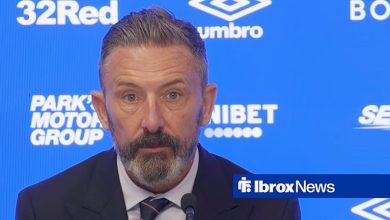
The emergence of One as a player worthy of attention from top-flight clubs represents an important moment in Scottish football. Young Scottish players breaking through at English clubs and subsequently attracting interest from Rangers demonstrates both the quality being produced north of the border and the club’s commitment to identifying and recruiting Scottish talent. Under the stewardship of manager Derek McInnes, Rangers have shown a clear philosophy of building squads around Scottish core players, a strategy that has proven successful during his previous roles at Hearts and Kilmarnock.
To fully understand the significance of Rangers’ interest in Ryan One, it is necessary to trace his journey through the various levels of professional football. One’s career began in Scotland, where he developed through the youth ranks at Hamilton Academical, one of the country’s oldest and most respected football institutions. Hamilton has a long history of identifying and developing young talent, and One’s progression through their academy system suggests that he possessed qualities that caught the attention of experienced coaches and scouts.
Hamilton Academical occupies an important place in Scottish football’s ecosystem. While not one of the country’s biggest clubs, Hamilton has consistently produced players who have gone on to significant careers. The club’s youth development program has been a source of pride for the organization, and the pathway from Hamilton’s academy to successful careers elsewhere has established a pattern that gives credibility to players emerging from their system.
One’s early development at Hamilton was sufficient to attract the attention of clubs south of the border. In 2023, the young striker made the significant step of joining Sheffield United’s youth academy structure. This move represented a considerable progression for One, as Sheffield United, despite their current travails in the English football system, remain a club with significant resources, history, and infrastructure. The club’s academy is recognized as one of the more structured and professional youth development environments in English football, and securing a place within it represents validation of a young player’s potential.
Breaking into senior football at any club is challenging; doing so at a club the size of Sheffield United, with all the competitive pressures and standards that entails, is particularly difficult. Yet One managed to accomplish this feat, catching the attention of manager Chris Wilder through his performances in training and in the club’s development squads. Wilder, an experienced manager with a reputation for recognizing and developing young talent, has given One several opportunities to feature in the club’s first-team squads during the 2024-25 campaign, demonstrating that the young striker had done enough to convince the senior coaching staff of his potential.
One significant step in One’s development came when he departed Sheffield United on a temporary basis to join Lincoln City. This loan move, which occurred in January, proved to be a crucial period in the young striker’s career development. Lincoln City, competing in the EFL League One, offered One the opportunity to gain regular first-team football in a competitive environment while remaining under the umbrella of Sheffield United’s ownership and development program.
The loan spell was highly productive from One’s perspective. During his time at Lincoln City, he scored five goals and provided one assist for the Imps. More significantly, these contributions came during a period when Lincoln City was pushing for promotion, and One’s performances directly contributed to the club’s successful push up the football pyramid. The ability to score goals and create opportunities in a competitive, promotion-chasing environment speaks volumes about One’s composure, finishing ability, and mental resilience.
This type of loan arrangement is increasingly common in modern football and serves multiple purposes. For the player, it provides the opportunity to play regular competitive football, to develop under different coaching staff with potentially different tactical philosophies, and to prove that he can perform at a certain level. For the parent club, it allows them to monitor the player’s development in a competitive environment without the immediate pressure of the first team, while also ensuring the player is gaining valuable experience. In One’s case, the loan move to Lincoln City appears to have been a success from both perspectives.
The fact that One was able to impact a promotion-winning campaign at Lincoln City is particularly significant. Promotion campaigns place significant pressure on players; matches matter more, there is greater intensity, and the expectation levels are higher. One’s ability to contribute meaningfully in this environment suggests that he possesses not just talent, but also the mental characteristics necessary to perform under pressure – a crucial ingredient for success in professional football.
Perhaps the most telling indicator of One’s potential comes from the interest shown by Liverpool Football Club. The Reds, one of England’s most successful clubs with a global reputation for identifying and developing talent, have had scouts monitoring One’s development. According to reports from December 2024, Liverpool had begun compiling a detailed dossier on the young Scottish striker, suggesting a systematic and serious approach to evaluating his potential.
The fact that scouts from a club of Liverpool’s stature were impressed by One’s “powerful” style of play indicates that he possesses physical attributes and playing characteristics that appeal to top-level clubs. Power in football terminology typically refers to a combination of physical strength, acceleration, and the ability to impose oneself on a match. These are particularly valuable characteristics for a centre-forward, as they allow a player to hold up play, shield the ball from defenders, and create opportunities for teammates while also being a threat in their own right.
Liverpool’s interest, while perhaps not having materialized into a formal bid to date, should not be underestimated in terms of what it represents. The Merseyside club have a track record of identifying talented young players and bringing them into their system. The fact that they saw enough in One to warrant serious scouting attention and the compilation of a detailed dossier indicates that experienced evaluators at the club believed there was genuine potential there.
This interest from Liverpool also provides important context for Rangers’ own pursuit of One. If a club of Liverpool’s resources and stature has identified One as a prospect worthy of serious attention, then Rangers’ interest is not a shot in the dark but rather a carefully considered pursuit of a player who has already been vetted by some of Europe’s finest scouting operations.
To understand why Rangers are pursuing One, it is essential to consider the broader strategic approach that Derek McInnes has outlined for his time at Ibrox. Throughout his managerial career, McInnes has demonstrated a clear philosophy regarding squad construction. At Hearts and Kilmarnock, where he previously held positions of authority, McInnes built successful squads around a strong Scottish core of players.
This approach has several advantages. Firstly, players with Scottish roots often have a particular connection to clubs that resonates with the fanbase. There is an emotional element to supporting players from your own country, particularly when those players are given the opportunity to represent your club. Secondly, Scottish players often have a particular understanding of the demands and characteristics of Scottish football, which can facilitate smoother integration into the team and the league. Thirdly, there is a philosophical element to building around Scottish talent – it represents a commitment to developing home-grown football talent and investing in players from within the nation.
McInnes’ previous success with this strategy at Hearts and Kilmarnock suggests that it is not merely a philosophical preference but a tested approach that can yield competitive results. At both clubs, McInnes built squads that competed effectively and achieved their objectives, with Scottish players forming the backbone of those successful teams.
An important consideration in Rangers’ interest in One is the timing relative to the club’s current striking options. Lawrence Shankland, recently signed as a senior striker, will turn 31 in August 2026. While Shankland is likely to be an important player for Rangers in the coming seasons, the reality of football is that forward planning requires identifying young talent who can potentially assume greater responsibility as established players age out of the squad.
One, at just 20 years old, fits the profile of a player who could potentially develop into a long-term option for Rangers over the next five to ten years. The investment in a young striker at this stage of his career is quite different from the investment in an established player. It is, by definition, a longer-term bet on potential rather than a short-term acquisition of proven ability.
However, the fact that Rangers are willing to make this investment suggests that McInnes and his recruitment team have identified One as having genuine potential to develop into a significant player at the club. This is not a panic purchase or an attempt to solve an immediate problem; rather, it is part of a considered, long-term vision for how the club should evolve.
An interesting element of Ryan One’s background is his family connection to professional football. His father, Armand One, is a former professional footballer who played for clubs including Raith Rovers, Alloa Athletic, and Stranraer. This family football pedigree is noteworthy because it suggests that Ryan One has grown up around the professional game, understanding its demands and its realities from an early age.
Football families often produce talented players, though this is not an absolute rule. However, there is evidence suggesting that growing up in a household where football is understood at a professional level, where the demands and challenges of the sport are discussed and understood, can provide young players with certain advantages. Such players often have a more mature understanding of what professional football requires, and they may benefit from guidance and mentorship from parents who have navigated similar challenges.
The fact that Ryan One comes from a football family might also suggest a particular commitment to the sport and to achieving at the highest levels. Families involved in professional football often instill a strong work ethic and dedication to improvement in their children.
During his time at Hamilton Academical, Ryan One had the opportunity to develop under the tutelage of manager John Rankin. Rankin, an experienced manager with extensive experience in Scottish football, provided valuable insight into One’s development during an interview in August 2023. Rankin’s assessment of One is particularly revealing and provides further context for understanding why clubs have begun to take serious interest in the young striker.
Rankin noted that One had “worked on his game” and demonstrated significant improvement. He specifically highlighted that One had navigated what is often a difficult period for young players – the “second season” after making an initial impact. Rankin explained that while the first season can be challenging for young players as they adjust to professional football, the second season can be even more difficult, as opponents have studied them and defensive strategies have been adjusted accordingly.
Rankin’s observation that One “has been great since he came back, he’s made a real impact in the first team and you are looking at him now as a real goal threat for us” represents a significant endorsement. The assessment that One had become “a real goal threat” is particularly important, as it suggests that by this point in his development, he was not simply an emerging talent but a player who was making meaningful contributions to matches.
This assessment from an experienced manager like Rankin carries significant weight. Rankin is not known for hyperbole or for exaggerating the abilities of young players; his evaluation therefore provides a credible basis for believing that One does indeed possess genuine potential
The pursuit of One by Rangers must also be understood within the broader context of Scottish football and Rangers’ role within it. Rangers, as one of Scotland’s two biggest clubs, have a responsibility and an opportunity to develop and support Scottish talent. Historically, Rangers have been successful when they have invested in Scottish players who understood the demands of the club and the league.
In recent years, there has been a particular emphasis within Scottish football on ensuring that young Scottish talent does not simply drift south to England and become lost in the English football system. While development abroad can be valuable, there is also an argument for keeping talented Scottish players engaged with Scottish football and Scottish clubs. Rangers’ pursuit of One represents an attempt to bring a Scottish talent back to Scotland and to offer him the opportunity to develop at one of the country’s biggest clubs.
This is not merely a commercial or sentimental consideration. There are genuine footballing advantages to keeping talented Scottish players involved with Scottish football. Familiarity with the league, connections within the Scottish football community, and the psychological boost of playing for one’s national club can all contribute to a player’s development and performance.
While Rangers are now reportedly interested in One, it is important to recognize that the young striker may have other options. The interest from Liverpool, while not yet resulting in a formal bid, demonstrates that One has attracted attention from other quarters. Additionally, Sheffield United themselves may not be keen to part with a young player who they believe has potential.
For One, the decision about his next move will be crucial. Moving to Rangers would offer him the opportunity to develop at one of Scotland’s biggest clubs under an experienced manager who has a track record of developing young talent. However, it would also mean leaving the English football system, at least temporarily, and potentially competing for playing time with established strikers like Shankland.
The challenge for Rangers will be convincing One that Ibrox represents the best option for his development. This may require assurances about playing time, development opportunities, and a clear pathway to regular football. Young players typically want to know that they will have opportunities to develop and prove themselves; Rangers will need to provide this assurance if they are to successfully recruit One.
One’s potential signing would represent another piece of the broader recruitment strategy that Rangers have undertaken during this summer’s transfer window. The club has already brought in several players, including Lawrence Shankland, Ivor Pandur, Ross McCrorie, Ben Godfrey, Dan Neil, Cammy Devlin, and others. The addition of One would further strengthen the squad and demonstrate continued ambition from the club.
The diversity of the recruitment – bringing in players of different ages, experiences, and profiles – suggests a sophisticated approach to squad building. Rather than simply targeting the biggest names or the most expensive players, Rangers appear to be thoughtfully constructing a squad that balances experience with youth, proven ability with potential.
The potential signing of Ryan One by Rangers represents an interesting development in the Scottish transfer market. Here is a young Scottish striker who has already attracted the attention of major clubs, who has performed well in competitive environments, and who has received positive assessments from experienced managers and scouts.
For Rangers, the pursuit of One fits clearly within the strategic vision that Derek McInnes has outlined for the club. It represents an investment in youth, in Scottish talent, and in long-term potential. While One may not be a household name like some of the other players Rangers have recruited, he represents the type of prospect that, with proper development and opportunity, could become an important player for the club.
The next few weeks will reveal whether Rangers are able to convince One that Ibrox is the right destination for the next stage of his career. If they are successful, One could potentially develop into a significant part of Rangers’ attacking options for years to come. For now, the young striker remains an intriguing prospect, a player with genuine potential who is beginning to attract the attention his performances deserve.