Mikey Moore’s Rangers Loan: A Critical Development Moment for Tottenham’s Rising Talent

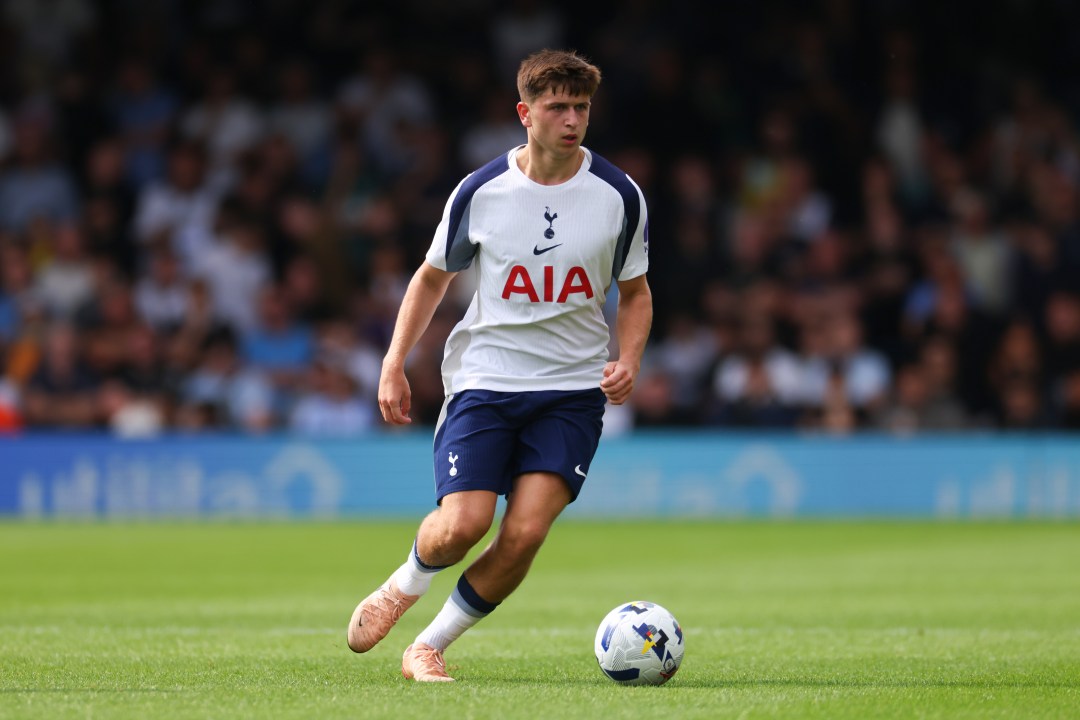
In the fast-paced world of professional football, timing is everything. For Mikey Moore, Tottenham Hotspur’s promising young winger, the timing of his loan move to Rangers appears to be exactly what he needs at this crucial stage of his career development. The deal, confirmed on August 1, 2025, marks a significant milestone for the 17-year-old talent as he prepares to take another substantial step toward establishing himself as a potential cornerstone of Spurs’ future. This comprehensive analysis explores the implications of Moore’s temporary transfer to the Scottish Premiership, examining what it means for his development, Rangers’ ambitions, and Tottenham’s broader strategy in nurturing their academy prospects.
Before diving into the specifics of this loan arrangement, it’s essential to understand who Mikey Moore is and why Tottenham has placed such confidence in his abilities at such a young age. Moore emerged from Tottenham’s prolific academy system as one of the most exciting prospects in English football. His combination of pace, technical ability, and football intelligence has drawn comparisons to other young wingers who have progressed through elite academies in recent years.
Born in 2007 (turning 18 later in August 2025), Moore has already demonstrated remarkable composure and maturity in limited first-team appearances. His journey through Tottenham’s academy has been marked by consistent progression, with the youngster catching the eye of coaching staff at every level. What sets Moore apart from other academy talents is not merely his individual skill set, but his understanding of positioning, his movement in attacking phases, and his willingness to engage in the unglamorous aspects of modern football—pressing, defending, and work ethic off the ball.
The winger has represented England at various youth levels, further testament to his standing among the nation’s young talent pool. His performances in youth competitions have been characterized by consistency and professionalism beyond his years, suggesting that maturity off the pitch matches his on-pitch development.
The decision to loan Moore to Rangers represents a carefully considered move by Tottenham’s management structure. Rather than simply keeping the youngster around the first-team setup at White Hart Lane, where opportunities would necessarily be limited, the club has opted for what many development specialists consider the optimal pathway for young talent: regular, meaningful minutes at a competitive level with a club of Rangers’ stature.
This approach aligns with modern best practices in player development. While training with elite first-team squads provides valuable exposure and technical refinement, nothing substitutes for competitive minutes against adult opposition. The loan strategy allows Moore to develop in a structured, competitive environment without the pressure of immediate, permanent first-team integration at a club competing at the highest levels of English football.
The timing of this move, executed while Tottenham’s main squad was on a pre-season tour in Asia, demonstrates the efficiency of modern football operations. Loan moves often require extensive negotiations—between clubs, player representatives, and regulatory bodies. By facilitating Moore’s departure during the pre-season period, Tottenham ensured minimal disruption to their competitive preparations while giving the young player immediate opportunities to integrate with his temporary new club.
Rangers Football Club represents a step-up in terms of competitive environment compared to most loans available to young English players. The Scottish Premiership, while not matching the global profile of the Premier League, presents a markedly different challenge: a more physically demanding league played at a rapid tempo with intense rivalry fixtures that create genuine high-pressure situations.
The Ibrox club has a rich history of developing young talent and integrating academy products into their first team. More importantly, Rangers’ recent trajectory has positioned them as consistent challengers to Celtic for Scottish supremacy, meaning Moore will be competing in matches with genuine consequences and intensity. The club’s investment in their youth academy and commitment to developing young players has been exemplified by their approach to recruitment and squad development over recent seasons.
Furthermore, Rangers’ playing philosophy, often characterized as attacking and creative, provides an ideal setting for a winger of Moore’s profile. Rather than being asked to adopt a purely defensive or limited role, Moore will be expected to contribute meaningfully in an attacking sense—creating chances, scoring goals, and driving play forward. This positive reinforcement of attacking instincts is crucial for young creative players developing their craft.
While some might view a loan to Scotland as a step away from elite competition, the reality is considerably more nuanced. The Scottish Premiership presents unique developmental challenges that differ significantly from the Premier League or Championship. The physical intensity of Scottish football is well-documented; matches are played at high tempo with little time on the ball in congested areas. This environment forces young players to improve their positioning, decision-making speed, and physical robustness—qualities essential for success at any elite level.
For a young winger like Moore, these challenges are particularly valuable. He’ll be forced to improve his defensive positioning, his ability to win possession in midfield, and his capacity to withstand sustained physical pressure. Unlike more comfortable loan environments, Scottish football doesn’t provide comfortable scenarios for technically gifted players to evade challenges; it demands they engage with them.
Additionally, the Scottish Premiership features a competitive structure that ensures regular, consistent minutes for loan players who establish themselves. Unlike some lower-level English divisions where loan players might find themselves on the bench, competitive leagues like Scotland’s provide genuine opportunities for talented youngsters to accumulate meaningful experience.
Perhaps one of the most significant aspects of Moore’s Rangers loan is the genuine possibility of Champions League football. Rangers’ status as Scottish Premiership champions (or at minimum, regular top-two finishers) means qualification for European competition is virtually assured. More specifically, the Scottish Premiership’s top teams regularly enter the Champions League proper, meaning Moore could find himself playing against some of Europe’s elite clubs—Real Madrid, Bayern Munich, Manchester City, and similar powerhouses.
This exposure is invaluable for young player development. While Champions League mathematics might not immediately see a 17-year-old on the pitch in knockout stages, group-stage appearances, even if limited to minutes against weaker opposition in dead-rubber matches, provide experience playing in elite stadiums against elite players. The psychological benefit of walking out at the Camp Nou or the Santiago Bernabéu, even as a substitute, shapes a young player’s mentality and ambitions.
At 17, Moore is at a pivotal developmental stage where physical maturation significantly impacts performance. The Scottish Premiership’s demanding nature will accelerate his physical development and adaptation to men’s football. Regular matches against experienced, physically robust opponents will force improvements in strength, stamina, and physical positioning that training sessions alone cannot replicate.
Beyond the physical, the mental aspects of a loan move to a different country represent valuable growth. For young players to mature psychologically, they must navigate challenges independently—adapting to new teammates, different coaching philosophies, new environments, and the responsibility of contributing meaningfully to a professional squad. Moore will be forced to develop maturity, resilience, and problem-solving capacity that transcend football itself.
The article’s reference to a pending new contract—reportedly a three-year deal—underscores Tottenham’s commitment to Moore’s future. The technical limitations around contract lengths for players under 18 explain the delay in announcing an extension, but the club’s clear intention to secure Moore’s services long-term is evident from their willingness to publicly discuss such plans.
This contract situation is important context: Tottenham isn’t simply discarding a young player; they’re investing in him by securing his services while simultaneously providing optimal developmental conditions through the Rangers loan. This dual approach—long-term security combined with competitive opportunity—represents best-practice player development strategy.
Moore’s age will allow him to sign a substantially longer contract upon reaching 18, potentially including improved terms and guarantees reflecting his growing importance to the club’s plans. The loan period essentially serves as a risk-free opportunity for all parties: Moore proves his capacity to perform at a competitive level, Tottenham gains confidence in his trajectory, and he returns better developed for the challenge of breaking into Spurs’ first team.
Moore’s trajectory bears comparison to other young wingers who have successfully navigated similar loan moves. Consider the experiences of players like Gareth Bale during his early career, or more recently, young talents who have used loans to accelerate development before establishing themselves at elite clubs. The common thread in successful cases is that loans to competitive environments—rather than comfortable lower-division clubs—produce players better equipped for eventual first-team football at elite clubs.
The timing of Moore’s development also matters contextually. Young wingers often take longer to establish themselves than central midfielders or defenders, as the position demands increasingly sophisticated understanding of positioning, decision-making, and off-ball contribution. A 17-year-old winger on loan at a competitive club like Rangers is positioned ideally to accelerate this understanding across a full season of competitive football.
From Tottenham’s perspective, this loan represents a calculated investment in long-term squad development. Rather than blocking Moore’s development through limited opportunities at Spurs, or allowing him to languish in fringe environments where growth stagnates, the club is facilitating his accelerated development at Rangers.
Fans should expect Moore to return to Tottenham substantially improved: physically stronger, mentally more resilient, and technically more refined. A successful loan season doesn’t mean he’ll immediately become a regular first-team player, but it significantly improves the probability of him contributing meaningfully to Spurs’ ambitions in future seasons.
Mikey Moore’s loan move to Rangers represents a milestone moment in the career of one of English football’s brightest young talents. By moving to a competitive, physical league with a club capable of providing meaningful minutes, European football, and a demanding environment, Moore is positioned to accelerate his development during a critical period of his footballing education.
For Rangers, acquiring a young player of Moore’s caliber on loan represents an opportunity to bolster their attacking options while potentially securing a player who could become a major contributor if circumstances align. For Tottenham, the move exemplifies modern player development strategy: securing young talent through long-term contracts while simultaneously creating optimal conditions for accelerated growth through temporary competitive environments.
As Moore embarks on this new chapter at Ibrox, all parties involved have legitimate reasons for optimism. Rangers gain attacking talent and competitive depth; Moore gains the opportunity to establish himself at a competitive level; and Tottenham gain confidence in one of their most exciting academy prospects’ trajectory toward becoming an elite player. The stage is set for what could be a genuinely transformative season for one of English football’s emerging talents.