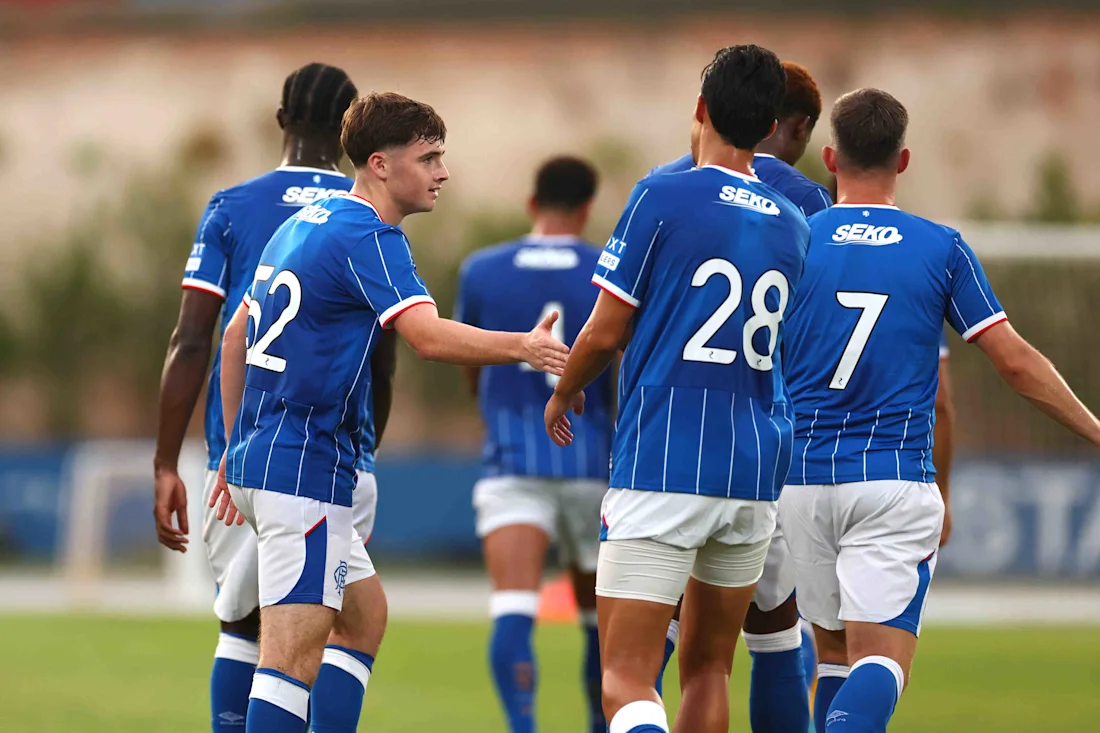
As the summer progresses and the Scottish Premiership season edges ever closer, Rangers Football Club concluded their Spanish pre-season training camp with a performance that provided both encouragement and food for thought. The Ibrox side drew 2-2 against Malaysian Super League side Johor Darul Ta’zim in what was billed as a behind-closed-doors fixture, with the match serving as an important barometer of where Derek McInnes’ squad stands as they prepare for the competitive campaign ahead. While a draw might seem an inconclusive result, the manner in which Rangers fought back from two goals down to level the score offers genuine insight into the character, resilience, and quality that the manager is building into his squad.
The match, played during Rangers’ week-long camp in southern Spain, represented the culmination of a pre-season training block designed to maximize fitness, build cohesion among new signings, and prepare the team tactically for the challenges that lie ahead. In many respects, it tells a story that transcends the simple narrative of a 2-2 draw, revealing instead something far more meaningful about the direction McInnes is taking the club and the personnel he’s assembled to achieve his objectives.
To understand the significance of Rangers’ Spanish trip and the match against Johor Darul Ta’zim, it’s essential to contextualize it within the wider arc of the club’s pre-season preparations. Before departing for warmer climes, Rangers had already undertaken a significant block of domestic preparation that demonstrated the strength of McInnes’ squad building efforts.
The Light Blues had previously recorded an emphatic 5-1 victory over Raith Rovers, a result that showcased the attacking prowess and clinical finishing that McInnes is endeavoring to instill in his team. This wasn’t merely a comfortable victory over lower-league opposition; it represented a statement of intent, demonstrating the quality and depth of Rangers’ attacking resources. A week later, Rangers repeated the dose with a commanding 3-1 triumph over Dunfermline, further evidence that the club’s attacking play is functioning with considerable efficiency.
These victories set the stage for the Spanish adventure, where the temperature would rise both meteorologically and competitively. By the time Rangers departed for their overseas training camp, they had already accumulated valuable match fitness and tactical familiarity under McInnes’ system. The Spanish trip, therefore, represented an opportunity to deepen that preparation against higher-quality opposition than the Scottish domestic league has to offer at this early stage of the season.
On paper, Johor Darul Ta’zim might appear as a somewhat unexpected opponent for a club of Rangers’ stature and continental experience. However, the Malaysian Super League side represents a genuine challenge despite the geographical distance and unfamiliarity many Rangers supporters might have with the club. JDT has established itself as one of the dominant forces in Malaysian football and Asian club football more broadly, with the resources and infrastructure to compete effectively against European opposition.
This tactical matchup held genuine interest. For McInnes and his coaching staff, facing a different style of football, with different tactical approaches and a distinct philosophy, provides invaluable preparation for a season that will involve European competition and the challenges that come with facing unfamiliar opposition. European clubs that rest on their laurels often find themselves exposed when they travel to Asia or face teams from different footballing traditions. McInnes, clearly, was keen to avoid such pitfalls by testing his squad against quality opposition in a non-competitive environment.
The result—a 2-2 draw—reflected both the competitive nature of the encounter and the different phases through which the match progressed. Initially, Rangers struggled to assert themselves, finding themselves trailing 2-0 after two second-half goals conceded. For many observers, this might have represented a concerning development, suggesting perhaps that McInnes’ side had lost their way or that the intensity of preparation had left them fatigued. However, the reality proved far more nuanced.
What makes the Rangers comeback particularly noteworthy is the manner in which it unfolded and, more significantly, the player who orchestrated the team’s return to parity. Tochi Chukwuani, the Brazilian midfielder who arrived at Rangers during the January transfer window, demonstrated precisely the kind of quality, confidence, and impact that convinced McInnes the player was worthy of permanent addition to the squad.
Chukwuani’s brace—a double that brought Rangers level after they had fallen two goals behind—showcased several key attributes that make him such an exciting prospect for the Ibrox club. First and foremost, there’s his technical ability. Operating in the midfield, Chukwuani possesses the kind of technical security and progressive passing range that allows Rangers to move the ball effectively through the thirds of the pitch. In an era where midfield possession and control is increasingly valued, Chukwuani’s abilities in this regard make him a particularly valuable asset.
Beyond his technical qualities, however, Chukwuani’s performance against Johor demonstrated the kind of attacking intent and goal-contributing ability that McInnes clearly values in his midfield. The Brazilian didn’t merely showcase passing range or defensive stability; he actively contributed to the team’s attacking play and, crucially, found the back of the net. For a midfielder playing in a central role, the ability to both control possession and influence the scoresheet directly is a rare commodity.
The comeback from two goals down also reflects something about the character and mentality that McInnes is cultivating. A weaker squad might have accepted defeat or merely gone through the motions in a behind-closed-doors friendly. Instead, Rangers fought back, equalized, and demonstrated the kind of resilience and determination that often proves decisive over the course of a long, demanding season.
The lineup that took the field against Johor Darul Ta’zim provides considerable insight into McInnes’ thinking regarding squad rotation, tactical approach, and player development. The selection offers a fascinating glimpse into how the manager perceives his squad’s composition and the roles various players are expected to fulfill.
In goal, Liam Kelly was given the responsibility of providing protection for Rangers’ back line. Behind him, a back four comprising Dujon Sterling, Ben Godfrey, Manny Fernandez, and Tuur Rommens formed the defensive foundation. This particular defensive selection is noteworthy for several reasons. It represents a blend of established players and players who appear to be developing within McInnes’ system or fighting for regular involvement.
In the midfield, the partnership of Dan Neil and Mo Diomande operated in the center. This pairing is particularly significant given the context of recent transfer speculation surrounding Diomande. With two years remaining on his Rangers contract, there has been speculation regarding his future at the club. However, his inclusion in this match suggests that McInnes remains committed to utilizing his services and developing him as a key component of Rangers’ midfield architecture.
The wing positions were occupied by Findlay Curtis and Djeidi Gassama, both players who offer pace and directness in wide areas. In attack, Lawrence Shankland wore the captain’s armband alongside Ryan Naderi in a more advanced attacking partnership. Shankland’s presence as captain reflects both his status at the club and his importance to McInnes’ plans for the season ahead.
As the match progressed and substitutions were made, the depth and quality of McInnes’ squad became increasingly apparent. Oliver Antman, Nedim Bajrami, and Bojan Miovski entered the fray, providing attacking reinforcements and demonstrating the attacking options available to McInnes. Later in the match, Youssef Chermiti, Tochi Chukwuani, and Ross McCrorie replaced Naderi, Gassama, and Godfrey, with Chukwuani’s introduction ultimately proving decisive as he scored his crucial brace.
The manner in which McInnes rotated his squad throughout the match against Johor demonstrates a manager with considerable confidence in the depth of his playing resources. In modern football, where domestic league demands continue to intensify and European competition places additional strain on squad rotation, the ability to field multiple competitive lineups is increasingly essential.
McInnes’ substitutions weren’t merely cosmetic changes; they represented deliberate tactical adjustments and opportunities to assess different combinations of players. The introduction of Chukwuani, in particular, proved transformative. The Brazilian’s arrival from Benfica on a permanent basis during the previous winter transfer window had created considerable excitement among Rangers supporters, and performances in pre-season friendlies like this one provide crucial evidence of whether that excitement is justified.
The tactical flexibility demonstrated through these substitutions also reflects McInnes’ analytical approach to football. He’s not simply making changes for the sake of rotation; rather, he’s using friendly matches as extended tactical laboratories, testing different combinations, assessing player form and fitness, and gathering information that will inform his team selection and tactical approach when competitive football resumes.
While the result against Johor Darul Ta’zim might appear inconclusive on the surface, the broader narrative of Rangers’ pre-season is considerably more impressive. Three matches across the pre-season preparation—victories against Raith Rovers and Dunfermline, coupled with the draw against Johor—have provided McInnes with valuable information regarding his squad’s condition, tactical coherence, and readiness for the competitive season ahead.
The upcoming friendlies against St Etienne and West Ham at Ibrox represent the next phase of this preparation. These fixtures against European and English opposition will provide even sterner examination of Rangers’ readiness. St Etienne, despite fluctuations in form, remains a club with considerable European pedigree, while West Ham represents a Premier League side with considerable resources and playing in one of the world’s most demanding leagues.
These matches, scheduled for Ibrox next week, will provide Rangers’ supporters with their first opportunities to see the squad in competitive-style circumstances at home, adding a dimension of intensity that training camps and overseas friendlies cannot fully replicate.
Beyond the immediate narrative of a 2-2 draw, what’s perhaps most significant is the bigger picture of squad building that McInnes has undertaken. The signings of players like Dan Neil, Cammy Devlin, Vanja Dragojevic (nearing completion), and the retention of creative players like Nedim Bajrami and Bojan Miovski suggest a manager with a clear vision for how he wants Rangers to play.
There’s a emphasis on possession-based football with attacking intent, a midfield capable of both controlling matches and breaking down defenses, and attacking options that provide genuine variety. Chukwuani’s emergence as a crucial player in McInnes’ plans represents the kind of mid-season addition that can transform a team’s trajectory. His performance against Johor—particularly his ability to remain composed, make an impact despite Rangers having fallen behind, and ultimately secure the equalizer—suggests he could prove to be a significant factor in Rangers’ assault on domestic and European honors.
As Rangers concluded their Spanish pre-season adventure with a 2-2 draw against Johor Darul Ta’zim, the broader narrative is one of a squad in the process of being molded into McInnes’ image. The manager has clearly identified areas requiring strengthening, made investments in the transfer market to address those issues, and is using the pre-season period to build cohesion, fitness, and tactical understanding.
Tochi Chukwuani’s double in Rangers’ comeback provides an emblem of the quality and resilience within McInnes’ squad. The Brazilian’s ability to change the course of a match, combined with the character demonstrated through coming from two goals down, suggests that Rangers will provide a genuine challenge to Celtic in the domestic league and will be competitive in European competition.
The forthcoming friendlies against St Etienne and West Ham will provide further evidence of Rangers’ readiness. By the time the Scottish Premiership season commences, McInnes will have orchestrated a comprehensive pre-season program that should leave his squad well-prepared for the challenges that lie ahead. The unlikely emergence of Chukwuani as a match-winner during this period is merely one facet of a broader project aimed at restoring Rangers to prominence.