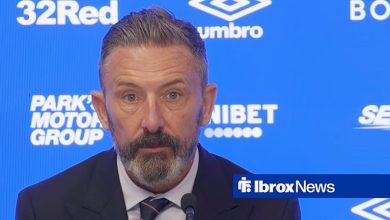
Derek McInnes’ Transfer Ambitions Accelerate: Rangers Chase Eighth Signing as Dragojevic Deal Nears Completion

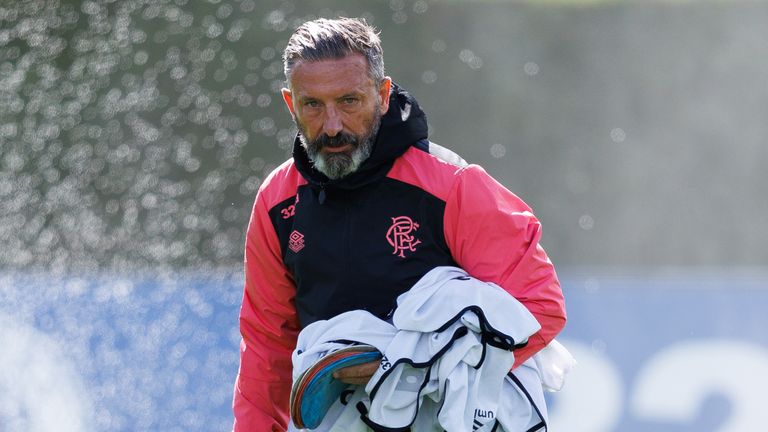
As the summer transfer window enters its critical final phases, Rangers Football Club finds itself in the midst of one of the most ambitious and comprehensive squad overhauls in recent memory. With seven signings already secured and the eighth poised to arrive imminently, Derek McInnes has orchestrated a transformation at Ibrox that demonstrates both the scale of the challenge inherited when he took charge and the clarity of vision he possesses regarding the direction the club needs to travel. The arrival of Vanja Dragojevic from Partizan Belgrade is expected to be confirmed following his medical on Friday, but McInnes’ comments during Rangers’ Spanish pre-season camp suggest the transfer activity is far from complete, with at least one more addition likely before the crucial St-Etienne friendly on Wednesday.
This flurry of transfer activity represents far more than mere window dressing or opportunistic acquisitions. Rather, it reflects a systematic, thoughtful approach to rebuilding a squad that fell woefully short of expectations in the previous campaign. McInnes has identified specific areas requiring strengthening, has executed those acquisitions with impressive efficiency, and shows every indication of being prepared to make further investments if the right opportunities present themselves. The question now is not whether Rangers will continue to strengthen their squad, but rather who will be the eighth signing to join the Ibrox revolution.
To properly understand the urgency and ambition surrounding Rangers’ summer transfer activity, one must first acknowledge the profound disappointment of the previous campaign. Rangers, a club accustomed to competing for titles and dominating Scottish football, experienced a season that fell dramatically short of expectations. The specifics of that underperformance—whether stemming from tactical issues, squad composition, individual player form, or a combination thereof—are less important than the reality that change was deemed essential.
When McInnes arrived at Ibrox, he inherited not merely a squad that needed improving but a collective that had proven incapable of delivering at the level the club’s resources and history demand. The rebuild that McInnes has set in motion, therefore, isn’t a gentle evolution; it’s a deliberate, comprehensive overhaul designed to fundamentally reshape how Rangers approach their football and to ensure that the disappointments of the past season are not repeated.
This context makes the speed and scale of Rangers’ summer recruitment particularly significant. McInnes hasn’t opted for a gradual approach, bringing in one or two players and assessing their impact before moving forward. Instead, he’s taken a decisive approach, identifying multiple areas requiring attention and moving decisively to address them. This aggressive transfer strategy speaks to McInnes’ confidence in his assessment of what Rangers require and his determination to implement his vision for the club.
Rangers’ summer recruitment has followed a clear strategic pattern, beginning with high-profile free agent acquisitions and progressing through targeted purchases designed to address specific weaknesses. The first major statement came with the free arrival of Lawrence Shankland, the experienced Scottish striker who arrived without a transfer fee. Shankland’s signing represented both a statement of intent regarding McInnes’ attacking ambitions and a pragmatic acquisition of proven quality at minimal cost.
Following Shankland’s arrival, Rangers moved quickly to strengthen other areas of the squad. Ivor Pandur arrived to add goalkeeping depth and competition, addressing concerns about the position. Ross McCrorie joined to provide midfield options and European experience, bringing proven pedigree from his time in the English Football League. Ben Godfrey’s arrival represented a significant investment in defensive reinforcement, bringing considerable Premier League and European experience to Ibrox. The Liverpool academy product’s presence in the backline immediately elevated Rangers’ defensive credentials.
Dan Neil and Cammy Devlin followed in quick succession, with both additions designed to strengthen the midfield. Neil brought physicality and leadership qualities, while Devlin contributed technical ability and tactical intelligence. Together, these six signings addressed multiple areas of Rangers’ squad, providing McInnes with genuine competition in key positions and raising the overall quality of his available options.
With Vanja Dragojevic on the verge of completing his move from Partizan Belgrade, Rangers were preparing to announce their seventh summer signing. The Partizan midfielder represents another significant investment in McInnes’ midfield rebuild, bringing both youth and potential alongside proven experience at a competitive European level. Dragojevic’s move to Rangers, pending successful completion of his medical on Friday, underscores McInnes’ determination to create a midfield capable of both controlling possession and providing the dynamism required for success in the Scottish Premiership and European competition.
The timing of Dragojevic’s imminent announcement is no accident. With the St-Etienne friendly scheduled for Wednesday, McInnes clearly wants to integrate his latest signing into the squad as quickly as possible, allowing him to feature in the match against the French side and begin developing understanding with his new teammates. This urgency reflects McInnes’ desire to maximize his pre-season preparation and ensure that any new arrivals have adequate time to acclimate to Rangers’ system and expectations.
Dragojevic’s profile—a midfielder with Partizan pedigree who has played in European competition—aligns perfectly with the recruitment strategy McInnes has pursued throughout the summer. There’s a clear preference for players with proven ability in competitive environments, whether at their domestic level or in European competitions. This approach stands in marked contrast to speculation regarding more speculative signings and suggests that McInnes is not interested in gambling on potential; he wants established players capable of making an immediate impact.
As the calendar moves toward the St-Etienne match on Wednesday, McInnes’ public comments suggest that an eighth signing could well arrive before that fixture. Speaking to Rangers TV during the team’s pre-season campaign in Spain, McInnes explicitly indicated that the club’s transfer work would be “ongoing” and that the Gers were “still looking to try and get a couple of things done ahead of the St-Etienne game.”
This admission represents more than mere politeness or transfer window etiquette. McInnes, a manager not known for making unguarded public comments, has effectively confirmed that Rangers have identified additional targets and are actively pursuing those acquisitions. The specificity of his reference to the St-Etienne match suggests that the club has set an internal deadline of Wednesday for completing at least one more deal, presumably to allow the new signing time to integrate with the squad before that fixture.
The question, of course, is who will be the eighth signing? Speculation has centered on several possibilities, with Jens Hjerto-Dahl from Norwegian club Tromsø emerging as one of the more prominent candidates. The young Norwegian has attracted interest from multiple clubs, with Cardiff City also known to have advanced in negotiations. However, reports from Norway have suggested that Rangers’ interest may be cooling, with conflicting accounts regarding the likelihood of the deal progressing.
The situation surrounding Jens Hjerto-Dahl represents a fascinating subplot in Rangers’ summer transfer activity. The young Norwegian has demonstrated sufficient quality to attract attention from multiple clubs across different leagues, suggesting a player with genuine potential. Initial reports indicated that Rangers chiefs were flying to Tromsø to push through a deal, suggesting a level of commitment and determination to secure the player’s services.
However, more recent reporting has painted a more complicated picture. Having had a bid rejected, Rangers appear to have reassessed their position regarding Hjerto-Dahl, with suggestions that the club may have accepted that their hopes of landing the youngster are fading. This represents a pragmatic acknowledgment that not every target will be secured and that McInnes is unwilling to pay extortionate fees or engage in protracted negotiations when alternative options may be available.
This pragmatism is actually quite telling regarding McInnes’ approach to transfer business. He’s not the type of manager who becomes emotionally invested in singular targets to the point where he’s willing to distort the market or commit resources irrationally. If Hjerto-Dahl becomes too expensive or the negotiations become protracted, McInnes appears quite prepared to move on to alternative targets who can fulfill similar functions within his squad.
The Hjerto-Dahl situation also illustrates the competitive nature of the transfer market. Cardiff City’s involvement in negotiations for the same player demonstrates that Rangers isn’t the only club with interest in available talent. In a window where multiple clubs are actively recruiting and finances are significant, competition for proven quality or promising young players is inevitable. McInnes’ willingness to step away from negotiations that don’t develop favorably speaks to a manager confident in his ability to find alternative solutions.
Underlying all of Rangers’ summer transfer activity is a coherent philosophy regarding recruitment and squad building that appears to have guided McInnes’ decisions. Speaking during pre-season in Spain, McInnes praised the club’s transfer work, stating: “The club have done brilliant work at this moment in time to try and bring in the additions that we clearly needed from last season. We want to make sure we are a more rounded squad and we are ready.”
These comments reveal McInnes’ thinking regarding what Rangers requires. The emphasis on being a “more rounded squad” suggests that he’s identified not merely isolated weaknesses but rather an overall lack of balance in the team. The previous season’s disappointing campaign wasn’t simply the result of a poor center-back or an ineffective midfielder; rather, it reflected systemic issues in squad composition and depth.
By bringing in seven players across multiple positions and continuing to pursue further additions, McInnes is attempting to address these systemic issues. He’s building a squad with genuine competition in every position, ensuring that injuries or poor form in one area doesn’t compromise the entire team’s performance. This approach requires significant investment but reflects the reality of modern professional football, where squads need depth and quality at every level.
The speed with which Rangers is attempting to complete their transfer business reflects the proximity of competitive football. The St-Etienne match on Wednesday is not merely a friendly; it represents the final significant test before the Scottish Premiership season commences. McInnes is clearly keen to have his squad as settled as possible by that point, allowing him to assess combinations, test tactical approaches, and build understanding among his players.
This urgency also reflects the reality that every week that passes without competitive action sees Rangers falling further behind in terms of match fitness and tactical cohesion. Teams that complete their transfer business early have a significant advantage, as they can integrate new signings into their system and build combinations before competitive demands intensify. McInnes is clearly aware of this reality and is working to ensure that Rangers’ recruitment is concluded promptly.
The week between Dragojevic’s imminent announcement and the St-Etienne match represents a crucial window for Rangers. If an eighth signing can be secured during this period, they will have additional days to train with the squad and potentially feature in the match against the French side. This would significantly accelerate their integration and allow McInnes to assess their capabilities in a competitive context.
Rangers’ aggressive recruitment strategy must be understood within the broader context of the summer transfer market. This has been a window characterized by significant investment from multiple clubs and competitive bidding for available talent. The Premier League’s financial dominance means that English clubs are generally able to outbid their European counterparts for players, placing clubs in other leagues at a disadvantage.
Scotland, while having a proud footballing tradition, doesn’t currently possess the financial resources of the Premier League or even La Liga and Serie A. This means that Rangers must compete by other means—the attraction of European football, the opportunity for regular playing time, and the chance to play for a historically significant institution. McInnes appears to have successfully leveraged these factors to attract multiple players despite the competitive nature of the market.
The mix of free signings (Shankland), acquisitions from smaller leagues (Dragojevic from Serbian football), and purchases from English football (Godfrey from Liverpool) demonstrates that McInnes and his recruitment team have cast a wide net and identified players across multiple markets. This geographic diversity in recruitment suggests a sophisticated scouting operation and relationships across European football.
While McInnes has explicitly referenced the possibility of two more signings before Wednesday, the poll posed on Ibrox News—”Do you expect Rangers to go beyond 10 signings this summer?”—suggests that discussion of an even more ambitious target exists within the Rangers support and media community. An eighth signing would represent a significant summer; a ninth or tenth would represent an absolutely transformational transfer window.
The reality is that McInnes likely has a mental shortlist of targets and priorities that extends beyond the immediate August timeframe. If opportunities present themselves—key players becoming available, injuries requiring reinforcement, or tactical adjustments demanding different personnel—Rangers may continue to shop in the transfer market even after completing initial targets.
However, there’s also a point of diminishing returns in summer recruitment. A squad that undergoes wholesale changes risks losing cohesion and identity. McInnes, for all his ambition, will be aware of this risk and will likely reach a point where he deems the squad adequately strengthened and focuses on integration rather than additional acquisitions.
As Rangers conclude their Spanish pre-season camp and prepare for the St-Etienne friendly, the transfer window has already proven to be one of significant strategic ambition. Seven signings completed, an eighth on the verge of announcement, and the possibility of a ninth before Wednesday demonstrate Derek McInnes’ determination to rebuild Rangers comprehensively.
The recruitment strategy has been methodical and purposeful, addressing multiple areas of the squad and bringing in players with proven ability across different leagues and competitions. From the free arrival of Lawrence Shankland to the imminent completion of Vanja Dragojevic’s transfer from Partizan, each signing has been designed to improve Rangers’ overall squad balance and competitive capacity.
Whether the eighth signing materializes before Wednesday, and whether that signing is Jens Hjerto-Dahl or an alternative target, remains to be seen. What’s clear, however, is that McInnes has demonstrated both the ambition and the pragmatism required to successfully execute a major squad rebuild. Rangers’ supporters have reason for genuine optimism that this summer’s transfer activity will translate into improved performances and a return to the level of consistency and success the club’s history demands. The next week will provide further clarification regarding the scale and scope of McInnes’ final recruitment objectives.