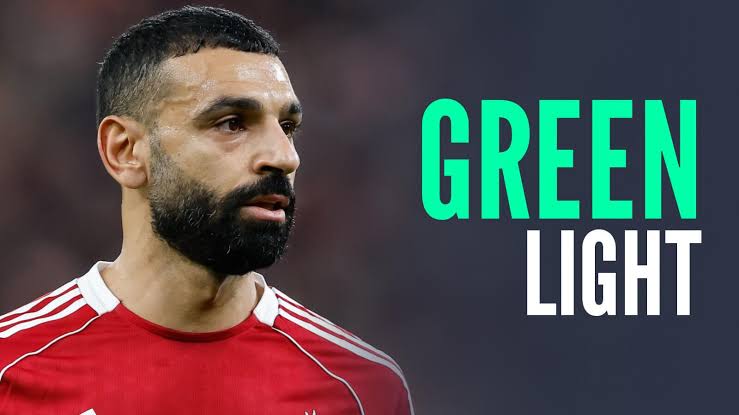
The transfer market operates in mysterious ways, often creating unexpected connections between seemingly disparate storylines. In the summer of 2026, one such intersection is emerging that could have profound implications for Rangers Football Club and their pursuit of Czech winger Vaclav Cerny. The surprising catalyst? None other than Mohamed Salah, the legendary Egyptian forward whose potential move to Turkish giants Besiktas could inadvertently unlock the door to securing Cerny’s signature for the Glasgow club.
At first glance, the connection between Salah’s future at Besiktas and Cerny’s prospects at Ibrox appears tenuous at best. However, when examined through the lens of modern football economics, squad planning, and the strategic considerations that govern elite-level transfers, a compelling narrative emerges—one that suggests Salah’s arrival in Istanbul could reshape the landscape of Turkish football in ways that directly benefit Rangers’ ambitions in the Scottish Premier League.
To understand how this situation has developed, it is essential to appreciate the current state of affairs at Besiktas, one of Turkey’s most storied and ambitious football institutions. The Istanbul-based club has invested considerably in recent transfer windows, seeking to establish itself as a genuine contender not just domestically, but in European competitions as well.
The acquisition of Vaclav Cerny from VfL Wolfsburg last summer for approximately £6 million represented a significant investment by Besiktas’ standards. The Czech forward arrived with considerable promise, having demonstrated his capabilities in one of Europe’s top five leagues. His technical ability, work rate, and capacity to influence matches from the wing position made him an attractive proposition for a club with European ambitions.
However, the Super Lig landscape is notoriously unpredictable. While Cerny performed admirably during his maiden campaign in Turkey, Besiktas’ hierarchy continues to pursue blockbuster signings that could transform their competitive standing. The interest in Mohamed Salah represents the kind of marquee addition that would dramatically elevate the club’s profile and potential on the continental stage.
At 34 years of age, Mohamed Salah remains one of world football’s most recognizable and potent attacking talents. His illustrious career at Liverpool, where he established himself as one of the Premier League’s greatest-ever players, has cemented his legacy. Yet, according to reports from Turkish journalist Yagiz Sabuncuoglu, who boasts over 2.2 million followers on social media platform X, Besiktas have made a serious play for the Egyptian international, with representatives already in talks with Salah’s legal team.
The prospect of a player of Salah’s caliber joining the Super Lig would represent an enormous coup for Turkish football. It would represent more than merely a commercial transaction—it would signal Besiktas’ serious intent to challenge for domestic supremacy and compete at the highest level of European club football. The financial package being offered to Salah would understandably be substantial, befitting a player of his stature and achievements.
For Salah himself, a move to Turkey could present an intriguing proposition. Having dominated European football for nearly a decade, the challenge of conquering a new league and establishing himself as a focal point in a rebuilding project might hold genuine appeal. At 34, with the physical demands of elite football taking their toll, the Super Lig offers a stage where his exceptional talents could continue to flourish, albeit in a less intensely competitive environment than the Premier League.
Here lies the essential complication that creates opportunity for Rangers. Both Salah and Cerny operate predominantly as wingers, with Cerny favoring the right flank during his time in Turkey. While modern football often accommodates multiple attacking options in flexible formations, the reality of squad dynamics, playing time allocation, and tactical coherence suggests that accommodating both players would present meaningful challenges.
Should Besiktas secure Salah’s services, the club’s attacking blueprint would inevitably revolve around maximizing the Egyptian’s influence. Salah’s reputation, global marketability, and proven excellence at the highest level would naturally make him the priority in team selection and tactical planning. This scenario would potentially relegate Cerny to a secondary status within the attacking hierarchy—a prospect unlikely to appeal to an ambitious young player in the prime of his career.
Cerny’s performance during the 2024-25 season at Rangers had been notably impressive. The Czech forward concluded the campaign as the second-highest goalscorer for the Glaswegian institution, demonstrating a capacity to deliver meaningful contributions in a competitive domestic environment. Such performances typically translate into expanded opportunities and elevated status within a club’s framework. The prospect of returning to a subordinate role at Besiktas would naturally prove unappealing.
Derek McInnes, appointed as Rangers’ manager, has made it abundantly clear that strengthening the club’s wide options represents a priority in the forthcoming transfer window. The Light Blues have identified significant gaps in their squad, particularly on the flanks, where consistency and creativity have proven elusive in recent campaigns. McInnes’ tactical philosophy emphasizes dynamic, attacking football that places considerable emphasis on width and the ability to create opportunities from advanced positions.
Cerny’s profile aligns remarkably well with McInnes’ requirements. The Czech winger possesses the precise combination of technical ability, physical robustness, and tactical intelligence that the Rangers manager seeks to implement. During his previous tenure at Ibrox, Cerny demonstrated these qualities extensively, establishing himself as a fans’ favorite and a reliable performer in the club’s attacking setup.
The narrative surrounding Cerny’s initial departure from Rangers reflects Barry Ferguson’s evident enthusiasm for retaining the player. During his interim spell as manager, Ferguson articulated his desire to maintain Cerny’s services, describing him as a “difference-maker” and highlighting the quality of his contributions both with and without possession. The interim manager’s perspective carried significant weight, yet the subsequent permanent appointment of Derek McInnes introduced new considerations that ultimately led to Cerny’s move to Turkish football.
The financial dimensions of this scenario warrant careful consideration. Besiktas, like most football clubs operating outside Europe’s wealthiest leagues, operates under fiscal constraints that necessitate careful budget management. While the club has demonstrated considerable ambition in recent transfer windows, the resources available remain finite relative to the global elite.
The acquisition of Mohamed Salah would require a substantial financial commitment, both in terms of the transfer fee itself and, more significantly, the salary package necessary to lure a player of his stature to the Super Lig. While specific figures remain speculative, industry observers suggest that Salah would command annual wages substantially exceeding what most Turkish clubs typically allocate to individual players.
This financial reality creates a cascade of consequences within Besiktas’ squad planning. The significant allocation of resources toward Salah’s recruitment and remuneration would create pressure elsewhere within the club’s budget. The wages committed to Cerny, while reasonable by European standards, would represent a line item that Besiktas’ hierarchy might reasonably seek to eliminate or reduce through an outgoing transfer.
Such a scenario would provide Rangers with a genuine opportunity to negotiate favorable terms for Cerny’s acquisition. Ibrox News’ exclusive reporting indicated that Cerny could be secured for approximately £8.5 million—a figure that, while substantial, remains within the realm of possibility for a club of Rangers’ stature. Should Besiktas become motivated to offload Cerny to free up wage budget for Salah and other strategic priorities, the valuation might prove negotiable downward from the initially stated asking price.
Understanding Rangers’ specific needs contextualizes why Cerny represents such an attractive prospect for the club’s hierarchy. The Light Blues have struggled in recent campaigns to consistently generate creative opportunities from wide positions. While the club has invested in attacking talent, the conversion of possession into genuine goalscoring opportunities has proven inconsistent.
McInnes’ preference for a dynamic, possession-based system that emphasizes width and combination play requires reliable wide players who can function effectively in a structured framework. Cerny’s experience, maturity, and demonstrated capacity to fulfill such requirements make him a natural fit within the manager’s strategic vision.
Furthermore, the continuity factor cannot be overlooked. Cerny’s familiarity with Rangers’ infrastructure, playing philosophy, and competitive environment would facilitate a seamless integration. The Czech winger would not require an adaptation period; he would be immediately capable of contributing meaningfully to the club’s objectives. In the context of a competitive season ahead, this consideration carries considerable weight.
An additional complication affecting Cerny’s mindset relates to his recent international football circumstances. The Czech forward has reportedly withdrawn from consideration for his national team, ostensibly to focus on establishing himself at club level. This strategic decision suggests Cerny’s current priority involves proving himself at the highest club level and securing a prominent role within his team’s tactical framework.
A scenario in which Cerny returns to Besiktas but finds himself diminished in status relative to an incoming Salah would directly contradict his stated objectives. Rather than advancing his career trajectory, such circumstances would potentially impede his development and limit his opportunities to compete consistently at the highest levels.
In contrast, a return to Rangers would provide Cerny with an environment in which he would occupy a central position within the team’s attacking philosophy. McInnes has demonstrated genuine enthusiasm for deploying wingers who can contribute both defensively and offensively, creating a framework in which Cerny’s multifaceted skill set could flourish.
Barry Ferguson’s advocacy for Cerny’s permanent retention cannot be dismissed as merely nostalgic. The interim manager’s assessment that Cerny functioned as a “difference-maker” reflected concrete observations about the player’s impact on Rangers’ performance. Ferguson’s emphasis on Cerny’s commitment to defensive duties alongside his attacking contributions highlighted a holistic understanding of the winger’s value within a structured team environment.
The fact that Ferguson’s recommendations were not immediately implemented—resulting in Cerny’s eventual departure to Besiktas—does not diminish the validity of his assessment. It merely reflects the complex decision-making processes that characterize modern football club management, wherein multiple voices and considerations influence outcomes.
McInnes’ appointment as permanent manager creates an opportunity for the club to reconsider Ferguson’s perspective. The new manager’s apparent recognition of the need for quality wide players suggests he may appreciate the value that a player of Cerny’s profile could contribute. The convergence of Ferguson’s advocacy and McInnes’ apparent needs creates a compelling case for renewed pursuit.
Contextualizing Rangers’ pursuit of Cerny within the broader Scottish football landscape reveals the stakes involved. The competitive rivalry with Celtic and the aspiration to establish Rangers as Scotland’s dominant force necessitates consistent investment in quality players who can contribute meaningfully to major objectives.
The 2024-25 season saw Cerny contribute significantly to Rangers’ performance, culminating in his second-highest goalscorer status. These outputs translate directly into points, trophies, and the prestige associated with competing for domestic and European honors. The prospect of reacquiring a player who has demonstrably contributed to such objectives represents a rational strategic decision for a club of Rangers’ ambition.
Furthermore, the Scottish Premier League’s commercial and competitive standing in European competitions depends partly on the caliber of talent displayed by the league’s representatives. Rangers’ capacity to attract and retain quality players like Cerny reflects positively on the league’s prestige and financial viability.
The timing of these various developments proves crucial. The summer transfer window of 2026 presents a narrow window of opportunity for all parties to execute their strategic objectives. Salah’s situation with Liverpool has apparently reached a juncture where both parties are open to exploring alternative options. Besiktas’ evident ambition to strengthen their squad creates a market dynamic in which movement is possible.
For Rangers, the current moment represents an opportune time to pursue Cerny. The club has a new manager whose vision and requirements have been articulated clearly. The transfer market, while unpredictable, currently appears favorable for a well-executed approach to player acquisition.
In conclusion, the connection between Mohamed Salah’s potential move to Besiktas and Vaclav Cerny’s prospects for a Rangers return exemplifies the intricate interconnectedness of modern football transfer dynamics. Salah’s arrival in Istanbul would create both financial and tactical pressures within Besiktas that would logically motivate the Turkish club to seek alternative options for players in Cerny’s profile.
For Rangers, this scenario presents a genuine opportunity to reunite with a player who has previously demonstrated his value to the institution. Derek McInnes’ evident need for quality wide players, combined with the competitive requirements of maintaining elite status in Scottish football, creates a compelling case for the club to pursue Cerny’s acquisition.
The path to success requires multiple elements to align: Besiktas must complete Salah’s acquisition, the financial pressures created must motivate the club toward selling Cerny, and Rangers must present a sufficiently attractive proposition for the player to commit to a return to Ibrox. While each element carries uncertainty, the current market dynamics suggest that success remains possible.
Should Rangers secure Cerny’s services, the club would address a genuine tactical deficiency while simultaneously reuniting with a player capable of immediately contributing at the highest levels. From this perspective, Mohamed Salah’s pursuit of a new challenge in Turkish football may prove to be the catalyst that enables Rangers to realize their own strategic objectives. In football, as in life, the most significant opportunities often emerge from the most unexpected intersections.