Lewis Ferguson and the Rangers Homecoming: Bologna’s Defiant Stance and the Unfinished Business at Ibrox


The Ferguson surname carries profound significance within Rangers Football Club’s storied history. For generations, members of the Ferguson family have represented the Light Blues with distinction, contributing to the club’s rich tapestry of achievement and tradition. The lineage is particularly distinguished through Derek Ferguson, whose midfield prowess made him a cornerstone of Rangers’ squad during a golden era, and Barry Ferguson, whose captaincy and leadership qualities epitomized the values the club holds dear.
The continuation of this legacy has long been anticipated within Rangers circles. When Lewis Ferguson, the talented son of Derek Ferguson and nephew of Barry Ferguson, embarked on his professional football career, many observers naturally assumed his trajectory would eventually lead him home to Ibrox. The genetic predisposition toward excellence in the midfield, combined with the family’s deep connections to the club, created an almost inevitable narrative arc in the minds of Rangers supporters and analysts alike.
Yet football rarely follows the scripts written by sentiment and family history. When Lewis Ferguson left Aberdeen in 2022, establishing himself as one of Scottish football’s most promising young talents, the expected approach from Rangers failed to materialize. This absence proved consequential, redirecting Ferguson’s career toward Serie A and Bologna, where he would experience both remarkable success and significant adversity.
Lewis Ferguson’s move to Bologna represented a decisive moment in his career trajectory. The transfer to the Italian club signified an ambitious leap onto European football’s grandest stages, a moment when a young Scottish player sought to prove himself against elite continental opposition. The prospect of competing in Serie A, one of world football’s most technically demanding and strategically sophisticated leagues, presented both opportunity and considerable challenge.
Ferguson’s initial impact at Bologna proved impressive. The midfielder’s technical quality, tactical intelligence, and capacity to influence matches aligned well with the demands of Italian football. His contributions extended beyond mere statistics; observers noted his intelligence in positioning, his ability to progress the ball effectively through congested midfields, and his leadership qualities despite his relative youth.
The significance of Ferguson’s achievements at Bologna cannot be understated. The Coppa Italia triumph represented a tangible trophy achievement, evidence of his ability to perform meaningfully in competitive environments. More substantially, his role in Bologna’s fifth-place Serie A finish—a result that qualified the club for Champions League football—demonstrated his importance to the team’s broader competitive objectives.
The World Cup experience provided additional validation of Ferguson’s emerging status. International recognition at football’s ultimate tournament, representing Scotland on the world stage, reinforced the impression that a genuinely talented midfield player was developing into something approaching elite-level performer.
Yet fortune in professional football proves fickle and unforgiving. A nightmare cruciate ligament injury—one of football’s most serious and psychologically challenging afflictions—fundamentally altered Ferguson’s trajectory at Bologna. The injury represented more than a mere physical setback; it constituted a psychological and competitive hurdle of considerable magnitude.
Recovering from a cruciate ligament injury demands not merely physical rehabilitation but profound mental resilience. Players must rebuild their confidence, reestablish their timing, and rediscover the explosive power that characterizes elite football performance. The return to competitive action following such trauma frequently proves protracted and complicated, with many players never fully regaining their previous capabilities.
In Ferguson’s case, the recovery process coincided with a managerial change at Bologna. Vincenzo Italiano, who had overseen much of Ferguson’s early success, saw the midfielder struggle for regular game time upon his recovery. The convergence of injury rehabilitation requirements and apparent tactical reorientation under Italiano created a frustrating period for Ferguson—a season in which his contributions diminished relative to his previous standards.
The managerial succession at Bologna, with Domenico Tedesco taking over the technical direction of the club, introduced new possibilities and uncertainties into Ferguson’s situation. Managerial transitions frequently create both opportunities and vulnerabilities for players seeking to reestablish their status within their clubs’ hierarchies.
Tedesco’s appointment carried particular significance given his substantial credentials. The manager boasts extensive experience managing elite-level football, with a track record that suggested serious ambition and tactical sophistication. His arrival at Bologna signaled the club’s continued pursuit of competitive excellence and European prominence.
Associated with Tedesco came his assistant, Andrea Tarozzi, whose role in the coaching infrastructure would prove meaningful in determining Ferguson’s future prospects. The coaching staff’s initial assessments of Ferguson would significantly influence the midfielder’s opportunities under the new regime and, consequently, his trajectory at the Italian club.
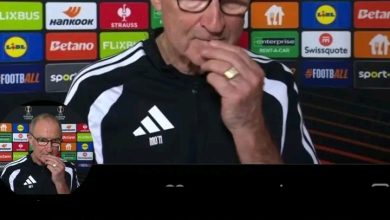
Tarozzi’s public characterization of Lewis Ferguson as “fundamental” to Bologna’s squad represents far more than mere diplomatic utterance. Within the context of modern football club management, such terminology carries deliberate strategic weight. When coaching staff publicly emphasize a player’s importance to their plans, they simultaneously communicate their intention to retain that player and their recognition of his value to their competitive objectives.
The timing of this statement—occurring amidst Rangers’ emerging interest in acquiring Ferguson—suggests a calculated response to external pressure. Bologna’s management recognized that Rangers would inevitably approach, presenting the possibility of losing a player they value significantly. By publicly articulating Ferguson’s fundamental importance, Tarozzi and Tedesco effectively signaled their unwillingness to entertain substantial offers for the midfielder’s services.
This public stance reflects a broader strategic principle in modern football. Clubs that value specific players communicate their positions clearly and unambiguously, creating negotiating positions that deter competing clubs from expending significant resources on acquisition efforts that would ultimately prove futile. The assertion that Ferguson is fundamental to Bologna’s plans implicitly communicates that the club would require an extraordinarily substantial offer to reconsider their position.
That Rangers have approached Bologna regarding Ferguson’s availability demonstrates the Glasgow club’s serious interest in addressing their midfield requirements. The Light Blues have clearly identified areas requiring strengthening, and Ferguson—with his proven capabilities in Serie A, his World Cup experience, and his family connections to the club—represents an attractive profile for addressing those needs.
The proposed structure of a potential deal—potentially involving a player-plus-cash arrangement—reflects Rangers’ sophisticated approach to negotiation. Rather than presenting a simple fee-based offer, Rangers have apparently contemplated offering players Bologna might value, alongside financial compensation, as a mechanism to reduce the actual cash expenditure required.
The mention of Connor Barron in relation to Rangers’ negotiating strategy suggests the club might offer the young midfielder as part of a package deal. Such an arrangement would potentially address Bologna’s depth requirements while simultaneously reducing Rangers’ direct financial outlay. However, such creative deal structures require both parties to identify mutual value, a condition that may not currently exist.
The £17 million valuation mentioned in reports represents a substantial fee by any standards, reflecting Bologna’s assessment of Ferguson’s worth. For a player recovering from a significant injury and having endured a season with limited game time, such a valuation might be considered aggressive by some observers. However, from Bologna’s perspective, the figure presumably reflects the midfielder’s long-term potential and the substantial financial and developmental investment the club has already committed.
The narrative surrounding Ferguson’s career carries an undercurrent of unfulfilled expectation. When he departed Aberdeen, the assumption among many observers was that Rangers would eventually acquire him, continuing the dynasty of Ferguson excellence at Ibrox. The fact that this transfer did not materialize at that juncture created a sense of unfinished business.
Derek Ferguson’s achievements at Rangers had established a template for midfield excellence and leadership. Barry Ferguson subsequently carried forward this legacy, captaining the club and embodying the values of commitment, skill, and competitive excellence that the institution demands. The natural progression would suggest Lewis Ferguson eventually following his ancestors’ footsteps.
The Italian detour, while ultimately productive, was never anticipated to be permanent. The accumulation of achievement at Bologna—the Coppa Italia triumph, the Champions League qualification, the World Cup experience—all contributed to Ferguson’s development but also intensified the sense that his trajectory would eventually lead back to Scottish football and the club representing his family’s greatest legacy.
It must be acknowledged that Italian football, particularly Serie A, represents one of the most demanding and technically sophisticated football environments globally. The league’s emphasis on tactical discipline, positional awareness, and defensive organization creates a training ground for young players seeking to develop their all-around capabilities.
Ferguson’s experience in this environment has presumably enriched his understanding of the game’s tactical dimensions. The intelligence and positioning he has presumably developed through competing against Serie A’s elite midfields would represent an invaluable asset upon any return to Scottish football. The technical and tactical sophistication demanded by Italian football would translate into enhanced capabilities within the Scottish Premier League.
The cruciate ligament injury that derailed Ferguson’s momentum at Bologna introduces complications into any transfer equation. While modern sports medicine has dramatically improved rehabilitation protocols, the psychological impact of such injuries frequently extends beyond the purely physical dimensions.
For Bologna, retaining Ferguson represents a calculated risk. The midfielder possesses demonstrable talent and has achieved meaningful success, but the injury raises questions about whether he will consistently perform at the elite levels he previously demonstrated. From this perspective, Bologna’s apparent willingness to retain him—despite injury complications—suggests the club’s hierarchy maintains genuine faith in Ferguson’s recovery trajectory.
Conversely, from Rangers’ perspective, acquiring Ferguson at a potentially reduced valuation following injury could represent smart strategic planning. If Ferguson’s recovery continues progressing positively, Rangers would benefit from acquiring a player whose market value might not fully reflect his actual capabilities.
Tarozzi’s response regarding Ferguson’s future—deflecting to the manager Tedesco while emphasizing his importance—reflects the contemporary reality of managerial hierarchy within elite clubs. Ultimately, the manager determines playing time allocation and tactical deployment. However, the assistant’s emphasis on Ferguson’s fundamental importance to Bologna’s plans provides crucial insight into Tedesco’s likely position.
If Tedesco considers Ferguson fundamental to his tactical vision, then the manager would presumably resist losing the midfielder, regardless of Rangers’ offer structure. The manager’s confidence in Ferguson’s recovery and his perceived role within the team’s strategic framework would effectively preclude his departure.
From a broader perspective, Ferguson’s situation illuminates the complex interplay between commercial considerations, competitive ambitions, and player development within modern football. Bologna faces multiple pressures: the desire to retain players who contribute to competitive success, the financial realities of operating within Serie A’s economic constraints, and the competitive necessity of maintaining squad quality.
Rangers, conversely, must balance their pursuit of immediate competitive objectives against financial prudence and the practical realities of Scottish football’s economic standing relative to elite European leagues.
The Lewis Ferguson situation represents a compelling narrative within modern football transfer dynamics. The family legacy, the Italian experience, the injury setback, and the emerging possibility of homecoming create a complex web of considerations affecting all stakeholders.
Bologna’s apparent determination to retain Ferguson, articulated through Tarozzi’s public statements, suggests the Italian club’s hierarchy maintains genuine faith in the midfielder’s value and recovery trajectory. For Rangers, the challenge involves determining whether the acquisition is worth the financial expenditure required, particularly given Ferguson’s recent injury complications and limited game time.
Yet the narrative of homecoming retains powerful resonance. Should Rangers ultimately succeed in bringing Ferguson back to Ibrox, the midfielder would complete a journey that many assumed inevitable when he departed Aberdeen. The continuation of Ferguson family legacy at Rangers would represent not merely a transfer transaction but the realization of expectations that have simmered throughout his Italian sojourn.
For now, however, Bologna’s stance remains clear: Lewis Ferguson remains fundamental to their plans, and they appear unwilling to facilitate his departure, regardless of the attractiveness of Rangers’ offer. The unfinished business at Ibrox must wait, at least for this transfer window.