Celtic and Rangers bosses react to away fan ban as O’Neill calls for united solution and McInnes caught off guard

Scottish football’s most storied fixture has been dealt a significant blow after the SPFL confirmed that away supporters will be shut out of every Old Firm match for the remainder of the season. The governing body’s announcement, delivered on Friday, means at least five meetings between Celtic and Rangers — across the Premiership and the Premier Sports Cup — will now be played in front of home fans only, a decision that has drawn a mixture of resignation, frustration and calls for compromise from both dugouts.
Martin O’Neill, back in interim charge of Celtic, was measured but clearly disappointed when he addressed the news, framing it as an outcome that had felt unavoidable for some time. Across the city, Rangers manager Derek McInnes admitted the timing had blindsided him, saying he had believed the matter was still open for negotiation when the SPFL’s statement broke.
The roots of Friday’s decision trace back to March, when a Scottish Cup quarter-final between the two Glasgow giants at Ibrox descended into disorder. Supporters from both sections of the ground invaded the pitch as violent scenes unfolded, prompting police intervention and a wave of condemnation from across Scottish football. An independent review into the disturbances followed, and its findings ultimately fed into the discussions that led to Friday’s outcome.
For years, Celtic and Rangers had operated under an agreement guaranteeing away fans roughly five per cent of stadium capacity for domestic fixtures between the pair — typically translating to allocations in the region of 2,500 tickets at either Ibrox or Celtic Park. That arrangement effectively collapsed this week when Rangers, ahead of the sides’ Premier Sports Cup quarter-final meeting, proposed cutting the away allocation drastically to just 300 tickets, citing their own assessment of the risks involved. Celtic’s response, by most accounts, was that a token allocation of that size defeated the purpose of having away fans present at all, and the club opted to reject it outright rather than accept a symbolic gesture.
With the two clubs unable to find middle ground, the matter was passed to the SPFL, which convened further talks before confirming there would be no away fans present at any fixture between the sides in domestic competition this season. The League Cup quarter-final, due to be played at Ibrox in the coming days, will now go ahead as a home-fans-only affair, as will the sides’ Premiership meetings — including the away side’s trip to Celtic Park roughly a week later, a fixture that will be broadcast live.
Speaking to Sky Sports News, O’Neill did not shy away from apportioning some responsibility to how the ticket negotiations had unfolded, suggesting the collapse of talks over the 300-ticket offer had made the eventual blanket ban all but certain. He described the situation as sad from an ordinary supporter’s perspective, and reiterated his long-held view that the fixture ranks among the very best in European football regardless of the quality of either side in a given season.
Despite the disappointment, O’Neill was careful to stress that the rivalry itself would endure, even if it is diminished without a travelling contingent inside the ground. He said the game would still hold value as a spectacle, just not to the same degree as when thousands of away fans are packed into a corner of the stadium creating the atmosphere the fixture is famous for.
Pressed on whether the ban could become a permanent fixture of Old Firm derbies rather than a one-season measure, O’Neill struck a hopeful note, describing the fixture as one of the greatest in European football and expressing a wish that it might eventually find its way back to normality. He suggested that common sense could yet prevail if the problems that have escalated in recent seasons are properly addressed, rather than allowed to fester.
On the question of a resolution, O’Neill pointed toward dialogue between the two boardrooms as the only realistic path forward, expressing hope that Celtic and Rangers would eventually sit down together and work through whatever specific issues are driving the current impasse. He acknowledged that friction between the clubs over away-day arrangements is nothing new, noting that difficulties of this kind have surfaced before, but suggested the frequency and severity of incidents had increased markedly over recent seasons — a trend he views as the underlying problem that needs to be tackled rather than papered over.
He closed his response by acknowledging the obvious: an Old Firm derby without a vocal away end will feel different. The fixture, in his words, would still be significant, still be competitive, and still matter enormously to both sets of supporters — but it would inevitably lose something in stature and spectacle with tens of thousands of home fans in the ground and none from the visiting
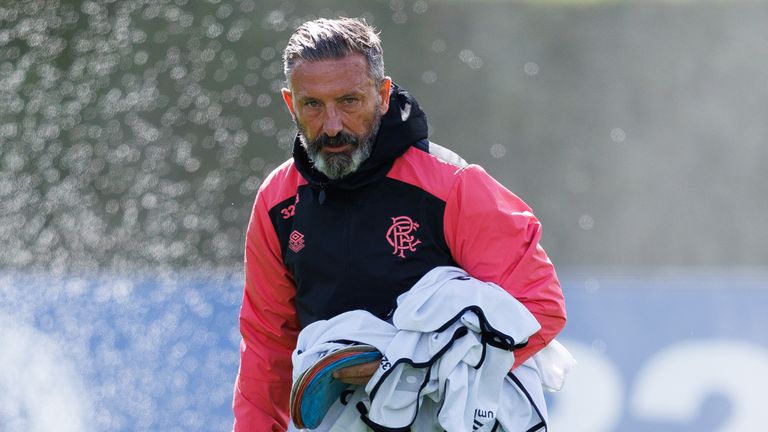
Where O’Neill offered a considered, almost philosophical take, McInnes’s reaction had the flavour of a man reacting to breaking news in real time. He revealed that he had first learned of the SPFL’s decision from a rolling news ticker while walking in from a training session, and admitted his immediate response was one of disappointment that the call had been made at all.
McInnes was notably cautious about going into detail, repeatedly stressing that he had not yet spoken to anyone at Rangers about the club’s official position and that he felt it was more appropriate for the club itself to address the specifics. He did, however, offer a general football view: as a rule, it is always preferable for a derby fixture to include the opposition’s travelling support, provided that support can be trusted to behave appropriately once inside the ground.
That caveat mattered to McInnes. He was clear that allowing away fans back in cannot simply be about restoring the old allocation for its own sake — certain standards of behaviour would need to be met and maintained before that trust could be rebuilt. Without having had the chance to discuss the finer details with the Ibrox hierarchy, he said he was reluctant to elaborate much further on what those conditions might look like or how quickly they could realistically be satisfied.
Perhaps the most telling part of McInnes’s reaction was his admission that, as far as he understood things, the matter was still supposed to be under discussion rather than settled. That expectation was clearly upended by the timing of the SPFL’s statement, which he said had caught him somewhat unprepared given his understanding that talks were ongoing. It is a small detail, but one that suggests the pace of developments this week may have outstripped even those close to the clubs’ hierarchies, with the governing body moving to draw a line under the saga faster than some inside Ibrox anticipated.
The practical effect of Friday’s announcement is straightforward, if unwelcome for supporters of both clubs. Every meeting between Celtic and Rangers in domestic competition this season — the Premiership fixtures at both Ibrox and Celtic Park, plus the upcoming Premier Sports Cup quarter-final — will be played without a dedicated away section. Rangers are due to host Celtic in the League Cup first, with the Premiership double-header to follow over the coming months, including a Celtic Park fixture that will be shown live on Sky Sports.
This is a considerably harder line than many observers had anticipated. Even after March’s disorder, there had been an expectation in some quarters that a reduced allocation — rather than a total shutout — might be the compromise eventually landed on, allowing some semblance of away support to continue while tightening security and conduct requirements. Rangers’ initial proposal of 300 tickets appears to have been an attempt at exactly that kind of middle ground, offering a fraction of the previous allocation as a gesture toward continuity. Celtic’s rejection of that offer, on the basis that such a small number would not meaningfully replicate the away-end experience, effectively removed the compromise option from the table and left the SPFL to choose between the status quo and a blanket ban.
Friday’s decision does not exist in isolation. Both Celtic and Rangers have spent recent seasons grappling with a string of incidents involving their supporters, on top of the disorder that triggered this particular review. Rangers previously took the step of imposing an indefinite ban on a group of their own fans after footage circulated showing them directing racist abuse and gestures at Celtic’s Japanese forward, an episode both clubs publicly condemned at the time as entirely unacceptable. Celtic, for their part, have also had to confront disciplinary issues involving their own support, including a suspended stadium ban imposed on a prominent fan group following an incident in which police officers and a steward were assaulted during a home fixture, with the club describing the coordinated nature of the disturbance as deeply troubling.
Missile-throwing has also been a recurring theme in commentary around both clubs’ away days over the years, with previous Celtic captains having raised concerns publicly about the safety risks posed to players when trouble flares in away sections. Add to that the volatile atmosphere that has periodically spilled over during and after fixtures between the two clubs specifically — of which March’s pitch invasions were only the most recent and most serious example — and it becomes easier to understand why the SPFL ultimately concluded that a full-season ban was the only way to guarantee no repeat of those scenes this year.
It is against that backdrop that O’Neill’s comments about problems “escalating” over recent seasons should be read. He is not suggesting the rivalry has suddenly become newly dangerous; rather, his framing suggests a pattern of incidents building over several years that finally reached a tipping point in March. Whether that reading is entirely fair to either fan base is a matter of debate that will likely continue for some time, but it does capture the general sentiment among administrators that patience for further disorder had worn thin.
Beyond the emotional and reputational dimension, there is a practical cost to Friday’s decision that neither club will welcome. Away allocations at Old Firm fixtures have traditionally been lucrative, both directly through ticket sales and indirectly through associated matchday spending by travelling supporters. A five per cent allocation at a ground the size of Ibrox or Celtic Park still represents several thousand tickets, and removing that revenue stream — even temporarily — will be felt by both clubs’ commercial departments, on top of the reputational hit of hosting a diminished spectacle on live television.
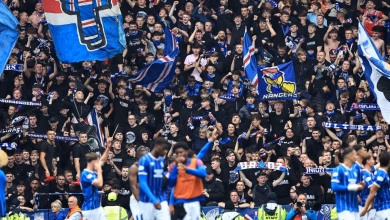
There is also the less tangible but arguably more significant cost to atmosphere. The Old Firm derby has long been cited, including by O’Neill himself in his comments this week, as one of the genuinely elite occasions in club football anywhere in Europe, in no small part because of the noise, colour and tension generated by a full complement of away fans packed into one end of the ground. Removing that element does not turn the fixture into a routine league match — the rivalry and the stakes remain — but it does strip away a layer of theatre that has helped define Old Firm weekends for generations of supporters on both sides.
Television audiences, too, are likely to notice the difference. With Sky Sports continuing to broadcast the Premiership meeting between the sides live, viewers will be watching a version of the derby stripped of one of its most recognisable features: two ends of a stadium, split by colours, trading noise back and forth for ninety minutes
For Celtic, the decision arrives at a moment of broader upheaval, with O’Neill only recently having returned to the dugout on an interim basis after the club’s previous permanent appointment failed to work out. Managing the fallout from a fan-related governance issue is not the ideal backdrop for a manager focused on stabilising results on the pitch, but O’Neill’s public comments suggest he is choosing to treat the situation with equanimity rather than confrontation, positioning himself as an advocate for eventual reconciliation between the clubs rather than adding fuel to any blame game.
McInnes, by contrast, finds himself needing to tread carefully in the coming days. Having been open about not yet knowing his own club’s official stance, he will presumably face further questions once Rangers issue a fuller statement or briefing on the SPFL’s decision, and it would not be a surprise if his tone hardens or softens depending on how that messaging is framed by those above him at Ibrox. His emphasis on the need for “behaviours” to be met before trust can be restored suggests Rangers may be positioning themselves to argue that the door remains open for away fans to return once specific conditions are satisfied, rather than accepting this as a fixed, season-long punishment with no route back
Friday’s announcement also lands amid a broader, ongoing conversation in Scottish football about how governing bodies balance the atmosphere fans bring against the disciplinary and safety obligations clubs are expected to meet. The SPFL and the Scottish FA have both faced pressure in recent years to demonstrate they are taking crowd trouble seriously, whether that trouble stems from pitch invasions, sectarian chanting, missile-throwing or confrontations between rival groups inside and outside stadiums. Old Firm fixtures have historically sat at the sharp end of that conversation simply because of the scale of the occasion and the intensity of feeling involved, but they are far from the only games where such issues have surfaced
Against that backdrop, a full-season ban on away fans for this specific fixture can be read as much as a statement of intent from the SPFL as a targeted punishment for March’s disorder. By removing the most obvious flashpoint — two heavily partisan sets of fans separated by a stand and a line of stewards — administrators are, in effect, buying themselves a season free of the specific risk that has caused the most serious incidents in recent years. Whether that approach becomes a template for handling other high-risk fixtures in Scottish football, or remains a one-off response to a uniquely fraught rivalry, is likely to be debated long after this particular derby weekend has come and gone.
Supporter groups on both sides are likely to have their own views on where responsibility truly lies, and it would not be surprising if fan representatives from both clubs push back publicly against the idea that entire fan bases should be penalised for the actions of a minority. That tension — between collective punishment and individual accountability — has featured in similar disputes at other clubs and in other sports over the years, and it seems likely to resurface here as supporters process the news over the coming
Both clubs have, in fairness, shown a willingness to take action against their own supporters when specific individuals or groups have been identified as responsible for trouble. Rangers previously moved quickly to hand indefinite bans to fans identified in footage of racist abuse directed at a Celtic player, while also cutting off the associated supporters’ bus operation from receiving future match tickets. Celtic, likewise, imposed a suspended ban on one of their own prominent fan groups after a serious incident involving assaults on police officers and a steward at Celtic Park, describing the coordinated nature of that disturbance in stark terms.
Those precedents suggest both clubs are capable of targeted disciplinary action against identifiable individuals or groups when the evidence supports it. The difference this time is one of scale and attribution: March’s disorder at Ibrox involved fans from both ends of the ground during a chaotic pitch invasion, making it considerably harder to isolate specific culprits or apply punishment narrowly. That difficulty in assigning individual blame may well be part of why the SPFL ultimately opted for a blanket restriction on away fans across all fixtures between the two clubs, rather than attempting a more surgical response aimed only at those directly involved in March’s chaos.
For now, the practical reality is straightforward: neither club’s fans will be able to purchase tickets for the other’s ground in domestic competition this season, covering both the Premiership fixtures and the Premier Sports Cup tie. Whether that stance could be revisited before the season concludes — perhaps if the two clubs and the SPFL agree on a fresh set of security or conduct measures — remains an open question that neither manager was able, or willing, to answer definitively this week.
What is clear is that both O’Neill and McInnes, despite their differing tones, are in broad agreement that this is not the preferred outcome for anyone associated with either club. O’Neill’s appeal for the two boardrooms to eventually find a way back to the table echoes a sentiment that will likely be shared by supporters on both sides who simply want to experience the fixture as it has traditionally been staged, disorder notwithstanding. McInnes’s insistence that any return of away fans must be earned through improved conduct, meanwhile, hints at the kind of conditions Rangers — and quite possibly Celtic and the SPFL as well — may look to attach to any future loosening of the restrictions.
Until then, Scotland’s biggest derby will be played out as a series of one-sided crowds: raucous, partisan, and missing the one ingredient that has always made it feel unlike any other fixture in the country. As O’Neill put it, the rivalry itself is not going anywhere, and the football will still matter just as much on the pitch. But something will be conspicuously absent from the stands when Rangers and Celtic next meet, and neither manager sounded confident it would be back any time soon.