James Tavernier to reunite with Rangers hero at new club as ‘excitement’ builds for ex-skipper in fresh start

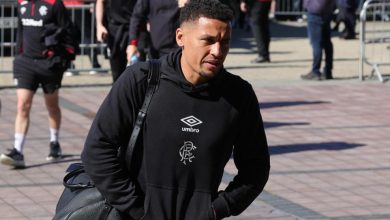
James Tavernier has finally found his next chapter. Almost four months after leaving Rangers at the end of last season, the club’s longest-serving captain and most decorated modern player has completed a move to Maccabi Tel Aviv, where he will link up with former Ibrox teammate Kenny Miller and take on a “big club” challenge in a completely new footballing environment.
For a player who spent 11 years in Govan, rewriting the record books along the way, the switch to Israeli football represents as significant a departure as any 34-year-old defender could make. But if Tavernier’s own words are anything to go by, that is precisely the appeal. Speaking to Maccabi Tel Aviv’s official website after sealing the move, he called it “a real honour to join a club with such a rich history,” adding that experiencing “a new country and experiencing a different environment is something I’ve always wanted to do in my career,” and that there is “a real excitement about the opportunity and the challenge ahead.
Tavernier’s arrival in Israel was confirmed after he travelled for a medical, penning a one-year contract with the option of a further twelve months attached. He will wear the number two shirt at his new club, the same number he made his own across more than a decade at Ibrox, and one that will carry familiar associations for any Rangers supporter who watched him overlap down the right flank season after season.
The move ends a summer of speculation that had linked Tavernier with clubs across Europe and North America, including reported interest from MLS side Charlotte FC, as well as persistent chatter about a sentimental return to Ibrox at some stage down the line. In the end, it was Maccabi Tel Aviv — a club with genuine European pedigree, having competed in the Europa League last season before their run this term ended in Conference League qualifying with an aggregate defeat to Swiss side Lugano — who won the race for his signature.
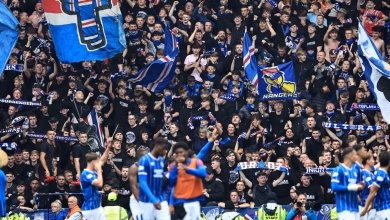
Central to that decision was the presence of Kenny Miller, who took over as Maccabi’s head coach in May after Ronny Deila, the former Celtic manager, departed the role. Miller and Tavernier were teammates during the right-back’s third spell in Glasgow, giving the new head coach first-hand knowledge of exactly what his new right-back can offer both on and off the pitch. Tavernier made a point of crediting that relationship in his unveiling, revealing that Miller had personally sold him on the move by talking up the club’s ambitions and the intensity of its supporters before the deal was finalised. “I’ve heard a lot about the club from Kenny Miller, especially the ambitions, the desire to compete for trophies and, of course, the Maccabi fans and the atmosphere they create,” Tavernier said, adding that he expects that fanbase to “drive a team on” in much the way Rangers’ support did throughout his own career in Scotland.
## How the Rangers Exit Unfolded
To understand the scale of this move, it is worth revisiting exactly how Tavernier’s Ibrox career came to an end. He departed Glasgow in the summer of 2026 having made over 500 appearances for the club, a run stretching back to his arrival in 2015 as a promising but unproven full-back plucked from Wigan Athletic. Across those 11 years he established himself not just as a mainstay of the side but as one of its era-defining figures: a Scottish Premiership title winner, a Scottish Cup winner, captain of the side that reached a Europa League final, and by a distance the club’s top-scoring defender of the modern age, with a strike rate more associated with a winger or forward than a right-back.
His final months in Glasgow, though, were not the fairytale send-off many supporters would have wanted. Reports at the time of his exit pointed to a breakdown in his relationship with then-head coach Danny Röhl, with a reported disagreement between the pair overshadowing what was supposed to be a celebratory farewell appearance at Ibrox. It was an unusually sour footnote to a Rangers career otherwise defined by consistency, longevity, and genuine affection from the stands — and it left Tavernier searching for his next challenge without the settled, ceremonial exit that a player of his stature and service might ordinarily have expected.
Derek McInnes, appointed as Rangers boss shortly afterwards, opted to move on from the Tavernier era rather than explore a reunion, bringing in Ross McCrorie as a fresh option at right-back and giving him the opportunity to make the position his own. McCrorie’s start to life back in Glasgow — the versatile defender previously worked under McInnes at Aberdeen — has been affected by injury problems, prompting periodic debate among supporters and pundits about whether Rangers moved on from Tavernier prematurely. Former teammate-turned-pundit Andy Halliday even suggested during a difficult early-season run of results that Rangers “could’ve done a lot worse” than picking up the phone to re-sign the 34-year-old, arguing he would represent “an upgrade” on the club’s current options at right-back. That suggestion, though, was never seriously pursued, and Tavernier’s path instead led him away from Scotland entirely.
## The Israeli Chapter
Maccabi Tel Aviv are one of Israeli football’s most storied institutions, regular participants in European competition and a club whose ambitions extend well beyond simply competing domestically. That context matters to how Tavernier has framed the move: rather than presenting it as a wind-down after over a decade in Scotland, he has been keen to stress the parallels with his time at Ibrox, telling his new club’s media that his experience “having played for a big club for so many years” has taught him exactly how important supporters can be in driving a team forward, and that he sees Maccabi in the same bracket — a club that “wants to win and compete for trophies.”
That framing will resonate with anyone who watched Tavernier’s Rangers career up close. His game was never just about end product, considerable as that was; it was built on a level of consistency, professionalism and leadership that made him captain for the majority of his time in Glasgow, retaining that status through changes of manager, boardroom upheaval, and the pressures that come with playing every one of Scottish football’s Old Firm fixtures at the highest possible stakes. Moving to a club with a demanding fanbase and genuine European aspirations, rather than simply taking the easiest financial offer on the table, suggests those competitive instincts remain intact even as he enters the twilight stage of his playing career.
The presence of Miller in the dugout adds an extra layer of reassurance to what could otherwise have been a daunting leap into the unknown. The pair’s history together at Ibrox — albeit from a different era of the club’s recent history, when Miller was in the twilight of his own playing days as Tavernier was first establishing himself — gives Tavernier a trusted voice inside the building from day one, someone who understands both his game and the level of standards he is used to operating under. It is a dynamic not unlike the one that helped persuade Jordan Jones to drop into English non-league football at South Shields earlier this year to work under Mike Williamson, another manager he already knew and trusted: familiarity, in a moment when a player’s next step is genuinely uncertain, frequently counts for more than any amount of due diligence a club or player can otherwise do on an unfamiliar situation.
There is also a broader theme here about how much appetite Tavernier retains for testing himself in unfamiliar surroundings. By his own admission, playing outside the UK for the first time in his career is something that has “always” appealed to him, and doing so at 34, after over a decade of stability in Glasgow, says something about a player who could easily have prioritised comfort and proximity to family over ambition. Instead, he has chosen a genuinely fresh footballing culture, a different style of competition, and a considerable change in day-to-day life, all in pursuit of one more meaningful challenge before his career eventually winds down.
## Tavernier’s Rangers Legacy
Whatever comes next in Israel, nothing will diminish what Tavernier achieved during his time at Ibrox. Few full-backs anywhere in European football have combined defensive duty with attacking output quite as prolifically as he did across his 11 seasons in Glasgow, regularly topping 20 goal contributions in a single campaign from right-back — numbers that would be considered excellent for an out-and-out winger, let alone a defender whose primary job is to keep the opposition’s attackers quiet.
He arrived at Rangers in 2015 as the club were still rebuilding from their well-documented financial collapse and subsequent climb back through the lower divisions of Scottish football, and by the time he left he had captained the side to their first Scottish Premiership title in a decade, lifted domestic cups, and led Rangers on a run to a European final — a trajectory that mirrors the club’s own recovery during that period almost point for point. It is difficult to think of another player from the “back-from-the-basement” era of Rangers’ history whose personal story so closely tracked the club’s own, and that context will likely define how his Ibrox career is remembered for years to come, regardless of how his final months at the club actually played out.
For Rangers supporters processing the sight of their former captain in a different set of colours entirely, in a country few would have predicted, Tavernier’s move to Maccabi Tel Aviv will land as a strange but somehow fitting way for this particular chapter to close: not a quiet retirement, and not the sentimental homecoming some had hoped for, but one final adventure, taken on his own terms, in pursuit of the kind of “big club” experience he insists he still craves.
From a Rangers perspective, Tavernier’s move confirms what had been gradually becoming clear throughout the summer: this really is the end of an era at right-back, with no lingering possibility of a sentimental reunion to soften the transition. McInnes’s decision to build his defence around Ross McCrorie, rather than keep the door open for a Tavernier return, will now be judged purely on its own merits as the season progresses, without the shadow of an alternative hanging over it.
McCrorie’s early-season injury problems have already invited comparisons back to the consistency Tavernier provided for over a decade, and those comparisons are unlikely to disappear while his new club captain and record appearance-holder settles into life at a different European club altogether. But Rangers’ business, for better or worse, has been done: the calculation McInnes and his recruitment team made over the summer was that the club’s long-term interests were better served building a new right-back option from scratch rather than searching for one more season out of a 34-year-old, however incident-free.
Time will tell whether that judgement proves correct. What is not in doubt is that Tavernier leaves Ibrox with a legacy that very few players in the club’s modern history can match, and that his next chapter — in Tel Aviv, under a manager who knows him intimately, at a club with genuine ambitions of its own — represents exactly the kind of fresh, high-stakes challenge a player of his competitive instincts was always likely to seek out, rather than quietly wind down elsewhere.