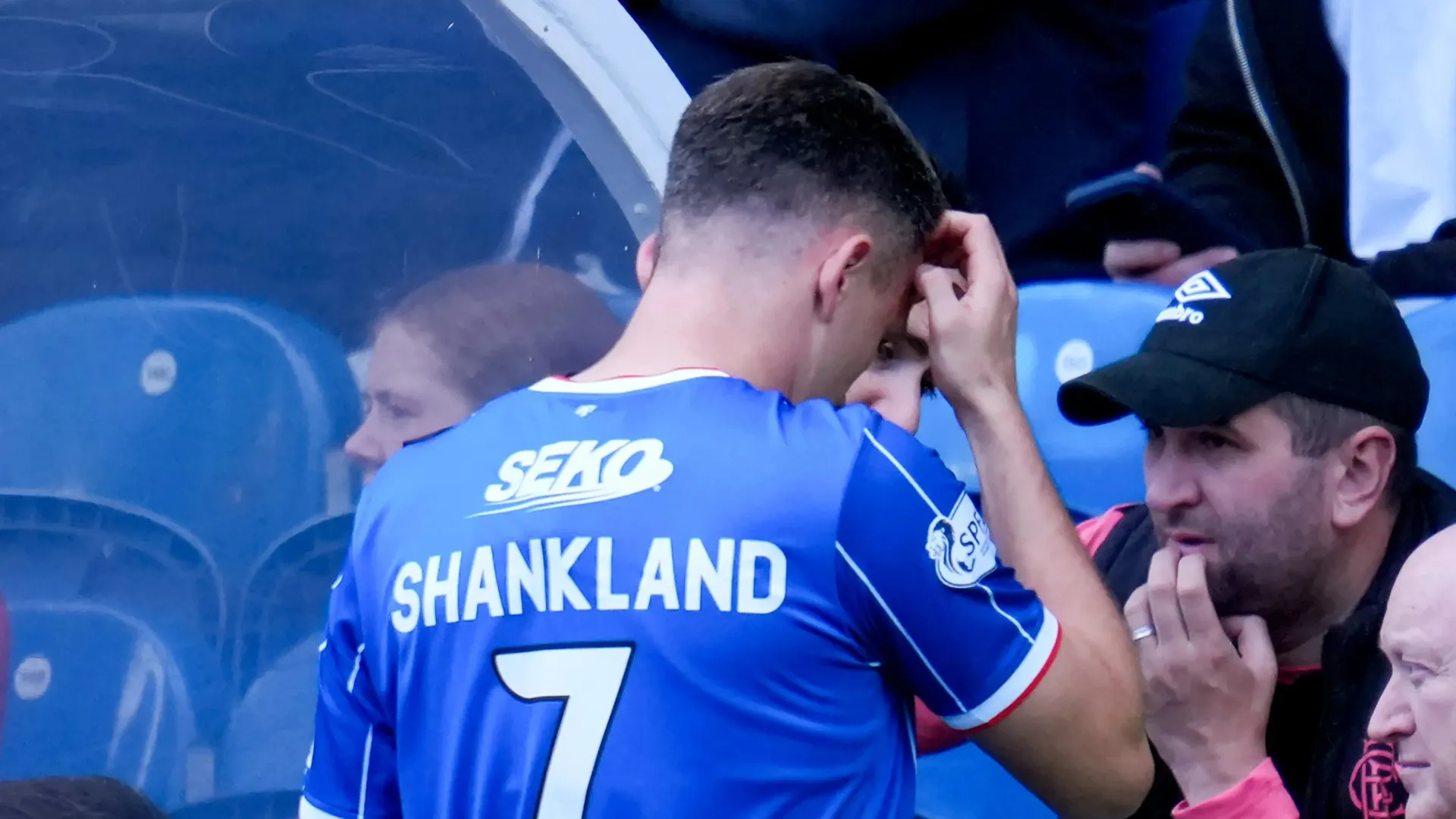
Rangers’ 1-0 win over Motherwell at Ibrox should, in isolation, have been a straightforward story of three hard-fought points and a growing sense of momentum under Derek McInnes. Instead, the headline discussion in the aftermath has shifted almost entirely toward the club’s forward line, after Scotland international Lawrence Shankland was forced off in the early stages of the game with what McInnes described afterward as a “significant” hamstring injury. That single moment has thrust Rangers’ record £9million deadline-day signing, Kevin Kelsy, into the spotlight far sooner than anyone at Ibrox would have planned, and former Rangers goalkeeper Cammy Bell believes the American striker now has little choice but to adapt quickly.
Kelsy’s arrival at Rangers was, on paper, exactly the kind of statement signing supporters had been craving. Signed from Portland Timbers on deadline day for a reported fee in the region of £9million, the move signalled genuine ambition from the Ibrox hierarchy — a significant financial commitment to a striker they clearly believe can lead the line at the highest level of Scottish football and beyond, given the club’s stated ambitions of competing for Champions League qualification.
Big-money signings, though, rarely arrive and settle instantly, particularly when making the jump from Major League Soccer to a completely different footballing culture, physical intensity, and tactical framework in Scotland. The unwritten expectation for almost any player moving between leagues and countries is that there will be an adjustment period — time to get used to new teammates, a new style of play, a new league’s particular rhythms and physical demands, and simply life in a new country altogether. For a striker specifically, that adjustment period often matters even more than for players in other positions, given how reliant forwards are on service, understanding of teammates’ movement patterns, and a settled role within the team’s attacking structure to hit the ground running with actual end product.
That’s precisely the kind of gentle introduction Kelsy was seemingly set to be afforded at Rangers. With Shankland firmly established as the club’s first-choice centre-forward and in the form of his life following two excellent goals against Falkirk, McInnes had every reason to expect he could bring his new signing along steadily — easing him into matchday squads, perhaps starting him in fixtures against less demanding opposition or in cup competition, and building his match sharpness gradually before expecting him to be the focal point of the entire attack against Rangers’ toughest oppnents.
Shankland’s injury against Motherwell has torn up that plan almost
The incident occurred early in Saturday’s match against Motherwell, with Shankland forced off the pitch after picking up what appeared, even in the moment, to be a serious muscular problem. McInnes’s post-match comments did little to soften the blow, describing the issue as a “significant” hamstring injury — language that immediately raised concerns about a substantial spell on the sidelines rather than a knock that might clear up within a week or two.
Hamstring injuries are notoriously unpredictable in terms of recovery timelines, ranging anywhere from a couple of weeks for a relatively minor strain to two months or more for a more serious grade of tear. The specific language used by McInnes — describing it as “significant” — suggests concern at the more serious end of that spectrum, though further scans and medical assessment will likely be needed before Rangers can put a firm timeline on exactly when their talismanic striker might be available again.
For a player who had, by all accounts, just found his rhythm in front of goal, the timing could hardly be worse. Shankland’s brace against Falkirk had been described as excellent, and after what had presumably been a period of settling into life under a new manager and finding his best form, the injury arrives at precisely the moment he was building genuine momentum. That’s a cruel blow not just for Shankland individually, but for a Rangers side that had clearly been building its attacking approach heavily around his movement and goal threat.
If there was a silver lining to emerge from Saturday’s match, it came in the form of Ryan Naderi, who replaced Shankland after the injury and went on to score the only goal of the game to secure the win for Rangers. It’s exactly the kind of contribution that can define a squad player’s season — stepping into an unexpected opportunity created by misfortune elsewhere in the team and delivering when it mattered most.
Naderi’s goal will rightly be celebrated, and it offers McInnes at least some reassurance that his squad has options capable of contributing even when first-choice personnel are unavailable. But few around Ibrox are likely to view Naderi’s performance as a long-term solution to the void left by Shankland’s absence. Squad depth contributions like this one are valuable precisely because they’re unpredictable and occasional — useful in isolated matches, but not something a club can realistically build its attacking strategy around for a sustained period, particularly with Champions League ambitions on the line and a manager already under pressure to deliver results.
That reality is exactly why attention has turned so quickly and so firmly toward Kelsy. Rangers didn’t spend £9million on an American international striker to have him serve purely as a long-term developmental project or a bench option behind more experienced squad members. That kind of outlay demands a return, and with Shankland now sidelined for an uncertain period, the pressure on Kelsy to deliver that return has arrived far earlier than anyone at the club would have
Speaking on the BBC’s Scottish Football Podcast, former Rangers goalkeeper Cammy Bell offered a blunt and pragmatic assessment of the situation facing both Kelsy and his manager. Bell’s central point was straightforward: when a club invests £9million in a striker, there’s a natural and largely unavoidable expectation that he’ll be the one to step in and lead the line when needed, regardless of how much time he’s actually had to adjust to his new surroundings.
Bell was candid in acknowledging that this isn’t the situation McInnes or Rangers would have wanted. Ideally, in his assessment, the club would have preferred to give Kelsy a proper period of adjustment — time to find his feet both in Scottish football generally and within the specific demands of the Rangers first team — before being thrust into a lead role. Instead, circumstances have overtaken those plans, and that gradual introduction is no longer realistically available to him.
He also took time to specifically praise Shankland’s recent form, describing his brace against Falkirk as excellent and noting that the Scotland international had just begun to find his rhythm in front of goal before the injury struck. That context matters — it wasn’t as though Shankland had been struggling and Kelsy was simply waiting in the wings for an inevitable opportunity. Rangers’ first-choice striker was in genuinely good form, making the timing of his injury all the more frustrating from the club’s perspective.
Ultimately, though, Bell’s conclusion was clear and largely unambiguous: with Shankland unavailable for the foreseeable future, it’s Kelsy who Rangers and McInnes will need to lean on to deliver the important goals the club requires, given that the team can no longer rely on their Scotland international to shoulder that burden in the short term.
There’s a particular kind of pressure that comes with being a club’s record or near-record signing, and it’s a pressure that exists almost entirely independent of how the transfer itself came about or how much time a player has genuinely had to adjust. Fees attached to transfers become permanently associated with a player in the public consciousness — supporters, pundits, and media coverage alike will inevitably reference the £9million price tag every time Kelsy’s name comes up, whether he’s excelling or struggling, and that number becomes a kind of permanent yardstick against which every performance gets measured.
That dynamic is compounded significantly by the specific circumstances Kelsy now finds himself in. Being asked to step up and lead the line so soon after arriving at a new club, in a new country, following a serious injury to the player who had been first choice, is about as demanding an introduction as a forward could realistically face. There’s no extended settling-in period, no chance to build match fitness gradually through substitute appearances or cup football against weaker opposition, and no opportunity to develop understanding with his new teammates at a comfortable pace. Instead, he’s likely to be thrust straight into the physical and tactical demands of regular Scottish Premiership football, with the accompanying scrutiny that comes from being the most expensive man on the team sheet.
Whether Kelsy is capable of meeting that challenge remains to be seen. Strikers who arrive from Major League Soccer carry a mixed track record when it comes to adapting quickly to European football, and every individual case depends heavily on factors like physical attributes, tactical adaptability, and simple temperament under pressure. Some have thrived relatively quickly; others have taken considerably longer to find their feet, or never fully adjusted at all. Kelsy’s specific profile, playing style, and characteristics as a striker will go a long way toward determining which category he falls into — but the early signs of how he handles this unexpected trial by fire, forced upon him by circumstances entirely outside his control, will likely shape perceptions of him at Ibrox for a considerable time to
For Derek McInnes, Shankland’s injury adds yet another layer of complexity to what was already shaping up as a demanding period in his tenure. The Rangers win over Motherwell extended the club’s winning run to three matches, a stretch of results that had understandably improved the mood around Ibrox after a difficult start to life under the new manager. Rangers currently sit fourth in the Scottish Premiership table, within striking distance of the top of the division, with genuine ambitions of not just competing domestically but potentially securing Champions League football for the 2027-28 campaign.
Yet that improving picture sits alongside continued reports that McInnes is fighting to keep his job, having won only around half of his matches in charge so far. In that context, losing his most in-form striker to a significant injury represents exactly the kind of setback McInnes can ill afford at this particular moment. Momentum in football is often fragile, built on confidence and settled team selections as much as raw quality, and an enforced change at such a pivotal attacking position risks disrupting the rhythm the team had only just begun to find.
McInnes now faces a genuine tactical dilemma in the weeks ahead. Does he throw Kelsy straight into the starting XI and hope the American forward can adapt on the fly, backing his expensive summer investment to deliver immediately despite the lack of settling-in time? Or does he lean more heavily on alternatives like Naderi, who has just proven he can contribute meaningfully when called upon, potentially protecting Kelsy from being overexposed before he’s ready while accepting the tactical and goalscoring limitations that might come with that more cautious approach?
There’s no obviously correct answer, and the decision will likely depend heavily on training-ground form, fitness levels, and McInnes’s own read of which option gives Rangers the best chance of maintaining their current momentum in upcoming fixtures. What’s clear is that the comfortable, gradual introduction originally planned for Kelsy is no longer realistically on the table, regardless of which specific selection decisions McInnes ultimately makes.
While the immediate focus understandably centres on how Rangers cope in Shankland’s absence, there’s also a human and career dimension to this story worth considering. Shankland had, by every account, just begun hitting his stride following his move to Ibrox, with his performance against Falkirk offering a genuine glimpse of the goal threat that made him such an attractive target in the first place. Injuries at exactly the moment a player is building momentum can be particularly frustrating, both for the individual and for the wider team that had started to reap the benefits of his improving form.
The road back from “significant” hamstring injury, as McInnes described it, will require patience from all parties — the medical staff managing his rehabilitation, the coaching staff planning around his eventual return, and Shankland himself, who will need to guard against rushing back too soon and risking a recurrence of the issue. Hamstring injuries carry a well-documented risk of recurrence if players return to full training and matches before they’re genuinely ready, something Rangers’ medical team will be acutely conscious of managing carefully given how much the team’s attacking output has already come to depend on him this season.
For now, though, the story belongs to Kelsy. Whatever timeline eventually emerges for Shankland’s recovery, Rangers’ record signing finds himself thrust into a leading role at Ibrox far sooner than either he or his manager would have chosen, carrying the weight of a substantial transfer fee and the club’s Champions League ambitions on his shoulders from almost the very moment he arrived. How he responds to that challenge in the coming weeks will go a long way toward shaping not just Rangers’ immediate results, but the broader narrative around one of the more significant investments the club has made in recent memory.