Derek McInnes names Rangers star who has ‘trained brilliantly’ ahead of St Mirren tie

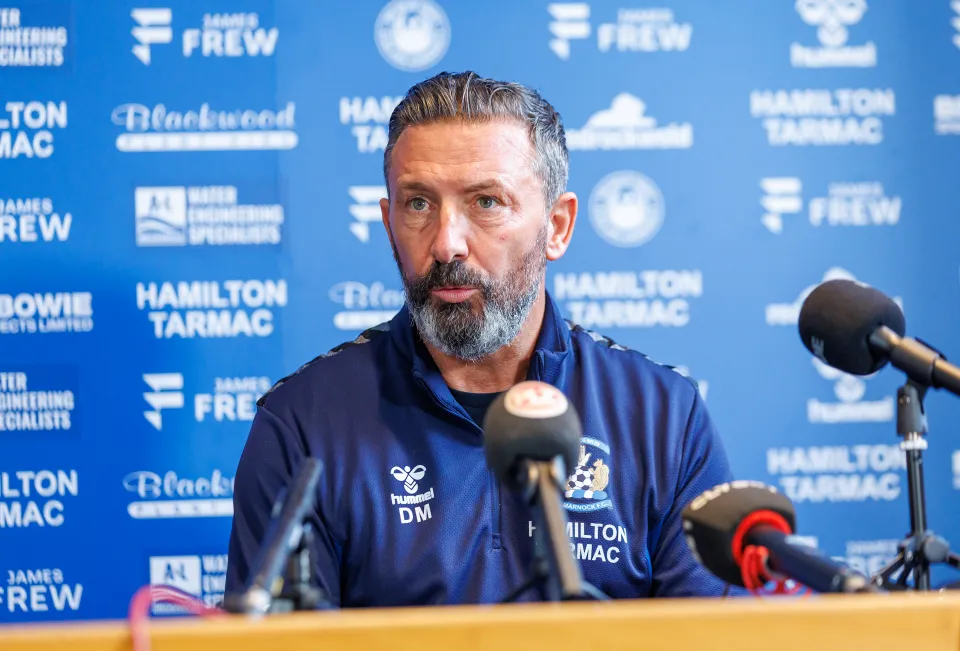
Rangers head into one of the most consequential stretches of their season so far carrying an injury list that continues to grow by the day. With a Premier Sports Cup tie against St Mirren arriving on Wednesday, followed almost immediately by an Old Firm double-header against Celtic across both cup and league competition, Derek McInnes finds himself needing to navigate arguably the most demanding run of fixtures in his short Ibrox tenure while simultaneously managing a mounting list of absentees that shows little sign of easing.
The latest blow arrived in the form of confirmation that summer signing Daisuke Yokota has picked up a groin injury, ruling him out of Wednesday’s meeting with St Mirren at the very least. It’s a frustrating development for a player who arrived at the club with genuine promise, and it adds yet another name to a growing casualty list that already includes some of Rangers’ most significant attacking and squad personne
Speaking to Ibrox News, McInnes confirmed that Yokota had picked up the issue in the build-up to the St Mirren fixture, ruling the winger out of contention for Wednesday’s match at the very least. While the manager didn’t attach a specific recovery timeline to the injury, the framing of his comments suggests the club will need to assess Yokota’s progress on a game-by-game basis rather than committing to a fixed return date at this early stage.
For a summer arrival still working to establish himself within McInnes’s plans, any injury interruption at this stage of the season is unwelcome, disrupting the kind of continuous game time and settling-in period that new signings typically rely on to build match sharpness and integrate fully into a new team’s tactical structure. Yokota’s absence, while perhaps less immediately significant in isolation than some of the other fitness concerns currently affecting the squad, nonetheless adds to an increasingly crowded treatment room at Ibrox and further thins out McInnes’s options across multiple areas of the pit
The Yokota news, however, pales in significance next to the update Rangers received regarding captain Lawrence Shankland, whose hamstring injury sustained during Saturday’s 1-0 win over Motherwell has now been confirmed as considerably more serious than a routine knock. McInnes revealed that Shankland has been diagnosed with a grade 2c tear in his hamstring, a classification that places it firmly among the more significant muscular injuries a player can sustain, and one the manager noted bears a striking resemblance to a similar injury Shankland suffered during his time at Hearts the previous January.
Speaking to The Herald, McInnes laid out the situation facing the club and player in stark terms. He confirmed the club had received official confirmation of the grade 2c classification, directly comparing it to the injury sustained at Hearts, and acknowledged that the path forward in terms of treatment remains genuinely uncertain at this stage. The manager specifically addressed the possibility of surgical intervention, noting that while an operation might shave three to four weeks off the overall recovery timeline compared to a more conservative treatment approach, it could also carry an increased risk of complications or setbacks further down the line — a difficult balancing act that will need careful consideration from Rangers’ medical staff, Shankland himself, and the coaching team as they weigh up the best path back to full fitness.
Rangers had earlier indicated that Shankland would undergo a scan in London within 48 hours of the initial injury to establish the full extent of the damage, and the grade 2c diagnosis now confirms what many had feared in the immediate aftermath of his substitution just minutes into the Motherwell match. Various reports covering the situation have suggested a recovery timeline stretching anywhere from roughly two months up to as long as three-and-a-half months, depending on the specific treatment path chosen and how smoothly his rehabilitation ultimately
The frustration surrounding Shankland’s injury is compounded significantly by the timing. Far from being a player who was already scuffling for form, Shankland had only recently rediscovered his scoring touch, netting from the penalty spot against Aberdeen before following that up with a double against Falkirk in the matches immediately preceding his injury. That run of form had McInnes and Rangers’ supporters alike growing increasingly optimistic about the captain’s ability to lead the line effectively across the season, making his sudden and significant injury all the more painful for everyone connected with the club.
The manner of the injury itself only adds to the sense of misfortune. Shankland lasted barely five or six minutes on the pitch against Motherwell before pulling up and signalling to the bench, immediately clutching at his hamstring in clear discomfort. He was replaced by Ryan Naderi, who would go on to score the game’s only goal within minutes of coming on — offering Rangers at least some consolation on the day, even as the wider implications of losing their captain for an extended period began to sink in.
Shankland’s injury doesn’t exist in isolation. It arrives on top of an already significant absence in Rangers’ forward line, with Youssef Chermiti having already been ruled out for what’s been described as a “significant period” following a serious knee issue, with some reports suggesting the injury could realistically keep him sidelined for the remainder of the entire season. Chermiti’s absence, combined now with Shankland’s extended layoff, leaves Rangers stripped of the two forwards who combined for the vast majority of the club’s attacking output last season, placing enormous pressure on the remaining options in McInnes’s squad to deliver in their place.
Beyond Yokota, Shankland, and Chermiti, Rangers’ treatment room continues to carry several other significant absences that further complicate McInnes’s selection plans heading into this crucial run of fixtures. Tuur Rommens remains unavailable, with McInnes confirming the winger is still a little away from returning to full training and match contention, though the manager has expressed some optimism that Rommens could potentially be back in contention in time for Celtic’s visit to Ibrox in the Premier Sports Cup.
Jose Cifuentes represents another ongoing concern, with the midfielder continuing to manage an injury issue of his own that has limited his involvement this season. Reports have suggested this fitness problem was also a contributing factor behind a potential summer move away from the club failing to materialise, adding a layer of complexity to his situation beyond simply the immediate question of his availability for team selection.
There was, at least, some more encouraging news to emerge from the club’s centre-back department. Emmanuel Fernandez, who was withdrawn late in the win over Motherwell after appearing to be in some discomfort, subsequently downplayed the severity of the issue, describing it as just a minor niggle rather than anything more serious. Fernandez explained that he had simply been cautious given the demanding schedule ahead, not wanting to risk aggravating the problem with St Mirren and the crucial Celtic fixtures rapidly approaching. That’s a reassuring update for McInnes, given how well Fernandez had performed throughout the Motherwell match, with the Nigerian defender receiving praise for a display that came after a period of criticism regarding his overall focus and concentration levels earlier in th
Speaking about the scale of the injury situation currently facing his squad, McInnes offered a candid assessment of just how significant a challenge this represents. He acknowledged that if someone had told him upon first walking through the door at Ibrox that both Chermiti and Shankland would suffer significant injuries within such a short window of each other, he would have felt the full weight of that burden immediately. It’s a rare moment of unguarded honesty from a manager typically inclined to project confidence and composure in his public statements, and it underlines just how seriously the club’s hierarchy is treating the scale of the current attacking crisis.
When specifically asked whether the arrival of deadline-day signing Kevin Kelsy had become even more critical given the circumstances, McInnes was direct in his response, confirming that it had become even more so — an acknowledgement that the American forward, signed for a reported £9.2million from Portland Timbers, is now being relied upon far more heavily and far sooner than originally planned when the move was finalised.
McInnes also drew an interesting parallel between the current attacking crisis and an earlier structural challenge the club faced this season: the departure of long-serving captain James Tavernier, who left Ibrox over the summer to join Kenny Miller’s Maccabi Tel Aviv in Israel. That exit forced a significant rebuild of Rangers’ right-back position, an area of the pitch Tavernier had effectively made his own across more than a decade of consistent service to the club.
The comparison is a pointed one. Just as Rangers lost an experienced, reliable leader in Tavernier and were forced to reconstruct their approach to right-back with less proven, less experienced options, the club now finds itself in a broadly similar situation up front, having lost the established leadership and reliability that both Shankland and Chermiti provided, and now needing new or less experienced options — Kelsy, Naderi, and potentially a reintegrated Bojan Miovski — to step into significantly expanded roles far sooner than anyone at the club would have ideally chosen.
Central to how Rangers navigate this period will be how quickly Kevin Kelsy can adapt to the physical demands of Scottish football and the specific requirements of leading McInnes’s attack. Signed from Portland Timbers for a fee in the region of £9.2million, Kelsy offers a notably different physical profile compared to Shankland, and his rapid integration into the side has become an urgent priority given the scale of the club’s attacking absences.
Kelsy has already had a brief taste of first-team action, coming off the bench during the Motherwell match and striking the crossbar during his cameo — a promising if fairly modest sign of the direct goal threat he might eventually offer once fully settled into his new surroundings. Whether McInnes opts to throw him straight into the starting lineup against St Mirren, or continues to ease him in more gradually given the limited time he’s had to adjust since his transfer, will be one of the most closely watched selection decisions of the coming week.
Ryan Naderi’s role in Rangers’ plans has also grown considerably as a result of the recent injury news. Having already delivered when called upon against Motherwell — scoring the winning goal within minutes of replacing Shankland — the German forward has strengthened his claim to a more regular starting role during this period of enforced attacking reshuffling.
McInnes has previously praised aspects of Naderi’s game beyond simply his finishing ability, highlighting his pressing intensity and physical presence as valuable attributes that add a different dimension to the team’s overall attacking approach. With both Shankland and Chermiti now unavailable, Naderi looks set to be a central figure in however McInnes chooses to configure his forward line across the coming weeks, starting with Wednesday’s cup tie against St Mirren.
The scheduling itself only heightens the stakes surrounding this current injury crisis. Rangers face St Mirren at Ibrox in the Premier Sports Cup on Wednesday, before turning their attention almost immediately to a hugely significant Old Firm double-header against Celtic, contested first in cup competition and then in the league shortly afterward. Navigating that demanding stretch of fixtures while missing key personnel across multiple areas of the pitch represents about as stern a test as McInnes has faced since taking charge at Ibrox.
There is, at least, some cause for cautious optimism heading into this period. Rangers arrive at this juncture on the back of three wins in six days, a run of form that has helped settle some of the earlier-season concerns about McInnes’s start to life as manager. The club has also stressed, through various channels, that there remains a good feeling around the training ground despite the mounting list of absentees — suggesting morale within the squad remains solid even as the list of unavailable players continues to grow.
Whether that positive underlying mood can be sustained through a fixture list as demanding as the one now facing Rangers, without further reliance on unproven or returning players from the treatment room, will go a long way toward determining how successfully the club navigates this particularly challenging stretch of the season. With Champions League ambitions very much still alive and the small matter of two fixtures against fierce rivals Celtic on the immediate horizon, McInnes will be hoping his depleted but resilient squad can find a way to maintain their recent momentum, even as the club’s medical staff continue working to return key personnel to full fitness as quickly and safely as possible.
For now, all eyes at Ibrox turn toward Wednesday’s meeting with St Mirren, which will offer the first real indication of how McInnes intends to reshape his side in light of the latest round of injury news. Team selection, formation choices, and which combination of Kelsy, Naderi, and potentially other options are trusted to lead the attack will all be closely scrutinised, both as a standalone selection decision and as a signal of how McInnes plans to approach the considerably bigger test of facing Celtic twice in quick succession immediately afterward.
With Yokota now added to a list that already includes Shankland, Chermiti, Rommens, and Cifuentes in various states of unavailability, Rangers’ squad depth is being tested more severely and more suddenly than anyone at the club would have anticipated at the start of the season. How McInnes manages this period — balancing the immediate demands of a hugely significant run of fixtures against the longer-term need to protect his existing personnel from further injury setbacks — will likely go a considerable way toward shaping the remainder of Rangers’ campaign, and quite possibly the manager’s own longer-term standing at the club as he continues working to establish his methods and build genuine momentum at Ibrox.