Football has always had its own particular customs for how a player finds his next club — a network of agents whispering in the right ears, scouts filing reports back to recruitment departments, transfer windows opening and closing with their familiar rhythms of speculation, medicals, and unveiling photos holding up a new shirt. What football hasn’t traditionally had, at least not in any prominent, headline-generating way, is a professional footballer simply posting on LinkedIn that he’s available and inviting direct messages from interested employers. That’s precisely what makes Ovie Ejaria’s recent public appeal so unusual, and precisely why it’s cut through into football media coverage in a way that a more conventional “free agent seeking club” story rarely would
Ejaria’s message, posted directly to the professional networking platform, was refreshingly direct in its phrasing — the kind of clear, almost transactional language you might expect from someone updating their professional status after being made redundant from a corporate job, rather than the carefully managed, agent-mediated communications that typically accompany a footballer’s search for a new contract. “I’m currently a free agent and looking for the right opportunity,” he wrote, before getting specific about exactly what kind of role he’s hoping to find: “If there’s an opportunity or you know of a club looking for a midfielder (6, 8 & 10) or someone who can play as a left winger, please feel free to DM me.”
There’s something genuinely striking about the format itself. LinkedIn is a platform built around corporate networking, job applications, and professional self-promotion in white-collar industries — accountants updating their status after a layoff, marketing executives seeking their next role, recent graduates hunting for entry-level positions. It’s not a platform historically associated with professional athletes, whose employment situations are typically handled through considerably more insular, relationship-driven channels: agents who maintain ongoing relationships with multiple clubs, scouting networks that track player availability continuously, and a transfer market culture where a player’s own public solicitation of interest can sometimes be read as a slightly desperate signal rather than a savvy piece of self-marketing. That Ejaria chose this particular route — public, direct, platform-agnostic in terms of typical footballing convention — is exactly what’s elevated what would otherwise be a fairly minor free-agency story into something picked up and discussed across multiple football news outlets.
To understand why Ejaria finds himself in this position at 28 — an age that should, in football terms, still represent a player’s prime professional years — it’s worth examining what happened during his most recent spell at Real Oviedo. He joined the Spanish club and spent last season with them in La Liga, Spain’s top flight, but his time there was defined more by frustration than opportunity. He made just eight league appearances across the entire campaign, a genuinely minimal amount of game time for a player of his experience and pedigree, and the season ended in relegation for Oviedo, sending the club back down to the Spanish second tier.
That combination — limited personal game time layered on top of a struggling, ultimately relegated collective — represents about as difficult a season as a footballer can experience without an outright, career-threatening individual crisis. It’s the kind of campaign that naturally prompts a player and his representatives to reassess their situation entirely: rather than staying at a club now playing in a lower division and hoping to force his way back into regular contention, Ejaria has instead opted to move on entirely, becoming a free agent and beginning the search for a fresh opportunity elsewhere, ideally somewhere he can secure the kind of regular, meaningful playing time that eluded him during his time in
Ejaria’s professional journey has taken him through a genuinely broad cross-section of European football over the course of his career, and that breadth of experience is central to how he’s framing his current pitch to potential suitors. His footballing education began at Liverpool, where he came through the club’s famed academy system during a period that produced several players who would go on to establish themselves at various levels of the professional game. From Anfield, his path led him through spells at Sunderland, Rangers, Reading, and most recently Real Oviedo — four different clubs across three different countries, England, Scotland, and Spain, each presenting its own distinct footballing culture, tactical demands, and competitive environment.
That kind of multi-country career path cuts both ways when it comes to how potential employers might assess a player’s suitability. On one hand, it demonstrates genuine adaptability — a player who’s proven capable of integrating into different footballing systems, different languages and cultures, and different levels of competitive intensity across his career, rather than remaining within the comfortable confines of a single domestic league throughout. On the other hand, a career that’s moved through quite so many clubs by the age of 28, without ever fully establishing himself as an undisputed first-choice starter at any single one of them for an extended, multi-season period, can also read as a player who’s struggled to find a genuinely settled home — someone whose considerable natural talent, evident enough to earn opportunities at a Premier League academy and multiple senior clubs across different leagues, hasn’t yet translated into the kind of sustained, undisputed first-team status that defines a truly successful professional career.
What Ejaria is clearly leaning on most heavily in his public pitch is his positional versatility — a genuinely valuable attribute in the modern game, where squad depth and tactical flexibility are increasingly prized by managers and recruitment departments alike. His self-description as capable of playing as a No. 6 (a deeper, more defensively oriented central midfield role, focused on shielding the back line and dictating tempo from a withdrawn position), a No. 8 (a more box-to-box role, combining defensive contribution with forward running and support play), or a No. 10 (a more advanced, creative playmaking position, operating between the lines and looking to unlock defences with incisive passing) speaks to a player who’s comfortable across the full breadth of central midfield responsibilities, rather than being narrowly specialized in just one specific function. His additional claim to being able to operate on the left wing further broadens his potential utility, offering a manager the option of deploying him in a wide attacking role as well as anywhere across the central midfield spectrum.
For a club assessing whether to take a chance on a free agent — inherently a lower-risk, lower-commitment kind of signing than a paid transfer, since there’s no fee involved and typically shorter, more easily terminable contract terms — that kind of stated versatility is precisely the sort of attribute that can make a player an attractive squad addition even without the guarantee of a clearly defined, undisputed starting role. A manager building squad depth heading into a new season, particularly at a club operating with a smaller first-team squad or facing its own injury concerns, might well see genuine value in a free, experienced, multi-positional midfielder available to integrate immediately, without the drawn-out negotiations, medical complications, and transfer fee considerations that typically accompany a paid signing.
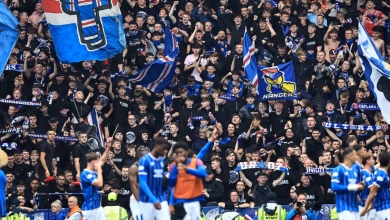
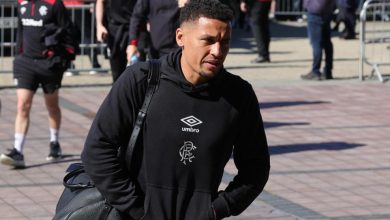
It’s Ejaria’s time at Rangers, though, that gives this story its specific “eight years” framing and its most resonant emotional hook for a Scottish football audience. He arrived at Ibrox on loan from Liverpool during the 2018/19 season, a period that saw him working directly under Steven Gerrard — the Rangers legend who had, by that stage, moved into management and was in the process of rebuilding the club following its well-documented financial collapse and subsequent climb back through the lower tiers of Scottish football earlier in the decade. Gerrard’s Rangers project would eventually culminate, a couple of years later, in the club’s remarkable “Invincible” title-winning campaign of 2020-21, ending Celtic’s nine-year stranglehold on the Scottish Premiership — but Ejaria’s specific loan spell predates that ultimate triumph, situating him within the earlier, foundational stages of Gerrard’s rebuild rather than its eventual crowning achievement.
By most accounts, Ejaria made a strong early impression during his loan spell at Ibrox, showing enough quality and promise to be remembered fondly by those tracking Rangers’ progress during that period — a spell that also included involvement in the club’s European campaign that season, with reporting specifically noting the connection to Rangers’ Europa League qualifying tie against FK Shkupi at Ibrox as part of the broader European run he was involved with during his time in Glasgow. That kind of positive, if relatively brief, association with a specific, fondly-remembered period of a major club’s recent history tends to generate a particular kind of enduring goodwill among that club’s supporters — even years after a player has moved on to other clubs and other chapters of his career, a strong loan spell during a formative, romantic period of a club’s rebuilding story often earns a player a lasting, warm place in that fanbase’s collective memory.
That’s precisely why the “eight years after Rangers” framing carries the resonance it does. It’s not simply a chronological marker noting the passage of time since Ejaria’s Ibrox spell concluded; it’s an implicit invitation for Rangers supporters, and the broader Scottish football media that covers the club so extensively, to reflect on how far Ejaria’s career has traveled since those early days under Gerrard — from a promising loan player at a club in the midst of an ambitious rebuild, through spells at Reading and Real Oviedo, to now, at 28, finding himself without a club and turning to an unconventional public appeal on a professional networking platform in search of his next
Ejaria’s approach, while unusual within football specifically, does connect to a broader pattern that’s become increasingly visible across professional sports and other high-profile industries in recent years: athletes and other public figures using social media and professional networking platforms directly, bypassing traditional intermediaries, to communicate their availability, their achievements, or their search for new opportunities. Whether that reflects a genuine shift in how football’s transfer market operates at its margins — particularly for players who find themselves as free agents outside the structured rhythms of major transfer windows, when clubs’ attention and recruitment resources are typically more heavily focused elsewhere — or simply an individual player and his representatives making a calculated decision to generate additional visibility and interest through an unconventional channel, is difficult to say definitively from the outside. What’s clear is that the approach has achieved at least one of its likely intended outcomes: genuine media attention and discussion of Ejaria’s situation, generated specifically because of the unusual nature of how he chose to make his availability known, rather than through any more conventional transfer speculation or agent-sourced reporting.
For now, Ejaria’s situation remains genuinely open-ended. He’s without a club, actively and publicly seeking his next opportunity, and has cast a deliberately wide net in terms of the positions and roles he’s presenting himself as capable of filling. His experience across England, Scotland, and Spain offers him a genuinely broad base of potential markets and leagues where interested clubs might emerge, and his specific positional versatility — spanning the full central midfield spectrum plus a left-wing option — gives him more potential squad-fit scenarios than a more narrowly specialized player might have available to him.
Whether his direct, LinkedIn-based appeal ultimately proves successful in generating the kind of serious, concrete interest that leads to his next contract, or whether it ends up being remembered primarily as a curious, attention-generating footnote in an otherwise fairly ordinary free-agency situation, will only become clear as the coming weeks and months unfold. Football’s transfer market, even outside the major structured windows, does continue to operate on an ongoing basis for free agents specifically — clubs facing unexpected injury crises, squads looking to add experienced depth on low-risk, no-fee terms, or managers simply keeping a watching brief on available talent that might strengthen their options as a season progresses, all represent plausible pathways through which a genuine opportunity could still emerge for a player in Ejaria’s position.
What’s already certain, though, is that his unusual approach has achieved a level of visibility that a more conventional, behind-the-scenes agent-driven search likely wouldn’t have generated — ensuring that, eight years on from his time working under Steven Gerrard during the early, formative stages of Rangers’ post-administration rebuild, Ovie Ejaria’s name is once again, however briefly, part of the conversation across Scottish football media. Whether that visibility translates into the “right opportunity” he’s explicitly seeking remains, for now, an open question — one that will likely be answered not through the traditional channels of agent negotiations and transfer rumour columns, but potentially, at least in part, through the direct messages his public LinkedIn appeal was specifically designed to invite.