Rangers star reveals what Derek McInnes told squad in team meeting amid ‘Bad’ situation

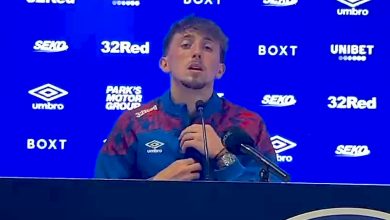
Rangers defender Jefte Fernandez has lifted the lid on the message Derek McInnes delivered to his players during a team meeting held in the aftermath of one of the most difficult opening spells to a season in the club’s recent history, revealing that the Rangers manager used the meeting to remind his squad that, despite a chastening European exit and an admittedly underwhelming start domestically, there remain three separate trophies still very much within reach this season. It’s a rare and useful window into the dressing room during what has, by any measure, been a turbulent few months at Ibrox, and Fernandez’s comments, carried by the Scottish Sun, paint a picture of a group that has been honest with itself about its shortcomings while also being given a clear and pointed reminder from its manager about where the genuine opportunities for success still lie.
To understand why that message from McInnes mattered so much, and why it has been picked up and dissected so widely by supporters and media alike, you have to go back to the circumstances that prompted it. McInnes arrived at Ibrox over the summer with a considerable reputation to live up to, having guided Hearts to within touching distance of a shock Scottish Premiership title the previous season, a run of form that made him one of the most talked-about managerial appointments in Scottish football when Rangers moved to bring him in. Expectations, inevitably, were high from the very start, and the early results did nothing to temper the anxiety that tends to surround any new manager walking into Ibrox given the club’s recent history of instability in the dugout.
Rangers endured a genuinely alarming opening stretch under their new boss, going through four competitive fixtures without registering a single win, a run that included a home Premiership debut defeat to Hibernian that saw star striker Youssef Chermiti carried off on a stretcher, adding injury concern to an already difficult night. Worse was still to come. Rangers’ participation in the Europa League was ended at the qualifying stage by Polish outfit Jagiellonia Białystok, a defeat McInnes himself described as mortifying and embarrassing, with his side managing just a single shot on target across the full one hundred and twenty minutes of the tie. Falling out of continental competition before the calendar had even reached September represented a significant blow, both in terms of reputation and, just as importantly, the finances of a club that had built certain budgetary expectations around European qualification. Losing that revenue stream so early in the season added an extra layer of pressure to an already difficult situation, and with injuries mounting, including the long-term loss of Chermiti to a cruciate ligament injury and a groin issue for left-back Tuur Rommens, McInnes found himself navigating a genuine early-season crisis rather than simply working through the normal teething problems of a new managerial appointment.
It was in the aftermath of that Jagiellonia defeat, and amid a broader sense that the wheels could be coming off before the project had even properly begun, that McInnes gathered his squad and delivered the message Fernandez has now spoken about publicly. Rather than simply venting frustration or dwelling on the negatives of a genuinely disappointing few weeks, McInnes is understood to have used the meeting to reframe the players’ focus, pointing out to them that although the disappointment of missing out on European football was real and had to be acknowledged, the club still had three separate trophies realistically in play across the remainder of the season: the Scottish Premiership title, the Scottish League Cup, and the Scottish Cup. It was, by Fernandez’s own account, a message designed to refocus a group that could easily have allowed the disappointment of the European exit to spiral into something far more damaging to morale and confidence heading into the business end of a long campaign.
Fernandez’s own words on the matter, relayed through the Scottish Sun, offer a candid and refreshingly self-aware assessment of where Rangers currently stand as a group. The 24-year-old Nigeria international, who has become an increasingly important figure in McInnes’ defensive setup, acknowledged that his own individual form this season could have been better, but was equally quick to extend that same honest assessment to the team as a whole, suggesting that collective performances have not always matched the levels required at a club of Rangers’ stature. That kind of candour from a current first-team player is not always common in football, where the instinct to protect the dressing room and present a united, defiant front to the media often takes precedence over genuine self-criticism, and it speaks to a squad that appears to have adopted an unusually honest internal culture under its new manager, one where problems are named and confronted directly rather than glossed over.
At the same time, Fernandez was careful to balance that honesty with a clear sense of optimism about the direction of travel under McInnes, describing a growing sense of togetherness within the group and suggesting that, even if results and performances have not always been at the level required since the club’s win over Aberdeen, there has nonetheless been a discernible improvement in how the team is growing and developing as a unit. That framing, of a team still very much a work in progress but one that is trending in the right direction, aligns closely with the broader narrative that has begun to take hold around Ibrox over the past couple of weeks, as Rangers have started to turn a corner on the pitch even if question marks over the manager’s long-term suitability for the role have not entirely disappeared.
That improvement in results has been significant and has arrived at exactly the right time to lend genuine credibility to the message McInnes delivered in that team meeting. Since the darkest days of the Jagiellonia exit, Rangers have put together a run of form that represents by far their best spell of the season, winning three Scottish Premiership matches in a row against Falkirk, Aberdeen, and Motherwell, a sequence that included the club’s first back-to-back league victories of the entire campaign. Those results have not always come with the kind of free-flowing, convincing performances that might fully banish lingering doubts about the team’s overall quality and cohesion, and Fernandez’s own admission that performances have not always matched the level of the results reflects a broader awareness within the camp that these have, in some senses, been marginal victories built more on resilience and growing togetherness than outright dominance. But results, at this stage of a difficult season, matter more than performance quality, and three consecutive wins have done more to settle nerves around Ibrox than any amount of reassuring rhetoric from the manager could have achieved on its own.
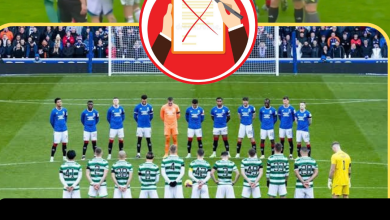
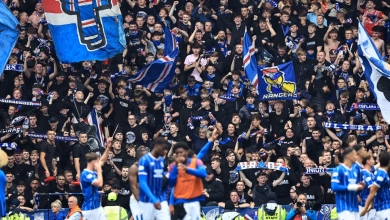
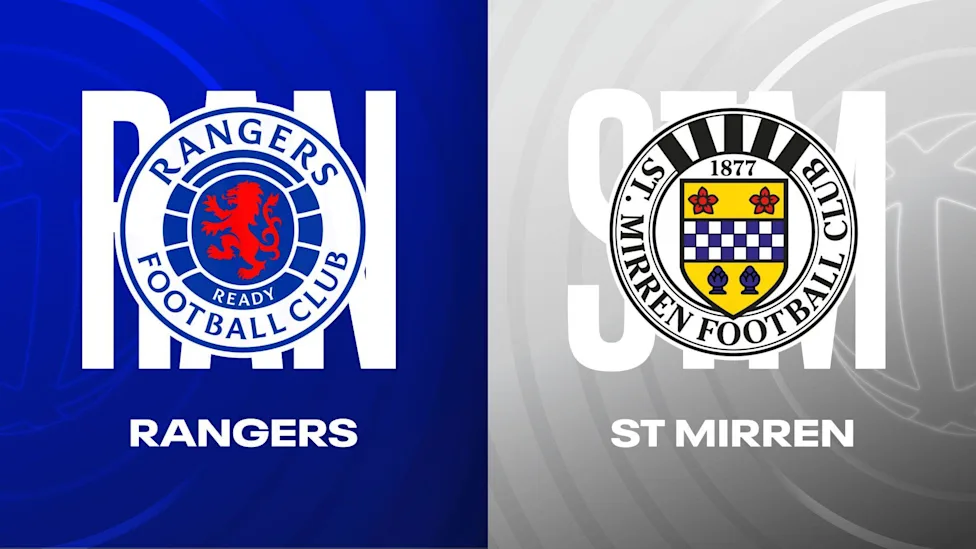
The significance of McInnes’ three-trophies message becomes even clearer when you consider the fixtures that now lie immediately ahead of his side. Rangers face St Mirren at home, a genuine six-pointer of sorts given the Buddies’ own strong start to the season under new permanent boss Craig McLeish, before turning their attention to what is undoubtedly the biggest fixture of the season so far: a home Old Firm derby against Celtic, played out, notably, without away supporters present following an SPFL statement on crowd safety measures. Losing either of those fixtures would represent a significant setback to any lingering hopes of a genuine title challenge this season, and McInnes will be acutely aware that the goodwill generated by three straight wins could evaporate quickly if his side stumbles against a rejuvenated St Mirren or, worse, suffers defeat in the white heat of an Old Firm derby played out in front of a partisan, expectant home support desperate for a response after such a difficult European exit.
It’s worth noting, too, that McInnes’ broader public commentary throughout this period has been consistent with the message Fernandez has now revealed from behind closed doors. Even during the darkest moments of the four-game winless start, McInnes was careful never to fully concede that his Rangers side were as poor as some of the more alarmist reactions suggested, insisting at various points that the group was not as bad as some critics were making out and that the priority was to stay strong and united while working through what he described as a challenging period of integration for a heavily reshaped squad. That same underlying message, a plea for patience and unity in the face of external pressure and internal disappointment, appears to have carried through directly into the private conversations McInnes has had with his players, with Fernandez’s comments confirming that the manager has been consistent in both his public and private handling of a difficult opening stretch to the campaign.
There is also a wider context worth considering when assessing why McInnes chose to frame his message around the club’s remaining trophy opportunities rather than simply focusing on damage limitation. Rangers’ ownership group, led by chairman Andrew Cavenagh since the American consortium’s takeover, has been explicit in recent public comments about wanting to move away from a cycle of instability and short-termism that has characterised the Ibrox dugout in recent years, with seven different permanent managers having occupied the position in under five years before McInnes’ arrival. Cavenagh has previously acknowledged at a shareholders meeting that a pattern of the club finishing second, or worse, had become deeply ingrained at every level of the football operation, and there is a clear institutional desire from the very top of the club to break that cycle and build something more sustainable, even if that requires showing patience through a difficult early period rather than reaching for the usual quick-fix solution of dismissing the manager at the first sign of trouble. McInnes’ insistence to his players that three trophies remain genuinely winnable can be read, in that light, as part of a broader effort to instil the kind of long-term thinking and resilience that the club’s hierarchy has publicly stated it wants to embed throughout the football department, rather than allowing a difficult opening month to derail the entire season’s ambitions.
For Fernandez personally, his willingness to speak so openly about both his own shortcomings and the manager’s private message to the squad also says something about the kind of leadership qualities beginning to emerge from within a young Rangers dressing room still finding its feet under a new head coach. The Nigeria international has quickly established himself as a reliable and increasingly vocal figure within the group, and his comments suggest a player fully bought into the process McInnes is trying to build, even while acknowledging its imperfections. That kind of honest internal buy-in from senior or increasingly influential players is often cited as one of the most important ingredients in helping a struggling team turn a corner, and if Rangers’ recent run of results is any indication, that message from McInnes, however uncomfortable it may have felt to deliver in the raw aftermath of a European exit, appears to be having exactly the galvanising effect the manager intended.
Whether that momentum can be sustained through the coming week’s back-to-back tests against St Mirren and Celtic remains to be seen, and McInnes himself would surely acknowledge that talk of three trophies still being achievable will count for very little if his side fails to deliver results in precisely the kind of high-pressure fixtures that now lie directly ahead. But for a Rangers squad that only a matter of weeks ago found itself out of Europe entirely and staring down the barrel of a genuine crisis, the fact that its own players are now speaking with a growing sense of togetherness and cautious optimism, while still being honest enough to admit performances need to keep improving, represents a meaningful shift in tone from the darkest days of late summer. McInnes will hope that shift, forged in part by that pointed team meeting message about the trophies still up for grabs, continues to translate into results on the pitch when it matters most.