Rangers suffer further injury blow as Daisuke Yokota out for two to three months

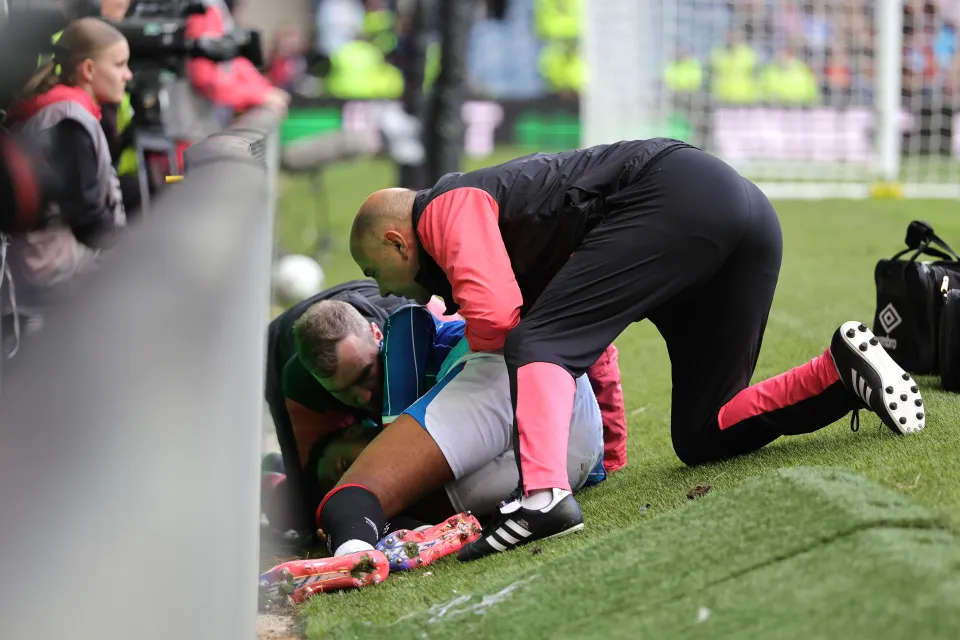
Rangers have been dealt another significant fitness setback after Derek McInnes confirmed that Japanese winger Daisuke Yokota will undergo surgery on a torn groin muscle that is expected to keep him sidelined for somewhere in the region of two to three months, adding yet another name to what has become an increasingly lengthy and worrying list of absentees for the Ibrox boss to contend with as his side heads into the most demanding stretch of fixtures so far this season. The news arrived within twenty-four hours of Rangers’ hard-fought 1-0 victory over St Mirren, a result achieved without either Yokota or captain Lawrence Shankland, both of whom are now scheduled to go under the knife with the same surgeon in London this week, and it underlines just how significant an injury crisis McInnes finds himself managing at exactly the moment his side had begun to show genuine signs of building momentum.
Yokota’s situation only came to light after the club sent the winger for a scan on Monday, a routine precaution that revealed something considerably more serious than had initially been feared. Rather than a straightforward muscle strain, the scan showed that Yokota had actually torn the muscle away from the tendon in his groin, an injury McInnes himself described as unusual and unpredictable enough that the surgeon involved determined an operation was necessary rather than attempting to manage the issue through rest and rehabilitation alone. That decision means Yokota now faces a recovery timeline stretching to two or three months, a considerable blow for a player who had been growing into an increasingly important attacking outlet on the right side of Rangers’ forward line since his summer move to Ibrox.
The timing of this latest setback compounds an already difficult picture in the treatment room at Ibrox. Yokota’s operation is scheduled to take place in London on Thursday, the same day and, remarkably, under the care of the same surgeon who will also be operating on Shankland’s recurring hamstring problem. McInnes revealed that the decision to proceed with surgery on his captain’s hamstring, rather than continuing with a more conservative rehabilitation approach, was driven by a desire to minimise the risk of the injury recurring yet again, acknowledging that while there remains no absolute guarantee against future flare-ups, the operation should provide the squad with greater confidence going forward, even if it extends Shankland’s expected return by a further three to four weeks compared to a non-surgical recovery path. The Rangers captain is now expected to be out of action for up to four months in total, a timeline that will keep him sidelined deep into the winter period and rules him out of involvement in a series of pivotal fixtures across both domestic and cup competitions.
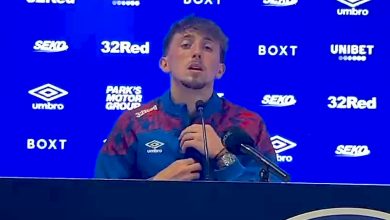
Speaking about the unusual coincidence of sending two players to the same surgeon on the same day, McInnes struck a wry note, quipping that the surgeon in question was effectively getting two operations for the price of one, with Shankland going under the knife first before Yokota follows immediately afterward. It was a rare moment of levity in what has otherwise been a genuinely challenging few days for the Rangers manager, who now finds himself needing to reshape both his midfield and attacking options for the second time in a matter of weeks due to fresh injury concerns.
Neither Yokota nor Shankland featured in Wednesday night’s narrow win over St Mirren, a victory secured in the most dramatic of circumstances when substitute Bojan Miovski raced onto a Ryan Naderi flick-on in the final seconds of normal time to lob home the only goal of the game. McInnes made three changes to the side that had beaten Motherwell in the previous fixture, handing full debuts to deadline-day arrivals Badredine Bouanani and Kevin Kelsy while also recalling Naderi to the starting lineup, reshuffling forced in no small part by the mounting absentee list that now includes Shankland, Yokota, and long-term absentee Youssef Chermiti, who continues his recovery from a serious cruciate ligament injury sustained earlier in the campaign.
Reflecting on the performance itself in the aftermath of the win, McInnes was notably frustrated that his side had not managed to make their first-half dominance count on the scoreboard, describing it as close to criminal that Rangers failed to find a breakthrough during a period in which St Mirren goalkeeper Jacob Chapman was called upon to make several important saves to keep the scores level. That frustration reflects a broader pattern that has emerged across Rangers’ recent run of victories, with the team finding a way to grind out results despite performances that have not always matched the fluency or clinical edge McInnes will ultimately want to see from a squad assembled with considerable summer investment behind it.
The scale of Rangers’ current injury list is worth pausing on, because it represents a genuinely significant challenge for any manager to navigate, let alone one still working through his first months in the job at a club with the size and expectation of Rangers. Chermiti’s long-term absence with a cruciate injury had already deprived McInnes of one of his most talented attacking options for the majority of the season, while Shankland’s hamstring problem, now requiring surgical intervention, removes the captain and primary attacking focal point from contention for up to four months. Yokota’s addition to that list, with a similarly lengthy two-to-three-month recovery period now attached to his name, leaves Rangers’ attacking options looking considerably thinner than they did at the start of the season, despite the considerable resources invested in bringing in Kelsy and Bouanani during the summer and on deadline day respectively.
It is against this backdrop that the emergence of players such as Miovski and Naderi as reliable attacking options takes on even greater significance. Both players have found themselves thrust into more prominent roles than might otherwise have been expected at this stage of the season, and both have responded with match-winning contributions in recent weeks, Naderi having scored the winner against Motherwell before providing the assist for Miovski’s decisive intervention against St Mirren. With so many of Rangers’ more established or higher-profile attacking options now sidelined through injury, the ability of squad players like Miovski and Naderi to step up and deliver in big moments has arguably become one of the more important subplots of Rangers’ season so far, offering McInnes at least some reassurance that his squad possesses sufficient depth to cope with an injury list that would test the resources of most clubs in the division.
The wider implications of losing both Shankland and Yokota for an extended period stretch well beyond the immediate concern of who fills their places in the starting eleven. Shankland’s importance to Rangers’ overall attacking approach has been well documented since his arrival at the club, with McInnes having built a considerable portion of his tactical setup around the captain’s movement and goal-scoring instincts in the final third. Replacing that influence, even with the summer additions of Kelsy and others, was always going to represent a challenge, and the fact that his recovery timeline has now been extended by surgery rather than shortened makes the search for consistent output from elsewhere in the squad all the more pressing heading into a run of fixtures that includes a Premier Sports Cup quarter-final against Celtic this weekend and a league trip to Celtic Park the following week.
Yokota’s absence carries its own significant implications, even if his profile has perhaps been slightly lower than some of his more heavily backed attacking teammates since his summer arrival from Japan. The winger had been growing into his role on Rangers’ right flank, offering pace and direct running that complemented the more patient build-up play favoured by others in the squad, and his removal from contention for the next two to three months leaves McInnes with fewer specialist wide options to call upon, particularly with Bouanani still finding his feet following his own recent arrival and Djeidi Gassama having endured a quieter evening against St Mirren before making way for Miovski.
There is also a broader financial and squad-planning dimension to consider. Rangers invested significant resources over the summer and again on deadline day in reshaping their attacking options, bringing in Kelsy, Bouanani, and others as part of a rebuild designed to give McInnes the tools to compete on multiple fronts this season. Seeing two more established attacking players ruled out for a combined stretch of several months so early into that rebuild inevitably raises questions about squad depth, and it would not be a surprise if the club’s recruitment focus in January comes to be shaped, at least in part, by the lessons learned from navigating this current spell of misfortune in the treatment room. The previously reported interest in bringing Lewis Ferguson back to Ibrox in the winter window, while primarily a midfield-focused pursuit, forms part of a broader picture of a club recognising the need for greater squad strength in depth if it wants to sustain a challenge across league, cup, and any European commitments that may yet arise.
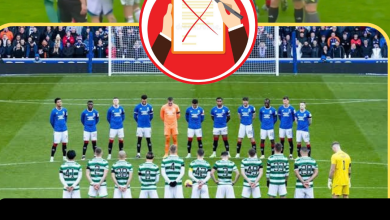
For now, though, the immediate priority for McInnes and his coaching staff will simply be managing the players currently available to him as effectively as possible heading into what remains a hugely significant week for the club. Rangers welcome Celtic to Ibrox for a Premier Sports Cup quarter-final this weekend, a fixture that will be played without away supporters present following an SPFL statement on crowd safety measures, before making the short trip to Celtic Park for a league fixture just days later. Both matches will test the resilience and adaptability McInnes has spoken about wanting to build into his squad since the darker days of the club’s early-season struggles, and doing so without two more significant attacking options only adds to the scale of the challenge facing a Rangers side that has, nonetheless, shown genuine signs of coming together over its recent four-match winning run.
There will be an understandable temptation among supporters to view this latest news through a lens of frustration and concern, given how central both Shankland and Yokota had appeared to McInnes’ plans for the season, but the manager’s own composed handling of the situation, right down to his relatively light-hearted observation about the shared surgeon, suggests a level head remains in charge of navigating this latest setback. Rangers have already shown over the course of the past month that they possess sufficient resilience and squad depth to grind out results even amid considerable adversity, and while losing two more significant contributors for an extended period is far from ideal timing given the fixtures immediately ahead, McInnes will be hoping that the same spirit and togetherness that carried his side through a difficult opening stretch to the season can once again be called upon as Rangers navigate this fresh round of injury misfortune heading into the business end of what remains a pivotal month in the club’s campaign.