The debate over one of the more contentious refereeing moments from Rangers’ dramatic 1-0 victory over St Mirren has taken a fresh and unexpected twist, with former PGMOL chief Keith Hackett publicly breaking ranks from the growing chorus of criticism directed at referee Don Robertson and VAR official Steven McLean, instead accusing St Mirren winger Ismeal Kabia of simulation and insisting the officials got the call spot on when they waved away penalty appeals during the first half of Wednesday’s contest at Ibrox. Speaking exclusively to Ibrox News, Hackett offered a starkly different reading of the incident to the one put forward by former Rangers midfielder Andy Halliday and ex-referee Bobby Madden, both of whom had described the missed penalty call as a serious and unforgivable error in the immediate aftermath of the match.
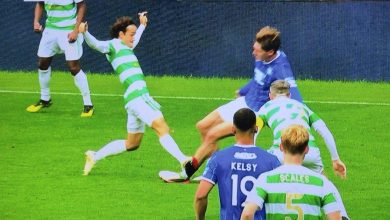
The flashpoint at the centre of this ongoing disagreement occurred when Kabia burst into space behind the Rangers defence during the first half, with Emmanuel Fernandez arriving to challenge for the ball as the St Mirren winger looked to advance into the penalty area. Kabia went down under the challenge, prompting appeals from the St Mirren bench and support for a penalty, but referee Robertson waved play on, and with no intervention from VAR official Steven McLean, the incident passed without a spot-kick being awarded. It was a decision that immediately split opinion among pundits and former officials assessing the replay footage, and Hackett’s intervention has now added an intriguing counterpoint to what had, until this point, appeared to be a fairly one-sided narrative building against the officials involved.
Hackett’s assessment of the incident was blunt and unambiguous in its conclusion. Rather than viewing Fernandez’s challenge as the kind of clear and obvious contact that should have prompted VAR to recommend a pitchside review, the former top-flight and FIFA-listed referee suggested that Robertson had been perfectly placed to make the correct judgement call in real time, and that the St Mirren winger had, in his view, gone down far too easily given the level of genuine contact involved. Hackett went as far as to suggest that Kabia should have been shown a yellow card for an act of simulation, arguing that the referee’s decision not to award a penalty was entirely correct, and that VAR therefore had no reason to intervene given the accuracy of the original call made on the pitch.
That verdict places Hackett in direct opposition to the assessment offered by Andy Halliday on BBC’s Sportscene in the immediate aftermath of the match, where the former Rangers midfielder had insisted there was no doubt in his mind that St Mirren should have been awarded a penalty, pointing to what he described as a clear buckling motion in Kabia’s ankle at the point of contact as evidence that Fernandez had initiated the challenge rather than the other way around. Former referee Bobby Madden had also weighed in with his own detailed breakdown of the incident on social media, referencing the game’s Clear Lines guidance for officials and concluding that Kabia had already played the ball away before contact was made, meaning the usual exemption for a legitimate attempt to win the ball did not apply. Taken together, Halliday and Madden had appeared to build a fairly compelling case that a genuine officiating error had taken place, making Hackett’s forceful dissent all the more notable given his own standing and experience within the refereeing community.
It is worth pointing out that this is far from the first time this particular fixture pairing between Rangers and St Mirren has generated pointed disagreement over refereeing standards involving Hackett specifically, and the pattern of his recent interventions across a number of incidents this season adds useful context to understanding where his latest verdict fits within his broader body of commentary. Hackett had previously weighed in on an entirely separate penalty controversy from Rangers’ earlier League Cup meeting with the same opposition, when he criticised officials for failing to award Rangers a spot-kick after Nicolas Raskin appeared to be pushed in the back inside the box during that 5-1 victory at Ibrox, describing the missed call on that occasion as a clear and obvious error that VAR should have corrected. He has also been a prominent voice in a string of other Rangers-related controversies this season, including accusing Djeidi Gassama of simulation after the winger won a disputed penalty against Motherwell, and separately labelling an incident involving Nasser Djiga against Hibernian as an act of cheating after the defender escaped a caution for what Hackett viewed as a clear dive. Across each of these interventions, Hackett has shown a consistent willingness to challenge the prevailing narrative around contentious decisions, regardless of which side of a given call happens to benefit Rangers, and his latest comments regarding Kabia fit that same pattern of independent, occasionally contrarian analysis.
That consistency matters when assessing the credibility of Hackett’s latest verdict, because it undercuts any suggestion that his conclusions are simply shaped by a desire to defend Rangers or Scottish officials more broadly. Indeed, in the very same breath as defending Robertson’s non-award of a penalty to St Mirren, Hackett has previously been willing to publicly criticise decisions that went in Rangers’ favour, including his assessment that Gassama’s converted penalty against Motherwell owed more to exaggeration than genuine contact, and his stinging criticism of the missed penalty award for Raskin against St Mirren earlier in the season. Viewed through that lens, Hackett’s insistence that Kabia dived rather than being legitimately fouled by Fernandez appears to be a case of an experienced former official calling the incident as he genuinely sees it, rather than any kind of institutional bias creeping into his analysis.
The disagreement between these various pundits and former officials also highlights a broader and increasingly familiar tension within modern football refereeing debates, namely the difficulty of establishing genuine consensus on marginal contact incidents even among individuals with considerable expertise and experience in officiating at the highest level. Where Halliday and Madden saw a clear act of illegal contact that should have been corrected by VAR, Hackett saw a player exaggerating the effect of what he judged to be minimal genuine contact, precisely the kind of split-second, subjective judgement call that continues to generate fierce debate across football broadcasts and social media in the current era of video assistant refereeing. It is a reminder that even with the benefit of slow-motion replays and multiple camera angles, incidents of this nature rarely produce the kind of unanimous, black-and-white verdict that fans and pundits alike often crave in the immediate aftermath of a contentious moment.
For St Mirren, Hackett’s intervention will likely do little to soften the sense of frustration that had already built up around the club following the initial wave of criticism directed at the officiating team. Craig McLeish’s side had produced a thoroughly competitive performance at Ibrox, matching Rangers for long periods and creating a series of promising opportunities of their own in the second half through Fraser Taylor and Nikolas Agrafiotis, before Declan John’s effort flashed agonisingly wide in the closing stages. Ultimately falling to a stoppage-time winner from substitute Bojan Miovski, St Mirren might reasonably have expected a period of sympathetic reflection on the marginal calls that went against them during the match, and Hackett’s public suggestion that their own player was guilty of simulation rather than being denied a legitimate penalty is unlikely to be well received within the Paisley club’s camp, regardless of the technical merits of his analysis.
From a Rangers perspective, Hackett’s comments will offer a welcome counterbalance to what had otherwise been a fairly critical media narrative surrounding the manner of Wednesday’s victory, even as the result itself extended Derek McInnes’ winning run to four consecutive matches across all competitions and lifted the club into second place in the Scottish Premiership table. Having already faced separate accusations over the summer regarding the standard of officiating in fixtures involving Rangers, and having previously been on the receiving end of criticism from Hackett himself over the missed penalty appeal for Raskin earlier in the season, McInnes and his players will likely take some quiet satisfaction from seeing a respected former official push back publicly against the suggestion that the club benefited from a clear and obvious refereeing error in this particular instance.
The broader context of Scottish football’s ongoing relationship with VAR technology continues to loom large over debates of this nature, with barely a week seeming to pass this season without some fresh controversy emerging from a top-flight fixture involving either half of the Old Firm. Whether the issue lies with the fundamental interpretation of contact-based fouls, the consistency of application across different officiating teams, or simply the inherent difficulty of adjudicating fast-moving, marginal incidents in real time, the sheer volume of contested decisions being debated publicly by prominent former officials suggests a system still working through significant growing pains as it seeks to establish greater consistency and public trust. Hackett’s willingness to challenge the emerging consensus on this particular incident, just as he has done on several other occasions already this season, only adds to that broader sense of an officiating landscape in which genuine expert agreement remains frustratingly elusive even on individual, heavily scrutinised moments.
For Kabia personally, being singled out by name as having committed an act of simulation carries its own reputational implications, regardless of how the broader debate over the incident eventually settles in the public consciousness. Players accused of diving or exaggerating contact often find themselves facing increased scrutiny from officials in subsequent matches, a kind of unofficial reputational tax that can make it harder to win legitimate contact-based decisions going forward even when genuine fouls do occur. Whether that proves to be a lasting consequence of Hackett’s intervention remains to be seen, but it adds an extra layer of significance to what might otherwise have remained a fairly routine, if contentious, refereeing incident from a regular-season Scottish Premiership fixture.
Looking ahead, this latest disagreement over the standard of officiating in Scottish football arrives at a particularly inconvenient moment for the Scottish FA’s refereeing department, coming just days before the first Old Firm derby of the season, with Rangers hosting Celtic in the Premier Sports Cup quarter-final at Ibrox this Sunday. Given the intense scrutiny that inevitably accompanies any fixture between the two Glasgow giants, and given the sheer volume of contentious decisions that have already been debated publicly this season, officials appointed to Sunday’s derby will know they face an unusually challenging assignment, with every marginal call likely to be picked apart in forensic detail by pundits, former officials, and supporters of both clubs regardless of which way any given decision ultimately falls.
For now, though, the debate over Wednesday’s contentious penalty incident looks set to rumble on without clear resolution, with Halliday and Madden maintaining their position that a clear and obvious error occurred, and Hackett standing firmly on the other side of the argument in defence of referee Don Robertson’s original call. It is precisely the kind of split-decision controversy that tends to generate lasting discussion long after the final whistle has blown, and with Rangers already turning their full attention toward Sunday’s derby showdown, this particular officiating debate serves as a timely reminder of just how difficult it remains, even for experienced former professionals, to reach genuine consensus on the kind of fine marginal calls that continue to shape the outcome of matches across Scottish football on a near-weekly basis