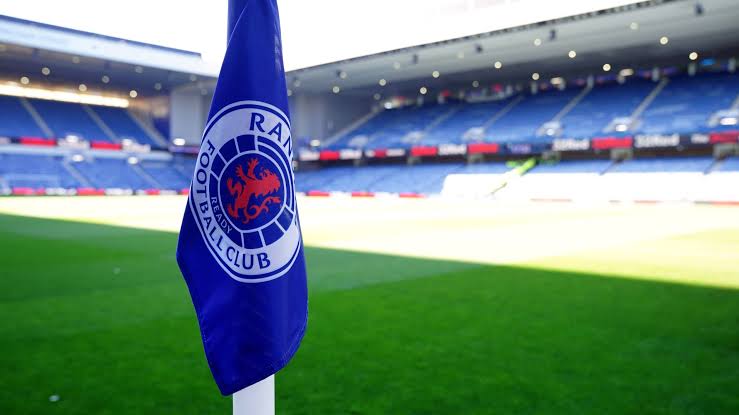
Kris Boyd has waded into the ongoing debate over Rangers’ failure to sign Lewis Ferguson, questioning the Ibrox hierarchy’s transfer strategy after fresh reports revealed the Bologna midfielder could have been available for a fee in the region of eighteen million pounds during the summer window, a sum the former Rangers striker believes the club could comfortably have afforded given the scale of their overall spending in recent months. Boyd’s intervention adds another prominent voice to a saga that has rumbled on for the best part of eighteen months, and it arrives at a particularly pointed moment given Ferguson’s continued excellence in Serie A and the persistent comparisons that have been drawn between the Scotland international and Napoli’s Scott McTominay, one of the most coveted British midfielders playing outside of England or Scotland today.
The comparison to McTominay is not a new one where Ferguson is concerned, but it carries considerable weight given the source. Former Scotland international Joe Jordan, speaking in 2025, described Ferguson as a complete midfielder, effective in both attacking and defensive phases of play, with a strong finishing ability, and stated plainly that he was not remotely surprised to hear the player’s name mentioned in the same breath as McTominay’s. Given the trajectory McTominay’s own career has taken since his move to Italy, becoming a genuine talisman at Napoli, winning the Serie A title in his very first season at the club, and collecting a string of individual accolades along the way, that comparison represents about as high a compliment as a British midfielder plying his trade in Italian football could hope to receive, and it underlines exactly why Rangers’ failure to close out a deal for Ferguson continues to generate such pointed criticism.
Boyd’s specific frustration centres on the financial calculus involved in Rangers’ recruitment decisions over the summer. According to his assessment, the Ibrox hierarchy, under chairman Andrew Cavenagh, had more than enough financial firepower to complete a deal for Ferguson given that the club ultimately spent in excess of thirty-five million pounds on new signings across the course of the transfer window. Rangers instead directed the majority of that outlay toward other areas of the squad, bringing in Dan Neil, Cammy Devlin, and Vanja Dragojevic to bolster their midfield options, along with significant investment in attacking reinforcements through the deadline-day arrivals of Kevin Kelsy and Badredine Bouanani. Boyd’s argument is not that any of those individual signings were poor pieces of business in isolation, but rather that a club willing to spend that level of money across a single window should, in his view, have found a way to also secure a player of Ferguson’s calibre and Scotland pedigree, particularly given the strength of the personal connection that already existed between the player and the club through his father Derek Ferguson’s own history at Ibrox.
The context behind Ferguson’s uncertain situation at Bologna during the summer adds further weight to the sense of a missed opportunity. The Scotland international faced genuine uncertainty over his future at the Stadio Renato Dall’Ara heading into the new season, a period of unrest that would ordinarily represent exactly the kind of window a club like Rangers should be looking to exploit in pursuit of a player they have long admired. Reports at the time suggested Ferguson held direct talks with Rangers during the transfer window, appearing to open a genuine pathway toward a return to Scottish football, but no formal bid ultimately followed from the Ibrox hierarchy, and Ferguson has since gone on to establish himself as a key figure under head coach Domenico Tedesco at the start of the new Serie A season, seemingly putting to bed, at least for now, any lingering uncertainty over his long-term future in Italy.
That outcome, a player who reportedly held talks with Rangers and seemed genuinely open to the move, only for the Ibrox hierarchy to ultimately fail to follow through with a concrete offer, mirrors almost exactly the frustration that had already been building around this saga before Boyd’s latest comments, and it connects directly to previous reporting suggesting personal terms had effectively been agreed between the two parties before Rangers failed to submit a bid to Bologna ahead of the deadline. Ferguson’s father Derek has previously spoken publicly and candidly about how close his son had come to completing a move back to Scotland, and his own assessment that the opportunity may have already passed given how the summer ultimately played out will only be reinforced by Ferguson’s growing importance to Tedesco’s side in the weeks since the window closed.
Boyd’s broader point extends beyond simply questioning a single missed transfer opportunity, however, and touches on what he perceives as a wider issue regarding leadership and squad composition at Ibrox. His comments have highlighted a lack of experienced leadership within what remains a relatively young Rangers squad, pointing to the significant turnover of personnel that has taken place at the club in recent windows as a factor that has made it more difficult to establish the kind of settled, senior presence that a player of Ferguson’s profile, at 27 years old and already a full Scotland international with several seasons of top-level Serie A experience behind him, could have provided almost immediately upon arrival. That argument carries particular resonance given Rangers’ well-documented struggles with managerial and squad stability in recent seasons, a period that saw seven different permanent managers occupy the Ibrox dugout in under five years before Derek McInnes’ arrival over the summer, and it speaks to a broader concern that simply spending large sums of money on transfer fees does not, by itself, guarantee the kind of squad cohesion and leadership that ultimately determines success on the pitch.
The financial dimension of this debate inevitably invites scrutiny of exactly how Rangers’ recruitment budget has been allocated this year, and whether the balance struck between different areas of the squad has been the right one given the club’s broader ambitions under Cavenagh’s ownership. Spending over thirty-five million pounds across a single transfer window represents a considerable statement of intent from a club looking to close the gap on Celtic and establish itself as a more consistent force domestically and in Europe, and the individual quality of several of Rangers’ summer signings has not been seriously questioned by pundits or supporters. Dan Neil in particular has already produced some notably impressive individual performances since his arrival on a free transfer from Sunderland, while the deadline-day additions of Kelsy and Bouanani were driven at least in part by the unforeseen and season-altering injury to Youssef Chermiti, a circumstance that could hardly have been planned for at the outset of the window. Nevertheless, Boyd’s underlying question, whether a club spending at that level should also have found the additional resources required to complete a deal for a player of Ferguson’s calibre and profile, remains a legitimate and pointed one, particularly given the reported willingness of the player himself to make the move.
There is also a broader strategic consideration at play regarding Rangers’ apparent reluctance to meet Bologna’s valuation, whatever the precise figure ultimately proved to be, a hesitancy that stands in interesting contrast to the club’s evident willingness to spend heavily elsewhere in the same window. Reports emerging more recently have suggested Rangers may look to revive their interest in Ferguson during the January transfer window, with sources indicating Bologna would be prepared to sanction a sale for a fee in the region of fifteen million pounds, a figure that, taken alongside Boyd’s suggestion that a fee closer to eighteen million pounds may have been sufficient during the summer, only adds to the sense of a deal that could and perhaps should have been completed months earlier, before Ferguson’s stock rose even further through his continued strong performances for Bologna under Tedesco.
For Rangers supporters, the frustration articulated by Boyd will likely resonate deeply, particularly given how the broader narrative around Ferguson’s situation has developed since the summer. A player with a clear family connection to the club, a proven track record in one of Europe’s most competitive leagues, and reported personal willingness to make the move represents about as close to an ideal transfer target as a club like Rangers could hope to identify, and the sense that such an opportunity may have slipped through the club’s fingers due to hesitancy over the required fee, even amid a summer of otherwise substantial spending, will inevitably invite uncomfortable questions about the prioritisation and execution of the club’s recruitment strategy under its current ownership.
Looking ahead, the January window now represents Rangers’ clearest remaining opportunity to correct what Boyd and others clearly view as a significant summer misstep, though the challenges involved in completing a deal for Ferguson appear to have only grown more complex in the intervening months. With the player continuing to impress under Tedesco and further cementing his importance to Bologna’s plans for the season, any renewed approach from Rangers in January will need to be considerably more decisive and better resourced than whatever process unfolded, or failed to unfold, during the summer, if the club is to avoid watching this particular target’s stock rise even further beyond their reach.
McInnes himself has previously been reported to hold considerable personal admiration for Ferguson as exactly the kind of experienced, technically accomplished midfielder capable of adding steel and composure to his engine room, and it remains to be seen whether that admiration, combined with the mounting external pressure from voices like Boyd’s, will be enough to convince the Ibrox hierarchy to finally commit the resources required to get a deal over the line when the January window opens. For now, though, Boyd’s intervention serves as a pointed reminder that, for all the genuine progress Rangers have made on the pitch in recent weeks under their new manager, questions over the club’s broader recruitment strategy and its ability to close out deals for genuinely transformative targets remain very much unresolved, and the shadow of what might have been with Lewis Ferguson looks set to continue hanging over Ibrox until the situation is finally put to bed, one way or the other, in the months ahead