Celtic: Boss Martin O’Neill says side given ‘timely’ police reminder before derb


Celtic manager Martin O’Neill has revealed that Police Scotland paid a visit to his squad on Friday, delivering what he described as a timely reminder about their general behaviour ahead of Sunday’s Premier Sports Cup quarter-final against Rangers at Ibrox. The meeting, confirmed by O’Neill in his pre-match press conference, comes with the Old Firm rivalry once again under intense scrutiny following the disorder that marred the sides’ last meeting at the stadium back in March, and it sets an unusually serious backdrop to a fixture that already carries considerable weight given the sanctions both clubs are currently serving.
Speaking to the media before Sunday’s derby, O’Neill confirmed that officers had spent a brief period with his squad, describing the session as a little 15-minute meeting focused on reminding the players of their general conduct. Far from framing the visit as unwelcome, the Celtic boss called it a timely reminder and said he considered it a good thing overall, suggesting he was broadly supportive of the intervention rather than viewing it as an unnecessary imposition on his players so close to kick-off.
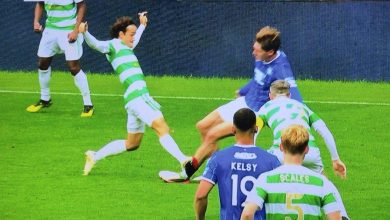
Pressed further on the specifics of what had been discussed, O’Neill said he assumed the conversation had touched on conduct out on the pitch itself, reasoning that such matters can escalate and be taken further if not properly addressed beforehand. He was candid in acknowledging that nobody wants to see fighting between players, nor any excessive goal celebrations that might inflame tensions further, framing the visit as being about the overall picture surrounding Sunday’s fixture rather than any specific individual or incident.
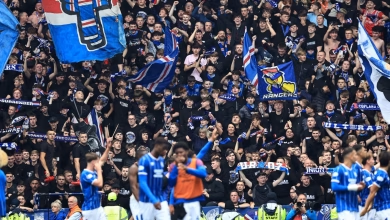
The backdrop to this week’s police visit lies in the sides’ previous meeting at Ibrox, a Scottish Cup quarter-final in March that Celtic won on penalties after 120 goalless minutes. What should have been a moment of celebration for the visitors quickly turned ugly, as Celtic supporters invaded the pitch to mark the win, triggering a retaliatory invasion by hundreds of Rangers fans. Scenes of disorder followed, with missiles including a lit flare thrown into the crowd, and police and stewards left struggling to separate the two sets of supporters.
The fallout from that night was serious. Reports at the time detailed a child being struck by a coin and a police officer being hit on the head by a bottle, while further incidents were captured on video, including an officer being knocked to the ground and an apparent attempt to kick out at a Celtic player before he was pushed clear by a fan who had made it onto the pitch. Nine fans were arrested within the first 24 hours, with further arrests following as investigations continued, and the disorder prompted an independent review of the fixture by the Scottish Football Association.
As a direct consequence, both Celtic and Rangers were ordered to play their next home Scottish Cup fixture behind closed doors, alongside a joint £100,000 compensation payment. That history explains why Sunday’s return to Ibrox carries such added significance, marking Celtic’s first visit to the stadium since the chaos of March, even though the two sides have since met at Celtic Park in May, when Celtic ran out 3-1 winners in the league.
Sunday’s fixture will also be played out in an unusual atmosphere, with the Scottish Professional Football League having ruled that no away fans would be permitted at any Old Firm derby in the league or League Cup for the entirety of the season. That decision followed a breakdown in ticketing negotiations between the two clubs, with Celtic rejecting an offer of just 300 tickets from Rangers for Sunday’s game and instead asking the governing body to intervene and settle the matter independently.
O’Neill touched on how strange he expects the occasion to feel without any of his own supporters present inside the 50,000-capacity stadium, acknowledging that a travelling support has traditionally offered opposing teams a small degree of comfort and backing in hostile away environments. With that absent for Sunday’s derby, and for every Old Firm fixture in domestic competition this season, both sets of players will be operating in a genuinely unusual atmosphere, home fans in full voice with no visiting section to counter itBeyond the security and behavioural context, O’Neill also offered his assessment of the challenge Rangers are likely to present on the pitch. He acknowledged that Derek McInnes’s side have faced criticism from their own supporters over a difficult start to the season, but was quick to point out that the hosts arrive on the back of four consecutive victories, a run of form that suggests real momentum building at Ibrox heading into the derby.
Reflecting on how home advantage, and specifically an entirely one-sided crowd, might affect the game, O’Neill suggested that anxiety can creep into an opponent’s game if Celtic manage to establish an early lead, while acknowledging the gulf between discussing that scenario in the abstract and actually achieving it on the pitch. He was respectful of the atmosphere Rangers’ supporters were likely to generate, predicting that the home crowd would be fully behind their team as would be expected in a fixture of this magnitude, while stressing that Celtic simply needed to focus on their own performance against what he described as a very good side.
Alongside the police visit and the broader occasion, O’Neill also has his own selection dilemmas to navigate heading into Sunday. Questions remain over which goalkeeper will start between the sticks, with summer arrival Sam Johnstone having kept a clean sheet on his debut in midweek, putting pressure on Viljami Sinisalo, who had started the season as Celtic’s first-choice number one. O’Neill indicated he was yet to settle on a final decision between the two heading into such a significant fixture
There was better news on the fitness front regarding midfielder Mika Baur, who had missed a training session in the build-up to the game but was nonetheless confirmed as available for selection. With Celtic already missing several first-team players through injury, including Alistair Johnston, Jota, Hyun-Jun Yang, Callum Osmand and Landon Emenalo, having Baur available to call upon offers O’Neill a little more flexibility in midfield than he might otherwise have had heading into such a demanding fixture.
While much of the coverage in the days since O’Neill’s press conference framed the police visit as Celtic being “warned” ahead of the derby, some closer analysis of his actual comments has pushed back on that characterisation, suggesting the reality was somewhat more balanced than a simple rebuke. O’Neill’s own words focused as much on player welfare and the broader picture surrounding the fixture as they did on any specific threat of punishment, describing the session in largely positive terms as a good and timely thing rather than a stern dressing down.
That nuance matters given how much scrutiny already surrounds this fixture. Rather than being read purely as evidence of Celtic players needing to be kept in line, the visit can equally be understood as a proactive, collaborative step between the club and the authorities, aimed at ensuring both the players’ own safety and the smooth running of a fixture already operating under exceptional security measures. Given the events of March, few would argue that some form of proactive engagement between police and both clubs’ squads is an unreasonable precaution to take
At 74 years of age, O’Neill’s willingness to embrace the pressure that comes with occasions of this magnitude has been a notable feature of his time back in charge of Celtic. Fixtures at Ibrox or Parkhead carry a unique intensity within British football, and O’Neill’s own demeanour throughout the build-up, candid, measured and largely unbothered by the scrutiny surrounding the police visit, reflects a manager with decades of experience navigating exactly this kind of high-pressure environment.
That experience may prove valuable in helping his players remain focused on the football itself, rather than being overly consumed by the unusual circumstances surrounding Sunday’s fixture, from the absence of away fans to the heightened police presence and the shadow still cast by the events of March. O’Neill’s own comments suggest he is approaching the occasion with a mixture of nervous anticipation and genuine excitement, framing it as a great fixture regardless of the surrounding context, while making clear he would relish the chance to see his side celebrating success at full time, so long as those celebrations stay within appropriate bounds.¹
Taken together, the details emerging in the build-up to Sunday’s quarter-final, the police visit, the goalkeeper dilemma, Baur’s fitness scare, and O’Neill’s broader reflections on the occasion, paint the picture of a fixture being approached with real care and seriousness by both the football and security sides of the operation. With Celtic sitting top of the Premiership after a perfect start to the season and Rangers building momentum of their own after a shaky start under McInnes, the football itself promises to be a compelling contest between two sides in form, even as attention remains partly fixed on ensuring the day passes off without any repeat of the scenes that marred the corresponding fixture back in March.
For O’Neill, navigating that balance, taking his side into one of the most charged fixtures in world football while ensuring conduct on and around the pitch stays within acceptable limits, will be as much a part of his job on Sunday as any tactical or selection decision. His comments this week suggest he sees no contradiction between embracing the magnitude of the occasion and welcoming a sensible, proactive reminder from the authorities about the responsibilities that come with it.