Bojan Miovski struck deep into stoppage time to send Rangers through to the semi-finals of the Premier Sports Cup, breaking Celtic hearts and bringing an emphatic end to their unbeaten domestic run in a pulsating first Old Firm derby of the season at Ibrox. In front of a stadium packed exclusively with home supporters, Derek McInnes’s side dug in for long periods before the substitute’s intervention sparked scenes of jubilation among the home crowd and handed the Rangers manager the first meaningful piece of silverware progress of his young tenure in charge.
## Setting the Scene
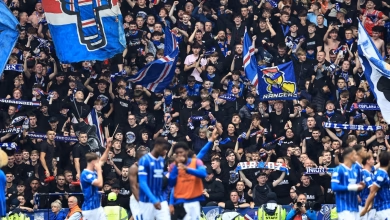
Sunday’s quarter-final carried an unusual weight even before a ball was kicked. With no away fans permitted inside the 50,000-capacity stadium, following the Scottish Professional Football League’s decision to bar travelling support from all Old Firm fixtures this season in the wake of the disorder that marred the sides’ Scottish Cup meeting back in March, the atmosphere inside Ibrox was overwhelmingly one-sided from the very first whistle. That backdrop, combined with the added significance of the two sides’ contrasting form lines heading into the fixture, made for a compelling early-season litmus test of where both Glasgow giants stood.
Celtic arrived at Ibrox unbeaten through their first six domestic fixtures of the season, sitting five points clear at the top of the Scottish Premiership under Martin O’Neill, and looking every bit the form side in Scottish football heading into the derby. Rangers, by contrast, had endured a difficult opening to the campaign under new head coach Derek McInnes, but arrived on the back of four straight victories across all competitions, a run that had at least restored some confidence and momentum around Ibrox heading into the biggest fixture of the season s
McInnes opted for a 4-2-3-1 shape, naming Ivor Pandur in goal behind a back four of Dujon Sterling, Manny Fernandez, Olwethu Makhanya and James Penrice. In midfield, Nicolas Raskin and Dan Neil were selected as the central pairing, tasked with providing both control and energy against a talented Celtic midfield unit. Ahead of them, Ryan Naderi, Kim Min-Su and Djeidi Gassama formed the attacking midfield line, with Kevin Kelsy handed the nod to lead the line as Rangers’ central striker, ahead of Vanja Dragojevic and Bojan Miovski, both left among the substitutes and ready to be introduced later in the game if required.
The team selection reflected the scale of Rangers’ ongoing injury problems, with captain Lawrence Shankland missing through a hamstring tear that could keep him out for up to three months, and fellow striker Youssef Chermiti still working his way back from ACL surgery. With both first-choice forwards unavailable, the onus fell heavily on Kelsy to make an impact from the start, with Miovski, fresh from a matchwinning midweek cameo against St Mirren, waiting in the wings as a potential source of impact from the bench.
Celtic lined up in a similar 4-2-3-1 formation under O’Neill, with Sam Johnstone continuing in goal having impressed with a clean sheet on his previous outing, ahead of a back four of Rocco Donovan, Cameron Carter-Vickers, Liam Scales and Kieran Tierney. Callum McGregor and Mika Baur were selected in central midfield, with Camilo Duran, Alexander Nygren and Nathan Tounekti in support of lone striker Kasper Hogh. O’Neill’s side were themselves missing several key players, including right-back Alistair Johnston, along with Jota, Landon Emenalo and others further forward, though the return of Baur and Duran to the squad offered some encouragement heading into such a demanding fixture.
From the outset, the atmosphere inside Ibrox lived up to expectations, with the home crowd creating a wall of noise that Celtic had to try to play through without any of their own supporters present to offer encouragement in return. True to McInnes’s pre-match prediction that nobody dominates a fixture of this magnitude for the full 90 minutes, the opening exchanges were cagey and tightly contested, with both sides showing moments of quality but struggling to fully impose themselves on proceedings.
Celtic, as their league form suggested they might, saw the majority of the ball for long spells, with McGregor and Baur dictating tempo through the middle of the pitch and Hogh working hard as a focal point up front. Rangers, for their part, sat in a well-organised defensive shape, looking to break quickly through Gassama and Min-Su whenever possession was won back, with Raskin and Neil providing a solid platform from deep to disrupt Celtic’s rhythm whenever they threatened to build momentum.
Chances were relatively scarce in the first half, with both goalkeepers required to make routine rather than spectacular saves, reflecting the cagey, high-stakes nature of the occasion. Kelsy worked hard as a lone frontman without significant service, while at the other end, Celtic’s front three struggled to find the kind of space in behind that had proven so productive during their perfect start to the domestic season.
As the second half progressed, the game gradually opened up, with both sides beginning to commit more players forward in search of a breakthrough. Celtic continued to enjoy the greater share of possession, and O’Neill’s introduction of fresh legs from the bench as the half wore on injected further urgency into their pursuit of a way through a well-drilled Rangers defence. Fernandez and Makhanya stood firm at the heart of the Rangers backline, while Pandur was called upon to make a couple of important saves to keep the scores level as Celtic pushed for the opening goal.
At the other end, Rangers continued to look dangerous on the counter, with Min-Su’s willingness to drift inside from a wide starting position offering a consistent outlet, and Gassama’s directness on the opposite flank causing problems for Celtic’s makeshift full-back pairing. Even so, clear-cut opportunities remained at a premium for both sides as the match entered its closing stages, with a place in the semi-finals looking increasingly likely to be decided by a single moment of quality, or a mistake, from either side.
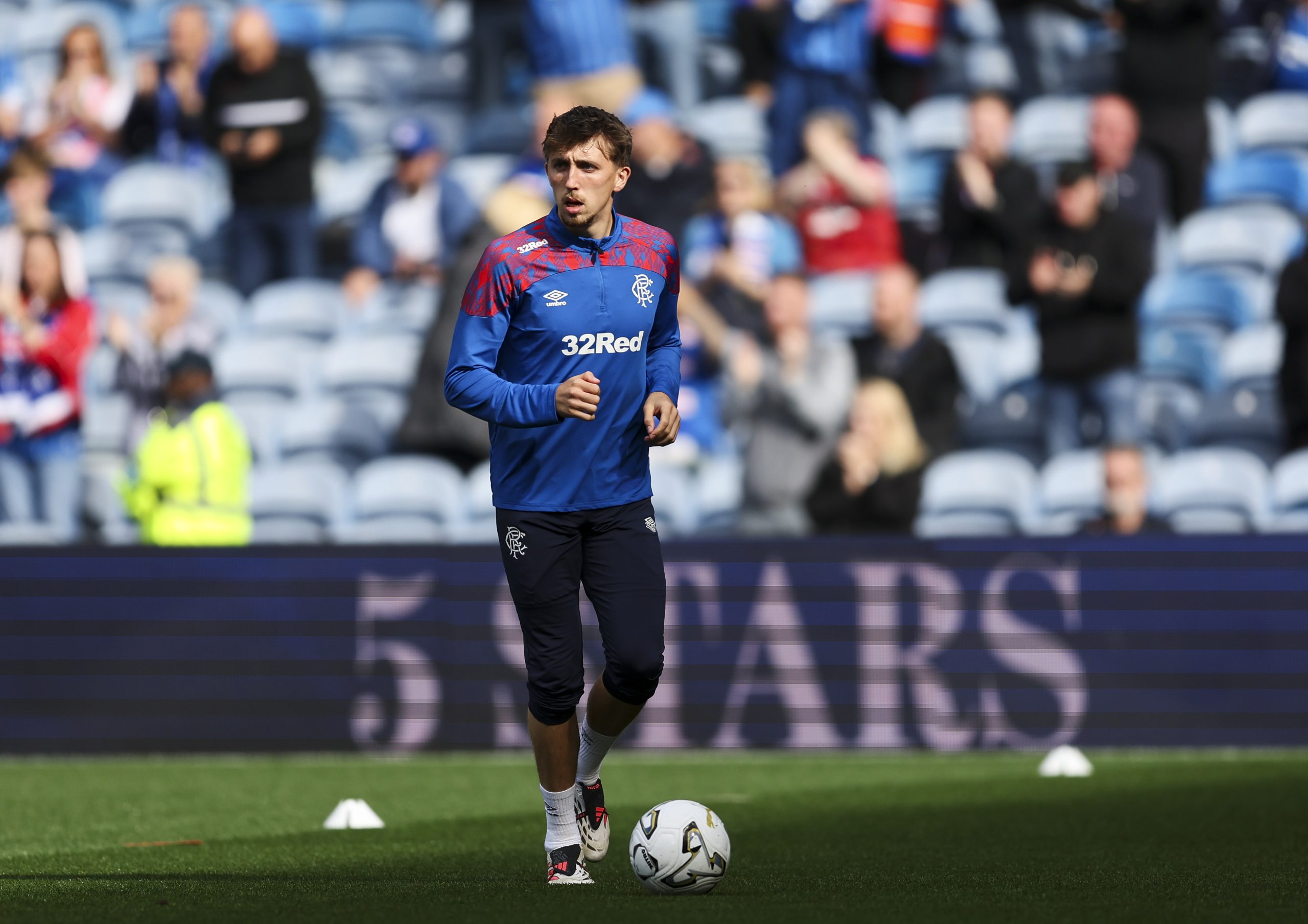
With the game delicately poised and extra time looming, McInnes turned to his bench in search of the decisive intervention his side needed. Miovski, whose dramatic late winner against St Mirren in midweek had already demonstrated his knack for delivering when introduced from the bench, was introduced alongside Dragojevic as Rangers looked to inject fresh legs and a different kind of attacking threat into the closing stages of the contest.
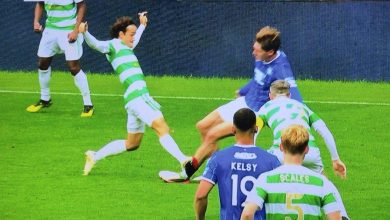
The change proved inspired. Deep into stoppage time, with a replay at Celtic Park looming and Ibrox growing increasingly tense, Miovski found space at the edge of the Celtic box and produced a clinical finish to send the home crowd into raptures. The goal, arriving with almost the last kick of normal time, sparked jubilant scenes around the stadium, with players, staff and supporters alike celebrating what instantly felt like a hugely significant moment in Rangers’ season.
For Rangers, the victory represents far more than simply progression to the semi-finals of the Premier Sports Cup. Coming against a Celtic side that had been perfect domestically all season, and doing so in front of an Ibrox crowd unaccompanied by any away support, the win offers a genuine marker of progress for McInnes just months into his tenure as head coach. Having previously stressed that his own future, and that of his players, would ultimately be judged on the club’s ability to deliver silverware, Sunday’s result represents an important early step in exactly that direction, keeping alive Rangers’ interest in one of the three domestic trophies still available to compete for this season
The manner of the victory will also carry significance beyond the result itself. Ending Celtic’s unbeaten start to the season, and doing so through a substitute whose knack for scoring decisive late goals has already become a recurring theme of Rangers’ recent form, offers a timely reminder of the value of squad depth even amid a lengthy list of injury absences at Ibrox. With captain Lawrence Shankland and striker Youssef Chermiti both sidelined for extended periods, the emergence of Miovski as a reliable source of impact from the bench has given McInnes a crucial weapon to call upon in tight, high-stakes fixtures exactly like this one.
For Celtic and O’Neill, the defeat brings an abrupt end to what had been an ideal start to the season, and it will raise fresh questions about the club’s ability to perform in the fixtures that matter most, even amid an otherwise dominant run of domestic form. Having gone into the game as favourites given their perfect record and position at the top of the Premiership table, the manner of the defeat, conceding deep into stoppage time having largely controlled proceedings for long periods, is likely to sting all the more for O’Neill and his players.
Sunday’s result also carries broader significance given the context surrounding the fixture. Played out entirely without away fans following the disorder that marred the sides’ meeting in March, and just days after Celtic’s own players had received a police visit reminding them of their general conduct ahead of the derby, the occasion had already been laden with off-field significance before a ball was even kicked. That Rangers were able to produce a moment of such pure footballing drama, a stoppage-time winner from a substitute, to settle the contest, offers a reminder that, for all the noise surrounding security arrangements and crowd behaviour in recent months, it is still what happens on the pitch that ultimately defines these fixtures.
For McInnes personally, the win offers a significant boost just as questions were beginning to be asked about his side’s slow start to the season, and it arrives at a moment when he has been explicit in stating that trophies, and performances in fixtures precisely like this one, will define how his tenure at Ibrox is ultimately remembered. Overseeing a victory against Celtic in his first Old Firm derby in charge, achieved through resilience, a well-organised defensive display and a decisive intervention from the bench, offers an early marker of exactly the kind of progress he has been demanding from his players since taking charge.
With Rangers now through to the semi-finals of the Premier Sports Cup, attention will quickly turn to who they will face for a place in the final at Hampden Park, as well as to the small matter of a Scottish Premiership rematch with Celtic at Celtic Park just a week later. That fixture will offer O’Neill’s side an immediate opportunity to respond to Sunday’s disappointment, while Rangers will hope to carry the confidence and momentum generated by Miovski’s dramatic late winner into a demanding run of fixtures across multiple competitions.
For Celtic, the defeat, while ending their unbeaten start to the campaign, leaves them still well placed domestically given their five-point cushion at the top of the Premiership table heading into the international break. How O’Neill’s side respond to their first setback of the season will offer an important indication of the depth of character within his squad, particularly with a trip to Celtic Park looming for Rangers just days later in what promises to be an equally significant follow-up chapter in this season’s Old Firm story.
For now, though, Sunday belongs to Rangers, McInnes and Miovski, whose late intervention has given Ibrox a moment to savour and handed the Rangers manager a first significant statement result since taking permanent charge of the club he has already made clear he intends to lead back toward regular silverware.