Rangers Beat Celtic 3-0 in the First Old Firm Derby of the Season — and Now McInnes Faces Aberdeen

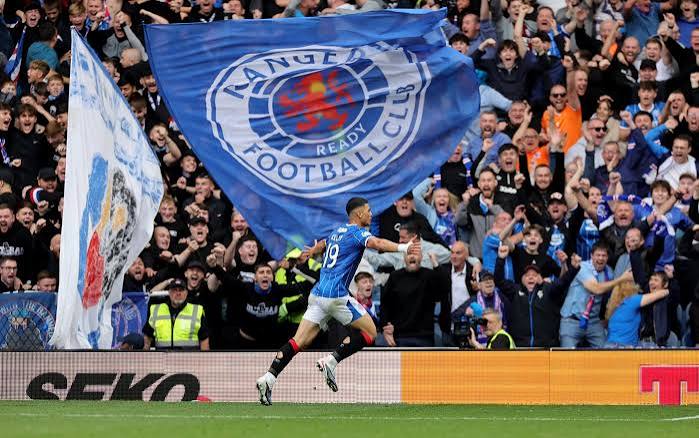
Derek McInnes has waited a long time for a day like this one. Sunday’s 3-0 demolition of Celtic in the Premier Sports Cup quarter-final was not just his first victory over Rangers’ oldest rivals since taking charge in Govan — it was the result that finally silenced the doubts hanging over his early months at Ibrox, sent Rangers into the last four of the competition, and, by the time Sunday evening’s draw was made, handed him a rather pointed reunion with one of his former clubs.
A Statement Win, Confirmed by the Wires
The scale of what Rangers achieved at Ibrox was underlined not just by the reaction in Scotland but by the fact that the result was significant enough to be picked up by international wire services. The Associated Press led its coverage by noting simply that Dan Neil scored a double as Rangers beat Celtic 3-0 in the first Old Firm derby of the season, describing it as a landmark result that also delivered McInnes his maiden win over Celtic since his appointment. That framing — the first Old Firm meeting of the campaign settled so emphatically, and in a cup competition no less — captures why this victory carries weight well beyond three points or a place in the semi-finals.
The bare facts of the contest, relayed succinctly in the AP’s report, tell their own story. Neil, handed the captain’s armband by McInnes despite having only joined from Sunderland over the summer, put Rangers ahead from the edge of the area midway through the first half. New signing Kevin Kelsy doubled the lead after the interval, opening his Rangers account in precisely the fixture every summer arrival dreams of scoring in, before Neil completed his brace with what was described as another fine finish in the 75th minute. It was, by any measure, a complete and clinical derby performance — exactly the kind of statement result Rangers’ fanbase had been waiting for since McInnes’s turbulent start to the campaign.
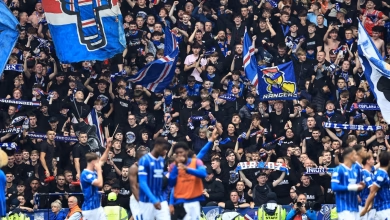
Just as significant as what happened on the pitch was what did not happen off it. The wire report noted there were no immediate reports of disorder from the encounter, a detail that will be met with considerable relief by both clubs and by Scottish football’s governing bodies given the fraught build-up to the fixture. That relatively peaceful conclusion follows months of tension stemming from the ugly scenes that marred the corresponding Scottish Cup quarter-final between the sides back in March, disorder serious enough that Celtic supporters were barred entirely from Sunday’s rematch as a direct consequence of the league’s subsequent review into that trouble. For a fixture that has become as much a story about crowd safety and away-fan bans as it has about football in recent months, passing off without further incident will be seen as a small but meaningful step in the right direction, even if the debate over ticket allocations and away-fan bans is far from resolved.
A Damaging Afternoon for Celtic on Two Fronts
For Martin O’Neill and his players, Sunday’s result compounded what has already been a difficult opening month of European competition layered on top of an otherwise flawless domestic campaign. As the AP report was quick to point out, this was Celtic’s first domestic defeat of the season, but it was not their first setback of the campaign overall — the Hoops had also been eliminated from Champions League qualifying at the play-off stage by Austrian side LASK, a defeat that raised early questions about the durability of O’Neill’s squad heading into a season of heavy expectation following significant summer investment. Taken together, those two results — a shock Champions League exit in August and a chastening cup defeat to their fiercest rivals in September — paint a picture of a Celtic side whose perfect Premiership record has masked underlying issues that a truly testing fixture was always likely to expose.
There is a compensatory note for O’Neill’s side, at least in the short term. Celtic’s elimination from the League Cup frees up their midweek schedule to focus fully on continental competition, with the club due back in action on Thursday as their Europa League league-phase campaign begins away to Ferencvaros of Hungary. Whether that represents a blessing in disguise — extra recovery time and a clearer run at redeeming their season in Europe — or simply another examination of a Celtic side low on confidence after Sunday’s mauling, will become clear soon enough. Either way, O’Neill’s players do not have long to dwell on Sunday’s result before facing another examination, this time on foreign soil against unfamiliar opposition.
The Bigger Picture: Rangers’ Long-Awaited Cup Pedigree Returns
For Rangers and McInnes, Sunday’s win carries significance that stretches well beyond the immediate three points of progression. This was McInnes’s first competitive victory over Celtic since arriving at Ibrox, a psychological milestone that matters enormously at a club where results in Old Firm fixtures are often used as the primary measuring stick for a manager’s credibility, regardless of form in other competitions. It was also Rangers’ first appearance in the last four of the Premier Sports Cup since the 2023-24 campaign, when the club went on to lift the trophy itself, beating Aberdeen 1-0 in that season’s final. That historical footnote will not be lost on a Rangers support well aware of the symbolism of reaching the same stage of the competition they last won by beating the very side they have now been drawn against in the semi-finals.
The Draw: McInnes Set for Reunion with Aberdeen
Sunday’s football at Hampden Park did not end with full-time whistles across the four quarter-finals — it continued into the evening with the draw for the Premier Sports Cup semi-finals, and it produced a fixture with unmistakable personal significance for McInnes. Rangers were drawn against Aberdeen, the club where McInnes made his name as a manager over more than eight years in charge before eventually moving on, in what will be a fascinating tactical and emotional collision when the two sides meet at the national stadium.
Aberdeen booked their own place in the last four in considerably more dramatic circumstances than Rangers managed, needing penalties to see off Kilmarnock following a 1-1 draw after extra time, in a quarter-final further complicated by a second-half red card for Dons defender Dan Happe. Neil McCann’s Killie side pushed Aberdeen desperately close to an upset, but the Pittodrie club ultimately prevailed 3-1 in the shootout to set up the reunion with their former manager. It is worth noting that this will not be the first meeting between the two sides this season — Rangers have already beaten Aberdeen 1-0 in Premiership action earlier in the campaign, giving McInnes something of a psychological head start heading into the rematch, even accounting for the different stakes and different circumstances of a one-off cup semi-final.
McInnes’s history with Aberdeen adds a layer of intrigue that few semi-final draws in Scottish football can match. Having transformed the Pittodrie club into a regular top-three Premiership finisher and cup contender during his time in charge, his reputation in the north-east remains largely positive even now, several years removed from his departure — a contrast to the reception some departing managers receive when they return with a direct rival. Facing his old club at Hampden, with a place in the Premier Sports Cup final at stake, is precisely the kind of fixture that will generate outsized attention regardless of how either side is performing domestically at the time.
An Edinburgh Derby in the Other Half of the Draw
The other semi-final pairing announced on Sunday evening carries its own significant local rivalry, with Heart of Midlothian drawn against Hibernian in what will be the second Edinburgh derby of the season. The two capital clubs have already met once domestically this campaign, with Hearts running out 3-1 winners at Easter Road in the Scottish Premiership — part of a red-hot run of form that has seen the Tynecastle side reportedly extend their unbeaten sequence to nine games heading into the cup weekend. That head-to-head record, combined with Hearts’ broader momentum this season, makes them the favourites heading into the Hampden reunion, though cup semi-finals between fierce local rivals rarely follow the form book quite as predictably as league form might suggest.
Both Edinburgh clubs progressed to the last four in considerably more routine fashion than either Rangers or Aberdeen managed. Hearts eased past Championship leaders Stenhousemuir at Ochilview, with goals from JJ Williams, Rogers Mato and Yan Dhanda securing a comfortable 3-0 win that allowed manager to rotate his squad ahead of a quick turnaround to face Falkirk in Premiership action just days later. Hibernian recorded an identical 3-0 scoreline in their own quarter-final, seeing off League One side Ross County at Easter Road without particular alarm. The last time these two sides met in a national cup semi-final came back in 2022, when Hearts edged the corresponding Scottish Cup last-four tie 2-1 at Hampden — a result the Hibernian support will be keen to see reversed when the sides return to the national stadium at the end of October.
Logistics of the Semi-Final Weekend
Both semi-finals will be played at Hampden Park over the weekend of 31 October and 1 November, with Premier Sports set to broadcast both ties live, though exact dates and kick-off times for each fixture had not been confirmed at the time of the draw. The scheduling of the semi-finals on that particular weekend has already had a knock-on effect on the wider domestic calendar, with several Premiership fixtures involving the four clubs concerned — including Hibernian’s meeting with Dundee, Dundee United’s clash with Hearts, and Rangers’ own scheduled Premiership fixture against Aberdeen — all having to be postponed and rearranged for a later date to accommodate the cup ties. That knock-on disruption to the league calendar is a familiar consequence of Scottish football’s crowded autumn schedule, particularly in a season featuring the added burden of European qualification campaigns for several of the country’s leading clubs.
Looking further ahead, the Premier Sports Cup final itself has been pencilled in for 13 December, giving whichever two clubs emerge from the Hampden weekend a clear run of over a month to prepare for a Hampden showpiece that would represent the first major domestic trophy up for grabs in the 2026-27 season. For Rangers, reaching that final would mean successfully negotiating a semi-final against the very club McInnes built his managerial reputation with — an outcome that would carry both professional and deeply personal significance for a manager who, after a difficult start to life at Ibrox, will feel Sunday’s events have finally given his tenure some much-needed momentum.
McInnes’s Aberdeen Legacy in Full
To understand why this particular semi-final pairing has generated such interest, it is worth revisiting exactly what McInnes achieved during his time at Pittodrie. Appointed in 2013, he spent more than eight years transforming Aberdeen from a club drifting in the lower half of the Premiership into a consistent top-three finisher and the most reliable challenger to the Old Firm’s domestic dominance for the best part of a decade. Under his stewardship, the Dons reached domestic cup finals on multiple occasions, including a Scottish Cup final defeat and a run of League Cup final appearances that, while not always ending in silverware, cemented Aberdeen’s status as Scotland’s most consistent “best of the rest” side throughout the 2010s. His teams were built on defensive resilience and disciplined organisation — traits that have become increasingly recognisable in his early work with Rangers, whose recent run of clean sheets has been central to the turnaround in form that preceded Sunday’s derby win.
That shared managerial DNA between his old club and his new one adds an extra layer of intrigue to the semi-final draw. Aberdeen under current management have looked considerably more fragile defensively than during McInnes’s tenure, evidenced by their need for penalties to see off a Kilmarnock side reduced to Championship-adjacent form in recent seasons, and by a red card that briefly threatened to derail their run to the last four entirely. If McInnes’s Rangers side can carry their newly rediscovered defensive solidity into the last four, the tactical battle between a manager and the identity he instilled at his former club promises to be one of the most compelling subplots of the entire tournament.
The Winning Run That Set Up Sunday’s Statement
It would be wrong to view Sunday’s demolition of Celtic as an isolated result rather than the culmination of a broader upturn in form under McInnes. Rangers arrived at the fixture unbeaten in their previous four Premiership outings, a run built on the kind of defensive discipline that had been notably absent during a difficult opening to the season, when the club took just a single point from their first two league fixtures and suffered early European exits in both the Europa League and Conference League qualifying rounds. That torrid start had prompted genuine speculation in the Scottish press about the sustainability of McInnes’s position, with some pundits questioning whether the board’s patience would extend much beyond the opening weeks of the campaign if results did not improve rapidly.
The turnaround since has been striking. Three of Rangers’ four wins in that sequence arrived via clean sheets, built around a settled back four and a clear tactical identity focused on disciplined defensive shape combined with pace and directness on the counter-attack. Sunday’s victory over Celtic represented the clearest possible validation of that approach against the very highest calibre of domestic opposition, and it explains why McInnes’s celebrations at full-time were notably more animated than after any of Rangers’ previous league wins in the sequence — a recognition, perhaps, that beating your fiercest rivals so convincingly carries a different psychological weight to grinding out narrow victories over mid-table opposition, however valuable those results were in rebuilding momentum.
Kelsy’s Timely Breakthrough
Kevin Kelsy’s contribution to Sunday’s win deserves particular attention given the context of his summer arrival. Signed for a club-record fee as Rangers’ marquee attacking addition, the Venezuelan striker had shown flashes of promise without consistently finding the net in his opening weeks in Scottish football, leading to familiar early-season scrutiny of a big-money signing still adapting to a new league, a new style of football, and the unique pressures of Old Firm competition. Breaking his duck for the club in such a high-profile fixture, and doing so with a confident, powerful finish rather than a scrappy or fortunate goal, should go a long way toward settling any lingering questions about his early adaptation. For a forward who will be relied upon heavily as Rangers push for silverware across multiple competitions this season, few moments could have offered a more perfect confidence boost than doubling his side’s lead against Celtic at Ibrox.
Old Firm Meetings Yet to Come
Sunday’s result also sets an intriguing tone for what remains an unusually cup-heavy season of Old Firm collisions. With the two Glasgow clubs already scheduled to meet again in the Premiership the following weekend, and with both sides still theoretically capable of crossing paths again later in either the Scottish Cup or, depending on how their respective European campaigns unfold, in continental competition, this looks set to be a season defined by repeated measuring points between Rangers and Celtic rather than a single decisive derby. Each fresh meeting will carry its own significance, but Sunday’s cup exit will inevitably colour the build-up to every subsequent encounter until Celtic can produce a definitive response.
That dynamic places extra weight on next Sunday’s Premiership fixture at Celtic Park. A home win for O’Neill’s side would go some way toward restoring confidence and repairing the psychological damage of Sunday’s defeat, while a second consecutive loss to Rangers — however different the context of a league fixture compared to a cup quarter-final — would represent a genuinely alarming pattern for a Celtic side many had expected to canter through the early months of the season unchallenged. For Rangers, arriving at Celtic Park full of confidence and with McInnes now boasting an Old Firm win to his name, there will be a clear opportunity to compound Sunday’s damage and open up daylight in the psychological battle between the two clubs heading into the winter months.
What Sunday Means Going Forward
Taken as a whole, Sunday represented one of the most eventful days of the Scottish football calendar so far this season — four quarter-finals completed, an Old Firm derby settled in emphatic and controversy-free fashion, and a semi-final draw that has already generated considerable excitement thanks to the Rangers-Aberdeen pairing and the renewed Edinburgh derby between Hearts and Hibs. For neutrals, it offers a genuinely intriguing route to a Hampden final; for the four clubs and managers directly involved, it offers a mixture of opportunity and reckoning that will shape perceptions of their respective seasons regardless of how their remaining domestic campaigns unfold in the meantime.
For Rangers and Celtic specifically, there is barely time to process Sunday’s result before the two sides meet again — this time in the Scottish Premiership at Celtic Park next Sunday, under the same away-fan restrictions that emptied Ibrox of Celtic support this weekend. Given the emphatic nature of Sunday’s victory and the questions it has reopened about O’Neill’s squad depth and resilience, that rematch now carries even greater significance than it might have done a week ago. McInnes, meanwhile, can allow himself a rare moment of satisfaction before turning his attention fully to a Rangers side that, after a stuttering start to the season, has now put together a run of results — and a performance against their fiercest rivals — that suggests the rebuild in Govan may finally be beginning to take shape exactly as its manager and his board had hoped.