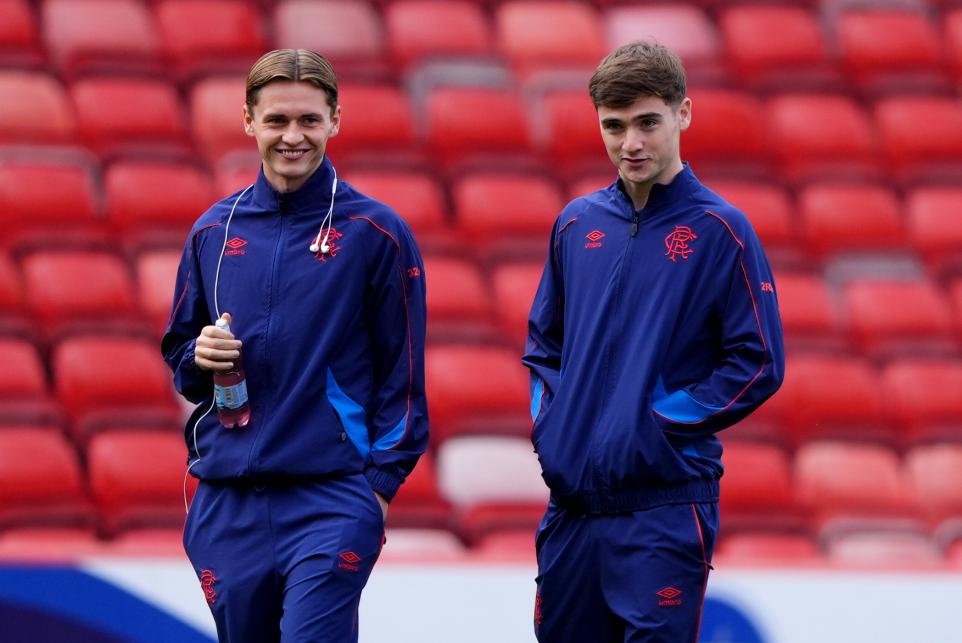
A new era of Scottish international football formally began on Tuesday when Sebastien Pocognoli named his first squad since taking over as national team head coach, and for Rangers, the announcement brought a mixture of reward and disappointment in roughly equal measure. Two Ibrox players retained their place in the set-up that took Scotland to the World Cup finals over the summer, while a third — enjoying arguably the finest form of his Rangers career to date — found himself left out entirely.
Kelly and Curtis Retain Their Places
Goalkeeper Liam Kelly and versatile forward Findlay Curtis were the two Rangers players named among Pocognoli’s 26-man group, with both retaining the international recognition they earned under previous head coach Steve Clarke. Kelly was included as one of three goalkeepers selected alongside Angus Gunn and uncapped Championship stopper Liam McFarlane, continuing his run in and around the senior squad despite a currently unusual circumstance at club level — the 30-year-old has not featured for Rangers since Derek McInnes took charge of the club in the summer, leaving him significantly short of match sharpness heading into the September international window. That lack of playing time had been flagged by several outlets in the days leading up to the squad announcement as a potential obstacle to his continued involvement, with suggestions that Pocognoli might instead look toward alternative options better placed to provide meaningful competition given their more regular exposure to senior football. Ultimately, though, the new head coach opted for continuity in that department, keeping faith with a goalkeeper who travelled to the World Cup as one of Scotland’s back-up options despite his own restricted game time at Ibrox in the build-up to the tournament.
Findlay Curtis’s inclusion, by contrast, arrived on the back of a considerably stronger run of club form and represented the least surprising of Rangers’ two call-ups. Having impressed during a loan spell at Kilmarnock under Neil McCann, Curtis earned a place in Clarke’s World Cup squad and has since returned to Ibrox to establish himself as a regular fixture in Rangers’ first-team plans under McInnes. His inclusion continues a rapid rise that began with his senior Scotland debut against Japan at Hampden Park back in March, when he came off the bench to replace Tommy Conway for the closing stages of the fixture, and it underlines the level of trust the national set-up continues to place in his development, even amid the broader turnover in personnel that often accompanies a change of head coach.
The Snub That Will Sting
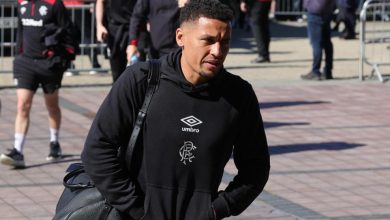
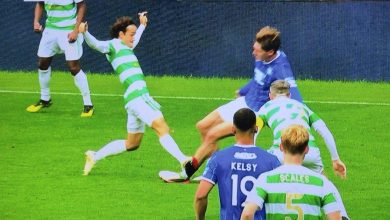
The most eye-catching Rangers-related detail from Tuesday’s announcement, however, was not who made the squad but who did not. James Penrice, whose excellent start to life at Ibrox following his loan-to-buy move from AEK Athens has been one of the more pleasantly surprising individual stories of Rangers’ season so far, was left out entirely, despite form that several outlets had specifically flagged in the days before the squad was named as potentially strong enough to force his way into contention. Penrice’s omission is made all the more striking given his direct involvement in Sunday’s 3-0 Old Firm derby win over Celtic, where his advanced role in Derek McInnes’s tactical reshuffle was central to the build-up for two of Rangers’ three goals — precisely the kind of eye-catching, tactically significant performance that might ordinarily be expected to catch a new head coach’s attention at exactly the right moment.
Instead, Pocognoli has opted to stick with an established group of left-sided defensive options, naming Sassuolo’s Josh Doig alongside Liverpool captain Andy Robertson and Kieran Tierney in that particular department of his squad. All three arrive with considerably more accumulated senior international experience than Penrice currently possesses, and their inclusion reflects a broader pattern in Pocognoli’s initial selection — a coach clearly prioritising continuity and proven quality over rewarding the most eye-catching recent form at club level, at least in this particular position. For Penrice himself, the message will be a clear one: continued performances of the calibre he has shown in recent weeks, including Sunday’s derby masterclass, will need to be sustained over a longer period before a senior Scotland call-up becomes a realistic prospect under the new regime.
A New Era Begins in Govan and at Hampden Alike
The timing of Penrice’s snub carries a certain symmetry with the broader story of Rangers’ season so far. Just as McInnes has spent his early months at Ibrox working to establish a settled group of players and a clear tactical identity following a difficult start to the campaign, Pocognoli finds himself undertaking a broadly similar exercise at national level, having succeeded Steve Clarke after the veteran head coach’s departure following Scotland’s group-stage exit from the World Cup back in June. Clarke’s seven-year reign had been defined in part by a well-documented loyalty to established faces within his squad — an approach that delivered Scotland’s first men’s World Cup appearance in 28 years, but which also drew periodic criticism from sections of the national team’s supporters for being slow to introduce younger or in-form alternatives when circumstances arguably called for it.
Pocognoli’s first squad selection suggests at least some early appetite for change, even if Tuesday’s announcement did not represent the wholesale overhaul some had speculated might follow a change of regime. Luke Graham, the uncapped Stoke City centre-back who impressed during a breakthrough campaign at Dundee before securing a move south, and Robbie Ure, the former Rangers academy striker now plying his trade at Sevilla following a prolific spell in Sweden, both earned their first full senior call-ups as part of the new head coach’s opening squad — clear early signals that fresh performances at club level, wherever they are taking place, will be given genuine consideration under the Belgian’s stewardship. Ure’s rise in particular has been striking: after departing Rangers, the 22-year-old scored 20 goals and provided three assists in 20 matches for Sirius, form that took the Swedish side to the top of their domestic table and prompted a £5.5million move to La Liga side Sevilla over the summer, a transfer that generated considerable interest from clubs across the continent given the scale of his goalscoring exploits in Allsvenskan football.
The Wider Squad Picture
Beyond the specific Rangers storylines, Pocognoli’s first squad offered a broader snapshot of where Scottish football’s player pool currently stands heading into a new managerial era. In defence, the head coach named nine players including the experienced trio of Robertson, Tierney and Doig at left-back, alongside Aaron Hickey and Nathan Patterson on the opposite flank, both of whom appear to have retained their places relatively comfortably given their current club situations — Hickey starting regularly for Brentford, and Patterson having recently completed a move to Torino in an effort to reignite his club career following a difficult spell elsewhere. Jack Hendry, Scott McKenna, Stephen Welsh and the uncapped Graham completed the central defensive options, giving Pocognoli a blend of tournament experience and fresh blood to work with as he begins shaping his own approach to the position.
In midfield, the inclusion of Billy Gilmour, Lewis Ferguson, John McGinn, Ryan Christie and Kenny McLean alongside younger options Lennon Miller, Ben Gannon-Doak, Findlay Curtis and Josh McPake pointed to a settled core of experienced performers being retained even as the head coach looks to blend in fresher options around the edges. Gannon-Doak in particular remains Scotland’s first-choice option in wide areas following his continued involvement with Bournemouth in England, while Curtis’s own inclusion in that same department, having accompanied Gannon-Doak to the World Cup earlier in the year, further underlines the value the national set-up continues to place on his development.
Up front, Che Adams, Lyndon Dykes, Kieron Bowie, Robbie Ure and Oli McBurnie rounded out the forward options named in the squad, with Dykes’s continued inclusion perhaps the most notable given the 30-year-old’s occasionally scrutinised position within the national set-up in recent seasons. Now playing his club football for Millwall following a characteristically nomadic recent period in his career, Dykes has nonetheless continued to find the net at club level, with recent reports suggesting he had scored in three of his previous five appearances for the London side — form that appears to have been enough, for now at least, to see off suggestions that his place in the national picture might be under genuine threat heading into the new regime.
What Pocognoli’s Approach Reveals So Far
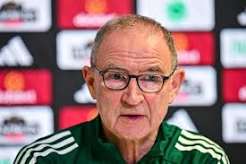
Speaking during his introductory press conferences after being appointed as Clarke’s successor, Pocognoli made clear his intention to strike a balance between continuity and evolution, stating his desire to “add his own emphasis to the style of play and the development of young players for the future of Scottish football.” Tuesday’s squad announcement offers an early, if still somewhat tentative, insight into how that stated philosophy is likely to translate into concrete selection decisions in the weeks and months ahead. The inclusion of uncapped talents such as Graham and Ure alongside a broadly settled core of established senior internationals suggests a coach willing to introduce fresh blood at the margins of his squad without wholesale disruption to the group that carried Scotland to their first World Cup appearance in almost three decades — a pragmatic approach that will likely be welcomed by supporters wary of destabilising a squad that, whatever its shortcomings in North America over the summer, nonetheless represented a genuine landmark achievement for the national game.
For a player like Penrice, that pragmatic, continuity-first approach to selection is precisely what has cost him a place in this particular squad, despite form that might, under a more radically minded new head coach, have been enough to force an immediate recall. The Rangers full-back will simply have to continue performing at the level he has shown in recent weeks — including Sunday’s eye-catching derby display — and hope that sustained excellence, rather than a single standout performance, eventually proves sufficient to convince Pocognoli that his services are needed at international level.
Why Kelly’s Inclusion Raised Eyebrows
Liam Kelly’s continued place in the Scotland squad deserves closer scrutiny given just how unusual his current club circumstances are for a player still considered part of the senior international picture. Having barely featured for Rangers in the months leading up to the World Cup, Kelly’s situation at Ibrox has, if anything, deteriorated further since McInnes’s arrival in the summer, with the 30-year-old yet to make a single appearance for the club since the new manager took charge. That represents a genuinely unusual case among Pocognoli’s selections — a goalkeeper retained in a senior international squad while going without any competitive club football whatsoever across an entire managerial reign at his own club.
Reports in the days before the squad was confirmed had specifically identified this issue as a genuine dilemma for the incoming head coach, with suggestions that Pocognoli might use his first squad announcement as an opportunity to move away from a goalkeeping department that had already lost the experienced Craig Gordon to retirement following the World Cup. That Kelly retained his place regardless speaks either to a shortage of viable alternatives further down the goalkeeping pecking order, or to a degree of continued faith in a player whose underlying quality, when actually afforded playing time, has rarely been seriously questioned. Whichever explanation proves closer to the truth, his inclusion alongside Angus Gunn and uncapped Championship stopper Liam McFarlane suggests the goalkeeping department remains something of an unresolved question for Pocognoli as his tenure gets under way — one that will likely become clearer only once Kelly’s club situation at Rangers itself is resolved one way or another.
Curtis’s Rapid Rise Continues
Findlay Curtis’s own trajectory over the past twelve months offers a useful contrast to Kelly’s more complicated situation, illustrating precisely the kind of rapid rise through the international ranks that a strong loan spell followed by sustained first-team involvement can produce. His path to senior recognition began in earnest during a productive loan spell at Kilmarnock under Neil McCann, a stint that did enough to convince Steve Clarke of his readiness for senior international football well before he had established himself as a guaranteed starter back at Ibrox. That faith was repaid with a World Cup call-up over the summer, and Curtis has since returned to Rangers determined to cement his place as a first-team regular under McInnes — a task he appears to be managing successfully if his continued involvement in Pocognoli’s plans is any indication.
What makes Curtis’s continued inclusion particularly notable is the timing relative to the broader turnover taking place elsewhere in Pocognoli’s squad. With several established faces from the Clarke era facing genuine competition for their places from a new generation of uncapped talent, Curtis’s ability to retain his spot without controversy suggests the new head coach views him as a genuine long-term fixture in his plans, rather than simply a squad player retained through inertia. For a 21-year-old still establishing himself at senior club level, that vote of confidence from an incoming international manager represents a significant marker of the progress he has made since his breakthrough campaign began.
The Bigger Picture for Rangers’ International Standing
Taken together, Tuesday’s squad news offers a useful barometer of where Rangers currently stand in terms of producing and retaining players of genuine senior international quality, at a moment when the club’s broader on-field fortunes have been steadily improving under McInnes following a difficult start to the season. Two players retained in the senior Scotland picture, a third emerging as a serious contender for future inclusion, and a fourth in Robbie Ure continuing to make headlines at international level having left Ibrox for pastures new — collectively, these represent a reasonably healthy set of storylines for a club that has, at various points over recent seasons, faced questions about its ability to consistently produce or attract players capable of competing at the very top level of Scottish and, increasingly, wider European football.
The Fixtures Ahead
Pocognoli’s first matches in interim charge will arrive later this month, with Scotland’s Nations League B campaign beginning away to Slovenia on Saturday 26 September, before the new head coach makes his home debut in the Hampden dugout three days later against Switzerland. Those two fixtures will offer the clearest possible early indication of how Pocognoli intends to set his side up tactically, and which of the players named in Tuesday’s squad are likely to feature most prominently as his tenure begins to take shape in earnest.
For Rangers supporters specifically, those fixtures will carry particular interest given the presence of both Kelly and Curtis in the squad, with the latter in particular likely to be viewed as a strong candidate for regular involvement given his current standing as a first-team regular under McInnes at club level. Whether either player can force their way into Pocognoli’s starting eleven for either fixture remains to be seen, but their continued inclusion in the wider squad ensures Rangers will retain a visible presence in the early days of Scotland’s new managerial era — even as the club’s supporters process the separate disappointment of seeing Penrice overlooked despite a run of form that, on the balance of recent evidence, looked considerably stronger than at least some of the alternatives who were preferred ahead of him.
A Snub in Good Company
There is at least some consolation available to Penrice and his supporters in the knowledge that his omission from Tuesday’s squad places him in the company of several other notable names left out of Pocognoli’s opening selection. Colby Donovan, who has forced his way ahead of Anthony Ralston in Celtic’s own right-back pecking order this season, was among those who missed out despite being tipped by some outlets as a possible inclusion, while Hearts duo Josh McPake and Calvin Miller — both enjoying excellent campaigns for the Tynecastle side — were similarly overlooked despite their own strong recent form at club level. Former Rangers players Nathan Patterson and Josh McPake did find their way into the squad from elsewhere in the football pyramid, a reminder that Ibrox’s connection to the national set-up extends beyond the club’s current playing staff and into the wider network of Scottish talent developed at the club before moving on to pastures new.
Ultimately, Tuesday’s announcement offered Rangers fans a familiar mixture of pride and frustration that regularly accompanies international squad announcements at clubs across Scottish football — satisfaction at seeing familiar faces retain their places in the senior set-up, tempered by understandable disappointment that a player enjoying such visibly strong current form was not deemed ready for inclusion just yet. Whether that omission proves to be a lasting one, or simply a temporary staging post on the way to a first senior call-up further down the line, will depend heavily on whether Penrice can maintain and build upon the kind of performance level he showed against Celtic at Ibrox, both between now and the next international window and across the remainder of what has, on balance, already proven to be an eventful and largely positive first season in Scottish football for the AEK Athens loanee.