There are refereeing controversies that split a fanbase down the middle, and then there are the ones where even the fans of the team that benefited struggle to defend what happened. Sunday’s Premier Sports Cup quarter-final between Rangers and Celtic at Ibrox produced one of the latter, a missed penalty call so glaring that a former FIFA referee felt compelled to speak out publicly about it within a day of the final whistle, and the fact that Rangers went on to win the game 3-0 has done little to quiet the noise around it.
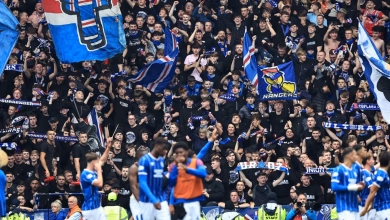
The context matters here. This was the first Old Firm derby of the season, arriving earlier than originally scheduled after the two clubs were drawn together in the League Cup quarter-final, a full week before their previously arranged Premiership meeting at Celtic Park. It also marked Derek McInnes’s first taste of the fixture as Rangers manager, going up against Martin O’Neill, who was taking charge of Celtic in the derby for the first time himself. With no away fans permitted inside Ibrox, a hangover from the disorder that marred last season’s Scottish Cup quarter-final between the sides, the atmosphere was always going to be intense and one-sided in the stands, and Rangers made sure it was every bit as one-sided on the pitch too.
McInnes set his side up in a 4-2-3-1, with Ivor Pandur in goal behind a back four of Dujon Sterling, Emmanuel Fernandez, Olwethu Makhanya and James Penrice, Nicolas Raskin and stand-in captain Dan Neil holding in midfield, and Djeidi Gassama, Kim Min-su and Badredine Bouanani supporting a front line built around pace and movement. It worked close to perfectly. Rangers dominated possession, comfortably outshot their rivals, and by full time Neil had scored twice, with Kevin Kelsy adding a third, to send McInnes’s side through to the semi-finals with a statement 3-0 win. Celtic’s afternoon was miserable from start to finish, and O’Neill was left admitting afterwards that his side’s tactical approach simply hadn’t worked, with Sam Johnstone and Cameron Carter-Vickers left repeatedly exposed by a Rangers team playing with real freedom.
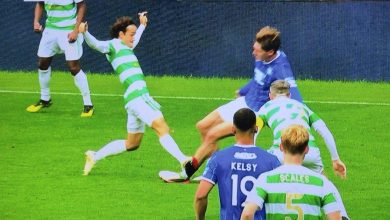
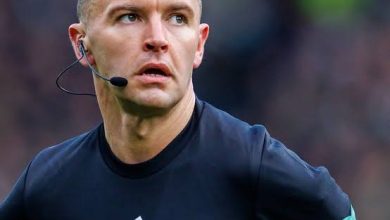
Buried in the middle of that comfortable win, though, sits an incident that deserves far more attention than it got in the moment. With the game still finely poised, Rangers defender Olwethu Makhanya was involved in a challenge with Celtic’s Kasper Hogh inside the Rangers box, climbing onto the striker’s back before swinging him down to the ground. It’s the kind of coming-together that, described in isolation, sounds like a fairly obvious penalty call, and watching the clip back it’s genuinely difficult to construct much of an argument in Rangers’ favour. And yet nothing happened. Referee Nick Walsh, positioned nearby, didn’t blow his whistle. There was no signal from Andrew Dallas in the VAR booth suggesting a review was even being considered. Play simply continued as though nothing of note had occurred at all.
What’s striking about this one, compared to plenty of other contentious Old Firm flashpoints down the years, is just how little was made of it in real time. Premier Sports, covering the match live, barely dwelled on the incident during their broadcast, and it took until the following day for the moment to really gather any traction, once clips began circulating more widely on social media and pundits and former officials started weighing in with the benefit of slower, clearer replays. That delayed reaction is itself part of the story. In the white heat of a 3-0 derby win, with goals flying in and a home crowd in full voice, a missed penalty appeal for the away side can understandably get lost in the noise. But once people actually sat down and watched the challenge back frame by frame, the consensus formed quickly: this should have been given, and at an absolute minimum it should have been checked.
That consensus found its most authoritative voice in Keith Hackett, the former FIFA and PGMOL referee who has built a reputation in retirement for offering blunt, considered verdicts on contentious officiating decisions across British football. Speaking exclusively to Ibrox News in the aftermath of the game, Hackett didn’t hedge. Asked about the Makhanya challenge on Hogh, he said he was surprised there had been no VAR intervention at all once the referee had opted not to award a spot-kick in the moment. He went further in comments carried elsewhere, stating plainly that Celtic have every right to feel aggrieved that a penalty wasn’t given, and that they can feel genuinely hard done by, given the nature of the contact involved. For a figure with Hackett’s background and standing in the game to use language that direct is notable in itself. Ex-officials tend to be measured in how they critique current colleagues, aware of how the trade views public criticism from within its own ranks, so when someone with Hackett’s CV says he’s surprised VAR didn’t even look at something, that’s a meaningful marker of just how clear-cut this incident appears on review.
The specific mechanics of what should have happened are worth spelling out, because they get to the heart of why this incident has proven so contentious. VAR in its current form isn’t designed to overturn every marginal or debatable decision a referee makes on the pitch, it exists to intervene in cases of clear and obvious error, moments where the on-field call is so plainly wrong that video review corrects an obvious injustice rather than re-refereeing every fifty-fifty call. The standard threshold, in other words, is a high one by design, precisely to avoid the game grinding to a halt for endless review of borderline contact. What makes the Makhanya-Hogh incident different is that it doesn’t appear to be one of those genuinely borderline calls at all. A player climbing onto an opponent’s back and using that position to pull him down to the ground inside the penalty area is about as textbook a foul as exists in the modern game, the kind of challenge referees are specifically coached to spot and punish precisely because it’s unambiguous once seen clearly. If Hackett’s read is right, and the replay evidence circulating since certainly supports it, this wasn’t a case of VAR correctly staying out of a marginal call, it was a case of VAR seemingly failing to engage with an incident that met its own stated threshold for intervention in the first place.
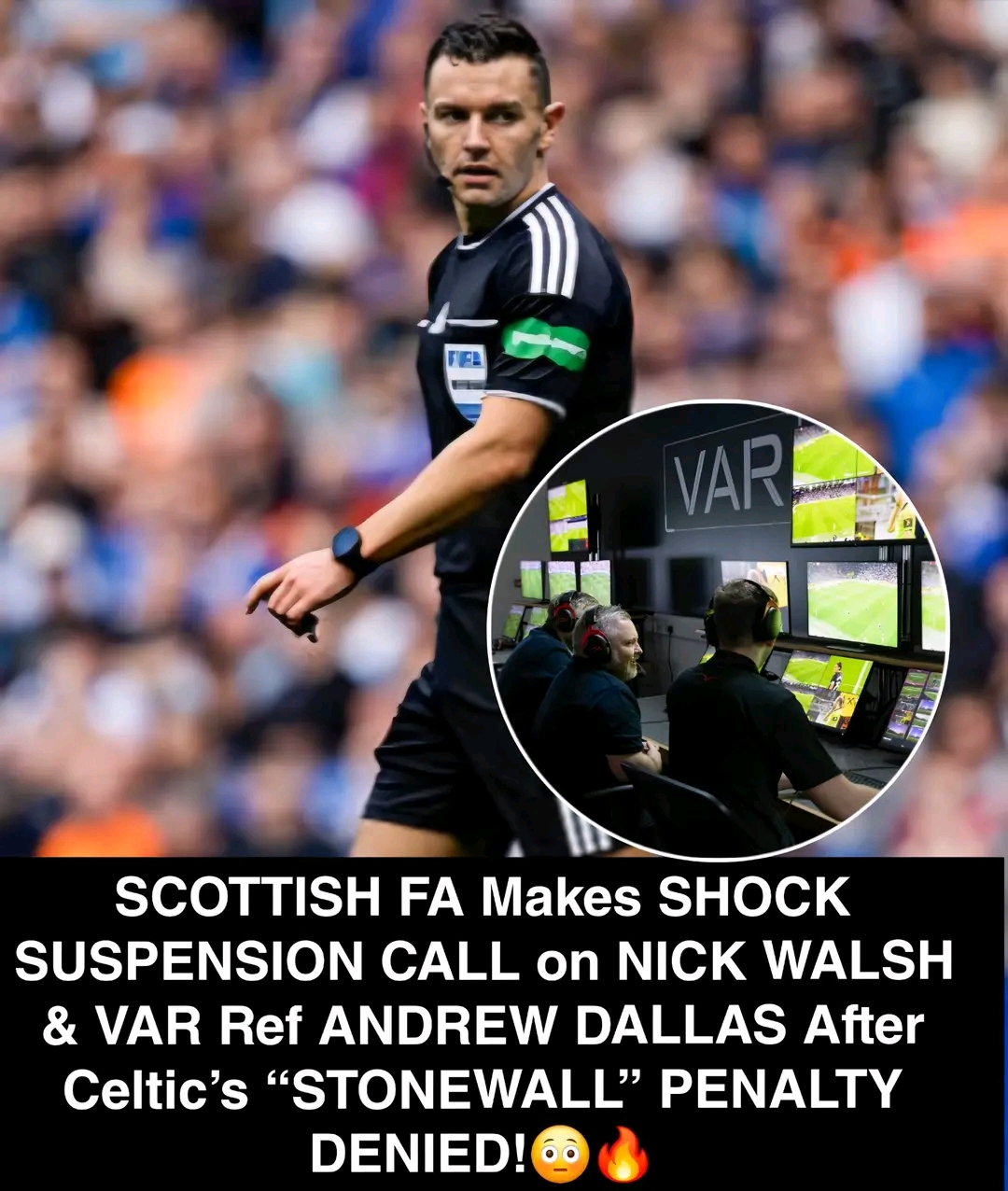
That raises an obvious and uncomfortable question about process rather than just the individual decision. Andrew Dallas has been Scotland’s regular VAR official for exactly this kind of fixture throughout the season, working alongside Steven McLean as his assistant in the booth for Sunday’s game, and between them they’re tasked with catching precisely the sort of missed contact that referees, focused on tracking the ball and the wider passage of play, can understandably lose sight of amid the chaos of a crowded box. That’s the entire justification for VAR’s existence as a system: a second and third set of eyes, reviewing incidents from multiple angles and without the split-second time pressure the man in the middle is working under, catching what gets missed live. When that system apparently doesn’t even flag an incident as clear as this one for a monitor review, it isn’t really Walsh’s individual judgement that comes into question so much as the wider process that’s meant to exist specifically as a safety net for moments exactly like this.
None of this happened in a vacuum, either, in terms of Nick Walsh’s broader relationship with these two clubs. Walsh came into Sunday’s fixture with a substantial history in the Old Firm fixture, this reportedly his ninth Glasgow derby as an official, and a record in those matches that, going purely by results, has leaned heavily in Celtic’s favour down the years, with six wins, a draw and a single defeat from his previous eight appointments to the fixture. He was also the referee in the middle for last season’s Scottish Cup semi-final between the sides, and has a recent history that includes contentious moments in fixtures well beyond Scotland too, including criticism from a Europa League manager over red card decisions and a bruising experience in a previous Scottish Cup final involving these same two clubs. None of that history makes Sunday’s non-decision correct or incorrect in isolation, refereeing performances should really be judged fixture by fixture rather than through the lens of reputation, but it does mean this particular missed call landed in an environment where scrutiny of Walsh’s Old Firm form was already an existing conversation among fans of both clubs, just usually pointed in the opposite direction.
There’s also a slightly awkward layer of irony sitting underneath all of this, given how the actual result played out. Rangers won this game comfortably enough, 3-0, that a converted penalty for Celtic at whatever stage of the match this incident occurred wouldn’t necessarily have changed the eventual outcome. That’s arguably one reason the moment didn’t generate the same immediate, visceral reaction in the ground and the broadcast that a similarly missed call might have produced in a tighter game, where every decision carries the potential to swing three points or a place in the next round. But the final scoreline doesn’t retrospectively make the missed call correct, and in fact there’s a reasonable argument that it makes the wider point about VAR’s inconsistency more concerning rather than less, because it suggests officials can miss even glaring incidents when the game state doesn’t feel finely balanced in the moment, which is precisely the kind of situational bias VAR was introduced to eliminate in the first place.
For Rangers, there’s an obvious temptation to treat all of this as somebody else’s problem, and it’s fair to acknowledge that supporters of a team that’s just delivered a statement 3-0 win over their fiercest rivals are unlikely to spend much energy interrogating a decision that fell in their favour. That’s human nature, and it would be naive to pretend otherwise. But there’s also a version of self-interest at play here that’s worth Rangers fans bearing in mind regardless of which side of a given decision they land on. A VAR system that fails to catch clear and obvious incidents doesn’t stay consistently kind to one club purely because it missed something in their favour once. The same inconsistency that let Makhanya off the hook on Sunday is exactly the kind of inconsistency that produces the opposite outcome in a different fixture, on a different weekend, when it’s a Rangers player on the receiving end of a missed call rather than benefiting from one. If anything, incidents like this should be points of common ground between rival fanbases rather than tribal battlegrounds, because the underlying complaint, that the review system isn’t reliably doing the job it exists to do, applies just as much to future Rangers grievances as it does to this particular Celtic one.
Where this goes from here is genuinely uncertain. The SFA and the relevant officiating bodies don’t tend to comment publicly on individual refereeing performances beyond the occasional statement acknowledging an error after the fact, and there’s been no indication as things stand of any formal review process being applied to Walsh or Dallas specifically over this incident, beyond the retrospective media and pundit scrutiny that’s followed in the days since. Keith Hackett’s comments, however pointed, carry weight as informed opinion rather than any kind of binding verdict, and Celtic themselves haven’t been reported making any formal complaint to the governing body over the non-award, at least not publicly. In the absence of the kind of retrospective action or statement that sometimes follows genuinely egregious officiating controversies in Scottish football, this one looks likely to settle into the familiar pattern: extensively picked over in the media for a few days, cited by both sets of fans as evidence for whatever pre-existing view they hold about the standard of officiating in the Scottish game, and then gradually overtaken by whatever the next contentious flashpoint happens to be.
That’s probably the most frustrating part of the entire episode. A challenge this clear-cut, involving this level of contact, missed by both the referee and a video review system specifically designed to catch exactly this kind of oversight, should really be prompting something more substantial than a news cycle of pundit reaction pieces before everyone moves on. Instead, in the absence of any independent disciplinary or review body stepping in publicly, it becomes another entry in the long list of Old Firm officiating grievances that both sets of supporters carry around with them, ready to be cited the next time a decision goes the other way in a future derby. Given how competitive this Rangers side under McInnes looks early into the new season, and given how many more meetings between these two clubs are still to come before the campaign is out, starting with next weekend’s Premiership fixture at Celtic Park, it’s unlikely to be the last time VAR’s consistency in the Old Firm fixture comes under this kind of scrutiny before the season is finished