From Jagiellonia Crisis to Old Firm Conqueror: Derek McInnes’s Remarkable Turnaround, and the Aberdeen Reunion Now Waiting for Him


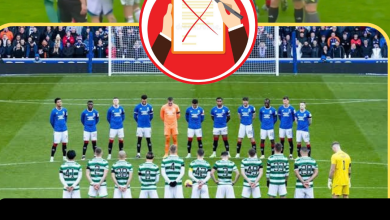
Football management has a habit of moving in extremes, and few managers currently working in Scotland understand that better than Derek McInnes. Barely a month ago, questions were being asked openly about whether the former Hearts boss was the right man to be leading Rangers at all, after a chastening European exit at the hands of Jagiellonia Bialystok left the club facing the prospect of another season without continental football and a support growing increasingly restless. On Sunday, at Ibrox, McInnes produced the perfect response: a 3-0 demolition of Celtic in the first Old Firm derby of the season, secured with a tactical set-up that thoroughly outclassed Martin O’Neill’s previously unbeaten side, and delivered in a manner that has fundamentally reshaped the conversation around his young Ibrox tenure. As if the football gods wanted to add one final flourish to the afternoon, the League Cup semi-final draw that followed almost immediately after full-time paired Rangers with Aberdeen — the club where McInnes built his entire managerial reputation across eight years at Pittodrie. It is difficult to imagine a more fitting subplot for a manager whose fortunes have swung so dramatically in such a short space of time.
A Rocky Start That Threatened to Define Everything
To understand quite how significant Sunday’s win was, it is worth revisiting just how difficult things had become for McInnes in his opening weeks in the Ibrox dugout. He arrived at Rangers this summer following his exit from Hearts, walking into a job that comes with a level of scrutiny few other posts in British football can match. Almost immediately, he was plunged into a European qualifying campaign that ended in humiliation, with Rangers falling to Jagiellonia Bialystok and missing out on the group-stage football the club’s finances and ambitions demand. That defeat followed hot on the heels of another underwhelming continental exit, and it did not take long for pundits, former players, and sections of the Ibrox support to begin openly questioning whether McInnes had the pedigree to succeed at a club of Rangers’ size.
The pressure only intensified from there. Reports throughout the opening weeks of the season painted a picture of a manager under genuine threat, with warnings from respected voices in the Scottish game suggesting he simply had to start delivering results or face the prospect of an extremely short reign. Given the sums Rangers had invested in rebuilding the playing squad over the summer — a spend running into tens of millions of pounds across a host of new arrivals — the stakes attached to that pressure were unusually high even by Ibrox standards. It was, by any measure, about as difficult a start as a new Rangers manager could have endured, and there were legitimate questions being asked about whether the club’s board would show the patience required to let McInnes work through it.
The Turnaround Begins
What has followed since those difficult early weeks has been nothing short of remarkable. Rangers have won five matches in a row across all competitions, conceding just a single goal in that period, a defensive record that speaks to a team that has rapidly found both its shape and its confidence under McInnes’s guidance. That run has included league victories that steadied the ship domestically, but nothing was going to prove the point quite as emphatically as a victory over Celtic, in the biggest and most scrutinised fixture Scottish football has to offer.
Sunday delivered exactly that. With Celtic having arrived at Ibrox with a perfect domestic record and sitting clear at the top of the Premiership table, the conditions were set for a genuine statement occasion, and McInnes duly delivered one. His decision to set his team up with three at the back, overloading Celtic in central midfield areas, gave Rangers complete control of the game from a remarkably early stage. It has been described by those inside Ibrox as a tactical masterclass, and the scoreline — a comfortable 3-0, with goals from captain Dan Neil (a first-half opener and a wonderfully curled second) and new striker Kevin Kelsy — reflected a genuine gulf in performance between the two sides on the day. Celtic, by contrast, rarely threatened the Rangers goal throughout the ninety minutes, a damning indictment of a team that had gone into the match with an unblemished domestic record and had been installed as slight favourites in some quarters given their form coming into the fixture.
It marked McInnes’s first Old Firm victory as Rangers manager, at the first attempt, and it came in a fixture that carries more weight than almost any other result available to a manager working in Scottish football. For a boss who had spent the opening weeks of his reign fending off questions about his suitability for the role, there could hardly have been a more emphatic way to silence those doubts, at least for now.
A Career Built on Resilience
None of this should come as a complete surprise to anyone who has followed McInnes’s managerial career closely over the past decade and a half, because resilience in the face of adversity has become something of a defining trait. His reputation was built at Aberdeen, where he took charge in March 2013 and went on to enjoy an eight-year reign that remains, statistically, one of the most consistent in the club’s modern history. He led the Dons to their first major trophy in nineteen years when Aberdeen beat Inverness Caledonian Thistle to win the League Cup in 2014, a triumph secured in front of a reported 43,000 travelling Aberdeen supporters at Celtic Park, and one that instantly elevated his standing within the Scottish game. Four consecutive second-place finishes in the Premiership followed between 2015 and 2018, along with four cup final appearances and a string of European qualification campaigns, statistics that placed McInnes among the most successful managers outside of the Old Firm duopoly during that period. His overall league win ratio at one stage stood at a genuinely elite 57 per cent, a figure that, put into context by Aberdeen’s own historians, comfortably matched the equivalent record Alex Ferguson posted during his own time at Pittodrie decades earlier.
That success at Aberdeen naturally attracted interest from bigger clubs along the way. McInnes was strongly linked with the vacant Rangers job as far back as 2017, following Mark Warburton’s departure, with Aberdeen legends publicly urging him to resist the lure of Ibrox and continue building his legacy in the north-east instead. Sunderland also made contact with him at various points during his Pittodrie tenure. On each occasion, McInnes chose to remain loyal to Aberdeen, a decision that would eventually be repaid with the kind of prolonged stability that is exceptionally rare for any manager working outside Glasgow’s two dominant clubs.
Like all long managerial reigns, though, it eventually reached its natural end. A dramatic dip in form during the 2020-21 season, including a run of one win in nine matches and an eighteen-game scoring drought that broke a 118-year-old club record for goal-shyness, brought McInnes’s Pittodrie tenure to a close by mutual consent in March 2021. Aberdeen chairman Dave Cormack was generous in his assessment at the time, crediting McInnes with raising standards at the club and delivering a level of consistency that had not been seen at Pittodrie for many years, while acknowledging that the board felt a change was necessary given results had begun to slide. It was an amicable, if disappointing, ending to a spell that had otherwise defined an era of relative success for the Dons.
The Long Road Back to the Top
Rather than disappearing from the game, McInnes used the following period to rebuild in less glamorous surroundings, and it is this chapter of his career that arguably explains the resilience he has shown during his difficult opening weeks at Ibrox. After a period out of work, he took charge of Kilmarnock in January 2022, arriving at a club that had recently been relegated and was scrapping to rebuild in the second tier of Scottish football. He steadied the ship and, over time, built Kilmarnock into a genuinely competitive top-flight outfit, culminating in a Scottish Football Writers’ Association Manager of the Year award in 2024 after guiding the Rugby Park club into European competition — an achievement that saw off competition for the honour from, among others, then-Rangers boss Philippe Clement. It was a full-circle moment of sorts for McInnes, who had first won the same individual honour a decade earlier during his Aberdeen pomp, and it re-established his reputation as a manager capable of overachieving relative to his budget and squad depth, this time working with considerably more limited resources than he had enjoyed at Pittodrie.
That Kilmarnock spell, along with a subsequent stint at Hearts before his Rangers appointment this summer, has given McInnes a body of work spanning nearly every level of the Scottish game: promotion-winning work at St Johnstone early in his career, sustained top-four consistency at Aberdeen, a rebuilding job at Kilmarnock, and now the ultimate test of managing one half of Scottish football’s most famous rivalry. Few managers currently working in the domestic game can claim a comparable breadth of experience, and it is that accumulated knowledge of building teams under pressure, in a variety of different circumstances, that appears to be paying dividends now that things have finally started to click at Ibrox.
An Emotional Homecoming Now on the Horizon
If Sunday’s derby victory represented the on-field vindication McInnes needed, the League Cup semi-final draw that followed almost immediately afterwards added a layer of narrative that no scriptwriter could have improved upon. Rangers’ win over Celtic secured their place in the last four of the competition, and the draw paired them with Aberdeen, sending McInnes back to Pittodrie’s great rivals for a place in the final at some point over the weekend of 31 October or 1 November, with the tie set to be played at the neutral venue of Hampden Park.
For McInnes, this is about as personal a fixture as Scottish football can produce outside of an actual Old Firm derby. Aberdeen is the club with which his managerial reputation was forged, the club whose supporters he served loyally for eight years, resisting overtures from both Rangers and Sunderland along the way, and the club that ultimately parted ways with him only when results demanded a change rather than through any sense of acrimony. Facing them now, from the opposite technical area, and with a place in a domestic cup final at stake, will inevitably stir up a mixture of emotions among supporters on both sides. Aberdeen fans of a certain generation still hold McInnes’s Pittodrie tenure in genuinely high regard — the 2014 League Cup triumph remains the club’s only major trophy of the post-Fergie era, and the sustained top-four finishes he delivered throughout the middle part of the last decade are unlikely to be forgotten quickly, whatever complicated feelings still linger from the manner of his eventual departure.
There is also a football dimension to the tie that will fascinate neutrals well beyond the emotional subplot. McInnes knows Aberdeen’s structures, their fanbase, and the demands of a club that has spent much of the past decade positioned as the best of the rest behind Celtic and Rangers, arguably better than any manager currently working in Scottish football. Whether that inside knowledge translates into a tactical advantage when the two sides actually meet remains to be seen, but it is precisely the kind of subplot that will dominate the build-up to the tie in the weeks ahead, adding an extra dimension of interest to what was already shaping up as an intriguing last-four draw alongside the Edinburgh derby between Hearts and Hibernian in the other semi-final.
The Bigger Picture: Can This Form Last?
For all the romance of an impending Aberdeen reunion, McInnes and his players will know that the more immediate and consequential fixture comes rather sooner, with Rangers and Celtic set to meet again in the Scottish Premiership at Celtic Park next Sunday, barely a week on from Sunday’s derby demolition. That fixture arguably carries even greater significance than the cup meeting, given the direct implications for the destination of the Premiership title, and it will provide the first real examination of whether Sunday’s performance represented a genuine step change in the level Rangers are now operating at, or simply an exceptional one-off occasion against a Celtic side that could not live with the specific tactical plan McInnes had prepared.
History suggests caution is warranted before getting too carried away. Football, and Scottish football in particular, has an unfortunate habit of punishing complacency, and O’Neill’s Celtic side will arrive at Parkhead next weekend desperate to atone for their heaviest domestic defeat of the season and to reassert their credentials at the top of the table. But McInnes’s own managerial history — the years of sustained consistency at Aberdeen, the rebuilding work at Kilmarnock, and now this rapid stabilisation at Rangers after such a torrid opening to the season — suggests he is unusually well equipped to handle exactly this kind of pressure moment. He has, after all, spent much of his career proving doubters wrong in one dugout or another, whether that meant resisting the lure of bigger clubs to stay loyal at Pittodrie, rebuilding a relegated Kilmarnock into European contenders, or now steering Rangers through an early-season crisis and out the other side with the club’s biggest possible statement result.
Whatever happens over the coming weeks, Sunday’s victory has already secured its place as a defining moment of McInnes’s short Ibrox tenure so far. A manager who, only weeks earlier, was being openly questioned over his suitability for the role has delivered a first Old Firm win at the very first attempt, in utterly convincing fashion, and now finds himself with the added intrigue of an emotionally charged reunion with the club where his managerial story really began. Rangers supporters, who had grown understandably anxious during those difficult opening weeks of the season, will hope this proves to be the moment everything turned — not just a brilliant single afternoon, but the true beginning of the McInnes era finally taking shape at Ibrox.