⚽ Team News: Rangers Sweat On Fitness As Celtic Manage Fragile Bodies Ahead Of Parkhead Rematch


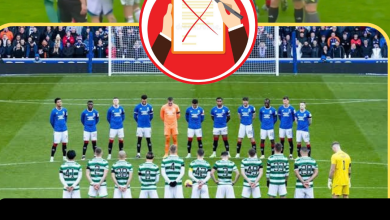
Seven days on from a result that shook Scottish football, Rangers and Celtic reconvene at Parkhead on Sunday for the first league instalment of this season’s Old Firm rivalry, and both managers head into it with genuine selection headaches to navigate, albeit for very different reasons. Derek McInnes is dealing with the loss of his captain and leading striker to a serious injury just as his side hits its best run of form in months, while Martin O’Neill is carefully managing a squad littered with players returning from, or still nursing, various knocks and niggles as he looks to respond to last weekend’s chastening 3-0 defeat.
Star with Rangers, because the injury news out of Ibrox this week has been considerably more significant than anything circulating around Celtic Park. Lawrence Shankland, who has worn the captain’s armband and led the line as Rangers’ first-choice striker, has been ruled out for an extended spell after suffering a significant hamstring tear, with McInnes’s side facing the prospect of missing their talismanic forward for around four months. That’s a genuinely serious blow regardless of the timing, but it lands at a particularly awkward moment given how well Rangers have been playing collectively of late, riding a five-match winning run that has included Sunday’s statement victory over Celtic. Losing your captain and top scorer for the best part of a season’s worth of fixtures is never something a club can simply shrug off, and McInnes will now have to find a way to reshuffle his attacking options without his most senior forward available for the foreseeable future.
Shankland’s absence isn’t an isolated issue either. Youssef Chermiti, another significant attacking option for Rangers, remains sidelined by a long-term anterior cruciate ligament injury and is unlikely to feature again this calendar year, a blow that compounds the loss of Shankland given how highly regarded the young forward’s potential had become before his injury struck. Japanese winger Daisuke Yokota has also been unavailable in recent weeks, further thinning out McInnes’s attacking options at a time when the club could really use its full complement of forward players given the physical and mental demands of playing Celtic twice inside a week. Taken together, that’s a genuinely concerning list of attacking absentees for a manager who will want to keep pushing his current run of form rather than being forced into makeshift solutions up front.
There is at least one piece of good news on the fitness front for Rangers, with a member of the squad who had been managing a foot issue in recent weeks tipped to be available for the trip to Parkhead having missed the cup victory over Celtic entirely. Getting any body back into contention, even a squad player rather than a first-choice starter, offers McInnes a bit more flexibility for a fixture that will demand freshness and intensity from whoever takes the field, particularly with a second Old Firm derby inside seven days always likely to take a physical toll on both squads regardless of how comfortably the first leg went.
McInnes, for his part, has been careful in his public comments this week not to get carried away with the scale of Sunday’s win, repeatedly stressing that his players need to treat the two fixtures as entirely separate occasions rather than assuming Sunday’s dominant display guarantees anything at Parkhead. He’s pointed to the performance at Ibrox as a marker and a reference point for what his side is capable of when everything clicks, but he’s also acknowledged that Celtic are likely to come out with a different setup and a more urgent approach given the manner of last weekend’s defeat, and that individual moments and performances, rather than tactical setups alone, tend to decide these occasions more than anything else.
Over at Celtic Park, the picture is considerably more complicated, not because of any single devastating injury blow on the scale of Shankland’s, but because O’Neill is currently managing a squad with an unusually high number of players either returning from injury, carrying knocks, or unavailable through other circumstances. Cameron Carter-Vickers, one of O’Neill’s most trusted defenders and a fixture in the side before this recent stretch, was left out entirely for Celtic’s midweek trip to face St Johnstone, a decision O’Neill was quick to frame as precautionary rather than the result of any fresh injury setback. Speaking to BBC Sport, the Celtic boss explained that Carter-Vickers had looked to be wilting in the closing stages of Saturday’s win over St Mirren and that leaving him out completely for a game against lower opposition made more sense than risking him unnecessarily ahead of a bigger occasion. Whether that bigger occasion in his mind was last Sunday’s cup tie at Ibrox or this coming weekend’s league fixture at Parkhead, the logic holds either way, and it’s the kind of careful load management that becomes increasingly important once a club is playing Old Firm fixtures in successive weekends. Given his extensive injury history at Celtic, including a lengthy Achilles lay-off that wiped out a significant chunk of a previous season and even cost him involvement with the USMNT, O’Neill has every incentive to be cautious with Carter-Vickers rather than risk aggravating anything ahead of a run of fixtures that includes back-to-back derbies.
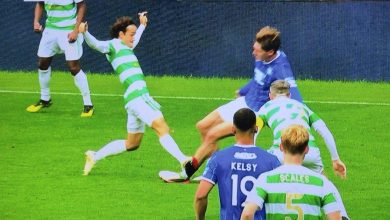
Elsewhere in the Celtic squad, several other names are at various stages of returning from their own fitness issues. Kieran Tierney has recently resumed training and has been building his way back towards involvement after a spell out, making the bench in recent fixtures as he works his way back to full sharpness, and he’ll be pushing for greater involvement as the week progresses. Alistair Johnston, meanwhile, remains further back in his recovery timeline, continuing individual training on the grass as he works through a hamstring problem that has kept him out for a more extended period, meaning O’Neill is unlikely to have him available for selection this weekend. Kasper Høgh has only recently returned to the fold himself after his own spell out, featuring in Sunday’s defeat at Ibrox, where he was the player fouled in the box by Rangers defender Olwethu Makhanya in the incident that’s generated so much VAR-related debate since. Yang Hyun-jun, another attacking option O’Neill would ordinarily be able to call upon, has been unavailable in recent weeks having left to join up with the South Korea squad for the Asian Games, a commitment that takes priority over club fixtures and leaves O’Neill without one of his wide options for the time being.
Taken together, that’s a genuinely stretched Celtic squad heading into a must-respond fixture, with several key defensive and attacking options either sidelined entirely or being carefully managed rather than risked at full intensity. It’s a markedly different kind of selection headache to the one facing McInnes across the city, less about a single devastating long-term loss and more about the cumulative weight of a squad carrying multiple smaller issues simultaneously, any one of which could force a change to O’Neill’s preferred starting lineup depending on how training goes in the days before kick-off.
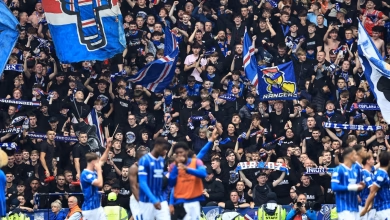
The context around this fixture adds another unusual layer that neither manager has had to contend with in quite the same way before. For the second Old Firm meeting in successive weekends, there will be no away fans present, with the SPFL’s decision to suspend travelling supporter allocations for the remainder of the season, a direct response to the crowd disorder that marred last season’s Scottish Cup quarter-final between these two clubs, meaning Sunday’s game at Parkhead will be played in front of an entirely home Celtic crowd, just as last weekend’s Ibrox fixture featured only Rangers supporters. Both McInnes and O’Neill have expressed disappointment at the arrangement from a footballing and atmosphere perspective, with O’Neill telling Sky Sports News that it feels genuinely sad from an ordinary supporter’s point of view not to have both sets of fans present for occasions of this magnitude, even while acknowledging the safety rationale behind the decision. Whatever the atmospheric drawbacks, the practical reality for both squads is that they’ll be playing in front of a stadium that’s overwhelmingly partisan in the home side’s favour, which historically has tended to work in Celtic’s favour at Parkhead regardless of form heading into the fixture.
There’s also the small matter of history and psychology to factor into how both squads and their respective backroom staffs are approaching the build-up. Sunday’s 3-0 scoreline at Ibrox was about as emphatic as Old Firm results get, and O’Neill has been explicit in his public comments this week that his players need to move past it rather than dwelling on the manner of the defeat, telling Celtic’s official channel that his side simply needs to rise above what happened and focus on producing a positive response. That’s a fairly standard managerial line in the aftermath of a heavy derby loss, but the substance behind it matters more than the words themselves, and O’Neill will know that a similarly passive or disjointed performance at Parkhead risks turning what was already a difficult week for the club into something considerably more serious in terms of pressure from supporters and media alike, particularly with question marks already circulating about aspects of the squad’s recruitment and depth following the summer transfer window.
For Rangers, the psychological dynamic is essentially the inverse. McInnes’s side arrive at Parkhead full of confidence, riding their best run of form of the season and having produced arguably their most complete derby performance in years just seven days earlier. But that confidence brings its own pressures too, not least the widely held view among pundits and former players that following up a result like Sunday’s with anything less than a strong performance risks undoing much of the psychological ground gained, giving Celtic and their supporters an opportunity to draw a line under the Ibrox defeat and restore some parity to the rivalry heading into the rest of the season. McInnes has been careful to guard against complacency in his public comments, repeatedly stressing that Sunday’s win, however pleasing, needs to be treated purely as a reference point for what his side is capable of rather than any guarantee of what will happen at Parkhead, where different tactical wrinkles from O’Neill and the different backdrop of a fully partisan home crowd could easily produce a very different kind of contest.
From a pure team-selection perspective, the loss of Shankland is likely to force McInnes into his first significant tactical rethink since the derby win, with the responsibility for leading the line now likely to fall to whichever combination of attacking options remains fit and available given Chermiti’s continued absence and Yokota’s unavailability. Whether that means a like-for-like swap in personnel or a broader shift in shape and approach up front remains to be seen, and it’s exactly the kind of selection puzzle that can complicate a manager’s preparations even when the underlying squad form and confidence remain high. For O’Neill, the calculus is somewhat different, less about replacing a single irreplaceable figure and more about carefully piecing together his strongest available eleven from a squad currently carrying an unusually high number of players in varying stages of fitness, with decisions still to be made in the coming days about exactly how far to push players like Carter-Vickers and Tierney given the accumulated demands of the fixture list.
What’s clear heading into Sunday is that both clubs are dealing with genuine fitness and selection challenges that go well beyond the tactical and psychological storylines generated by last weekend’s result. Rangers will be without their captain and top scorer for a significant stretch of the season just as their form has hit a genuine peak, a frustrating juxtaposition for any manager to navigate. Celtic, meanwhile, head into a must-respond fixture with several important names either unavailable entirely or being carefully nursed back towards full sharpness, adding an extra layer of uncertainty to how O’Neill approaches his selection for what is already, by any measure, one of the most significant fixtures of his second spell in interim charge at Parkhead. Both managers have talked a good game about moving past Sunday’s result and treating this as an entirely separate occasion, and the respective injury and fitness situations at each club will do plenty to determine whether either of them can actually deliver on those words when the two sides meet again on Sunday afternoon.