McInnes expected to demote Rangers ‘godsend’ with Ibrox future uncertain – journalist

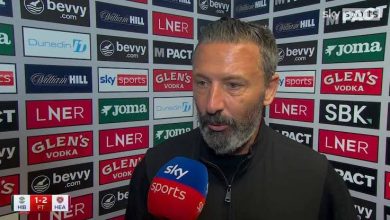
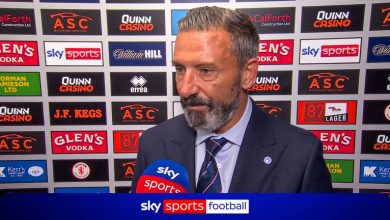
Bojan Miovski has gone from surplus to essential inside the space of a fortnight, and now finds himself facing the prospect of being shuffled back down the pecking order almost as quickly as he climbed it. The North Macedonian striker was talked about as good as gone from Ibrox during the closing weeks of the summer transfer window, with his own camp working to find him a way out. Instead, injuries to Lawrence Shankland and Youssef Chermiti have handed him a route back into Derek McInnes’ plans, and after a dramatic late winner against St Mirren followed by a starring role in a resounding 3-0 Old Firm victory over Celtic, the 27-year-old has been elevated to a status few would have predicted when the window slammed shut. McInnes described him as a “godsend” for what he has brought to the team in recent weeks, praise that reflects just how badly Rangers needed a body up front once their first-choice options were ruled out. Yet according to a report carried by a football journalist, that goodwill has a shelf life. McInnes is expected to move Miovski back down the list once Shankland and Chermiti are fit again, unless the striker’s form between now and then forces a change of heart, and while there is no suggestion Rangers will look to sell him in January given the club’s ongoing need for attacking cover, his longer-term future at Ibrox has been described as uncertain.
It is a familiar story in modern football, where circumstance rather than conviction often decides who leads the line. Miovski’s rise back into contention has come entirely off the back of misfortune elsewhere. Shankland arrived at Ibrox as a marquee capture, a proven goalscorer with a pedigree in the Scottish game, while Chermiti’s arrival was framed as a statement of ambition, a younger, more dynamic option to spearhead the attack for years to come. Both have been sidelined for extended spells, and it is that vacuum which Miovski has been asked to fill. He has done so impressively, but the nature of his opportunity means it was always likely to be viewed as temporary rather than a genuine changing of the guard. McInnes has been open about how much he values what the striker offers positionally and in terms of experience, but there is a difference between being useful in a crisis and being first choice when the squad is at full strength, and it appears the manager has already drawn a mental line between the two.
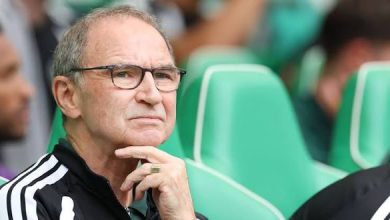
The context behind Miovski’s situation makes the twist all the more compelling. He joined Rangers only last year from Girona, arriving with a reputation built during two prolific seasons at Aberdeen, where he scored 44 goals in 98 appearances and earned a club-record sale to the La Liga side. That move to Spain, worth around £6.8million at the time, was supposed to be the platform for the next step in his career, but it never quite worked out. He managed only a handful of goals in more than 20 appearances for Girona before dropping down the priority list there too, and last summer he returned to Scotland in a deal that brought him back into a league where he had already proven he could deliver. The switch was billed by those at Ibrox as a coup, a striker with know-how of the Premiership walking straight into a Rangers side that needed proven firepower. Head coach at the time, Russell Martin, spoke of his movement and intelligence in front of goal, while the club’s sporting director pointed to his track record as a reason the move made sense. Instead, his first season back in Scotland has been anything but smooth, and the disconnect between the fanfare of his arrival and the reality of his first year has been stark.
That disconnect reportedly extended into this past summer, when Miovski’s representatives worked to find him an exit. Reports at the time suggested he remained keen to leave Ibrox, with sources indicating the breakdown of his relationship with his agent stemmed at least in part from failing to secure a departure before the window closed. That backdrop matters enormously when assessing where things stand now. This is not simply a case of a player fighting for a starting berth in a settled dressing room; it is a player who reportedly wanted to move on, who was thwarted in doing so, and who has now been thrust into the shop window at exactly the moment his manager needed him most. There is an irony in a player who wanted away becoming, however briefly, indispensable, and it raises questions about how sustainable that arrangement can really be once the initial emergency passes and cooler heads prevail on both sides.
On the pitch, the timing of his emergence could not have been better managed from Rangers’ perspective. Miovski had barely featured before his introduction against St Mirren, appearing only as a substitute in his previous outings this season without ever forcing his way into the starting XI. Then came the moment that changed the conversation. A delicate, composed finish in the dying stages turned a share of the points into a crucial three, and it was the sort of contribution that immediately reframed how supporters and pundits alike were talking about him. McInnes praised his character in the aftermath, noting how the striker had bounced back into the club with the right attitude despite the uncertainty hanging over him, and pointed to his experience and know-how of the Scottish game as qualities that had been undervalued in the assessment of his season so far. It was exactly the kind of impact substitute cameo that managers dream of, and it thrust Miovski into contention for a much bigger occasion just days later.
That occasion arrived in the form of the derby, and Rangers delivered arguably their finest performance of the McInnes era to date. A 3-0 victory over Celtic at Ibrox sent the Light Blues through to the semi-finals of the Premier Sports Cup and did so in a manner that will have delighted supporters who have spent much of the season demanding more urgency and aggression from their side. Dan Neil opened the scoring midway through the first half, capitalising on a defensive mistake from Celtic to give Rangers the perfect platform, and from there the home side never allowed their rivals to find a foothold. Kevin Kelsy doubled the lead after the interval, converting at the back post following good work down the flank, before Neil completed his brace with a superb strike into the top corner to put the result beyond doubt. It was a complete team performance built on the kind of discipline and competitive edge that had been missing in previous derby meetings, and Miovski’s involvement in that success only added further weight to the argument that Rangers have stumbled upon something valuable, even if it arrived through adversity rather than design.
The challenge now for McInnes is a familiar one for any manager whose plans have been disrupted by injury. Do you stick with what is working, even if it was born out of necessity, or do you revert to the structure and personnel you originally intended once your first-choice options are available again? The expectation, according to the report, is that McInnes will lean towards the latter. Shankland was brought in to be a focal point of the attack, a player capable of leading the line with the kind of composure and finishing instinct that has defined his career north and south of the border, while Chermiti represents a different profile entirely, younger and with the athleticism to stretch defences in a way that suits the more expansive style Rangers have tried to build under their current management team. Both were signed with specific roles in mind, and it would be a considerable shift in thinking for either to be left out in favour of a player who was, until recently, on his way out of the building.
That is not to say Miovski has no say in the matter. Football is littered with examples of fringe players who used a run of good form to force their way permanently into a manager’s thinking, and there is nothing to suggest McInnes has entirely closed the door on that possibility. The report is careful to note that the striker can still alter the outlook with his performances between now and the return of his rivals, which suggests this is being framed as an open competition rather than a fixed hierarchy that Miovski is powerless to influence. Every goal, every strong performance in the weeks ahead will add pressure on McInnes to reconsider, and there is a version of events where sustained form makes the decision far more complicated than it currently appears. Managers talk often about competition for places being healthy for a squad, and if Miovski continues to deliver in the manner he has over the past week, Rangers may find themselves with a genuinely difficult selection headache rather than a straightforward reversion to the original pecking order.
What does seem clear, however, is that Rangers have no intention of cashing in on him during the January window regardless of how the on-field situation develops. The report is explicit on this point: the club’s ongoing injury problems mean they simply cannot afford to lose attacking depth, even for a player whose long-term role is in question. That is a pragmatic stance rather than a ringing endorsement of his Ibrox future, but it does at least offer Miovski short-term security that seemed unthinkable just a few weeks ago when his own camp was actively trying to engineer a departure. It also protects Rangers from a scenario where they sell a player mid-season only to find themselves short of options again if further injuries strike a squad that has already been stretched thin at the top end of the pitch. There is a sensible risk-management logic to keeping him around through the winter months, even if the club’s underlying assessment of his long-term suitability has not fundamentally changed.
Beyond January, though, the picture becomes murkier. Miovski still has plenty of time remaining on his contract, and there is no obvious financial pressure forcing Rangers into a quick decision either way. That gives both parties room to assess the situation over the coming months without needing to rush into anything. If Shankland and Chermiti return to full fitness and quickly reclaim their places as originally intended, the conversation around Miovski’s summer future will likely resurface, particularly if his own camp remains keen on finding a route away from Ibrox as previous reporting suggested. Equally, if his current form proves to be more than a flash in the pan and he continues contributing significant moments in big games, Rangers may find their perspective on his value shifting in real time. Strikers who score in Old Firm fixtures and deliver match-winning contributions off the bench tend to earn goodwill that outlasts a single hot streak, and McInnes himself has already shown a willingness to publicly praise the player’s contribution and attitude despite the uncertainty hanging over his situation.
There is also a broader story here about squad management under McInnes as he continues to shape Rangers in his own image following his appointment. Balancing the ambitions of a rebuilt attacking line with the reality of an injury list that has forced significant improvisation is exactly the kind of test that will define his reign in these early months. The manager has already shown pragmatism in his willingness to lean on a player who was reportedly heading for the exit, and how he handles the transition back to his preferred options once fitness allows will say plenty about his man-management as well as his tactical planning. Get it right, and Rangers emerge from this injury crisis with genuine strength in depth up front, a luxury few Scottish clubs can boast. Get it wrong, and there is a risk of unsettling a player who has just delivered arguably his two biggest contributions in Rangers colours, at precisely the moment he might have started to feel wanted again after months of speculation about his departure.
For now, Miovski will simply want to keep playing and keep contributing, aware that every touch in front of goal strengthens his case regardless of what the longer-term planning might say. His story since returning to Scotland has already been one of twists, from a difficult first season back in the Premiership, through very public exit talk over the summer, to becoming the man McInnes turned to and publicly praised in the club’s biggest fixture of the season so far. Supporters, meanwhile, will care little for the politics of pecking orders and squad planning as long as he keeps producing moments like the winner against St Mirren and the composure he showed in the derby win over Celtic. Whether that is enough to change McInnes’ calculations once his rivals return remains to be seen, but Miovski has at the very least given himself, and Rangers, something to think about heading into the winter months. In a season already shaped by injuries and shifting fortunes, his situation stands as one of the more intriguing subplots still to play out at Ibrox.