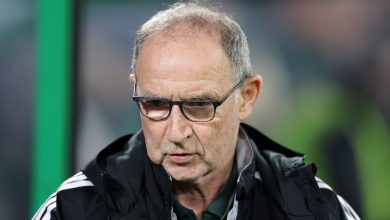
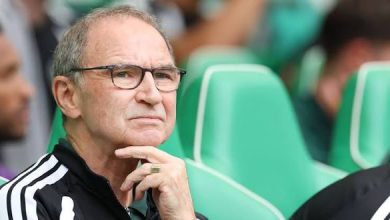
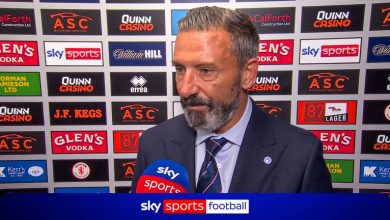
Danny Röhl is not returning to Rangers, having left the club in June 2026 to become the head coach of Red Bull Salzburg.

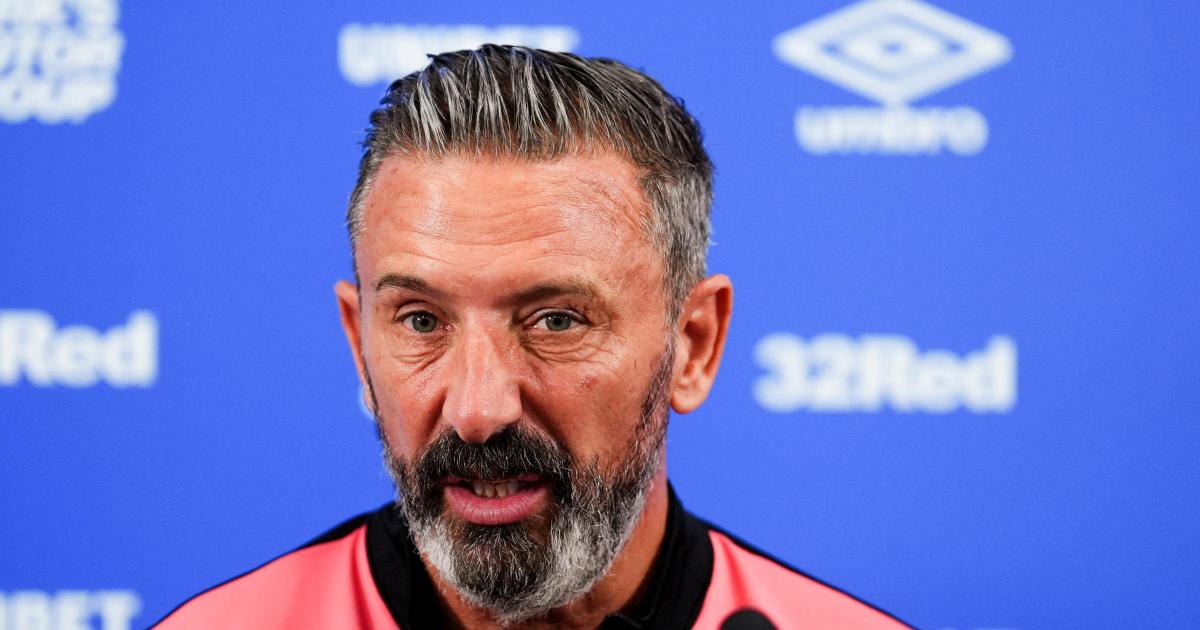
Danny Röhl’s time in charge of Rangers lasted just eight months, a brief and, in retrospect, somewhat turbulent chapter in the club’s recent managerial history that ended not with a sacking but with something rarer in modern football: a mutual parting of ways, engineered largely by the coach’s own decision to pursue an opportunity elsewhere. To understand how Rangers arrived at this point — and why a manager with two years still left on his contract, and public assurances over his future, ultimately left for Austrian football just months after taking the job — requires looking closely at the full arc of his short tenure, the pressures building around him, and the timeline of how his Red Bull Salzburg move actually came together
Röhl’s appointment at Rangers in October 2025 came on the back of a genuinely impressive managerial reputation, forged not in Scotland but in the English Championship. He’d taken his first senior managerial role at Sheffield Wednesday in October 2023, inheriting a side in genuine crisis — a team that had picked up a mere two points from its opening ten matches of that Championship season, a start bad enough to threaten relegation before a ball had barely been kicked in anger. Röhl’s task was straightforward in description but difficult in execution: keep Wednesday up. He managed it, guiding the club to Championship safety in a rescue job that earned him considerable praise within English football circles, before steering them to a respectable 12th-place finish in his final season at Hillsborough.
That kind of profile — a young, progressive German coach with a proven record of stabilising a struggling side and coaxing structure and improvement out of limited resources — made him an appealing candidate when Rangers found themselves needing a change following Russell Martin’s departure. He arrived at Ibrox to replace Martin with the club sitting sixth in the Scottish Premiership table at the time of his appointment, tasked with a similar rescue-and-rebuild job to the one he’d completed at Wednesday, only now under the considerably higher scrutiny and expectation that comes with managing one half of Scottish football’s most famous rivalry.
By most objective measures, Röhl’s first and only full season in charge represented a genuine improvement on the position he’d inherited. Having taken over with Rangers languishing in sixth, he led the side into contention in the title race for a period, before Rangers ultimately fell away in the closing stages of the campaign and finished third in the Scottish Premiership — an outcome that, judged purely against the sixth-place position he’d inherited, represented meaningful progress, even if it fell short of genuinely challenging for the title itsel
Cup competitions told a more mixed story. Rangers were eliminated by Celtic at the semi-final stage of the League Cup, and suffered a further defeat to their Old Firm rivals at the quarter-final stage of the Scottish Cup — meaning that, across two domestic cup competitions, Röhl’s Rangers side found their season ended on both occasions specifically by Celtic. For a club with Rangers’ history and expectations, defeats to Celtic in cup competitions carry a particular sting regardless of the broader context, and it’s not hard to imagine that pattern contributing to a sense, whether fair or not, that meaningful progress under the new German coach remained incomplete.
Chairman Andrew Cavenagh’s public response to that third-place finish is worth noting for what it reveals about the club’s stated position at the time. Rather than expressing dissatisfaction, Cavenagh instead promised fans that the Ibrox squad would be revamped over the summer, with Röhl publicly backed to continue in the role despite the club having finished outside the top two. That kind of public backing — a chairman explicitly committing to backing his manager through a squad rebuild rather than moving him on — is precisely the sort of statement that, on the surface, suggested Röhl’s position at Rangers was considered secure heading into the new season.
Beneath that public show of support, however, a rather different story was quietly developing. Reports emerged that, despite Röhl having two years remaining on his Ibrox contract, and despite the assurances over his future that had followed the third-place finish, Rangers hierarchy had been continuing to review their options since as early as May — well before any formal approach from another club had become public knowledge. That detail is significant: it suggests the relationship between Röhl and the Ibrox boardroom may have been less settled than the public messaging implied, with question marks over his long-term fit persisting even as the club’s official line remained supportive.
It was around this period that Red Bull Salzburg’s interest first became concrete. Sky Sports reported that the Austrian Bundesliga outfit were targeting Röhl specifically as a replacement for their own outgoing head coach, Daniel Beichler, with talks between Salzburg and Rangers already underway. Notably, this wasn’t the first time Röhl’s name had been floated for a move away from Scottish football — he had previously been linked with German side Wolfsburg during the same period, indicating that his reputation within the wider footballing world, and specifically within Germany and the broader Red Bull ownership network, remained strong even as questions persisted about his position at Ibrox specifically.
Crucially, any deal for Röhl’s services was always going to hinge on compensation. Sky Sports reported explicitly that any move would need to meet Rangers’ terms around a compensation package — a reminder that even amid reports of mutual interest and ongoing talks, Rangers retained genuine leverage in the situation, given Röhl still had two full years left on his contract. A club in that position doesn’t have to let a manager leave on the cheap, regardless of how willing that manager might be to
One of the more striking threads running through the coverage of this saga is the gap between Röhl’s public statements and the reality that eventually unfolded. At various points during the speculation, Röhl had previously stated his commitment to Rangers, publicly playing down the Bundesliga links that were swirling around him. He’d also spoken, following his first campaign in charge, about looking forward to the new season and hoping to build on and learn from his first seven months in the job — the language of a manager settling in for a longer project, not preparing an exit.
That gap between stated commitment and eventual departure isn’t necessarily evidence of insincerity on Röhl’s part; football managers frequently find themselves publicly downplaying genuine interest from other clubs, either out of genuine uncertainty about their own intentions at the time, out of respect for ongoing contractual obligations, or simply because circumstances — and the appeal of a specific opportunity — can shift considerably once a concrete approach and a firm structure are actually put in front of them. Whatever the precise internal calculus, the eventual outcome made clear that whatever commitment Röhl felt toward Rangers in the moment, it wasn’t sufficient to keep him at Ibrox once Salzburg’s interest translated into a genuine, structured offer.
The situation moved to its conclusion in mid-June 2026. On 17 June, Rangers and Red Bull Salzburg completed their deal, confirming Röhl’s departure to the Austrian Bundesliga club after just eight months in the Ibrox hotseat. The structure of the exit is worth examining closely, because it illustrates a fairly unusual dynamic in modern football departures: there was no buyout clause written into Röhl’s Rangers contract, meaning there was no pre-agreed release fee that Salzburg could simply trigger to secure his services. Instead, once Röhl himself showed genuine interest in speaking with Salzburg, the two clubs reached a mutual agreement to part ways — a process that required negotiation and goodwill on both sides rather than a straightforward contractual mechanism.
That negotiation ultimately delivered Rangers a seven-figure compensation payment for their departing head coach — a substantial sum for a manager who had been in position for less than a year, and one that reflects both Röhl’s evident value in the current managerial market and Rangers’ own negotiating position, given the two years still remaining on his contract at the time of his exit. Salzburg, for their part, secured Röhl on a three-year contract, representing a significant vote of confidence in his ability to lead their project over a sustained period, rather than simply filling an immediate vacancy on a short-term basis.
Röhl’s own reaction to the move, on the record, struck a tone of genuine excitement rather than reluctant departure. He described himself as incredibly excited about his new role at Red Bull Salzburg, a sentiment that carries particular resonance given his coaching history: Röhl’s professional coaching career had originally begun within the same Red Bull ownership network, at RB Leipzig, meaning the Salzburg move represented in some sense a return to familiar organisational territory — working once again within a structure, philosophy, and recruitment approach he already understood intimately from his formative coaching years, rather than adapting to an entirely unfamiliar footballing culture as he’d had to at both Sheffield Wednesday and Rangers.
The tone of Rangers’ own public statements throughout this process is worth noting for its consistent, measured graciousness — notably absent of any of the bitterness or public criticism that can sometimes accompany a manager’s early departure, particularly one initiated, at least in part, by the manager’s own openness to speaking with a rival club. Chairman Andrew Cavenagh’s statement thanked Röhl “for his service and commitment to Rangers,” specifically praising the significant hard work he and his coaching staff had put in during their time in charge, and wishing them well for the future.
That gracious tone extended to the practical details of the transition, too. The club confirmed that two further members of Röhl’s backroom staff — first-team performance manager Sascha Lense and first-team analyst Tristan Steiner — would also depart Ibrox alongside their head coach, suggesting a coordinated, amicable exit for Röhl’s wider coaching team rather than any attempt by the club to retain elements of his staff separately. Rangers’ statement on the vacancy itself was notably brief and non-committal at the point of announcement, simply promising supporters “a further update from the club on the vacant position” would follow “in due course” — standard, measured language for a club in the process of identifying its next appointment, rather than one caught genuinely off guard by the
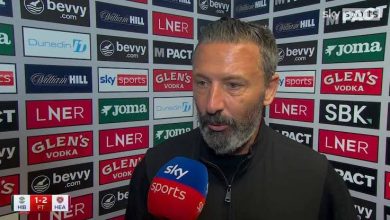
That “further update” arrived swiftly. Media speculation around the timing of Röhl’s exit had already strongly linked then-Hearts head coach Derek McInnes with the vacant Ibrox position, and that speculation proved well-founded: McInnes was confirmed as Röhl’s successor, joining Rangers on a three-year contract, with Hearts receiving compensation reported at figures ranging between roughly £400,000 and £700,000 depending on the specific source consulted.
McInnes arrived at Ibrox with a strong recent managerial record of his own. He had guided Hearts to a runner-up finish in the Scottish Premiership the previous season, agonisingly falling short of what would have been a historic title victory on the final day of the campaign, with Celtic ultimately claiming the championship instead. That near-miss, while painful for Hearts and their supporters at the time, nonetheless represented exactly the kind of high-level managerial performance likely to attract interest from a club of Rangers’ stature — proof that McInnes was capable of building a genuinely competitive side and sustaining that form across a full, gruelling Scottish Premiership campaign.
The appointment also reunited McInnes with players he’d previously worked with at Tynecastle. Both Lawrence Shankland and Cammy Devlin followed their former manager from Hearts to Rangers in the same transfer window that brought McInnes to Ibrox — with Shankland in particular representing a move laden with personal significance, given his boyhood support of Rangers and family connection to the club through his uncle, former Ibrox captain Barry
Stepping back from the specifics of Röhl’s exit, it’s worth situating this episode within the broader pattern of Scottish football’s managerial landscape over recent seasons — one that has, if this particular sequence of events is any indication, remained as volatile and interconnected as ever. Röhl’s departure created the vacancy that pulled McInnes away from Hearts, which in turn created a vacancy at Tynecastle, setting off a further round of managerial reshuffling beyond Ibrox itself. It’s a familiar pattern in football more broadly: managerial moves rarely happen in isolation, and a single high-profile departure — in this case, a German coach’s decision to pursue what he clearly regarded as an exciting new opportunity at a club within a footballing network he already knew intimately — frequently sets off a chain reaction extending well beyond the club initially involved.
Assessing Röhl’s brief spell at Rangers with the benefit of hindsight is an inherently difficult exercise, precisely because eight months represents such a limited sample from which to draw firm conclusions about what a longer tenure might eventually have produced. The tangible on-pitch record — a third-place Premiership finish having inherited a side in sixth, alongside two domestic cup exits at the hands of Celtic — reads as a genuinely mixed bag: clear evidence of progress in the league table, but a set of cup results that fell short of representing a definitive breakthrough for a club of Rangers’ ambitions and resources.
What seems clearer is that the ultimate outcome had as much to do with opportunity and timing as it did with any specific failing during his time in Scotland. Salzburg’s interest arrived at a moment when Röhl had just delivered a season of tangible, if incomplete, progress, giving him a body of recent work to point to even as he prepared to leave for pastures new. And the destination itself carried a particular pull that a straightforward lateral move to another club might not have: a return to the Red Bull organisational network in which his coaching career had first taken shape, offering both familiarity and, in the form of a three-year contract, a clear vote of long-term confidence from a club that understood precisely the kind of coach it was getting
Perhaps the most notable feature of this entire episode, taken as a whole, is just how amicably it appears to have been resolved on all sides. There’s no public indication of lingering bitterness from Rangers toward Röhl for pursuing the Salzburg opportunity despite having two years left on his Ibrox deal, nor any suggestion that Röhl left with any specific grievance against the club that gave him his first taste of management outside England. Instead, the picture that emerges is one of a genuinely mutual, business-like parting: a head coach whose stock had risen enough to attract a compelling opportunity elsewhere, a club willing to negotiate fair compensation for releasing him early rather than insisting on the letter of his contract, and a smooth, rapid transition into the McInnes era that followed.
For Rangers supporters, the lasting legacy of the Röhl era is likely to be defined less by any single dramatic moment and more by its function as a bridge — a period of stabilisation and modest progress between the end of the Russell Martin era and the beginning of what has, in the months since McInnes’s arrival, developed into its own distinct and eventful chapter at Ibrox, complete with a striker signed specifically to bring the goals Röhl’s Rangers side sometimes lacked, a genuine title challenge still to be shaped, and the kind of transfer sagas, injury crises, and Old Firm drama that have always defined life at one of Scottish football’s two great institutions, regardless of which name happens to be occupying the technical area at any given moment.