Better than Dan Neil: £3m Rangers star looks like he’ll be worth £35m next year

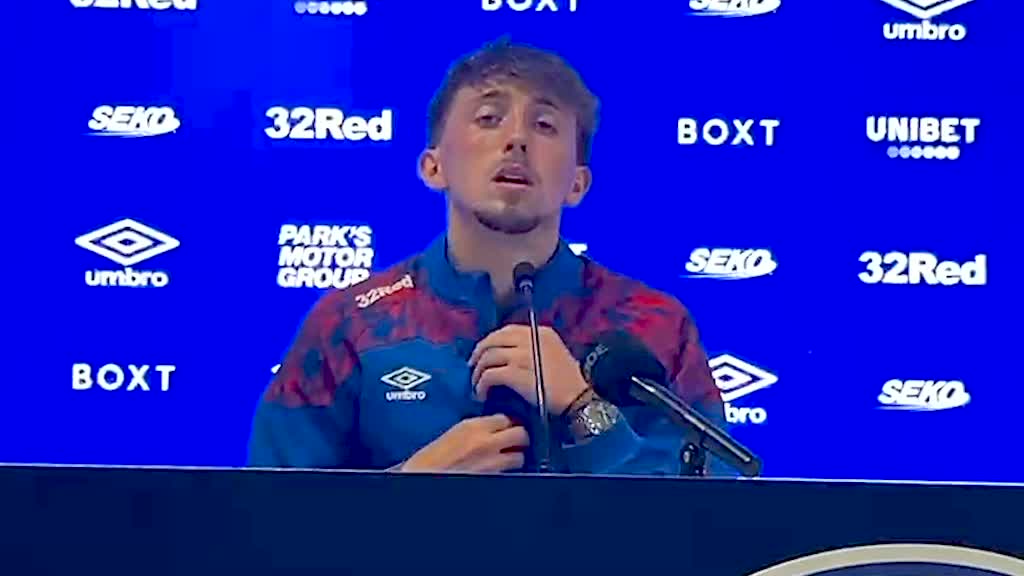
There’s a version of every football summer where the marquee arrival dominates the headlines and a quieter signing does the heavy lifting in the background. This summer at Ibrox, that marquee name is Dan Neil — a Sunderland academy graduate arriving on a free transfer with genuine Championship pedigree and a track record captaining a promotion-chasing side. But increasingly, the more interesting story in Govan isn’t the free-transfer midfielder at all. It’s a £3million centre-back most Scottish football fans had never heard of three months ago: Olwethu
Makhanya’s move to Rangers this summer barely registered outside the club’s own fanbase when it was first announced. Signed from Philadelphia Union for a modest £3million, the South Africa international arrived with zero prior experience of European football. His entire footballing education, to that point, had taken place across two very different footballing cultures — South African domestic football and Major League Soccer — neither of which is typically treated by European scouting networks as a reliable proving ground for a Scottish Premiership-ready defender, let alone one destined for a move to one of the country’s two dominant clubs.
That’s precisely what makes his early form so intriguing. Rangers didn’t sign a player who’d already been vetted and validated by a “bigger” European league before arriving at Ibrox. They took a bet on raw defensive instincts, physical attributes, and footballing intelligence developed in leagues that most of the continent still doesn’t take entirely seriously — and, so far, that bet looks like it’s paying off in a way that could end up defining Derek McInnes’s recruitment strategy for years to come.
Since Makhanya established himself as a starter, Rangers have kept three clean sheets in five Premiership matches and five clean sheets in their last seven games across all competitions — a run that includes a shutout against Celtic in last weekend’s League Cup quarter-final. Context matters here: before that run of form began, Rangers had conceded six goals in their opening four matches of the season, a defensive record that had many supporters bracing for a repeat of the leaky, unconvincing backline that has occasionally undermined Rangers’ title challenges in recent years.
The turnaround since has been dramatic enough to draw attention. It’s worth being honest about the limits of what a defensive statistic like “clean sheets kept while a player starts” can actually tell us — defending is a collective discipline, shaped as much by a goalkeeper’s shot-stopping, a midfield’s willingness to track back, and a manager’s tactical setup as by any individual centre-back’s positioning. Makhanya doesn’t deserve sole credit for Rangers’ improved defensive record any more than a single midfielder deserves sole credit for a team’s improved passing accuracy. But there’s a reason his name, specifically, keeps coming up in conversations about why that turnaround happened. Watch enough of his performances and a pattern starts to emerge: comfortable in possession, willing to step out of the back line to intercept rather than simply drop and defend space, and — perhaps most importantly for a player new to a notoriously physical, high-intensity derby environment — entirely unfazed by the step up in occasion. A shutout against Celtic in his first Old Firm involvement is not a small thing for a defender three months removed from MLS
None of this is happening in a vacuum, and Rangers fans with decent memories will already see where this story is going, because they’ve watched it before. Last season, Rangers paid a similarly modest £3.5million for defender Emmanuel Fernandez, another player who arrived without an established reputation in a “major” European league. By the end of that campaign, reports had Fernandez valued at somewhere in the region of £35million, with interest credited from some of the Premier League’s biggest spenders, including Arsenal, West Ham United, and Chelsea.
That’s not a subtle coincidence. It’s the same shape of story, repeating itself twelve months later with a different name attached: unfashionable market, modest fee, immediate defensive impact, and — if the trajectory holds — a valuation that balloons roughly tenfold within a calendar year. If Makhanya’s rise follows anything close to the same curve, Rangers will have turned a combined outlay of around £6.5million on two defenders into assets worth a potential £70million between them, an extraordinary return by the standards of a Scottish club operating in a league that generates a fraction of the broadcast revenue of England’s top flight.
It’s worth pausing on why this model works as well as it appears to for Rangers specifically. Scottish football occupies an unusual market position: it offers regular continental football through Europa League and Champions League qualifying rounds, genuine pressure-cooker fixtures in the form of Old Firm derbies, and enough live TV exposure through outlets like Sky Sports to put a player in front of recruitment analysts across Europe — all while paying substantially below Premier League or top-five-league wage and transfer inflation. For a player like Makhanya, moving from MLS, a league that has historically struggled for full continental respect despite its growing quality, a switch to Rangers effectively works as a credibility upgrade and a proving ground rolled into one. He gets meaningful European competition, a run of genuinely high-stakes derby fixtures, and a level of week-to-week broadcast visibility that Philadelphia Union, for all its merits as an MLS club, simply can’t offer
None of this is intended as a slight on Dan Neil, whose signing was, on its own terms, a smart piece of business — a Championship-quality holding midfielder walking through the door on a free transfer represents low-risk business by definition. But the comparison implied by the “better than Dan Neil” framing isn’t really about who the better footballer is in isolation. It’s about value creation. Neil arrived as a known quantity: English football had already put a price tag on him, clubs across the Premier League and Serie A had reportedly circled him, and Rangers got him for nothing largely because his contract situation allowed it, not because nobody else recognised his quality. There’s very little unpriced opportunity left in a free-transfer deal for a player who’s been extensively watched by data and recruitment departments across two divisions.
Makhanya represents the opposite kind of value. He was, in market terms, essentially unpriced when Rangers signed him — a modest £3million fee reflecting not his ceiling as a player but simply how few European clubs had bothered to properly assess an MLS-based South African centre-back. That’s the entire logic behind smart recruitment in a market like Scottish football’s: the biggest returns rarely come from correctly valuing a player everyone already agrees is good. They come from being right about a player nobody else has bothered to seriously evaluate yet
There is, inevitably, a less flattering way to read this story, and it’s one Rangers supporters would do well to keep in mind before getting too carried away. Every clean sheet Makhanya helps deliver, every composed defensive performance in a nationally televised Old Firm derby, functions simultaneously as a recruitment advert for clubs with far deeper pockets than Rangers’. This is precisely the pattern that played out with Fernandez — a breakout season immediately followed by transfer speculation involving some of the Premier League’s wealthiest clubs — and there’s little reason to think Makhanya will be treated any differently if his form holds through the rest of the campaign.
Rangers, to their credit, appear to understand this dynamic well enough to have built a model around it rather than being caught off guard by it. Clubs operating outside Europe’s financial elite increasingly have two broad choices when it comes to squad building: overspend relative to their actual financial standing in an attempt to compete season-to-season, gradually eroding their financial stability in the process, or accept a churn model in which promising, undervalued players are recruited cheaply, developed and exposed to high-level competition, and then sold on for substantial profit once their market value catches up with their actual ability. The second model is less romantic — supporters understandably want to see their best players stay rather than being treated as assets on a three-year clock — but it’s also considerably more sustainable, and it’s increasingly the model Rangers appear to be leaning into under their current recruitment set-up
Assume, for a moment, that the £35million valuation does materialise by next summer, and a Premier League or continental club comes calling with an offer Rangers can’t reasonably turn down. What then? The obvious concern is that Rangers simply end up on a treadmill: sell a breakout centre-back for significant profit, reinvest a portion of that fee into another unfashionable-market gamble, and hope lightning strikes for a third consecutive summer. There’s a version of that cycle that looks unsustainable — a squad that never gets to build continuity because its best defenders are perpetually one good season away from being sold.
But there’s also a more optimistic reading, and it’s the one Rangers will be hoping plays out. A club that successfully identifies, develops, and sells on undervalued defensive talent at a profit two years running isn’t relying on luck at that point — it’s demonstrating a repeatable scouting and coaching process. If that process holds, the specific players become less important than the pipeline itself. Rangers don’t need Makhanya to stay at Ibrox for the next five years to consider this transfer business a success; they need the money generated by his eventual sale, whenever it happens, to be reinvested effectively enough to plug the gap he leaves. Whether McInnes and the club’s recruitment department can consistently execute that model is the real question posed by stories like this one — not whether any single player stays o
It’s also worth placing this story within the broader context of Derek McInnes’s start to life as Rangers manager. After a difficult opening spell that had some supporters questioning the appointment, McInnes has strung together a run of results — four straight Premiership wins, an emphatic League Cup victory over Celtic, and now a defensive record that’s trending sharply in the right direction — that has largely quietened the early doubts. A settled, competent defensive foundation is often the least glamorous ingredient in a managerial turnaround, but it’s frequently the most important one. Games are rarely won purely through attacking talent if a side is repeatedly conceding avoidable goals, and the fact that Rangers’ defensive form has improved so dramatically in a matter of weeks — coinciding almost exactly with Makhanya’s emergence as a first-choice starter — will not be lost on a manager who inherited a leaky backline just a few months ago.
Whether Makhanya himself is the single biggest driver of that improvement, or simply the most visible symbol of a wider defensive reset under McInnes, is genuinely difficult to say with confidence this early in the season. Football analysis has a habit of over-attributing team-level improvements to whichever individual player happens to be new, exciting, and easy to build a headline around — and it’s worth holding that tendency in check here. But even accounting for that caveat, there’s enough in Makhanya’s underlying performances — the composure in possession, the willingness to engage attackers higher up the pitch, the calm in his first Old Firm test — to suggest this isn’t purely a case of good timing and a favourable run of fixtures.
So is Olwethu Makhanya really on track to be a £35million defender within twelve months? Nobody can say that with genuine certainty, least of all this early into his Rangers career. Valuations of that scale depend on dozens of variables well beyond one player’s control — form holding up over a full season rather than a promising handful of games, avoiding significant injury, continued exposure in high-profile European and derby fixtures, and, frankly, the ever-shifting and often irrational psychology of a transfer market that has a well-documented habit of overpaying for the “next big thing” regardless of whether the underlying numbers fully justify it.
What can be said with more confidence is that Rangers appear to have identified, for the second consecutive summer, a defender who cost a modest fee, arrived from outside Europe’s traditional scouting radar, and is already delivering an impact well beyond his price tag. If that’s a coincidence, it’s a remarkably well-timed one. If it’s a deliberate strategy, it might just be the most quietly important thing happening at Ibrox this season — more important, in terms of long-term value creation, than any individual midfielder arriving on a free transfer, however good that midfielder might be.
For now, Rangers fans should simply enjoy watching a £3million defender make Old Firm derbies look easy. The valuation conversations, and the inevitable transfer speculation that comes with them, can wait until next summer.