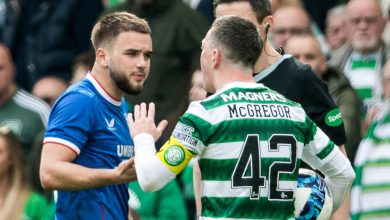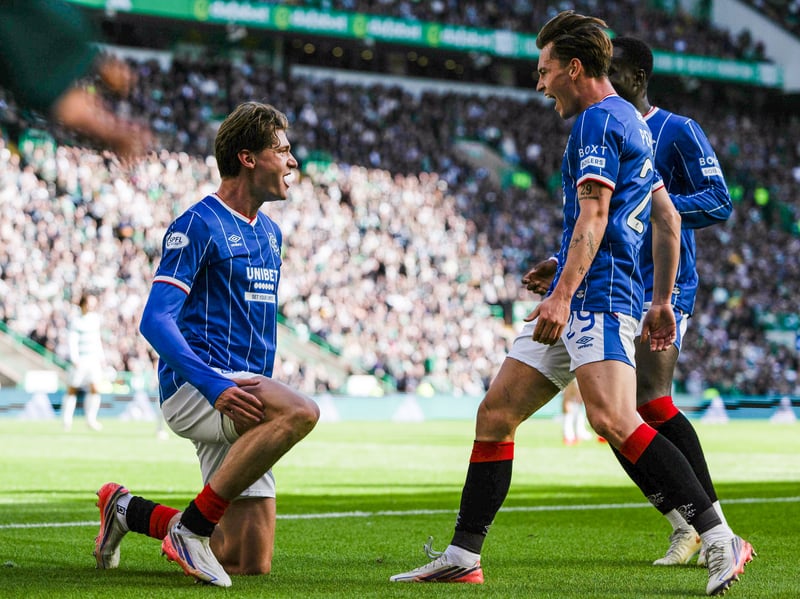
Ryan Naderi’s first-half finish was enough to sink Celtic 1-0 at Celtic Park on Sunday, handing Rangers a second Old Firm win in the space of seven days and cutting the gap at the top of the Scottish Premiership to just two points. It was a goal built on a defensive mistake as much as individual quality, but its consequences — for the title race, for Derek McInnes’s standing as manager, and for the mounting pressure on Martin O’Neill — will be felt for weeks to come.
**How the goal happened**
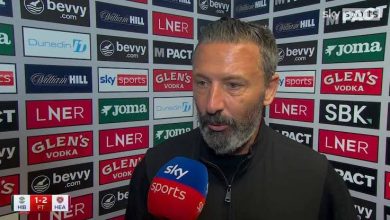
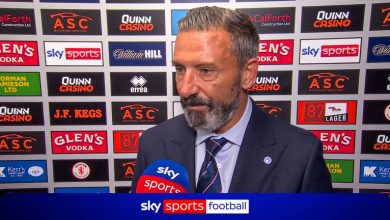
The breakthrough came before the break, and replays make clear exactly how it unfolded. A Rangers attack initially broke down, but as the ball bounced loose in the penalty area, Naderi reacted first. Kris Boyd, working for Sky Sports Scotland, dissected the goal afterwards and didn’t hold back in his assessment of Celtic’s part in it, saying he had “no idea” what goalkeeper Viljami Sinisalo was doing. Boyd was blunt about where he felt the issue lay, saying Celtic have problems in their goalkeeping department, no doubt about it, and calling the mistake “terrible.” He pointed out that Celtic’s defence simply didn’t react quickly enough, with Naderi breaking off the back of Benjamin Nygren and being first to the loose ball as soon as it came into the box, alert enough to find the net before anyone in a Celtic shirt could intervene.
It was, in other words, a goal that told two stories at once: one about Naderi’s sharpness and predatory instinct in the box, and another about a Celtic side that looked jittery and uncertain at the back — a theme that would recur throughout the wider post-match analysis of Celtic’s performance.
**A goal that ends a genuinely historic run**
The scale of what Rangers achieved becomes clearer with a bit of context. Celtic arrived at this fixture having won each of their last 13 league games, their longest winning run heading into a league Old Firm derby since March 2017, when they had strung together 22 in a row. That kind of run makes Sunday’s result even more significant — Rangers didn’t just beat a good Celtic side, they beat a Celtic side that had been sweeping aside virtually everyone else in the Premiership.
The underlying numbers add further weight to the result. Celtic have won only two of the six previous occasions they faced Rangers in the league while riding a winning run of 13 or more matches, with one draw and three defeats making up the rest of that record — suggesting that whatever formula has worked for Celtic domestically over recent months, it tends to break down specifically against Rangers. Sunday’s result fits that pattern precisely.
There was also a symbolic dimension to Celtic’s underlying attacking numbers being exposed. Five of Celtic’s six home league goals this season had come in the first half of matches, with their only second-half strike at Celtic Park all season coming from Benjamin Nygren against Dundee on the opening weekend. Against Rangers, Celtic managed neither a first-half nor second-half response, extending a worrying trend of games in which their attacking threat simply failed to materialise when it mattered most.
For Derek McInnes personally, Sunday’s win carries genuine historical weight. Having already won last weekend’s League Cup quarter-final at Ibrox, this second consecutive victory means McInnes has now won both of his first two Old Firm derbies in charge of Rangers — a feat matched by only one other manager in the club’s history: Graeme Souness, back in 1986. Given how turbulent McInnes’s start to the season looked only a matter of weeks ago — failing to win either of his opening two league matches and suffering early European exits against Jagiellonia Białystok and, on penalties, Jablonec — matching a record held by one of the most iconic figures in Rangers’ modern history represents an extraordinary turnaround.
McInnes, for his part, was careful not to get carried away in his post-match comments, delivering what was described as a notably measured reaction given the significance of the result. Speaking to BBC Sport afterwards, he was explicit about keeping perspective: “I wouldn’t go overboard like that but it’s such an important win for us. To follow up on the back of last week was really important for us. In the context of the season it’s just three points and it gets us three closer to Celtic, so we understood if we lost the game the gap starts to put that distance a bit uncomfortable.”
He also acknowledged how fine the margins had been, given how few clear-cut chances Rangers actually created despite dominating the game territorially. “Thankfully one was enough today,” he said. “We’ve said to the players some days it won’t be and we need to be far more clinical.” He also spoke directly to Rangers supporters who, once again, weren’t present inside the away end given the season-long ban on travelling fans at Old Firm fixtures: “The fans weren’t here but we know they’re watching and we want them to enjoy their Sunday. That’s something for them to enjoy, for us in the dressing room, but I want to stress the fact that it’s only three points and early on.”
That combination of satisfaction and restraint says a great deal about where McInnes’s head is at after a difficult start to the campaign — visibly pleased with the result, but consciously avoiding any suggestion that one win, however significant, settles anything with so much of the season still to play.
Naderi’s matchwinning goal arrives against a backdrop that makes his continued excellent form all the more remarkable. Just a week earlier, the German-Bulgarian forward had been forced off during Rangers’ 3-0 League Cup win over Celtic after a heavy second-half challenge from Mika Baur caught him on the shin — an incident that left Naderi’s lower leg, in McInnes’s own words, “a mess.”
What made the situation more contentious was the officiating around it. Rather than being awarded in Rangers’ favour, the resulting free-kick was given to Celtic by referee Nick Walsh, and the VAR team, led by Andrew Dallas, chose not to intervene or review the incident. Rangers didn’t let the matter drop quietly. Chief executive Jim Gillespie made contact with the SFA’s head of referee operations, Willie Collum, over the handling of the challenge, with McInnes confirming as much publicly: “Well, I haven’t, but the club have,” he said, when asked whether he personally had sought an explanation. He went further in outlining his frustration with the whole episode, saying: “I’m really not happy with the challenge but I’m not going to get caught up in referee chat,” while separately noting he found it “strange” that no review had taken place.
Given all of that, McInnes had gone into Sunday’s fixture openly uncertain whether Naderi would even be able to start, describing the lack of a like-for-like alternative in blunt terms: “We don’t really have another like for like but we’ll give him every chance. We’ve had to cope without key players before. Hopefully he can make it but if he doesn’t that will be somebody else’s opportunity.” Naderi not only started but scored the only goal of the game — about as emphatic an answer to that uncertainty as could be imagined, and a result that will only intensify scrutiny on how Rangers’ formal complaint over the earlier incident is ultimately resolved by the
For Celtic and Martin O’Neill, Sunday’s defeat compounds what was already shaping up as one of the most difficult weeks of his time in interim charge. Having lost last weekend’s League Cup quarter-final 3-0 and then a Europa League opener 3-1 to Ferencvaros in midweek, this was Celtic’s third poor result in the space of eight days, and their first Premiership defeat of the entire season, ending that 13-game winning streak in the most damaging possible fashion — at home, to their fiercest rivals, in the first league Old Firm meeting of the campaign.
O’Neill made three changes to his starting side following the midweek Ferencvaros defeat, bringing in Auston Trusty, Luke McCowan and Benjamin Nygren for James Forrest, Oliver Sorensen and Haissem Hassan — reshuffling that, on the balance of the performance, did little to arrest the visible anxiety running through the Celtic side. Reports from inside Celtic Park described the crowd as audibly frustrated by what was, by most independent assessments, another listless and untidy Celtic performance, extending concerns that have been building around the club for the better part of two weeks.
The goalkeeping situation in particular now looks set to become a lightning rod for criticism heading into the international break. With Sinisalo’s role in Naderi’s goal drawing pointed criticism from Kris Boyd on broadcast, and O’Neill having already made a change in goal earlier in the week’s build-up between Sinisalo and Sam Johnstone, questions about Celtic’s No.1 jersey look likely to follow the club into the three-week gap before domestic football resumes.
One further statistical detail from the build-up to this fixture is worth noting for what it reveals about Rangers’ approach to squad rotation this season. Rangers have used more individual players — 26 in total — than any other side in the Scottish Premiership this campaign, and have made the joint-most starting XI changes of any club, with 18 alterations across their opening matches. Given the injury situation Rangers have had to manage — Lawrence Shankland’s hamstring surgery, Youssef Chermiti’s season-ending ACL injury, and a lengthy list of further absentees including Daisuke Yokota, Tuur Rommens and Jose Cifuentes — that level of rotation reflects genuine necessity rather than simple squad management philosophy. That McInnes has still managed to extract this level of consistent Old Firm performance from a squad forced into that much reshuffling only adds further weight to the scale of what’s been achieved over the past fortnight
The immediate consequence of Sunday’s result is a dramatically tightened Premiership table. Rangers remain second, but the gap to Celtic at the top has been cut to just two points after seven matches — a remarkable state of affairs given how far behind Rangers looked only a few weeks into McInnes’s tenure. For Celtic, meanwhile, the timing of their first defeat of the season could hardly be worse, arriving alongside broader questions already circulating about the club’s summer transfer business, with fan-shareholder group Celtic Supporters Ltd and former striker Chris Sutton both having publicly linked the club’s difficult recent run to boardroom underinvestment rather than pure footballing failure
The three-week international break that follows offers both camps a chance to regroup, but the psychological weight of Sunday’s result will linger differently for each side. Rangers head into the break full of belief, having delivered exactly the kind of statement double over their fiercest rivals that can define a season’s trajectory. Celtic, by contrast, face three weeks of mounting scrutiny — over their goalkeeping situation, their overall form, and the wider structural questions being asked about the club above manager level — with no game to immediately put things righ
When domestic football resumes, both sides will know exactly where they stand: Rangers just two points off top spot with genuine momentum and a manager who has quietly matched one of the most storied achievements in the club’s modern history; Celtic still nominally in first place, but with their aura of early-season invincibility now visibly dented, and a mounting list of questions that O’Neill will need to answer before the pressure becomes genuinely unmanageable. Whatever happens next, Ryan Naderi’s smart, instinctive finish at Celtic Park will be remembered as the moment this season’s Old Firm rivalry — and potentially the destination of the title itself — genuinely turned on its head.