Awkward Moment: Celtic Boss Martin O’Neill Fires Back At Question Over Tactics And Team Selection

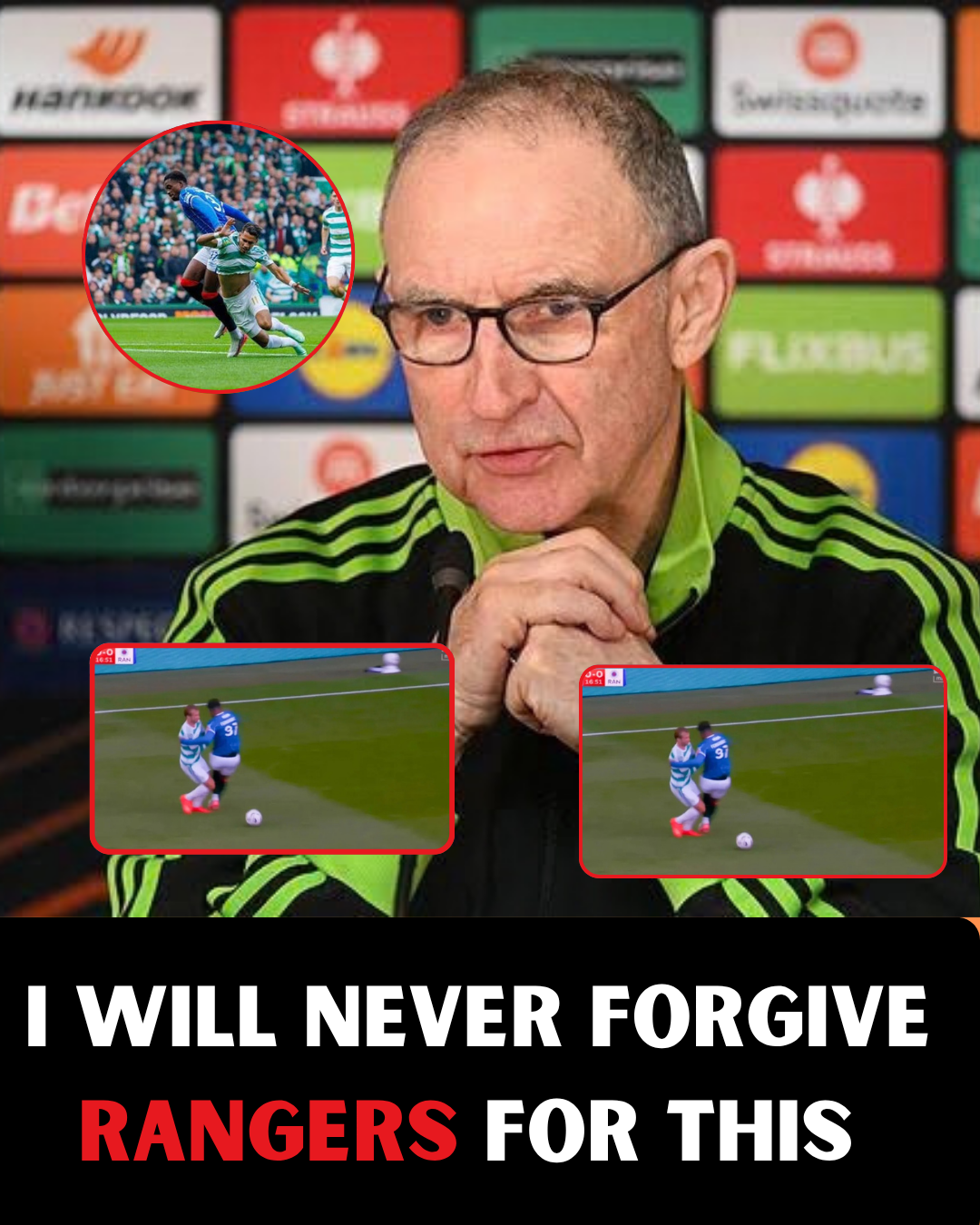
There is a certain type of manager who, when the questions start coming after a bad week, leans into the discomfort rather than away from it. Martin O’Neill has never been the sort to duck a fight with the press box, and in the space of a few days last week he gave Celtic supporters, and the wider Scottish football media, several reminders of exactly why. Between a testy press conference exchange over his tactics, a genuinely awkward mid-question phone interruption, and a post-match television interview that sparked a full-blown backlash, the 73-year-old’s return to Parkhead has rarely produced a dull moment — even when the football itself has been anything but entertaining.
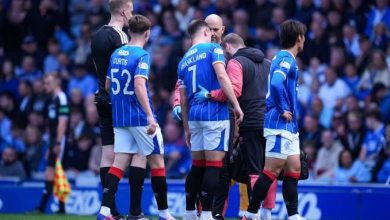
The backdrop to all of it was Celtic’s chastening 3-0 defeat to Rangers in the first Old Firm derby of the season, a result that ended the champions’ otherwise perfect start to the Premiership campaign and immediately raised questions about O’Neill’s approach. It was, by most independent assessments, a difficult watch for Celtic supporters: Rangers pressed as a unit and repeatedly exploited space in behind a Celtic side that, according to match analysis picked up by Celts Are Here, too often engaged individually rather than collectively, leaving gaps for Derek McInnes’s players to run into. Even after O’Neill used his half-time interval to try to address the problem, little changed in the second period as Rangers went on to complete a comfortable derby win.
That result inevitably invited scrutiny, and it was scrutiny O’Neill was clearly braced for by the time he faced the media again ahead of Celtic’s Europa League opener against Ferencvaros. Asked directly whether he and his coaching staff had reflected on the team’s tactics and selection given the criticism from “those on the outside,” O’Neill didn’t shy away from engaging with the substance of the question, but he made sure to frame his answer on his own terms. “Yeah, of course,” he said. “I said at the end of the game, anytime you lose a match, you will have to question yourself about tactics or whether the team selection. All of those things.” He then turned the question back on the questioner, delivering what became the defining line of the exchange: “It’s strange that you are never asked about team selection when you win the games. You’re never asked about whether the tactics are right or not when you win the matches.”
It was a pointed response, and one rooted in a fair observation about the nature of football punditry and media coverage more broadly — praise rarely receives the same forensic examination as criticism. But it also arrived from a manager whose Celtic side had, prior to the Ibrox defeat, won every single one of their opening domestic fixtures of the season, and who had led the club to a domestic double the previous campaign. O’Neill’s underlying message was clear: judge the body of work, not one bad afternoon, however chastening that afternoon had been.
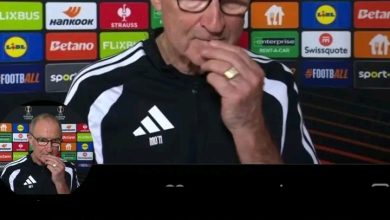
If that exchange showed O’Neill in combative, needling form, a separate moment from the same week showed a rather more good-humoured side to his prickliness. During a separate press conference ahead of the Rangers fixture, O’Neill’s phone rang mid-question, interrupting a journalist as they attempted to ask him something. Rather than ignoring it or fumbling awkwardly through an unanswered call, O’Neill immediately recognised what was happening, pulled out his phone to cancel it, and turned to the reporter with an unusually gracious apology: “I really do apologise, that is bad manners. I’m sorry.” Momentarily caught off guard by his own gaffe, he then simply asked, “Do you want to ask me the question?” and let the press conference continue as if nothing had happened.
It was a small moment, but one that generated its own share of attention — Goal.com went as far as putting O’Neill in the same “cringe club” as Roy Keane for pre-match press conference mishaps, more in good humour than genuine criticism. If anything, it offered a useful counterpoint to the sharper edges of the tactics exchange: a reminder that O’Neill’s combativeness with journalists tends to be reserved for questions he considers unfair or repetitive, rather than a blanket hostility to the press in general.
The same week’s third significant media moment proved considerably more controversial, and unlike the tactics exchange, this one did not end with O’Neill’s position looking particularly sympathetic in the eyes of many observers. Following Celtic’s chastening 3-1 home defeat to Ferencvaros in their Europa League opener — a result that compounded the misery of the Ibrox defeat just days earlier — TNT Sports reporter Connie McLaughlin asked O’Neill a straightforward question about his team selection, specifically why he had chosen to start Viljami Sinisalo in goal ahead of on-loan Wolverhampton stopper Sam Johnstone, who had looked shaky in the Ibrox defeat but remained the club’s presumed first-choice.
O’Neill’s response was notably terse. “No, I’ll not talk to you about the thinking behind that,” he told McLaughlin, before adding: “Sinisalo was always going to play this game, too. So, believe it or not, Connie, my job is not actually to explain every single situation to you, as much as you’re going to ask, and I’m delighted you are.” He went further still, suggesting that if he wanted to explain his reasoning to Celtic’s supporters, he would do so through the club’s own in-house channel rather than through McLaughlin’s broadcast interview: “I’ll tell the fans then, through Celtic TV.”
The exchange did not land well. Supporters and commentators quickly accused O’Neill of being condescending toward a reporter asking what was, on the face of it, an entirely reasonable question about a significant team-selection call. Some of the criticism became muddled by a separate misunderstanding, with several viewers convinced O’Neill had addressed McLaughlin as “honey” rather than by her first name — a claim McLaughlin herself later moved to correct in a light-hearted social media post, joking “Glad I came back from Portugal… Connie not honey,” while making clear the more serious substance of the criticism concerned his tone rather than any specific word choice. Social media reaction was blunt in places, with one supporter describing O’Neill as a “horrible little condescending man,” while another called the exchange “unbelievable… a hard watch,” arguing that “no person should be spoken to like this when they are doing their job and asking a very
To his credit, and in a departure from the more defiant tone of his tactics press conference days earlier, O’Neill did not attempt to defend the McLaughlin exchange when he next faced the media. Ahead of Celtic’s following league fixture, he apologised directly for having been “tetchy” about the team-selection questions, acknowledging that his response had not reflected well on him even if he continued to maintain that explaining every individual selection decision in real time to broadcast media was not strictly part of his job. It was a notable contrast to the unapologetic, needling tone of the earlier tactics exchange, and suggested O’Neill himself recognised a line had been crossed with the specific manner of his response to McLaughlin, even if the underlying frustration at being repeatedly questioned on selection matters remained unchanged.
None of these media flashpoints occurred in a vacuum, and it’s worth setting them against the genuinely difficult run of results that provoked them. Celtic’s 3-0 defeat to Rangers at Ibrox was followed just days later by a chastening 3-1 home loss to Ferencvaros in the Europa League, Celtic’s first fixture of their new league-phase campaign. O’Neill made four changes from the derby defeat, bringing in Sinisalo, Oliver Sorensen, Haissem Hassan and James Forrest in place of Johnstone, Benjamin Nygren, Kasper Hogh and Sebastian Tounekti, in what looked like a clear attempt to freshen up a side still reeling from the Old Firm result.
The changes did not have the desired effect. Celtic fell behind in the 20th minute when a deflected Bamidele Yusuf effort wrong-footed Sinisalo off Liam Scales, before Mika Baur’s equaliser just before half-time was immediately cancelled out by a Kristoffer Zachariassen header that restored Ferencvaros’s lead before the interval. The Hungarian side, managed by Balazs Borbely, then extended their advantage early in the second half through a stunning long-range strike from former Celtic forward Daniel Arzani, and held on comfortably despite a late flurry of Celtic pressure. It left O’Neill’s side with back-to-back defeats heading into Sunday’s Premiership rematch with Rangers, a considerably less comfortable position than the one Celtic had occupied just a fortnight earlier when their perfect domestic record made them look like champions cruising toward another title.
Context matters here, too. O’Neill’s return to Celtic came about in genuinely dramatic circumstances, stepping in on an interim basis following Brendan Rodgers’s shock resignation, a decision O’Neill himself has said he was given only “10 minutes” to make. At 73, and having not managed a club since a brief and difficult spell at Nottingham Forest that lasted just five months, O’Neill’s reappointment carried obvious risk — yet his first game back in the dugout, a 4-0 win over Falkirk, gave an early glimpse of the old touchline instincts still being sharp, even after years away from the game. He has been open about the personal insecurity that has always accompanied his management career, telling BBC Sport Scotland after that Falkirk win that he had been “concerned before the game,” attributing it to what he called his “dreadful insecurity problems” — a strikingly candid admission from a manager more usually associated with combative confidence in front of the cameras.
That combination — genuine self-doubt beneath a famously prickly public exterior — may go some way to explaining the pattern of the past week. A manager stepping back into one of the most scrutinised jobs in Scottish football at 73 years old, after everything Celtic have been through in the build-up to his return, was always going to face intense pressure the moment results dipped even briefly. O’Neill’s instinct, on the evidence of the tactics press conference, is to meet that pressure head-on rather than deflect it — a tendency that serves him well when the underlying point is sound, as it arguably was regarding the asymmetry of media scrutiny between winning and losing runs, but which tipped over into something less defensible in the sharper, more personal exchange with McLaughlin
With the international break now offering O’Neill and his coaching staff a rare pause to address the issues that emerged across those difficult few days, the immediate football questions facing Celtic are straightforward enough: sort out the defensive individual errors that undid them against both Rangers and Ferencvaros, decide on a settled goalkeeping picture between Johnstone and Sinisalo, and find a way to arrest a two-match losing run before it becomes something more serious. The media questions, though, may prove harder to fully resolve. O’Neill has shown across this one difficult week that he is capable of both robust, well-reasoned pushback when he feels a question misses the wider context, and a more brittle, less flattering defensiveness when he feels a specific selection call is being unfairly probed in the immediate aftermath of a loss.
For a club and a manager both operating under intense scrutiny — Celtic as reigning double winners suddenly on the back foot, O’Neill as a 73-year-old brought back for one more chapter under genuinely unusual circumstances — these moments of friction with the press are unlikely to be the last. What will matter far more in the long run is whether the football itself recovers before the next round of questions arrives. On that front, O’Neill’s own logic from the tactics press conference cuts both ways: win consistently again, and nobody will be asking about team selection at all.