Rangers’ International Break: Thirteen Players, Mixed Fortunes and the Verdicts Back Home

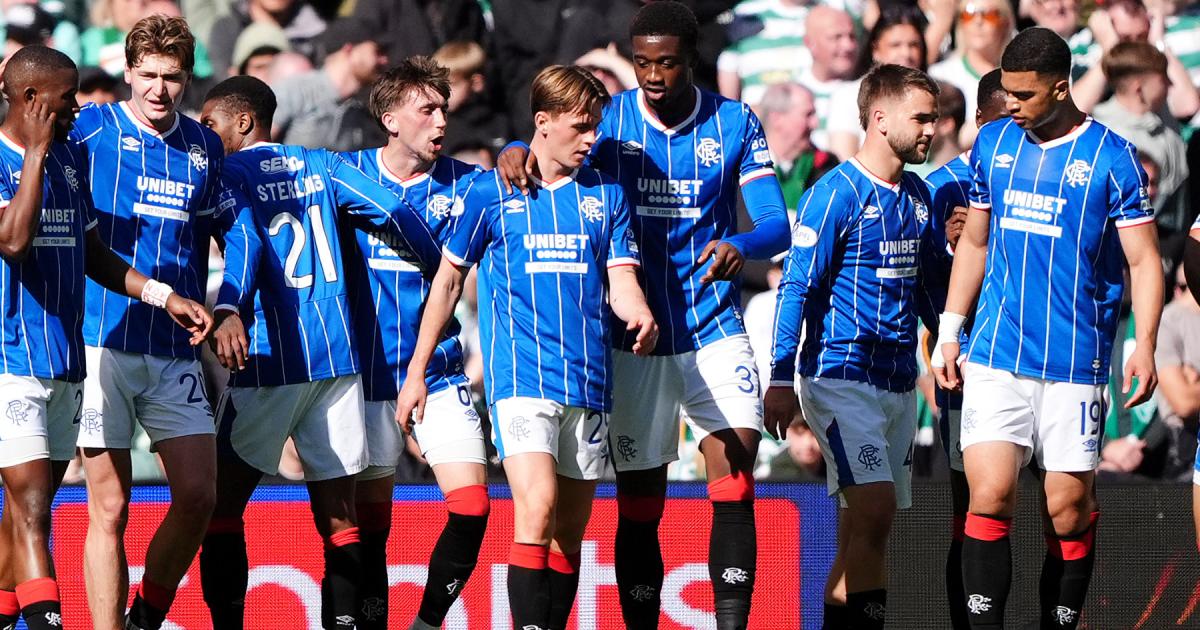
International breaks have a way of exposing the strange geography of a modern football squad. When Derek McInnes waved his players off at the end of September, thirteen of them headed to different corners of the world, from Prague to Pretoria, from Seoul to Caracas, each carrying the confidence of a club that had just beaten Celtic twice in a week and each walking into a different kind of reception. Some came back with praise, some with questions, and a few with the quiet frustration of players who spent the fortnight watching from the bench. The picture that has emerged is a patchwork, and it says a good deal about how far Rangers’ recruitment has stretched the club’s reach, and how differently each player’s story is being told at home.
A note on scope before going further. The headline that prompted this piece describes international media raging after a Rangers player started in his country’s loss and played disastrously. I could not open that article, and nothing I could access names the player or sets out the criticism, so this feature does not attribute that charge to anyone. Instead it looks at what the verified reporting says about every Rangers international during the break, including the losses, and treats the question of who played well and who did not on the evidence that is available. If you can share the original article, the piece can be rewritten around it.
The context for the break was about as good as it gets for a club that had endured a wobbling start to the season. Rangers had beaten Celtic 3-0 at Ibrox in the Premier Sports Cup quarter-final and followed it with a 1-0 win at Parkhead in the league, a result that cut the gap at the top of the Premiership to two points. The goal at Parkhead came from Ryan Naderi, and the mood in the dressing room was visibly lifted. Players spoke about carrying the feeling through the weeks off, and McInnes could reasonably hope that his squad would return refreshed and confident. Instead, the reality was that thirteen of them would be spread across the globe, playing in conditions and systems that varied wildly.
Naderi’s story has dominated the coverage, and rightly so. The twenty-three-year-old striker, born in Germany, qualifies for Czechia through his mother and was sought out by Pavel Nedvěd, the national team’s general manager and a former Ballon d’Or winner. After a paperwork delay that kept him out of the first match, he made his debut against Spain, coming on in the second half with his side two goals down. Czechia lost 3-1, but Naderi was involved, and he put the ball in the net after an error from the Spanish goalkeeper, only for the goal to be disallowed for a foul in the build-up. It was a debut that ended in defeat, and it still showed why the country wanted him.
For Nico Raskin, the break brought a more complicated set of messages. The Belgian midfielder was praised for his contribution in a 2-0 win over Italy, a result that suggested he still has a role in Mark van Bommel’s plans. But he played only five minutes off the bench in a 1-0 defeat to France, and the commentary that followed was less flattering. Former international Steven Defour, speaking to Le Soir, argued that Chelsea’s Romeo Lavia should be preferred in the holding role, describing him as better in every aspect and as the natural number one, with Raskin as his backup. The comments also referred to Amadou Onana, suggesting that when he returns he will push Raskin further down the order.
That kind of verdict matters, because Raskin’s future has been the subject of persistent speculation. Besiktas were reported to have tried to sign him in the summer, and the reporting since then suggests that he wants to stay at Rangers and help them challenge for the title. The club, for its part, does not wish to sell before the end of the season. A player who is being told by respected voices at home that he is a backup in the national team has to weigh that against the role he plays at Ibrox, where he is a regular and a significant part of McInnes’s midfield. The break has offered him a reminder of both sides of that equation.
Minsu Kim’s fortnight with South Korea was a lesson in how quickly a player’s usefulness can change from one match to the next. In the first game, a 4-1 defeat to Uruguay, he was introduced at half-time and was part of a second-half performance in which his side drew the final forty-five minutes 1-1. In the second, a 3-0 defeat to Ecuador, he was used only for the last fifteen minutes, which will have felt like a step backwards. He now hopes for a start in the match against Venezuela. For a summer signing who has been trying to establish himself at Ibrox, the minutes and the exposure to different levels of football will be valuable, even if the results were poor.
At the opposite end of the emotional scale, Olwethu Makhanya had the kind of break that every young defender hopes for. The twenty-two-year-old started both of South Africa’s matches, a win over Guinea and a 5-0 victory over Eritrea, and he drew public praise from coach Pitso Mosimane after the first game. Mosimane pointed out that Makhanya had been up against Borussia Dortmund striker Serhou Guirassy and had handled him very well, and he spoke of the importance of giving players who were part of the World Cup squad, but had not played, a chance to show what they can do. For Makhanya, who has been one of the quieter successes of the Rangers summer, it was a valuable endorsement.
Findlay Curtis, meanwhile, spent the break on a very different stage but with equal success. Playing for Scotland’s under-21 side, he provided four assists in a 5-2 win over Azerbaijan, a statistic that speaks to his creativity and his growing confidence. It is the type of performance that can change how a young player is viewed, and it will be noticed by the coaching staff at Ibrox. In a squad where competition for places is strong, a player who returns with four assists to his name has made a case for more minutes, and McInnes will be aware of the form he is bringing back.
Kevin Kelsy’s international fortunes were more mixed, but they carried a significant milestone. The striker scored his first goal for Venezuela in a 2-1 defeat to Japan, a moment that will mean a great deal to him even though the result went against his side. For a player who has been adjusting to a new club and a new league, scoring at international level is a useful reminder of what he can do. It also adds to the picture of a forward group in good heart, with Kelsy and Naderi both returning from the break with international experience and, in one case, a goal.
Elsewhere in the squad, the picture was quieter. Ivor Pandur remains uncapped for Croatia, serving as deputy to Dominik Livakovic, which is a familiar position for a goalkeeper in a strong national setup. Djeidi Gassama started for Mauritania in a loss to Benin and a win over the Central African Republic, giving him two competitive appearances. Emmanuel Fernandez was an unused substitute for Nigeria, which is the kind of outcome that does not make headlines but does mean a player returns fresh. Each of those stories is small on its own, but together they illustrate how varied the experience of an international break can be for players at the same club.
Bojan Miovski’s break was a more demanding one. The North Macedonian forward appeared in both of his country’s Nations League games, a 3-0 defeat to Switzerland and a 2-0 defeat to Slovenia, and the results will not have been easy to take. Miovski has had a mixed time at Rangers, with his place under question at various points, but his stoppage-time winner against St Mirren changed the mood around him. Returning from two defeats without a goal could weigh on a striker’s confidence, though it is also true that he was playing for a side that struggled as a whole. The challenge now is to bring the lessons back and use them in a squad where he is competing for minutes.
For Serbia, Kosta Nedeljkovic played the first hour of a 2-1 defeat to the Netherlands, a game in which his side was beaten by a stronger opponent but not by a heavy margin. Against such opposition, a defender or midfielder who lasts an hour is often doing his job reasonably well, though the judgement of the match is one for those who watched it closely. Vanja Dragojevic, the other Rangers player in the Serbian squad, did not feature, which means he will be fresh but will have little to show for the trip. The combination of one player with an hour of football and one with none is a typical example of the break’s uneven distribution of minutes.
Goalkeeper Liam Kelly was part of the Scotland senior squad, on the bench for a 0-0 draw with Slovenia and a 3-0 defeat to Switzerland. He did not play, but the reporting suggests that he could be in the mix for a place if Angus Gunn is replaced, with Falkirk’s Scott Bain mentioned as a rival. That kind of competition is good for a goalkeeper at the start of his international career, and it shows how far Kelly has progressed. Being in the squad at all is an achievement, and the experience of training with senior players and absorbing the culture will be valuable even without minutes on the pitch.
It is worth reflecting on what these results mean collectively, because the loss column is rather longer than the win column. Naderi’s debut ended in defeat, Kim’s South Korea lost twice, Kelsy’s Venezuela lost to Japan, Miovski’s North Macedonia lost both games, Nedeljkovic’s Serbia lost to the Netherlands and Kelly’s Scotland lost heavily to Switzerland. Against that, Makhanya won both of his matches, Raskin was part of a win over Italy and Curtis helped his side to a convincing victory. International football is not an exact reflection of club form, and losing matches against strong opposition does not necessarily say anything about the individual players involved. It does, however, mean that a number of Rangers players will return in a less buoyant mood than they left.
That matters because confidence is the most fragile currency in football, and managers know it. A striker who has missed chances or been on the losing side may need time to rebuild his belief, and a midfielder who has been told he is a backup will want to prove otherwise. McInnes has been through enough international breaks to know that the work of the first week back is partly psychological, reminding players of what they have done for the club and what is expected of them. The two wins over Celtic provide a useful anchor, a recent memory of success that can offset the disappointments of the previous fortnight.
The injury list is the other factor to watch. Lawrence Shankland and Youssef Chermiti are both sidelined with long-term problems, and the manager will be especially careful to avoid adding to it. Naderi, who shook off an ankle injury to start at Parkhead, played only part of one international match, which is a benefit in that regard. Players who have travelled long distances, played in different climates and adjusted to different time zones are more vulnerable to muscle problems and fatigue, and the medical staff will monitor each of the thirteen closely. The ideal outcome is a squad that returns healthy, rested and ready for the next block of fixtures.
There is also a tactical dimension to consider. Players who have spent two weeks under different coaches, in different systems and with different roles can return with fresh ideas or with confused habits. A midfielder who has been asked to play in a more defensive position may find it takes time to readjust, and a striker who has been used as a target man may need to refocus on movement and pressing. McInnes has built a team on structure and organisation, and he will want to reinforce those principles quickly. The first training sessions after the break will be as much about re-establishing shared habits as about conditioning.
It is worth thinking about the way international criticism travels, because it is one of the less discussed pressures on a modern player. When a footballer is picked for his country, his performances are judged by a different audience, with different expectations and often a more emotional frame. Supporters and commentators at home may be far harsher than anyone in Glasgow, and a bad night can produce headlines that follow the player back to his club. The pundit’s verdict on Raskin, delivered to a Belgian newspaper, is a good example: it was made in the context of a debate about the national side, but it will have been read at Ibrox too. Clubs can do little about that, beyond making sure their players feel supported when they return.
The same dynamic works in the other direction, of course. Praise from a national coach carries weight, and Mosimane’s comments about Makhanya will have reached South African supporters and the Rangers fanbase at the same time. For a young defender, being singled out for handling a striker of Guirassy’s calibre is the kind of recognition that builds belief, and it can influence how his club teammates and coaches see him. It is no coincidence that players who feel valued by their national teams often return with a spring in their step, and McInnes will be hoping that Makhanya’s positive experience translates into confidence in the Rangers back line.
There is a further question of how the club handles the logistics of an international break, which is often overlooked by supporters. Thirteen players travelling to different continents means different flights, different recovery schedules and different return dates. The medical and performance staff have to coordinate each player’s reintegration, deciding who needs rest, who is ready to train and who can be considered for selection in the next fixture. A player who has flown halfway across the world and played ninety minutes may not be at his best for several days, and the manager has to weigh that against the need to field his strongest side. The process is more complicated than it looks from the stands.
For the supporters, the break is an opportunity to follow their players in a different context, and the interest in how each of them fares reflects the strong bond between the fanbase and the squad. Rangers fans have a reputation for tracking their players across the world, and the social media reaction to Naderi’s debut, Kelsy’s goal and Makhanya’s praise shows how closely they watch. That attention is a double-edged sword, because it amplifies both the highs and the lows. A bad performance will be picked over just as thoroughly as a good one, and players who struggle can find themselves the subject of heated discussion before they have even returned to Glasgow.
What the break does not change is the demanding calendar ahead. With the league title race tight and Rangers only two points behind the leaders, every match matters, and the return of the internationals comes at a moment when the club is looking to build on its recent momentum. McInnes will want his squad to be sharp and unified, and he will draw on the lessons of the first weeks of the season, when the team found a way through difficult spells. The experience of the break, with its mixture of success and disappointment, will form part of that story, but the real test will come when the players return to the weekly rhythm of Premiership football.
One final point is that a break like this can reshape the internal pecking order without anyone intending it. A player who returns with four assists or a first international goal arrives with momentum, while another who spent the fortnight on the bench has to work his way back into the manager’s thinking. McInnes has been careful to reward form, and the next team sheets will show how much weight he places on what happened abroad. The safest assumption is that the answer will be little, because the manager’s priority is the club, but players are human, and a good fortnight tends to show up in training.
The wider lesson of the break is about the breadth of Rangers’ squad. Thirteen internationals representing more than ten nations is a sign of a club that has recruited from every corner of the football world, and that diversity brings both advantages and challenges. It means that the club has access to talent that other Scottish sides cannot match, and it means that its players are tested against a wide range of opponents. It also means that every international window pulls the squad in different directions, and that the manager has to manage not just fitness but the emotional highs and lows of each player’s experience.
In the end, the story of the break is one of variety rather than a single narrative. Naderi’s emotional debut, Makhanya’s praise, Raskin’s mixed verdict and Kelsy’s first goal each tell a different story about what it means to be a Rangers player on international duty. The losses will sting, the successes will give confidence, and the next few weeks will show which of them has the bigger effect. What is clear is that McInnes returns to Ibrox with a squad that has been tested in new ways, and that the work of turning thirteen separate experiences back into one team begins again on the training ground this week.








