
Ryan Naderi has not had a conventional route to the top of European football, and his first night in international colours was never going to be conventional either. The Rangers striker made his Czech Republic debut as a second-half substitute against Spain, the reigning world and European champions, in a 3-1 defeat that offered little consolation on the scoreboard. And yet the 23-year-old walked away describing the occasion as the biggest game of his life, a phrase that tells you almost everything about where he has come from and how quickly his world has changed.
A matter of months ago, Naderi was a new arrival at Ibrox with plenty to prove and few expectations attached to him. He had come from the German third division, he was understood to be competing for minutes behind Youssef Chermiti, and some of the early feedback on his performances was unkind. Today he is a regular presence in the Rangers attack, a senior international and the subject of a story that includes one of the most famous names in Czech football picking up the phone to recruit him. It is the sort of arc that feels almost too tidy, but it is also the product of a series of real decisions, and it has real consequences for Rangers, for Czechia and for Naderi himself.
The debut itself deserves to be told properly. It came on Saturday, in the Nations League, against a Spain team that most people would describe as the strongest in world football at the moment. The Czechs were already behind when Naderi was introduced, and the game was moving in the direction most observers had expected. But in the second half he came within a whisker of the kind of moment that defines a debut. With his side trailing 2-1, a dreadful error from Arsenal goalkeeper David Raya gifted the ball to the Rangers man, and Naderi was in the right place to capitalise. The ball ended up in the net, and for a brief moment he must have believed he had scored on his international debut against Spain.
The referee had other ideas. The goal was chalked off for a foul on the edge of the box, and the match moved on. Naderi has been honest about how it felt, explaining that the whistle came so quickly there was barely any time to enjoy the moment. It is a small, human detail that captures the cruelty of football at its best: a few seconds of joy, snatched away before they could properly register. He was gracious in his assessment afterwards, saying it was a shame but that he would keep working and hope for the next match.
Spain went on to win, and the headline from the night is the result. But for Naderi the more lasting memory is the experience itself. Speaking to local media, he described the last few days as something of a fairytale, saying he was grateful for everything that was happening and that these were big steps for him. He spoke about the need to have confidence in yourself, and about trying to enjoy a night that he knew he might never forget. When the final whistle went, the thing he said he could be sure of was that it had been the biggest game of his life.
To understand why that matters, it helps to remember how Naderi’s career has unfolded. He was born and raised in Dresden, in Germany, and he came through German football rather than through any of the pathways that traditionally lead to Scottish clubs. His route to Ibrox ran through Hansa Rostock, from whom Rangers signed him in January for a fee reported at £4.3 million. That is a significant outlay for a player coming out of the third tier, and it came with the weight of expectation that always follows a signing from a lower division. Supporters want to know whether a player can cope with the pace and the pressure, and the early evidence did not always provide a convincing answer.
The first few weeks were not smooth. The word that was used to describe some of his early appearances was “headless chicken”, a phrase that is hard to shake once it has been attached to a player. It reflected the sense that Naderi was a powerful, energetic forward who sometimes struggled to turn that energy into end product. He arrived at a club where Chermiti was the first-choice striker, and where the competition for places was real. In those circumstances, any new signing needs time, and Naderi was no exception.
What changed was the reality of the squad. Injuries to Lawrence Shankland and Chermiti left Rangers short of options at the top of the pitch, and Naderi was handed responsibility for leading the line. In football, opportunities often come through other people’s misfortune, and what matters is how a player responds. Naderi responded well. Across his first 21 appearances for the club he has scored six goals, a return that is respectable for a striker adjusting to a new country and a new league, and the performances have grown more assured. The phrase “headless chicken” has quietly faded from conversation, replaced by a more positive assessment of what he brings.
It is worth being clear about what that assessment is. Naderi is a big, physical forward with pace and power, and he is a dominant presence in the air. Strikers with that combination of size and mobility are rare, particularly those who also contribute assists as well as goals. His work rate is a significant part of his value, and it is something managers can build a system around. He does not require the team to change how it plays in order to fit him in, because he is flexible enough to adapt to different tactical demands.
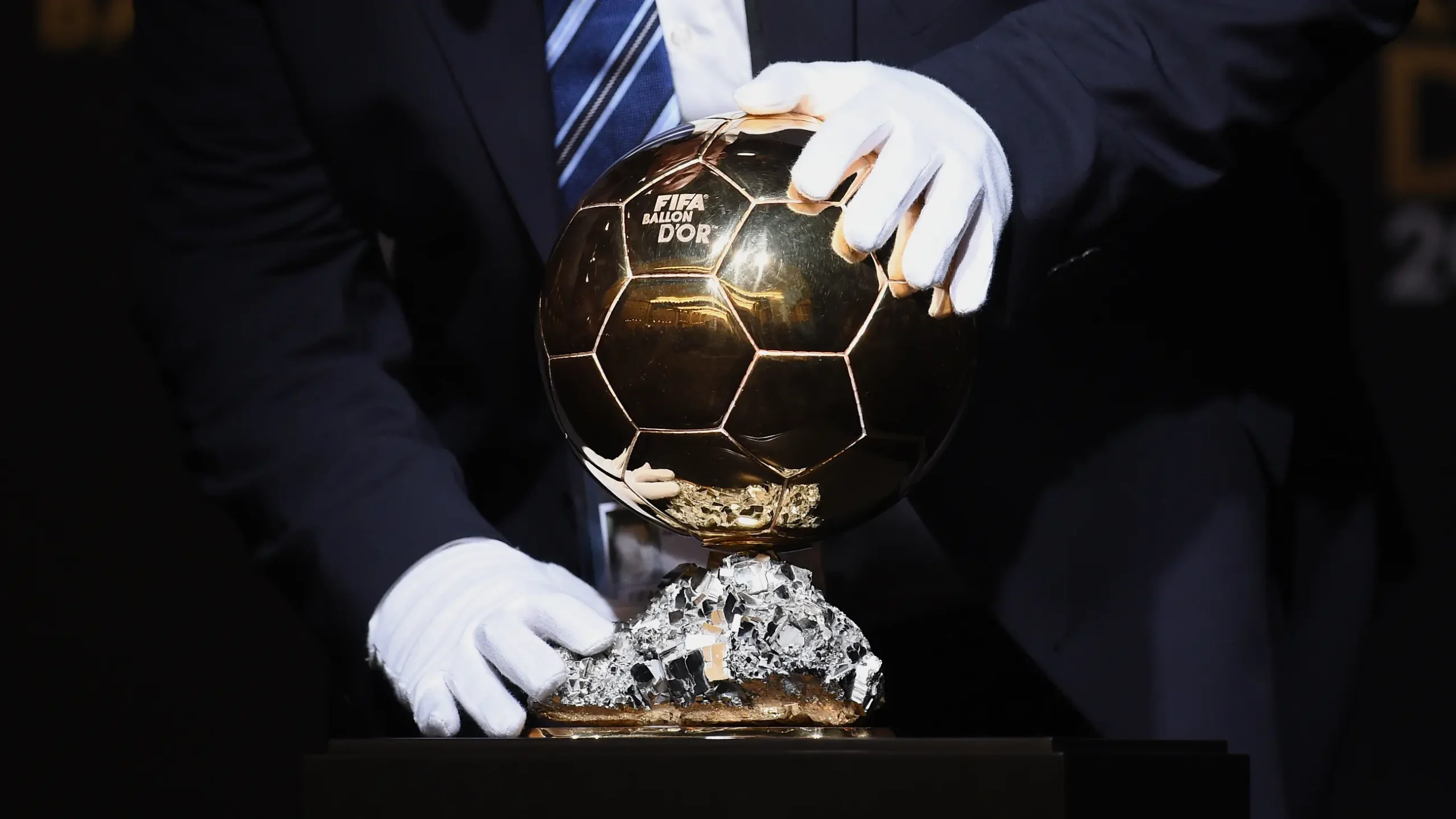
None of that would matter at international level without the intervention of one man. Pavel Nedved is a legend of Czech football and of the European game. He won the Ballon d’Or in 2003, he starred for Lazio and Juventus, and since last year he has been general manager and technical director of the Czech Football Association. In that role he has been looking for players who can strengthen the national team, and he decided that Naderi was one of them.
The first contact, as Naderi has described it, came in August, when Rangers played Jablonec in the preliminary stages of the Conference League. It is an ironic detail, because that tie did not go well for the Scottish club. Rangers lost out on penalties in what was widely regarded as a disastrous night, and it left the supporters with little to celebrate. For Naderi, however, the trip to the Czech Republic had a different meaning. He has suggested that it may have helped that he was able to introduce himself against a Czech team, giving the Czech authorities a chance to see him in action on their own soil.
What followed was a personal approach from Nedved himself. Naderi has said he found it incredible that a Ballon d’Or winner would contact someone like him and ask whether he wanted to represent the Czech Republic. He described himself, with some humility, as a kid, and called it another very nice moment in a year that has been full of them. It is easy to understand why it landed so powerfully. For a footballer of Naderi’s generation, a call from someone who won the sport’s most prestigious individual award is not just an invitation; it is a validation.
The choice was not as simple as it might appear. Naderi qualifies for Czechia through his mother, and he could also have represented Bulgaria, the country of his father’s birth. Reports suggest that he turned down an approach from Bulgaria around six months ago, a decision that shows how seriously he has been weighing his options. In the end, it was Nedved’s persuasion and the Czech project that won out, and the paperwork that formalised the switch was eventually completed after a delay. That delay, though frustrating, was a reminder that these things take time and that even the most enthusiastic federations have to deal with the bureaucracy of international eligibility.
It is not hard to see why Nedved was so keen to bring him in. The Czech Republic has a proud footballing tradition, but in recent years it has been searching for the next generation of players who can compete at the highest level. It also lost a key figure in July, when Vaclav Cerny, who had been Rangers’ most recent Czech star, retired from international football for personal reasons. That departure left a gap, and the federation has been looking for ways to fill it.
Naderi offers something different from Cerny. Where the winger was a creative presence on the flank, the striker brings physicality and a focal point in the box. In a team that needs to compete with technically gifted opponents like Spain, having a forward who can hold up the ball, win aerial duels and press from the front is a valuable asset. He is also young enough to grow into the role, and at 23 he has time to develop alongside his teammates and become a regular fixture for the national team.
There is also a broader point about how international football works in the modern era. Federations increasingly look beyond their own borders to find players who qualify through family ties, and the best-run ones put considerable effort into identifying and recruiting them early. Nedved’s personal approach to Naderi is a good example of how that works in practice. It required someone with credibility, someone who could speak about what the national team means and what role the player could have in it. The fact that he was willing to make that call himself says something about how seriously the Czech federation takes the process.
It would be wrong to read too much into a short cameo against one of the best teams in the world. But there are a few things the debut does suggest. The first is that Naderi is comfortable in unfamiliar settings. Coming on as a substitute in a Nations League match against the world and European champions is not an easy introduction, and he looked composed enough to put himself in the position where he almost scored. That is not the same as proving he is ready for a starting role, but it is evidence that he does not freeze when the pressure rises.
The second is that his approach is grounded. In his comments after the game, he talked about confidence, about gratitude and about enjoying the moment. There was no sign of arrogance or complacency, and no suggestion that he believes his place in the team is secure. Instead he spoke about working hard and hoping for the next match, which is exactly the kind of attitude managers look for in a young player who is still establishing himself.
The third is that he has already shown he can handle a rapid change in circumstances. Within the space of a year, he has moved from the German third division to one of the biggest clubs in Scotland, from the bench to a starting role, and from uncertainty about his international future to a competitive debut against Spain. Most players would find that sequence of events destabilising. Naderi has so far treated it as a series of steps forward.
The next chapter comes quickly. Czechia face England at Wembley in the Nations League on Tuesday, and Naderi has made it clear that he hopes to be involved from the start. That would be a significant moment, both for him and for the national team. Starting at Wembley, in front of a huge crowd and against one of the strongest sides in Europe, would be an even bigger occasion than the debut against Spain.
Whether he gets that chance will depend on the manager’s assessment of what the team needs. Naderi’s performance against Spain, and the way he almost scored, will count in his favour, but there are other options and the coaching staff will have their own views about how to approach the match. A starting role would be a mark of confidence; another substitute appearance would still be valuable experience. Either way, the chance to face England at Wembley is the kind of opportunity that does not come around often, and Naderi will want to make the most of it
For a player who has described the Spain game as the biggest of his life, the England game offers a chance to see whether he can top it. The scale of the occasion will be different, but so will the context. He has had time to settle into the squad, to get to know his teammates and to understand what is expected of him. That should help him perform with more freedom, and it gives him a better chance of making the kind of impact that would justify the faith Nedved has placed in him.
For Rangers, the story is complicated. On the one hand, there is real pride in seeing one of their players reach the international stage so quickly after joining the club. It reflects well on the club’s recruitment and on the environment at Ibrox, and it adds to the sense that Naderi is becoming a more important figure in the squad. A player who is called up by his country is usually a player who is performing well, and that is good news for the manager.
On the other hand, international breaks bring practical challenges. Naderi will be travelling, playing high-intensity matches and facing a different kind of pressure from the one he experiences at club level. For a squad that has already dealt with injuries, the last thing Rangers want is for a key forward to return fatigued or carrying a knock. The club will want to monitor his workload carefully, and the manager will need to decide how to manage his minutes in the games that follow.
There is also a question of confidence. A player who has just made his international debut and nearly scored against Spain will return to Ibrox with a boost, and that could be an asset in the weeks ahead. If he can carry that momentum into club football, Rangers could benefit from a striker playing with greater belief. That would be particularly valuable given the uncertainty over the availability of Shankland and Chermiti, and the pressure on the club to deliver results in a demanding part of the season.
The longer-term picture is more intriguing. If Naderi continues to develop at this rate, his value to Rangers will grow, both on the pitch and as an asset. A player who is a regular for his country, who scores goals and who has the physical profile to succeed in different leagues is the kind of player that clubs build around. The initial investment of £4.3 million is beginning to look more sensible than it did in the early weeks, and further progress could make it look like a bargain.
It is tempting to treat Naderi’s story as a fairytale, and he himself has used that word. There is something genuinely romantic about the idea of a young striker from Dresden, who started his career in the lower leagues of German football, being recruited by a Ballon d’Or winner and making his debut against the world champions. It is the sort of story that football does best, and it deserves to be enjoyed.
But the most interesting chapters are still to come. The debut was a start, not a destination. The disallowed goal was a reminder that careers are built on small margins, and that the difference between a perfect night and a good one can be a single decision by a referee. What matters now is how he builds on it. Can he establish himself as a regular for Czechia? Can he turn his improving form at Rangers into consistent goalscoring? Can he become the kind of striker who defines a team, rather than simply contributing to it?
The early signs are encouraging. He has shown he can adapt, that he can handle pressure and that he is prepared to work hard to improve. He has the physical attributes to succeed, and he has the backing of people who believe in him, from the manager at Ibrox to the former Ballon d’Or winner who made the call that changed his international future. If he can combine those advantages with the determination he has shown so far, there is no reason why the story should stop here.
For now, though, the focus is on Wembley. A young man who once heard himself described as a headless chicken is preparing to take on England in front of a vast crowd, with the chance to write another page of a story that already feels remarkable. If it ends the way the Spain game almost did, with the ball in the net and a crowd on its feet, it will be a night to remember. And if it does not, he will have another chance, because the truth is that this is only the beginning.








