Rangers Injury Update: Return Timelines for Shankland, Chermiti, and Yokota Revealed

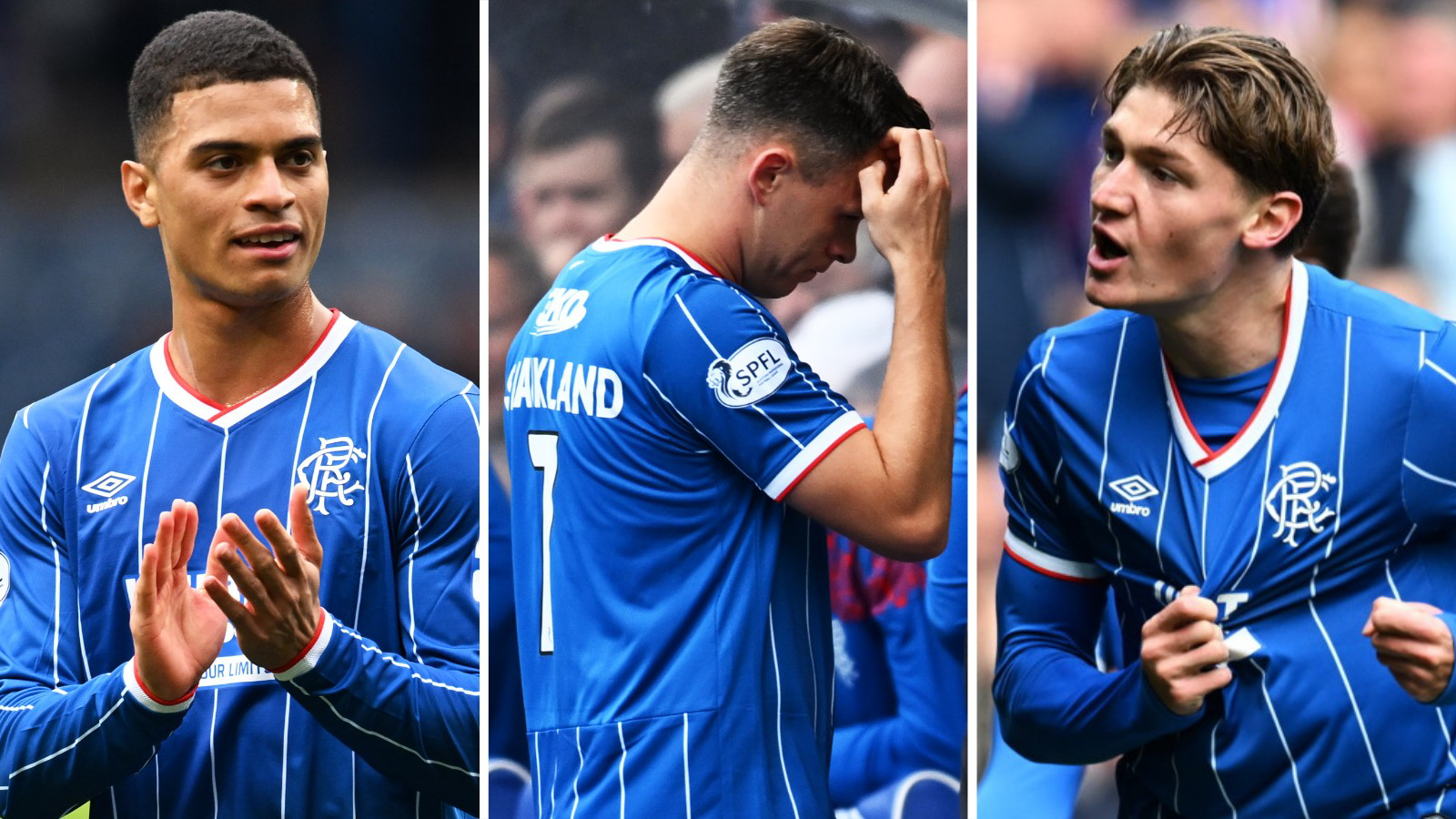
Rangers began the new season with fresh ambition under Derek McInnes, but the early weeks have been dominated by a different story: an injury crisis that has stripped the club of three of its most important attacking players. Lawrence Shankland, Youssef Chermiti and Daisuke Yokota are all on the sidelines, each with a different problem and a different road back. Together, their absences leave a manager who has only just arrived at Ibrox facing some of the toughest fixtures of the calendar with a front line that looks very different from the one he planned.
The most damaging blow in the short term is the loss of Shankland, the club captain and the player McInnes had trusted to lead the line. The 31-year-old striker pulled up early in Rangers’ 1-0 win over Motherwell at Ibrox, leaving the pitch after only eight minutes. At first there was some hope that the problem might not be serious, but the scan results quickly removed it. McInnes confirmed that the scan showed a tear in the hamstring, and he spoke openly about how long the captain might be gone.
The manager described a best-case recovery of around three months and a worst case of around four. Counting from the start of September, that puts Shankland’s likely return somewhere between early December and early January. It is a long time for a club to be without its main goal threat, especially one who had already scored four times in his first ten games for the club and had netted twice in midweek against Falkirk only days before the injury. His form was exactly what Rangers needed, which makes the timing even more painful.
The picture was made more complicated by the fact that Shankland travelled to London for further assessment, with the question of whether he would need surgery still part of the discussion. Any operation would be likely to affect the timeline, so supporters will be watching for news from that appointment. For now, the club is working with the three-to-four-month window, and the sensible assumption is that nothing will be rushed. A hamstring tear that is brought back too early has a nasty habit of returning, and Rangers cannot afford to lose their captain twice.
There is also a history here that adds some worry. Shankland suffered a hamstring problem last season while playing for Hearts, picking it up in a January game against Falkirk and not returning until a March meeting with Dundee. That is a gap of roughly two months, and McInnes has said the latest injury looks similar to the old one. Muscle injuries in the same area can be a sign that a player needs careful management, and the medical staff at Ibrox will be aware that the usual rush to get a star striker back on the field has to be balanced against long-term fitness.
The injury also reaches beyond Rangers. Shankland was part of Scotland’s World Cup squad, and the hamstring tear rules him out of the national team’s Nations League campaign this autumn. That is a real cost for a player who would have wanted to make a strong first impression on Sebastien Pocognoli, the Belgian who has taken over as Scotland manager. Missing the first six games of a new manager’s reign is an awkward way to start, because new coaches often form early opinions about who is in the pecking order and who is not.
There was also a personal storyline that has now almost certainly disappeared. Rangers are due to visit Hearts at Tynecastle on 28 October, and Shankland, a former captain of the Edinburgh club, would have been walking back into the ground where he built much of his reputation. Even before the full extent of the injury was known, his involvement in that match was in doubt. With a three-to-four-month recovery period, the reunion will not happen, and the striker will have to wait for another chance to face his old team.
Yet if Shankland’s injury is the most immediate headache, Chermiti’s is the most serious in terms of time. The young striker suffered damage to his anterior cruciate ligament in Rangers’ defeat to Hibs last month, and the club has made it clear that he is out for the rest of the season. An injury to that ligament is one of the most feared in football, because it affects the stability of the knee and demands a long and careful rehabilitation. For a forward whose game relies on power, pace and sharp changes of direction, it is a particularly cruel setback.
Typical recovery times for this kind of knee injury run from six to nine months, and if the player was hurt in August, that points to a return somewhere between February and May of next year in the best circumstances. In practice, the process is built in stages. First comes the work to control swelling and restore movement, then strength training, then running, then football-specific drills, and finally contact work with the squad. Clubs tend to be conservative with young players because a second injury to the same knee can be devastating, so a full return might not happen until next season is properly under way.
For Chermiti himself, the timing is hard to accept. He had been seen as an important part of Rangers’ attacking options, and his start at the club had been promising. A long injury interrupts that momentum at the very moment when a young player is trying to establish himself, and the mental side of a lengthy rehabilitation can be just as testing as the physical side. The staff around him will need to keep him involved with the group and focused on the long road ahead, and supporters will want to see him back at full strength rather than rushed into action.
The injury also had a direct effect on what Rangers did in the transfer market. After Chermiti went down, the club moved quickly and spent £9 million on the Venezuelan international Kevin Kelsy, who arrived from Portland Timbers. That is a significant investment, and it shows how seriously the club took the loss of a forward. Rather than simply asking the existing squad to cope, Rangers went out and bought a replacement, which also puts a degree of pressure on the new man to deliver quickly in a league that can be physical and unforgiving.
Then there is Yokota, whose situation is less dramatic than the others but still matters. The Japanese winger needed an operation on a groin injury, with McInnes revealing that the surgery would take place on a Thursday and that it would keep him out for two to three months. He is also unavailable for the meeting with Celtic at Ibrox. Groin problems are notoriously stubborn in football, and players often try to play through discomfort for weeks before it becomes clear that the only real solution is a procedure to fix the issue properly.
If Yokota’s operation took place in mid-September and the recovery takes two to three months, he could be back somewhere between mid-November and mid-December. That is likely to be gradual, with a period of controlled training before he is ready to play, and his first appearances might come from the bench rather than the starting line-up. The positive side is that groin surgery, when it goes well, can leave a player in better shape than before, with the nagging problem finally resolved. The negative side is that the club has lost a winger who provides pace and directness at a time when it needs options.
What Yokota offers is different from what the central strikers provide. A winger who can stretch the opposition by running at defenders and creating space helps the main forward by pulling markers out of the penalty area. Without that type of player, the attack can become more predictable, and opposing teams can focus on the central areas. So even though Yokota’s injury is shorter than the other two, it removes a specific tool from the manager’s collection and makes it harder to vary the way Rangers attack.
Putting it all together, the approximate timeline looks like this. Yokota should be the first to return, perhaps in the second half of November or in December. Shankland would follow in early December or around the start of January if the recovery goes according to plan. Chermiti is the longest, with a realistic return in the spring and quite possibly not until next season. None of these dates is fixed, since recoveries can move in either direction, and the club will only be able to give precise guidance as each player passes his rehabilitation milestones.
In the meantime, McInnes has to find solutions among the players who are fit. Ryan Naderi and Bojan Miovski are expected to take on larger roles than anyone expected at the start of the season. Naderi has already shown he can make a difference, because he scored the only goal in the Motherwell game in which Shankland was injured. Miovski brings experience of the league and the kind of physical presence that can help hold up the ball. Both will be asked to do more, and the manager will hope they can carry the load without being worn down by the number of games.
The most intriguing figure is Kelsy, who has arrived under circumstances nobody would have chosen. A £9 million signing is expected to make an impact, and the injuries have forced him into the spotlight sooner than the club might have wanted. Scottish football can take time to adjust to, with its intensity, its crowded fixture list and the pressure that comes with playing for one of the two biggest clubs in the country. If Kelsy settles quickly, the injury crisis could look much more manageable, and if he does not, the problems will become more obvious very fast.
The calendar does not help. Rangers face a run of important matches that includes back-to-back meetings with Celtic before the international break, and those games carry a weight that goes well beyond the three points. Old Firm fixtures are high-pressure, high-intensity affairs in which a thin squad can be exposed. Having to play them without the captain, without a promising young striker and without a pacy winger is a notable disadvantage, and McInnes will need to be clever about how he sets up the team to protect against the lack of options.
McInnes has not tried to hide how heavily the injuries have landed. He has suggested that if someone had told him when he walked in the door that both Chermiti and Shankland would be out with significant injuries, he would have felt the weight of that news immediately. It is an honest assessment, and it reflects the reality of building a new squad and a new style of play. Every manager wants to start with his best players available, and losing key figures this early in a reign can make it harder to build momentum and confidence.
Even so, a crisis of this kind can reveal what a squad is made of. Players who might have been on the fringes get chances, young talents can step forward, and the group as a whole can grow closer by getting through hard times together. Rangers have a history of producing big moments from unexpected sources, and it would not be surprising if one of the less-heralded names used the injuries as an opportunity. The challenge for McInnes is to make sure that the team stays organised and competitive while the stars recover.
There are also questions about the winter transfer window. If the injuries continue to bite, or if results begin to slip, the club may want to add another forward in January. Spending £9 million on Kelsy suggests that the board is willing to act when needed, and a further move cannot be ruled out if the situation demands it. On the other hand, Shankland and Yokota should both be back by around that point, so any decision will depend on how the next few months go and how well the replacements perform.
The medical side deserves attention too. Three significant injuries in a short space of time inevitably raise questions about training loads, the intensity of the schedule and the way players are managed. It is difficult to judge from the outside, and the injuries are quite different from one another, so there may be no single cause. A knee ligament, a hamstring tear and a groin problem often have unrelated origins. Still, any manager will want to review his preparation, and the club’s staff will be looking at ways to reduce the risk of a repeat.
For supporters, the most important thing is likely to be patience. The temptation to demand a quick return from any injured star is strong, especially a captain who is also the top scorer, but history shows that rushing players back often leads to relapses. A hamstring that is brought back at ninety percent can end up costing months rather than weeks. Fans who can accept a cautious approach now will probably be rewarded with fitter, more reliable players in the second half of the season, when the title and cup battles are at their most intense.
The injuries also say something about how fragile a season can be. A team can look strong on paper in August and find itself reshuffling by September, and the clubs that cope best are usually those with depth, adaptable tactics and a calm manager. Rangers have some of those qualities, though not all of them have been tested yet. How McInnes responds over the next few weeks will tell us a great deal about his ability to lead the club through adversity and about how well the squad has been assembled.
There are small positives to hold on to. The team won in the game in which Shankland was injured, and Naderi’s winner showed that there is attacking quality elsewhere. Kelsy’s arrival means there is a new face to inject energy, and Miovski is a seasoned option. Yokota’s surgery should resolve a problem rather than leave it lingering, and Chermiti, though out for a long time, is young enough to come back stronger. None of that removes the sting of the losses, but it offers a reason for measured optimism.
The coming weeks will provide the first real test. The Celtic matches, the trip to Hearts at the end of October and the other league fixtures will show whether Rangers can function without their expected attack. Each result will shape the mood around the club and the pressure on the manager. If the team holds its own, the injuries may come to be remembered as a bump in the road, and if it falters, they will be pointed to as the reason the early momentum was lost.
What is clear is that the return dates matter. Yokota could be back in the second half of November or in December, Shankland around the turn of the year, and Chermiti in the spring at the earliest. Each comeback will bring a lift of its own, and the order in which they arrive will shape how the second half of the campaign unfolds. If all three are fit and firing for the decisive months, Rangers could still finish the season in a strong position, but they have to get through the next stretch first.
For now, the club waits. Shankland will hear from his London specialists and plan his recovery, Yokota will move through the early stages of his rehabilitation after surgery, and Chermiti will begin the long road back from his knee injury. McInnes, meanwhile, has no choice but to work with what he has. It is not the situation he wanted this early in his tenure, but how he handles it could define the first chapter of his time at Rangers, and the next few months will show whether the club can turn a crisis into a story of resilience










