Rangers’ McInnes Fears Lengthy Shankland Absence After Injury Against Motherwell

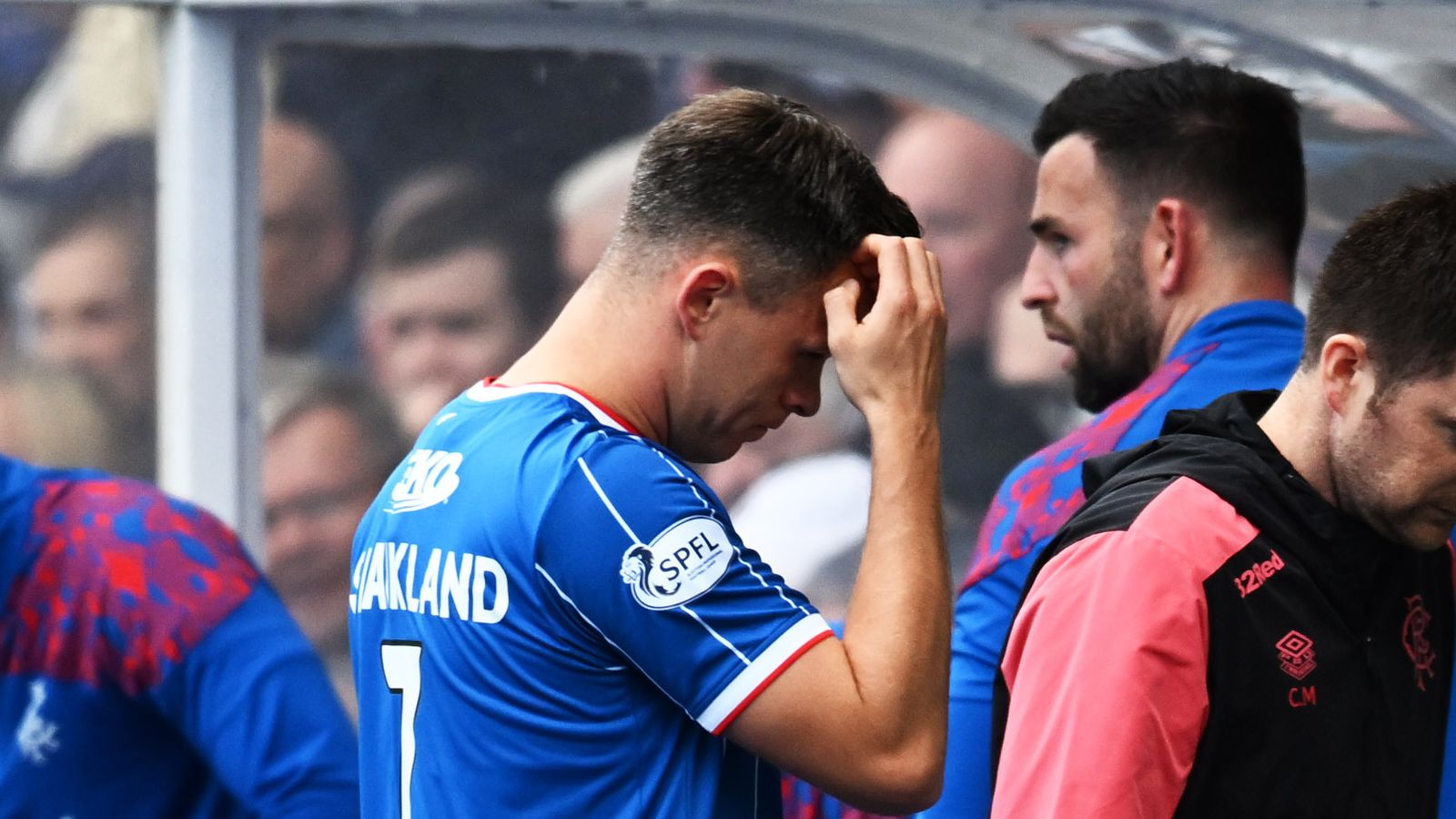
Rangers have been dealt a major setback after Lawrence Shankland suffered a hamstring injury during the victory over Motherwell, leaving Derek McInnes concerned about how long his captain could remain unavailable. The injury arrived at a difficult time for the Ibrox side, with Shankland beginning to make an impact following his arrival from Hearts. While Rangers managed to secure all three points, the loss of an important attacking player immediately changed the mood surrounding the result. McInnes now faces the challenge of keeping his team competitive while one of his key forwards concentrates on recovering from an injury that could keep him out for several months. According to Sky Sports, the Rangers manager initially feared a significant hamstring problem after Shankland was forced off during the 1-0 win over Motherwell on
The circumstances surrounding the injury made the situation particularly frustrating for Rangers. Shankland had been contributing goals and providing the experience expected of an established striker, and his early departure meant McInnes had to make an immediate adjustment. Ryan Naderi came on as his replacement and subsequently scored the winning goal, ensuring that Rangers still left the match with a positive result. That contribution was important because it demonstrated that the squad had players capable of stepping up when circumstances demanded it. However, one successful substitution does not automatically solve the wider problem of losing a key forward for an extended period. Rangers need consistency across a demanding run of fixtures, and McInnes must now decide how best to distribute the attacking responsibilities among the players available to h
Shankland subsequently underwent surgery, and the recovery process became the priority. In an update published on 7 October, the Rangers captain explained that his rehabilitation was progressing gradually and that he had recently made progress after relying on crutches. He also stressed the importance of being patient and following the advice of the specialists and physiotherapists overseeing his recovery. Although the update offered encouragement, it did not establish a confirmed date for his return. Rangers supporters will understandably want to see their captain back on the pitch, but the club must allow the medical team to determine when he is ready to resume training and
For McInnes, the immediate question is how Rangers can maintain their attacking threat without Shankland. Losing a recognised striker is difficult because his contribution often extends beyond the number of goals he scores. His positioning, movement and understanding of the team’s attacking patterns can help create opportunities for teammates, while his experience can be valuable in tight matches. When a player with those qualities becomes unavailable, the manager must find a way to replace his contribution collectively. That could involve selecting another centre-forward, adjusting the formation or encouraging the wide attackers and midfielders to take greater responsibility in the final third. Whatever approach McInnes chooses, the objective will remain the same: ensuring that Rangers continue to create enough opportunities to win matches.
Naderi immediately placed himself in the conversation by scoring the decisive goal against Motherwell after replacing Shankland. His performance provided McInnes with a positive option to consider, particularly because the forward demonstrated that he could respond to an unexpected opportunity. The goal also offered reassurance to supporters who might have worried about the team’s ability to cope with the injury. Nevertheless, the challenge is now to maintain that contribution over a longer period. A striker who enters a match as a substitute can benefit from the circumstances of a particular game, but starting regularly brings different demands. Naderi will need to demonstrate consistency, work hard for the team and make the most of the opportunities created by his teammates.
Kevin Kelsy is another player who could become important during Shankland’s absence. His availability gives McInnes another attacking option and allows the manager to consider different combinations depending on the opposition. Rangers will need their forwards to work together rather than expecting one individual to carry the entire goalscoring burden. Kelsy may offer qualities that complement Naderi or another attacking player, and the manager will have to determine which combinations are most effective. The important point is that Rangers still have options to assess, even though losing Shankland has undoubtedly reduced their flexibility. The next stage of the campaign will provide those players with opportunities to demonstrate that they can handle increased responsibility.
Bojan Miovski could also have a role to play. His experience of Scottish football means that he understands many of the challenges posed by domestic opponents, including the physical nature of certain matches and the need to make effective use of limited opportunities. If selected, he will need to show that he can contribute consistently and fit into the approach McInnes wants Rangers to use. Competition between the available forwards could benefit the club if it encourages each player to improve. However, the manager must ensure that his decisions are based on performances and tactical requirements rather than making changes simply for the sake of rotation. Rangers need a clear attacking plan that gives the selected players the best possible chance of succeeding.
One of the biggest challenges for Rangers will be maintaining the understanding that Shankland had begun to develop with the rest of the team. Attacking football depends on timing, communication and familiarity. Wingers need to understand when their striker wants the ball played into space, midfielders need to recognise when to make supporting runs, and the centre-forward must know how to combine with those around him. Replacing an established player can disrupt those relationships, at least temporarily. McInnes and his coaching staff will therefore need to use training sessions to establish new combinations and ensure that the available forwards understand their responsibilities. If Rangers can develop those relationships quickly, they may be able to limit the effect of Shankland’s absence.
There is also the question of leadership. Shankland’s role as captain means that his absence removes an influential figure from the matchday squad. A captain can help teammates maintain concentration, encourage players during difficult periods and provide a calming presence when a game becomes tense. Those qualities are especially valuable during a demanding season, when pressure can increase after disappointing results. Rangers still have experienced players who can help fill that leadership gap, but responsibility must be shared across the squad. McInnes will expect senior members of the team to set standards and ensure that the absence of their captain does not affect the team’s discipline or determination.
The situation could also provide an opportunity for other players to establish themselves. Football squads are constantly tested by injuries, suspensions and changes in form, and the strongest responses often come from players who are prepared to take advantage of unexpected opportunities. Rangers have several attacking options, and one of them could use this period to become a more important figure in the squad. That would not diminish Shankland’s value or make his injury any less unfortunate. Instead, it would demonstrate that the club has the depth required to manage setbacks. McInnes will hope that the competition for places produces improved performances rather than uncertainty or frustration.
However, Rangers must be careful not to put excessive pressure on whichever forward replaces Shankland. Expecting one player to reproduce every aspect of the captain’s contribution could create unrealistic expectations. The replacement might have different strengths, such as pace, movement or an ability to press defenders aggressively. McInnes should build the attacking system around those qualities rather than asking the player to imitate someone with a different style. A successful replacement does not necessarily need to score the same number of goals or perform exactly the same role. The more important objective is to help Rangers function effectively as a team and continue collecting points.
The injury also highlights the importance of having sufficient depth across the squad. A team competing for major honours cannot always depend on its preferred starting eleven remaining available throughout the season. Injuries are part of football, and clubs must prepare for periods when important players cannot participate. Rangers will have to assess whether their existing options are sufficient for the demands ahead, particularly if other injuries emerge. That assessment should be based on the quality of the available players, the schedule and the manager’s tactical preferences. It would be premature to assume that the club must immediately recruit another striker, but the situation provides a reminder of why squad planning matters.
Any decision about future recruitment would need to be considered carefully. Signing a new forward could offer additional depth, but it would also involve financial costs and the challenge of integrating another player into the squad. Rangers would need to establish whether a prospective signing could make a meaningful contribution, whether the player would fit the manager’s system and whether the move would support the club’s longer-term plans. A transfer should not be pursued solely because an injury has created a temporary problem. At the same time, if the situation reveals a genuine shortage of reliable attacking options, the club would be justified in examining its alternatives. For now, the immediate priority is making the best possible use of the players already available.
Shankland’s rehabilitation must remain separate from the pressure surrounding Rangers’ results. The forward will want to return as quickly as possible, but recovery from a significant hamstring injury requires patience. The medical team must determine when he can progress through each stage of rehabilitation, increase his workload and eventually return to full training. A return date should not be treated as certain until the necessary medical assessments have been completed. Rushing back could undermine the progress already made, while a carefully managed recovery would give the player the best opportunity to return ready to contribute. Rangers need their captain back, but they also need to ensure that he can perform without being placed under unnecessary pressure.
The psychological challenge of a lengthy injury should not be underestimated either. Being unavailable for months can be frustrating for a player who wants to contribute to his team, particularly when he has only recently joined a new club and is trying to establish himself. Shankland will need support from his teammates, coaches and medical staff as he works towards his return. Maintaining a positive approach while accepting that rehabilitation takes time can be difficult, but it is an important part of the process. Rangers supporters can also play a role by showing patience and encouragement rather than demanding a return before the player is ready.
McInnes, meanwhile, must concentrate on the matches immediately ahead. The manager cannot afford to allow uncertainty about Shankland’s recovery to dominate every decision. He needs to identify the strongest available starting eleven, prepare the team for different opponents and ensure that the forwards understand their roles. Some matches may require a more physical centre-forward, while others could favour movement and pace in behind the opposition’s defence. Having several options gives McInnes the opportunity to adjust his approach, provided he is clear about what he wants each player to deliver. Tactical flexibility could prove particularly valuable during the period when Shankland remains unavailable.
The rest of the team must also contribute more in attack. When a leading striker is missing, goals from midfielders and wide players can become especially important. Rangers cannot expect their replacement forward to solve every problem alone. Midfielders must look for opportunities to support attacks, wingers should be prepared to make runs into dangerous areas, and set pieces could offer another route to goal. A greater distribution of goals would reduce the pressure on the centre-forward and make Rangers less predictable. McInnes will want to see his players take responsibility when opportunities arise rather than relying entirely on one individual.
Supporters will naturally compare the team’s performances with and without Shankland. Such comparisons are understandable because the captain’s contribution was becoming increasingly important before the injury. However, Rangers must avoid treating his absence as an automatic explanation for every disappointing result. The squad still has quality, and the manager must ensure that the team continues to perform to an acceptable standard. If Rangers struggle to create chances, the coaching staff will need to examine the tactical approach as well as the performance of individual forwards. If the team continues to win matches, it will demonstrate that the squad has found a workable solution while its captain recovers.
The coming months could therefore become a significant test of McInnes’s management. Dealing with an injury to an important player requires more than selecting a replacement. It involves maintaining confidence, adapting tactics, managing workloads and ensuring that every member of the squad understands the responsibilities expected of them. McInnes will need to balance patience with the demand for results, giving players opportunities while remaining prepared to make changes when performances fall short. His decisions will influence how successfully Rangers navigate this period and whether they can maintain their ambitions throughout the campaign.
Ultimately, the injury to Shankland is a serious setback for Rangers, but it does not automatically mean their season must be derailed. The captain’s absence creates a difficult challenge, particularly because his recovery could extend across several months, yet the club has attacking players who can contribute in different ways. Naderi’s decisive goal against Motherwell offered an encouraging example of how another player can respond when called upon. Kelsy and Miovski may also have opportunities to help the team, while the wider squad will need to contribute more consistently in the final third.
For now, the priority is clear. Rangers must support Shankland through his rehabilitation, avoid making premature assumptions about his return and find the best possible attacking solution for the matches ahead. McInnes will hope that his available forwards can maintain their form and help the club remain competitive while the captain works towards full fitness. The challenge is significant, but it also offers an opportunity for other players to demonstrate their value.
Shankland’s injury against Motherwell has changed Rangers’ plans, and the manager’s concerns about a lengthy absence were understandable given the nature of the problem. The subsequent surgery and recovery update have provided a clearer picture of the challenge facing the captain, although the precise timing of his return remains uncertain. Rangers must now focus on the football they can control, make effective use of their squad and ensure that the absence of one influential player does not prevent the team from pursuing its objectives. How McInnes and his players respond will determine whether this setback becomes a defining problem or a difficult period they successfully overcome.








