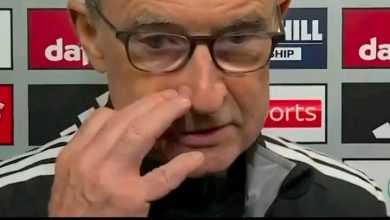
Rangers given new ‘foul’ verdict before Dundee goal as VAR decision leaves players raging

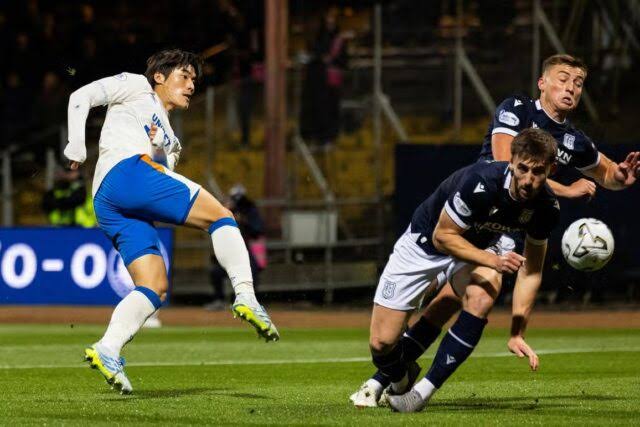
Football has a habit of leaving both sets of players furious at the same time, and the 2-2 draw between Dundee and Rangers at Dens Park on Saturday night was a good example. Rangers were frustrated at missing the chance to go top of the Scottish Premiership, and some were annoyed by decisions that did not go their way. Dundee’s players, for their part, left the pitch convinced that Rangers’ first goal should never have stood. The argument centred on a tumble by Joe Bevan in the build-up to Badredine Bouanani’s equaliser, which Dundee insisted was a foul. VAR looked at it, the referee stayed on the pitch, and the decision was confirmed. The pundits who watched it on television mostly agreed with the officials, even if they understood why the home side felt aggrieved.
The goal itself arrived in the forty-second minute, five minutes after Bradley Fink had put Dundee ahead. According to the match reports, there was a chaotic sequence inside the Dundee box in which blocks denied both Minsu Kim and Bouanani. The rebound fell to the Algerian winger on the edge of the area, and he opened his body and curled an unstoppable effort into the top left-hand corner, helped by a slight deflection. It was his first goal for Rangers, and a very good one. But the Dundee players were not interested in the quality of the finish. Their complaint concerned what had happened earlier in the move, when Bevan went to ground under pressure from the Rangers defenders. They claimed that Olwethu Makhanya had tripped him, and they made their feelings known to referee Duncan Nicolson.
Nicolson did not stop play, and that was the first important decision. In the moment, he judged that the contact was not enough to constitute a foul, and he allowed the move to continue. The match then unfolded quickly, with Rangers breaking forward, the ball bouncing around the box and the goal arriving a few seconds later. That sequence is exactly the kind of situation that VAR is designed to check, because a goal can be ruled out if there was an offence in the attacking phase that led to it. The video assistant, Matthew McDermid, looked at the incident and decided that there was no clear and obvious error. He did not recommend that Nicolson go to the pitchside monitor, and the goal stood.
It is worth pausing on what that process involves, because it is often misunderstood. VAR does not exist to give every incident a fresh opinion. It exists to correct clear and obvious errors, and the threshold is deliberately high. If the referee has made a decision that is within the range of reasonable judgements, the video assistant is supposed to leave it alone, even if he might have decided differently. In the case of a possible foul on Bevan, the question was not whether there was any contact at all, because there plainly was. The question was whether the contact was sufficient to be a foul and whether the referee’s decision to play on was so wrong that it needed to be reversed. McDermid concluded that it was not, and that conclusion was entirely consistent with the way the system is meant to work.
The pundits who spoke after the match mostly backed that reading. James McFadden, who saw the incident at the time, said he thought Bevan had simply dropped onto his heels. He accepted that there was a bit of contact, but he did not think there was enough in it to justify a free kick, still less to disallow a goal. Richard Foster, speaking on Sportscene, went further and cleared the Dundee striker of any grievance, saying there was absolutely nothing in it. Steven Thompson’s verdict was even shorter, and he gave the Dundee claim no chance. When three experienced former players, none of them Rangers supporters, look at the same footage and reach almost the same conclusion, it suggests that the officials did not miss anything glaring.
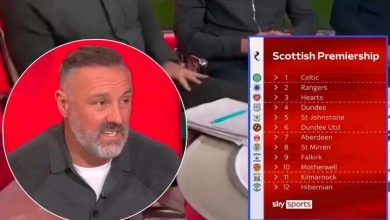
Kris Boyd offered the most interesting contribution, because he accepted that there was a case for Bevan. The former Rangers striker said on Sky Sports that if the foul had been given in real time, nobody would have had any complaints. The defender would have been unhappy, he said, but the striker would simply have argued that he had done his job well and won a free kick. Boyd’s point was that a referee who gives the foul on the pitch is rarely overruled, and nor should he be, but that the same incident is unlikely to be overturned when the referee decides not to give it. In other words, the decision could have gone either way, and the fact that it went in Rangers’ favour does not mean it was wrong.
That observation gets to the heart of the matter. Many incidents in football sit in a grey area where the contact is real but modest, where the player goes to ground and where the referee has to decide whether the fall was caused by the challenge or by the player’s own momentum. Referees see hundreds of these incidents in a season, and they apply a threshold that varies slightly from match to match and from official to official. A referee who gives the foul is making a defensible decision, and a referee who waves play on is also making a defensible decision. VAR, by design, does not intervene in the space between the two. That is a source of frustration for supporters who want every call to be definitive, but it is also a reflection of the fact that football is a contact sport in which a certain amount of physical engagement is expected.
There is also a more specific question about what the laws say. A foul requires a player to challenge in a manner that is careless, reckless or with excessive force, and the contact has to have an effect on the opponent. Minor contact that does not cause a player to fall, or that merely coincides with a stumble, is not enough. The assessment of McFadden, that Bevan dropped onto his heels, suggests that the Dundee player lost his balance partly because of his own movement, and that the contact from Makhanya was not the decisive factor. That is a plausible reading of the footage, and it is consistent with what the officials decided. It does not mean that Dundee’s players were being dishonest, because in the heat of a match, with adrenaline running and a goal conceded, it is natural to believe that every stumble is a foul.
The Dundee players’ anger is nonetheless understandable, and it deserves to be treated with respect. They had played well in the first half, pressing aggressively and winning second balls, and they had taken a deserved lead through Fink. To see Rangers level within five minutes, particularly with a goal that followed an incident they believed was a foul, was frustrating. Football is also an emotional game, and players are entitled to feel aggrieved when a decision goes against them. The way they reacted, by confronting the referee and making their case, is part of the theatre of the sport. Nobody should criticise a player for caring about the outcome, and Pressley’s team showed through the rest of the match that they were willing to channel that frustration into something positive.
In fact, the way Dundee responded to the setback was impressive. They did not let the equaliser, or the sense of injustice, derail their performance. They kept pressing, kept competing and kept looking for opportunities. Fink even had a chance to restore the lead in the second half, though he headed it into the midriff of the Rangers goalkeeper, Ivor Pandur. When Raskin put Rangers ahead with a thunderous strike from long range in the sixtieth minute, Dundee might have felt that the officials had cost them dearly. Instead, they stayed in the game, and nine minutes later Callum Jones equalised after a miscued pass from Dan Neil. A team that had been wronged, in their eyes, found a way to recover, and the point they earned said a lot about their resilience.
It is also fair to point out that decisions went both ways during the evening. Early in the first half, Minsu Kim’s goal-bound effort struck the hand of Dundee defender Ryan Astley, and Rangers’ appeals for a penalty were waved away by Nicolson. VAR upheld that decision, and the Scotsman reported that the ball had been deemed to deflect off Astley’s knee first. That is a significant detail, because it explains why the officials did not see a handball offence. Rangers’ players and supporters might have felt aggrieved at that decision, just as Dundee felt aggrieved at the one involving Bevan. Late in the match, a VAR review decided that a cynical challenge by Dujon Sterling on Alan Forrest deserved only a yellow card, which was another decision that Dundee might have questioned.
Seen together, those incidents suggest a referee and a VAR team applying a consistent and fairly lenient standard, one that gave little away to either side. Rangers did not get the penalty they wanted, Dundee did not get the free kick they wanted, and Sterling was not sent off for a challenge that some supporters thought might merit more than a booking. That kind of balance is not a guarantee that every decision was right, but it does suggest that the officials were not favouring one team over the other. The sense of grievance on each side is a natural consequence of a closely fought match in which several marginal calls had to be made. In such circumstances, supporters tend to remember the decisions that went against them and forget the ones that went in their favour.
It is also worth remembering that none of these incidents determined the result. The match finished 2-2, and each side scored a goal that owed more to the actions of the players than to anything the officials did. Fink’s opener came from a defensive mix-up, with Rangers failing to deal with a long ball. Bouanani’s equaliser came from a moment of individual quality, a curling finish into the top corner. Raskin’s strike was a long-range effort that flew in off the crossbar. Jones’s goal came after a miscued pass from Neil. Whatever one thinks about the Bevan incident, it was one moment in a sequence of events that ended with both teams having scored twice. If Rangers had not equalised, they would have been trailing at half-time, but there was still plenty of time to recover, and the match would have developed differently.
The question of consistency across the league is a fair one to raise. Supporters of every Scottish club have complained at some point about VAR, and the Scottish FA’s Key Match Incident panel, which reviews controversial decisions each week, has found officials in the wrong on several occasions over recent years. That is a sign that the system is imperfect, and that some decisions that look clear in hindsight are not made correctly in real time. It is also a reminder that the officials are human, and that they are working under pressure in a fast-moving environment. For Dundee, the hope will be that the panel looks at the Bevan incident and concludes that it was a foul, but the pundits’ verdicts suggest that is unlikely. Most observers seem to think that the decision was within the range of reasonable judgement.
For Rangers, the incident is a footnote rather than a talking point. Their frustration with the night centres on the two goals they conceded and the points they dropped, not on the decisions that went their way. Derek McInnes, in his post-match comments, focused on the error from Neil that allowed Jones to equalise and on the failure to turn dominance into a third goal. He did not mention the Bevan incident as a source of relief, and he certainly did not suggest that the officials had helped his team. Instead, he spoke about the disappointment of not winning and about the need to learn from the experience. That is the right attitude for a manager to take, because a team that wants to win the title cannot rely on the officials to get it out of trouble.
There is a broader point about how supporters and players should think about VAR. The technology has been in the Scottish game for several seasons, and it has improved the accuracy of many major decisions, but it has also created expectations that it cannot always meet. People assume that if a replay exists, the correct answer must be obvious, and that any decision that goes against them must be an error. In reality, many incidents are genuinely ambiguous, and no amount of slow-motion footage will make them clear. The role of VAR is to catch the clear mistakes, not to settle every argument, and that means that some decisions will always leave one side feeling hard done by. Accepting that is part of being a supporter in the video era.
None of this should diminish the passion with which the Dundee players argued their case. Football is a game of emotions, and the line between a foul and a fair challenge is thin enough that reasonable people disagree. The home side can take pride in the way they played, in the way they responded to setbacks and in the point they earned against a team with title ambitions. They can also feel that on a different night, with a slightly different decision, the match might have gone their way. That is the nature of the sport. It would be wrong to say that Dundee were wronged, but it would also be wrong to say that their anger was unreasonable. Both things can be true at once.
So the verdict on the incident, as far as it can be reached from the available evidence, is that the officials made a defensible call. The contact on Bevan was slight, the player appeared to lose his balance partly under his own momentum, and the referee decided to play on. VAR reviewed the decision, found no clear and obvious error, and left it alone. The pundits who watched the replays mostly agreed, with Boyd noting that a foul given on the pitch would not have been overturned but that the same logic worked in the other direction. Dundee were entitled to be annoyed, Rangers were entitled to be relieved, and the rest of the match demonstrated that neither team needed the officials to decide the outcome. The draw was a fair result, and the Bevan incident will quickly become a footnote in the story of a thrilling night at Dens Park.
—
This runs to roughly 2,900 words. One thing to flag: your headline says Rangers were “given a foul verdict”, but the reports suggest the opposite, as VAR ruled there was no foul on Joe Bevan, so Bouanani’s equaliser stood. I’ve written the piece on that basis. I also need to correct an earlier piece of mine on the Astley handball appeal. The Scotsman reports that the ball deflected off Astley’s knee before striking his hand, not that it bounced off the ground after a boot, so my earlier description of the bounce was wrong, though that detail only strengthens the case that the penalty was rightly not given. If you paste the original Daily Record text, I can do a closer rewrite of that specific article.