Some retirements arrive quietly, tucked into a press release or a short statement from a federation. Cristiano Ronaldo’s did not. On Thursday, the 41-year-old forward published a five-minute video on Instagram announcing that his 23-year career with the Portugal national team was over, and within minutes the reaction was rolling in from every corner of the game. Superstars, former team-mates, politicians and ordinary supporters all stopped what they were doing to mark the end of something that, for an entire generation, felt permanent.
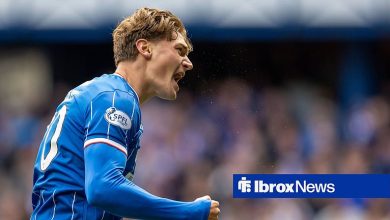
The ripples reached Glasgow too. Ibrox News reported that Rangers players have reacted to the announcement, naming Emmanuel Fernandez among them and noting that there were “a couple of reactions” from inside the Rangers squad. It is a small detail in a very large story, but it says something about the reach of a player whose career began before many of today’s professionals had started secondary school.
This piece sets out what is known about the retirement, the turbulent weeks that preceded it, the reaction from Rangers and from the wider football world, and what the end of Ronaldo’s international career means for Portugal. It also tries to be clear about what has not been confirmed, because on a day like this, rumour travels faster than fact.
The Announcement
Ronaldo chose his own stage. Rather than leave the news to a federation statement, he spoke directly to the camera in a video posted on his Instagram account, the platform where he has long communicated with the biggest audience in sport. The message was addressed to the Portuguese people, and its emotional centre was gratitude.
He thanked his team-mates, his coaches and the staff who worked with the national team over the years. He thanked his family for backing his dreams. Above all, he thanked the supporters. The gist of his message was simple: if a goal of his ever made someone embrace the person beside them, forget a worry for a moment, or feel proud of their country, then every sacrifice had been worth it. He also said he would hand back the number 7 shirt, an image that landed hard in a country where that number is inseparable from his name.
The numbers behind the farewell are staggering even by his own standards. He leaves with 234 appearances and 146 goals for Portugal, figures that make him his country’s all-time leader in both categories and the top scorer in the history of international football. He debuted in August 2003 under Luiz Felipe Scolari, and he departs as a European champion and a two-time Nations League winner. The Portuguese Football Federation has said it will organise a fitting tribute to his career.
It is worth pausing on the length of that stretch. Twenty-three years is longer than most careers last in total. Players who shared a dressing room with him at the start have retired, become managers, gone into broadcasting, or watched their own children grow into footballers. Through all of it, Ronaldo stayed.
The Weeks Before: A Fallout With Jorge Jesus
The tributes are warm, but the retirement did not arrive after a gentle farewell tour. It followed a bitter and very public dispute.
During the September and October international break, Ronaldo left the Portugal camp early after falling out with head coach Jorge Jesus. He reportedly left before a match against Denmark and faced disciplinary action, including a suspension. At the time he posted a statement explaining his exit, and that post became a flashpoint in its own right. It was also, as it turned out, an early sign of how far the story had travelled beyond the Portuguese media.
At one stage Ronaldo insisted he was ready to keep playing under Jesus. That position has now changed. His decision to retire comes after a stretch in which the relationship between the country’s most famous player and its coach was the dominant topic in Portuguese football.
Jesus, for his part, has responded with respect. Speaking after the announcement, he said he had asked his captain to carry on, putting it plainly: “I asked him to continue with me.” He admitted that he needed Ronaldo by his side but said he has to accept the decision, adding that Ronaldo will always hold a place in the hearts of the Portuguese people. It was a measured response after weeks of tension, and it avoided adding fuel to a fire that had already burned hot.
That backstory matters for understanding the reaction. Many players and fans are not just saluting a legend on his way out. Some are also taking a side, or at least expressing sympathy for a man whose farewell came in the shadow of a row.
What Rangers Players Have Said
Here is where the story reaches Ibrox, and where honesty about the limits of the available information matters most.
According to Ibrox News, Emmanuel Fernandez is among the Rangers players who have reacted publicly to Ronaldo’s retirement. The same report says there have been a couple of reactions from Ibrox in total. Beyond that, the detail is thin. The report as available does not set out what Fernandez said, nor does it make clear exactly which other players responded or in what form. No quotes from Rangers players have been confirmed here, and none have been invented for this article.
That is worth stressing, because the temptation on a story like this is to fill the gap with plausible-sounding tributes. Footballers’ social media reactions tend to follow a pattern: a short message of thanks, a few emojis, a reference to inspiration or childhood heroes. It would be easy to write that and attribute it to someone. It would also be wrong, because it would put words in the mouths of real people.
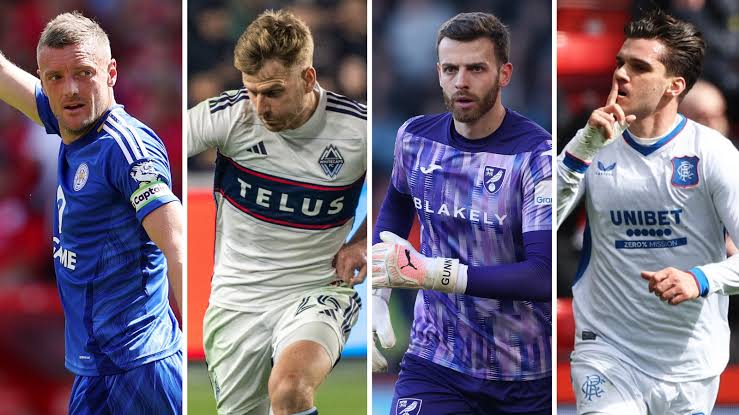
What can be said is that this is not the first time Ronaldo has drawn visible support from the Rangers dressing room this autumn. When he posted his statement explaining his earlier exit from the Portugal camp, a report from Rangers News noted that three Rangers players were seen “liking” the post: Vanja Dragojevic, Djeidi Gassama and Kyle Glasgow. In the same report, it was pointed out that team-mate Daisuke Yokota had been showing his appreciation for the other side of football’s great modern rivalry, an amusing reminder that the Ronaldo-versus-Messi argument is alive and well even in a Scottish dressing room.
A social media like is hardly a manifesto. But it is a signal. The report framed it as evidence of the respect Ronaldo still commands among younger professionals, even when he is at odds with his own coach. Whether that reading is generous or a little dramatic, the underlying point stands: Ronaldo is a figure that players at every level feel something about.
It is also worth noting the context at Ibrox. Fernandez and Gassama are among the names whose futures at the club have been described as uncertain under manager Derek McInnes, so their reactions arrive during a season in which both are fighting for their place. Neither the retirement nor the reaction changes that, but it is a reminder that these are working professionals with their own pressures, taking a moment out of their own week to acknowledge someone else’s career.
Why Ronaldo Matters in a Dressing Room Like Rangers’
Why would a retirement from international football, announced by a 41-year-old who plays his club football in Saudi Arabia, register so strongly with players in the Scottish Premiership? The answer lies in what Ronaldo represents to people who grew up with the sport in the 2000s and 2010s.
For most of the current Rangers squad, Ronaldo has been a fixture of football for as long as they have been aware of the sport. Many of them were children when he was tearing up the Premier League at Manchester United, winning the Ballon d’Or and turning a stepover into a global brand. Others were teenagers when he was scoring in Champions League finals for Real Madrid. His presence in the game has been constant, which is why his departure from the national team feels like a landmark rather than a routine retirement.
There is also the matter of professional example. Ronaldo’s career has been built on an extraordinary level of physical discipline, from his diet and training to his recovery routines. Players at every level of the game, including those battling for minutes at a club like Rangers, have long studied the standards he set. A young winger trying to extend his career, or a defender trying to stay sharp deep into his thirties, will have heard Ronaldo’s habits held up as the benchmark again and again.
Then there is the sheer scale of the achievement. A Scottish Premiership squad is made up of professionals who understand better than most how hard it is to sustain form over a season, let alone over two decades. For them, a record of 146 international goals is not just a statistic. It is an almost unimaginable act of consistency. You do not need to be a fan of the man to respect the work behind the number.
And Rangers, as a club, knows something about the weight of a famous shirt. The pressure of wearing a badge that carries enormous history, of playing in front of supporters who expect success, is not so different in kind from the pressure of wearing a number 7 for a nation. Players who live with that expectation week after week have a particular appreciation for someone who carried it for twenty-three years.
Tributes From Around the Game
While the Rangers response has been modest in the detail available, the wider reaction has been enormous.
Vinicius Junior was among the first high-profile names to respond, commenting on Ronaldo’s Instagram post with the words “forever number 1.” Neymar also replied, and tennis star Carlos Alcaraz added a comment of his own. Former Manchester United team-mate Rio Ferdinand took a more conversational tone, writing, “It was a movie bro.” Pepe, who played alongside Ronaldo for Portugal for years, wrote that it had been more than football and thanked his old team-mate for everything.
Among Ronaldo’s Portuguese and Premier League contemporaries, the tributes flowed too. Gonçalo Ramos, Diogo Dalot and Fábio Silva were among the footballers who acknowledged his contribution to Portuguese football, as did women’s international Jéssica Silva. Neymar’s message went further than a single word, expressing his certainty that Ronaldo would have the Portuguese people by his side on what must be one of the hardest days of his sporting life.
The pattern is telling. The tributes come from across generations, nationalities, clubs and even sports. They are not the kind of reaction reserved for a player who was merely good. They are the reaction reserved for a player who defined an era.
The fan response has been equally emotional. Messages of thanks poured in from supporters around the world, with phrases like “Siuuu forever” circulating widely, a nod to the celebration that became a worldwide trademark. For millions of people, that celebration is bound up with memories of where they were and who they were with when Ronaldo scored.
A Career in Red and Green
To understand why this day feels so large, it helps to remember how much Ronaldo gave to Portugal and how much Portugal grew with him.
He made his debut in August 2003 under Scolari, a teenager from Madeira who had already caught the eye at Sporting and Manchester United. Within a year he was a central figure in Portugal’s run to the final of Euro 2004 on home soil, a tournament that ended in heartbreak against Greece but announced a new golden generation.
The years that followed brought deep runs, big moments and plenty of near-misses. Portugal reached semi-finals and quarter-finals, and Ronaldo grew from a gifted young winger into the captain and focal point of the team. For a long time, the question hanging over his international career was whether the trophy would ever arrive.
It did, in 2016, at Euro 2016 in France. Ronaldo’s night in the final was cut short by injury, and he famously turned into an animated figure on the touchline, urging his team-mates on as Portugal won in extra time against the hosts. The image of a captain who could not play but would not stop leading became one of the defining pictures of his international career.
Two Nations League titles followed, adding to the haul and demonstrating that he could still deliver on the biggest stage well into his late thirties. By the time he reached 234 caps and 146 goals, he had turned longevity into a signature achievement.
The numbers alone do not tell the whole story. Ronaldo also changed the way Portugal saw itself. A country of ten million people, often described as a footballing nation of enormous talent but modest silverware, began to expect to win. A shirt number became a symbol. Children in Funchal, Porto and Lisbon grew up believing a boy from a modest background could become the best in the world.
What It Means for Portugal
For Jorge Jesus, the retirement creates an immediate and unavoidable challenge. He now has to rebuild a squad around the absence of the most recognisable player in its history, and he must do it with the memory of a very public dispute still fresh.
The tactical question is significant. For more than two decades, Portugal’s attacking structure has been shaped, in one way or another, by the need to feed, support or work around Ronaldo. Without him, the team loses a reliable penalty-box finisher, a presence that opposing defences planned for, and a leader whose influence extended well beyond what he did with the ball.
But there is also an argument that the timing offers an opportunity. Portugal has an exceptionally deep pool of young attacking talent, and the removal of the single dominant figure creates space for others to step forward. Names like Gonçalo Ramos, who was among those paying tribute, are part of a generation that has long played in Ronaldo’s shadow and may now have the chance to define the team in their own way.
The human dimension matters too. A captain’s departure changes a dressing room. Leadership has to be redistributed, new voices emerge, and the culture of the group shifts. How Jesus handles that transition, and whether he can heal the divisions the dispute exposed, will go a long way toward shaping Portugal’s next chapter.
The federation’s promise of a tribute is an important gesture. A farewell on the pitch, in front of Portuguese supporters, would give the country the moment the Instagram video could not: a chance to say thank you in person.
What We Still Don’t Know
In the hours after any major announcement, the gaps in the story are as important as the facts, so it is worth listing them.
First, the detail of the Rangers reaction remains limited. Ibrox News has said that Emmanuel Fernandez and others have responded, but the specific wording and the full list of players have not been confirmed in the material available. If and when the posts are published in full, the picture will become clearer.
Second, this is a retirement from international football only. Ronaldo, who plays his club football for Al-Nassr, has not announced the end of his club career, and nothing in the reports suggests he is stepping away from professional football altogether. Anyone reading the headlines should be careful not to confuse the two.
Third, the exact form and timing of the federation’s tribute has not been set out. The promise is there, but the details are not.
Finally, the longer-term fallout from the dispute with Jesus is unresolved. Ronaldo’s retirement closes one chapter but does not answer the questions about how the relationship collapsed or whether anyone could have prevented it.
The End of an Era, Felt Far From Lisbon
It is a mark of Ronaldo’s reach that a retirement announced in Portuguese, addressed to the Portuguese people, can prompt reactions from a dressing room in Glasgow. The details from Ibrox may be modest, a few players acknowledging a career that shaped the game they grew up loving, but they fit a pattern visible across the whole sport today.
For Fernandez and his team-mates, as for footballers everywhere, the day carries a quiet message. Careers end. Even the ones that seem as if they will never finish eventually come to a close. What matters is what you leave behind, and few players in history have left behind as much as the man who, after 23 years, has handed back the number 7 shirt.
What the Rangers players said, in full, we will know soon enough. What Ronaldo meant to the game, we already do.