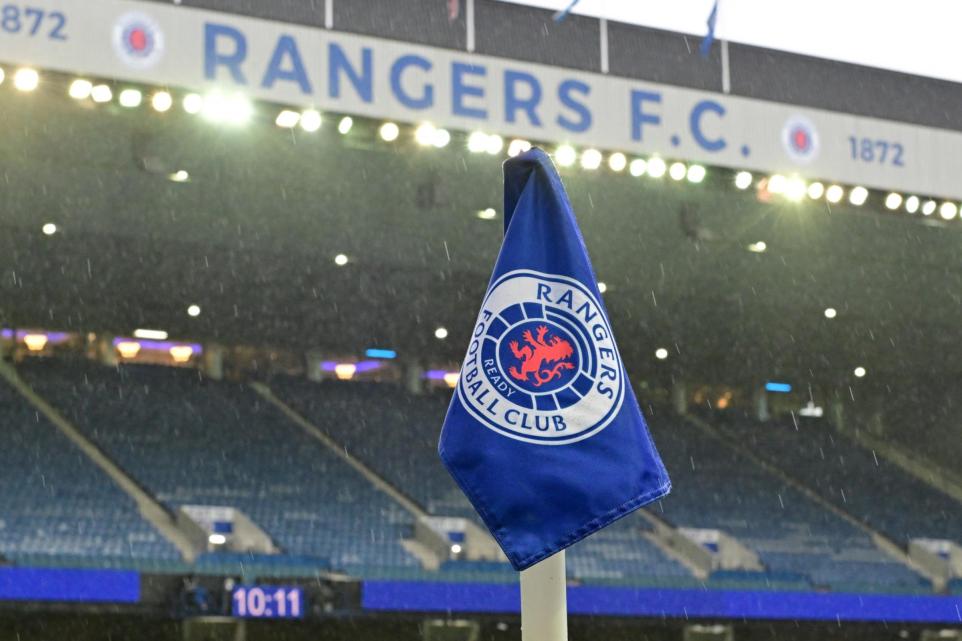
For many years, talk of expanding Ibrox has hovered around Rangers like a rumour that never quite becomes a decision. Supporters have heard it in boardroom interviews, read it in newspaper reports, and seen it appear on slides about the club’s ambitions. What has changed in the last eighteen months is the pace and seriousness of the work. Under new American ownership, the project now has a name, a set of consultants, a consultation process, and a growing paper trail of surveys and studies.
The shift is significant because Ibrox, for all its grandeur, is a stadium that has been constrained by its own history. It holds around 51,500 to 51,700 people, which leaves it nearly 10,000 short of Celtic Park, the home of its great rival. At the same time, demand for seats has remained high, and the club’s commercial ambitions have outgrown a stadium whose layout was largely set in the 1990s. Everything now being discussed flows from that tension between a famous ground and the modern demands placed on it
To understand why any change to Ibrox is weighed so carefully, it helps to remember how much history the ground carries. Rangers moved to the Ibrox area in 1887 and settled into the current site in 1899, when the stadium opened as Ibrox Park. Across more than a century, it has been rebuilt and reshaped repeatedly. The architect Archibald Leitch, the great designer of British football grounds, was responsible for an early expansion that took the capacity to around 63,000 by 1910, using earthen slopes.
The earliest concrete numbers appeared in reporting from late 2023. According to The Herald, Rangers were considering a major expansion that could take the capacity from about 51,000 to roughly 70,000. The proposal involved adding between 8,000 and 10,000 seats to the Copland Road and Broomloan Road stands, and one idea floated at the time involved lowering the pitch to allow extra rows of seating around it.
Those reports came with heavy caveats. The same coverage stressed that the plans were at a very early stage, that feasibility studies were still being carried out, and that nothing was guaranteed. A scheme on that scale was described as being a long way off. Rangers officials were examining options rather than committing to one.
Smaller schemes were also on the table. One, reportedly costing between £15 million and £20 million, would have been more modest but would still have needed more than one close season to complete. That raised a practical problem: the club might have to play home games elsewhere while the work took place. For a club whose identity is so closely tied to its home ground, that prospect was far from welcome.
Later, the then chief executive James Bisgrove outlined a set of options with a target of around 60,000 seats. One variation involved removing the big screens in the corners and filling the gaps between the Sandy Jardine Stand and the Broomloan and Copland Road stands. That would add roughly 3,000 to 4,000 seats at a cost of about £20 million to £25 million. Reporting on the studies noted that any approved expansion would likely need a significant initial outlay, and that it would have to be backed by the additional revenue the new seats could produce.
The same period saw the club working on accessibility. A programme to improve facilities for disabled supporters began in the summer of 2023, with further construction planned over the following two seasons, and the stated aim was to make Ibrox among the most accessible stadiums in Scotland and Europe.
The case for adding seats is easy to state. Rangers sell an enormous number of season tickets. In 2021, the club passed 44,000 season-ticket holders after winning the league, and executives at the time described expansion as a priority. Earlier plans had focused on adding seating in front of the Argyle House hospitality suite, behind the Sandy Jardine Stand, as an initial step.
More seats mean more matchday income, and that matters in a league where Rangers and Celtic compete not only for trophies but also for the financial advantages that come with European qualification. A larger stadium also helps the club make the most of its biggest fixtures. Ibrox’s highest home attendance this season was 51,212 against Celtic in September, which is close to the ground’s practical limit. When the stadium is nearly full for the matches that matter most, extra capacity becomes a straightforward business argument.
There is a second, less obvious part of the case. Revenue per seat can matter as much as the number of seats. Early reporting suggested that other expansion tasks could add more hospitality areas, which would generate further profit on matchdays. In practice, converting standard seats into premium or hospitality space can lift income without adding a single extra supporter. That is one reason the modern plan is not only about headline capacity.
The project took on new momentum after the San Francisco 49ers’ investment group, 49ers Enterprises, and other American investors completed their acquisition of Rangers on 30 May 2025. The deal came with a commitment of £20 million of investment in the club, and fans began asking what that would mean for the stadium. The speculation was fuelled by the group’s work at Elland Road, the home of Leeds United, another club in which they have an interest, where a redevelopment plan had already been put in motion.
The new owners moved quickly to put structure around the idea. In late November 2025, Rangers announced a wide-ranging feasibility study into the stadium’s future. The study was designed to review the current layout and infrastructure, assess capacity needs and look at expansion options across the whole Ibrox campus. It was also to consider how adjacent properties, including Edmiston House, the G51 site and existing office space, might be used differently on matchdays.
Fan facilities were described as a central focus. The study was to look at hospitality, retail, bars and social spaces and other supporter areas, while the club said preserving and celebrating Rangers’ heritage would remain a priority. The consultation named a group of supporter bodies as participants: the Fan Advisory Board, the Rangers Supporters Association, the Disability Matters group, the Copland Collective and Club 1872. The club’s then interim chief executive, Fraser Thornton, called it an important project for Rangers, and said the findings would feed into recommendations for both immediate improvements and longer-term planning.
That structure matters. By inviting the main supporter groups into the process from the start, the club acknowledged that any change to Ibrox needs to carry the fanbase with it.
By spring 2026, the work had a label. Rangers chairman Andrew Cavenagh, speaking about the plans in May, said the club had been developing a package of ideas and wrapped them together under the name Project Regen. He explained that the project has several parts. Some are cosmetic, some are functional, and some are about increasing revenue, for example by converting general admission seats into hospitality. Stadium expansion, he acknowledged, is the part that gets the most attention.
Alongside the chairman, chief executive Jim Gillespie confirmed that proposals for expansion had already been discussed with architects and engineers. Reports at the time said the club was still at the feasibility stage, working through a priority list rather than announcing a finished design. Cavenagh also pointed to a practical project already in motion: work on the old megastore, which has sat empty since the club moved its retail operation into the new Edmiston House development.
Supporter demand was one of the drivers behind the push. Reports noted more than 1,000 fans on a waiting list for season tickets, which made expansion one of the first items on the chairman’s agenda in his first year in charge
Not every change is happening inside the stadium. In January 2026, construction began on a residential development next to Ibrox. Known as Albion, it will create 160 flats on Edmiston Drive, on a site previously used for Rangers parking. It is a reminder that the area around the ground is itself being reshaped, and that the club’s vision covers more than the stands.
The G51 and Edmiston House references in the feasibility study point the same way. Ibrox is increasingly being treated as a campus rather than a single building. That approach opens up possibilities that a pure seat-count expansion would not, from new fan zones to better flows of supporters before and after matches, and from improved retail to more flexible use of adjacent buildings on matchdays.
The most concrete recent step came at the start of October 2026. Leeds-based engineering firm Dudleys Consulting announced that it had been appointed by Rangers to carry out an independent structural assessment of Ibrox and of the club’s Auchenhowie training facilities.
The commission came through a link with the 49ers’ other football investment. Dudleys had previously done work at Elland Road, and its website indicates the Ibrox job followed recommendations from that club. The appointment came as investment discussions involving the 49ers group developed, and the Rangers board wanted an independent view.
According to reports, the survey teams inspected the stadium in full. That included the roofs and internal roof structures, the areas beneath the stands and the wider infrastructure around the ground. The review covered concealed steelwork, large-span roof trusses, circulation routes and spectator facilities. The aim was to establish how the venue has been maintained, where future investment may be needed, and how the stadium could be kept in long-term use.
Supporters should read that carefully. A structural survey is not an announcement that bulldozers are coming. As commentators pointed out, the inspection does not mean work is imminent. Its purpose was to give the owners a clear picture of the stadium’s condition and to show where improvements will be needed down the line. In that sense it is a foundation for decisions, rather than a decision in itself. But it is also the kind of step that serious projects take before spending serious money, and it signals that the owners are treating Ibrox as a long-term asset that needs a proper evidence base
While the large questions are studied, the club has continued with routine and incremental work. During the September international break, Rangers carried out a series of maintenance and improvement projects across the stadium and its surroundings. The jobs ranged from cleaning and repairs to more substantial upgrades, with small-scale resurfacing being assessed and larger sections of seating in the Club Deck and the Enclosures scheduled for replacement over the following month or so.
It is easy to overlook that kind of work, but it shows how the club uses natural breaks in the calendar. International weekends, when the domestic league pauses, provide windows to do jobs that cannot easily be done in the middle of a match schedule.
There is also a lesson from the recent past. At the start of the 2024-25 season, Rangers were forced to play early home matches at Hampden Park because of delays with the Copland Road Stand at Ibrox. The episode was uncomfortable for supporters and a reminder that building work at a working stadium carries real operational risk. It is part of why a careful, phased approach, backed by detailed surveys, appeals to the club’s leadership.
Pulling the reporting together, the possible routes for Ibrox appear to fall into a few broad categories.
The first is a major expansion of the Copland Road and Broomloan Road stands. This is the large-scale option, associated with the figure of around 70,000 seats. It would transform the stadium’s capacity and put it well ahead of Celtic Park, but it would also be the most expensive and disruptive route, and the earliest reports described it as a long way off.
The second is a middle path, closer to the roughly 60,000-seat target discussed by earlier management. This would involve more targeted additions, potentially including filling the corners.
The third is a smaller expansion, in the region of a few thousand seats. The corner-filling scheme was estimated at £20 million to £25 million for 3,000 to 4,000 seats, and another small-scale scheme at £15 million to £20 million. Either could be done with less disruption, although the latter was reported to need more than one close season.
The fourth is a focus on quality rather than quantity: more hospitality, better concourses, improved retail and social spaces, and conversion of some standard seating to premium products. One report suggested that expansion and improvement together could be worth an additional £5 million a year to the club, although that figure should be treated as an estimate rather than a commitment.
In reality, the final plan may combine elements of several of these. The ownership has been clear that the work is phased and that different parts of Project Regen have different aims.
Every version of the plan eventually runs into the same issue: who pays, and how quickly the return arrives. Earlier reporting on the studies said any approved expansion would require a significant initial outlay and would need to be justified by the extra revenue it generates. Even the smaller options were priced in the tens of millions of pounds.
The 49ers’ involvement matters here. The group has experience with large stadium developments and has shown it will commission detailed engineering work before committing. At the same time, Rangers operate in a league with limited broadcasting income compared with England, and success in European competition has an outsized effect on the club’s finances. One analyst commenting on the takeover argued that qualifying for the Champions League would make an enormous difference to Rangers’ finances alongside the expansion plans. In other words, the stadium and the team’s results are linked: a bigger ground pays off most when the club is winning and qualifying for lucrative competitions.
On the pitch, the club is working under manager Derek McInnes, and recent coverage has described improving results and a more settled mood behind the scenes. A stable team and a stable boardroom make it easier to commit to a project that will take years
Supporters have two reactions to all of this, and they are not contradictory. Many want more seats, better facilities and a stadium that feels fit for a club of Rangers’ stature. Season-ticket demand supports that view, and the waiting list shows that people who want to be inside Ibrox on matchdays cannot always get in.
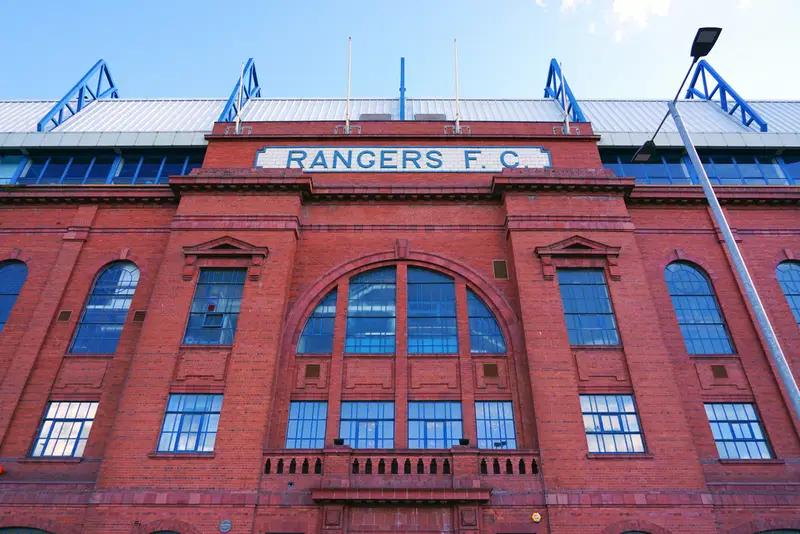
At the same time, there is genuine worry about losing what makes Ibrox special. One piece of commentary summed up the mood by saying that the last thing any Rangers fan wants is for the soul of the stadium to be ripped out. The famous red-brick Main Stand frontage, the sense of history in the walls, and the noise of a full ground are part of the club’s identity, and many supporters will resist any change that treats them as disposable.
That is why the consultation list matters. Including groups such as the Copland Collective, which represents supporters who sit in that part of the ground, and Disability Matters, which speaks for disabled fans, gives those voices a formal place in the process. The club has said heritage is a priority, and the way it handles that promise will be one of the most closely watched aspects of the project
The next stages are fairly easy to anticipate, even if the timing is not. The structural assessment will feed into the owners’ view of what the stadium needs. The feasibility study, launched in late 2025, should produce recommendations that separate quick wins from long-term plans. Architects and engineers will refine the options that the chairman has said are already being discussed. And at some point, the club will need to choose a preferred route and explain it to supporters, to the authorities, and to the wider community around Govan.
There are practical hurdles. Any major build will need planning permission, a construction schedule that avoids too much disruption, and a plan for where fans and the team go if the stadium is not fully available. The experience of Hampden in 2024 will be on the minds of those making that plan. There is also the question of cost control, since large stadium projects have a way of growing beyond their original budgets.
None of that makes the project unrealistic. It simply means the headline numbers, whether 60,000 or 70,000, should be viewed as ambitions rather than promises until the club announces a final design.
Stripped back, Rangers’ expansion plan is about whether a historic club can modernise its home without losing what made it great. The case for change is strong: demand for tickets, the need for more revenue, and the fact that its main rival has a larger stadium. The case for caution is equally strong: the cost, the risk, and the emotional weight of a ground that means so much to so many people.
What is different now is that the discussion has moved from the realm of vague aspiration to one of surveys, consultants, a named programme and a consultation with supporter groups. It is still early, and a great deal can change between a feasibility study and a finished stand. But for the first time in a long while, the question around Ibrox is shifting from whether the club will seriously consider expansion to how and when it will happen.
For supporters, that is a reason for both excitement and vigilance. Ibrox has been rebuilt before and remained itself. If the current plan is done well, it could add seats, improve the experience and secure the ground for another generation without losing the character that makes it Ibrox.