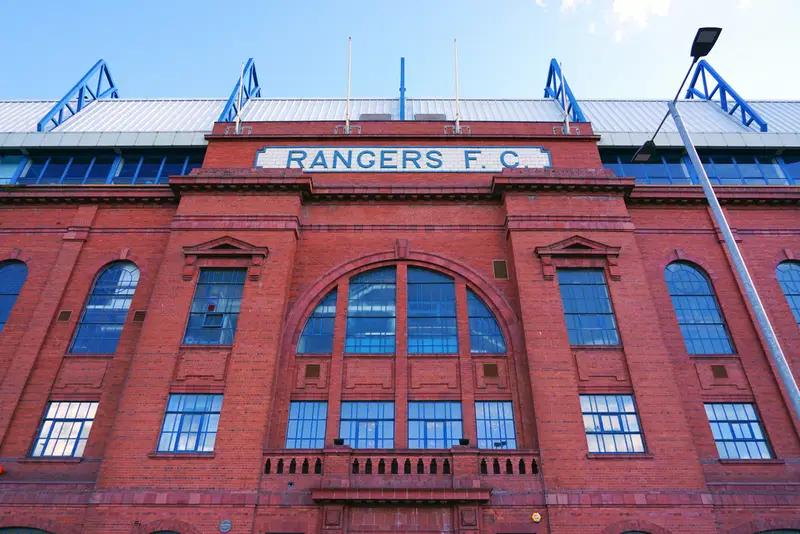
Ex-FIFA Referee Reacts to Rangers Controversy vs St Mirren as Chris Sutton Is Corrected


Few things stir up Scottish football quite like a refereeing decision at Ibrox. Supporters feel strongly, pundits queue up to offer verdicts, and former officials are asked to settle the matter with the benefit of slow-motion replays. The 1-0 win over St Mirren earlier this season has become the latest example, producing competing penalty claims, a pointed reaction from Chris Sutton and a series of explanations from retired referees about what the laws actually say.
I should be upfront about two things. I could not find the exact article behind your headline, so I do not know precisely how Sutton is “corrected” in it. What I found was a cluster of reports on the same match, including comments from Bobby Madden and Mark Clattenburg, and I have built this piece from those. I also found a separate report that Rangers and St Mirren meet again today, but the controversy covered here comes from the earlier fixture, so please check which match your original is about before publishing.
The match itself was tight. The Paisley club fell to a last-minute Bojan Miovski strike and left Ibrox without anything to show for their performance. That is the kind of result that sharpens every argument about decisions, because a single moment, one way or the other, would have changed the outcome. A 1-0 win decided late leaves little room to say that an incident did not matter.
The first flashpoint came in the opening half. Ismeal Kabia was brought down in the box, with the winger having played the ball before Emmanuel Fernandez made contact with his foot. St Mirren appealed, but there was no whistle. The appeals were waved away with no VAR intervention while the scores were level. Watching the incident back, the sequence seems straightforward enough: the attacker gets there first, the defender arrives late and the contact follows. What makes it contentious is how much weight to put on the fact that the ball had gone.
The reaction from the visitors was surprisingly restrained. St Mirren’s players did not make too much of the challenge on Kabia. That detail matters, because it fed one of the arguments in the officials’ favour. Referees often note that players themselves are the best guide to whether contact was significant, and a muted response can suggest a less obvious foul. But it is only a rough guide, and most analysts have treated it as a minor point rather than a decisive one.
The match officials were well placed. Referee Don Robertson, who was well positioned, did not point to the spot, and VAR did not intervene, which suggested they did not consider it a clear and obvious error. That phrase, clear and obvious, is the key to understanding why VAR stayed out of it. The video assistant is not supposed to re-referee the game. It is meant to step in only when the on-field decision is plainly wrong, and a call that falls within a range of reasonable opinions should stand.
That principle is exactly what divides the commentators. Some argue that the contact met the threshold and that VAR should have asked the referee to look again. Others maintain that, because the referee saw the incident clearly and made a judgement, the video team was right to leave it alone. Both positions are defensible, and the disagreement is less about the facts than about how high the bar for intervention should be.
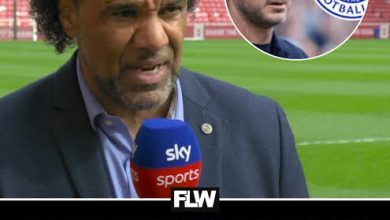
Sutton, never short of an opinion, made his view known quickly. Having watched the highlights, he posted on X that it was incredible St Mirren were not awarded a penalty. The post attracted plenty of attention, partly because of who wrote it and partly because it came from a pundit often seen as a critic of Rangers. His strength of feeling was clear, and it was shared by many. His opinion was backed by many, though the question remained what the laws say.
That last point is where the former referees came in. The role of a retired official in these debates is to move the conversation from instinct to the wording of the laws, and Bobby Madden took on that task. He said St Mirren should have had a first-half spot-kick, arguing that the attacker plays the ball away and the defender comes in late and steps on his foot. His explanation relied on newer guidance. He referred to UEFA’s new platform, Clear Lines, which sets out how referees should treat challenges of this kind.
The substance of that guidance is worth understanding. A direct free kick, and therefore a penalty inside the area, is awarded when a player’s challenge shows a lack of care or consideration for an opponent. A late arrival that treads on the attacker’s foot, even after the ball has gone, fits that description. The fact that the winger got to the ball first does not excuse a careless follow-through. For a defender, playing the ball is not a licence to hit the man afterwards, and that is a point supporters sometimes forget.
So where does the idea of a correction come in? In this case, Madden’s analysis largely supported Sutton’s instinct that a penalty should have been given, but it did so on the basis of the specific wording of the laws and the new guidance rather than on a general feeling that the contact looked bad. If your original article describes Sutton as being corrected, the likeliest explanation is on the finer points of how the laws are applied, but I could not confirm that, and I would not want to put words in anyone’s mouth. I would encourage you to check how your source frames it.
There was a second talking point, this time in Rangers’ favour. The hosts felt they had a claim of their own. Rangers felt they deserved a penalty in the match, and Mark Clattenburg analysed an incident involving Kevin Kelsy. The striker headed a free kick into the stride of a teammate inside the penalty area, and the ball appeared to strike a St Mirren defender’s hand along the way.
Clattenburg’s analysis was nuanced, and it illustrates how complicated these situations become. He said it looked as though the St Mirren defender handled the ball after Kelsy’s header inside the area. That alone would normally prompt a VAR review. But there was a complication. He also saw what looked like an offside when the ball was first played into the area from the free kick. If the attacker was offside at the moment of the initial pass, the handball would be irrelevant, because the offence would cancel out the potential penalty.
What bothered Clattenburg was the lack of clarity about what had been checked. He called the situation confusing, since neither the possible offside nor the possible handball seemed to have been checked. That is a fair criticism. VAR exists to resolve doubt, and when a sequence of events contains both a potential handball and a potential offside, the public deserves to know that both were examined and what conclusion was reached. Silence leaves room for suspicion on all sides.
There is also a wider issue about communication in the Scottish game. Supporters are often left guessing about the reasoning behind VAR decisions. In some other leagues, the audio between the referee and video assistant is shared or explained after the match. In Scotland, the process remains relatively opaque. When two significant incidents occur in the same game, with each side feeling aggrieved, the case for greater transparency becomes stronger.
The balance of the arguments is revealing. St Mirren’s claim looks strong on the replay, and two respected voices, Sutton and Madden, regard it as a clear penalty. Rangers’ claim is more complicated, depending on a possible offside that may or may not have been checked. It is possible to believe that both teams had grounds for complaint, and that the officials could have handled both incidents better. That is not an unusual outcome in a fast-moving match.
For Rangers supporters, the discussion is uncomfortable because it comes during a period of scrutiny. The team is winning, but not always convincingly, and each narrow victory invites questions about whether fortune played a part. A win like this one, achieved late and with a decision going the club’s way, feeds the narrative that the margins have been kind. Some fans will point out that Rangers have had decisions go against them in the past, and that these things tend to even out over a season. That is true as a general principle, but it does not make the individual incidents any less worthy of discussion.
For St Mirren, the frustration is natural. They produced a performance that deserved more, and they left with nothing. A first-half penalty could have changed the shape of the game, forced Rangers to chase a deficit or at least earned a point. It is easy to see why the decision stung, even if the players did not complain loudly on the pitch. Clubs outside the Old Firm often feel that big decisions go the way of the bigger sides, whether or not that is true, and incidents like this feed that perception.
The role of pundits in this process deserves attention. When a figure as prominent as Sutton posts a strong opinion, it shapes the debate. Millions of people see it, and it can harden positions quickly. That is not a criticism of him, because pundits are paid to have views. But it does mean that the corrections and clarifications from former referees are valuable. They add context and precision, and they remind viewers that the laws are specific, not merely a matter of whether something looks harsh.
At the same time, former referees are not infallible, and they do not always agree. Madden and Clattenburg are both respected, but they came at their respective incidents from different angles, and in other cases, such as earlier Rangers controversies involving Keith Hackett, former officials have reached contradictory conclusions about similar situations. It would be a mistake to treat any single verdict as the last word. They are expert opinions, and in a game of fine judgements, experts differ.
What is clear is that the demand for consistency is growing. Supporters want to know that similar incidents will be treated in the same way, week after week and club after club. The introduction of new guidance such as Clear Lines is intended to help with that, but it also raises expectations. When a referee’s decision looks at odds with published guidance, the criticism is sharper, because the standard is now written down. That is a healthy development in principle, and it puts pressure on the officials to apply it carefully.
There is a practical lesson for referees and for the bodies that manage them. Explaining decisions, even briefly, goes a long way. A short statement after the match setting out why a penalty was not given, or why VAR did not intervene, would take much of the heat out of these debates. The Scottish FA has moved in that direction in recent years, but there is more to do. Transparency does not eliminate disagreement, but it does make disagreement better informed.
There is also a case for patience from supporters and commentators. The VAR system is not designed to eliminate every error. It is designed to catch the most serious ones, and the threshold is deliberately high. If every contentious incident were reviewed and overturned, matches would become unmanageable. The cost of the current approach is that borderline decisions will sometimes go uncorrected. The benefit is that the game keeps its flow. Whether that trade-off is right is a legitimate debate, but it is a deliberate choice rather than an oversight.
In the end, the Rangers and St Mirren controversy is a case study in how modern football handles disputed decisions. A moment on the pitch becomes a topic across social media, television and newspapers. Experts are consulted, laws are quoted and the original decision is revisited for days. The result is rarely a neat conclusion. More often, the discussion leaves a sense that the officials made a call within a range of reasonable options, that some of the commentary is fair and some overheated, and that the rest of the season will bring another incident to argue over.
For now, the facts are these. Rangers won 1-0 with a late goal. St Mirren had a strong claim for a first-half penalty that the referee did not give and VAR did not review. Former referees, including Madden, have said the contact should have been punished, while Clattenburg has pointed to the confusion around Rangers’ own appeal. Sutton called the decision incredible, and the law-based analysis that followed has been largely consistent with his instinct, if not always with every detail of his reasoning.
Whether that makes the original decision an error or a defensible judgement depends on where you place the bar for intervention. What it undoubtedly does is demonstrate why these moments matter so much, and why the conversation about refereeing in Scotland shows no sign of fading