Brutal news for City. Antoine Semenyo played for City in the semi-finals, but Marc Guehi has been banned

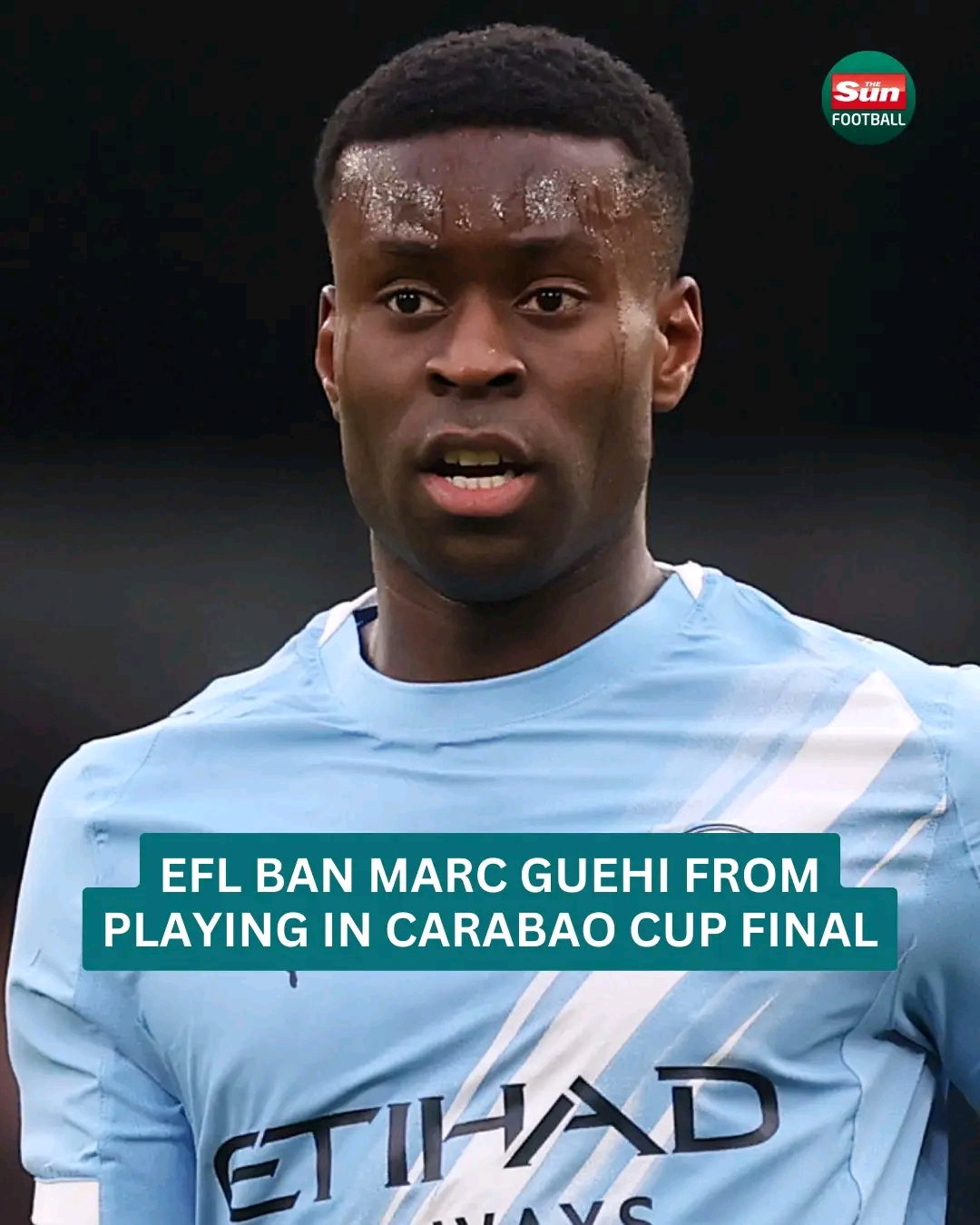
Manchester City fans have been riding a wave of excitement ever since the January transfer window opened. The club, determined to add firepower and solidity to their squad for the final stretch of the season, made some high-profile moves. Among these, one defender, a £20 million signing from Crystal Palace, was expected to make a significant impact immediately. He was meant to be the missing piece in Manchester City’s puzzle, a player who could reinforce the backline and provide much-needed options for Pep Guardiola. The excitement around his signing was palpable. Fans imagined him stepping onto the pitch at Wembley, lifting a Carabao Cup medal, celebrating with his new teammates, and becoming an instant hero. However, dreams, as often in football, are fragile, and reality has a cruel way of intruding on even the brightest hopes.
The saga began to unfold after Guardiola, known for his meticulous planning and attention to detail, realized that the new signing, despite being fully fit and ready, would not be eligible to play in the Carabao Cup final against Arsenal. This revelation came as a shock, not only to the coach but also to fans who assumed that once a player signed for a club, he could represent them in all competitions. The English Football League rules, as they exist, have peculiar clauses, nuances that even experienced managers sometimes misinterpret. And this, unfortunately for City and the player, was one of those moments where the law of football proved to be more complicated than common sense. Guardiola, frustrated and perplexed, immediately began advocating for an exception, for a change, for a recognition that the circumstances were unusual and that the spirit of competition should allow the player to feature.
The situation is tied to a little-known regulation about player eligibility in domestic cup competitions. According to the rule, a player can only represent two clubs in the same Carabao Cup season if certain conditions are met. Specifically, if they have played for a club earlier in the tournament, their ability to switch and play for another club depends on the timing of their transfer relative to the semi-finals. Guardiola’s other January signing, a Ghanaian attacker, had been allowed to play because he moved before the first leg of the semi-final, making him eligible under the updated regulations. But the defender from Crystal Palace finalized his move on January 19, after City had already won the first leg of the semi-final against Newcastle 2-0 at St James’ Park. The timing was, by cruel coincidence, just too late.
Guardiola’s reaction was a mix of disbelief and logic. To him, it made no sense that a player who belonged to Manchester City, for whom they had paid a significant sum, could not take part in the biggest domestic cup final of the season. He pointed out the inconsistency between the two cases: why one January signing could play and another could not. It was a question rooted not just in rules but in the fairness of the game, in the human element of football, which sometimes clashes with the rigid framework of regulations. His plea was simple and emotional: the club had invested heavily, the player was ready, fit, and eager, yet he would be forced to watch from the stands. For Guardiola, this was illogical and unfair, and he did not shy away from expressing his frustration publicly.
The Carabao Cup final represents more than just a single match. For many players, especially newcomers, it is the first opportunity to taste silverware with a new team. It is a chance to etch their name into the club’s history, to celebrate in the dressing room, to have their contribution immortalized in memories of fans and in photographs across social media. Missing out on such a moment is more than disappointment; it is a professional heartbreak. For the young defender, who had already shown glimpses of promise and skill in his previous club, the opportunity to step onto the Wembley pitch in City blue was supposed to be the culmination of his early career ambitions. And now, it was denied by a technicality that seemed arbitrary in the heat of the moment, yet unyielding in its application.
Despite Guardiola’s efforts, EFL sources made it clear that there would be no changes to the rules. They reaffirmed that the updated clauses, introduced at the beginning of the season to clarify eligibility for players who move clubs mid-season, were final. The specifics stated that a registered player may only play for two clubs in the competition in a single season if they have appeared for their previous club before the closure of the winter transfer window or the first leg of the semi-final, whichever comes sooner. Emergency goalkeeper loans are an exception, but this scenario did not qualify. The rules, while technical, are designed to maintain the integrity of the tournament, preventing clubs from shuffling players mid-competition in ways that could give them an unfair advantage. From a regulatory perspective, the logic is sound, but from a human perspective, the situation felt cruel.
Guardiola, undeterred, made it clear that Manchester City would not remain silent. He confirmed that the club would submit a formal letter to the EFL, requesting a review or reconsideration of the rules to allow the defender to play in the final. However, Guardiola tempered expectations, acknowledging the unlikelihood of success. “Do I expect them to change? No, no way,” he admitted. Yet, the act of fighting for his player, of attempting to bend rules in favor of fairness, highlighted the passion and advocacy that defines Guardiola’s managerial style. He is a coach who does not merely manage tactics on the field but also cares deeply about the emotional and professional welfare of his players.
The drama around Guehi’s ineligibility also shines a light on the broader issue of January transfers and their timing in relation to domestic competitions. Clubs often make signings in the winter window to cover injuries, strengthen weak positions, or provide depth for congested schedules. The Carabao Cup, with its early knockout rounds and semi-finals spread across months, intersects awkwardly with this transfer activity. A player who is essential for a club’s league campaign may be barred from participating in a cup final simply because of the sequence of matches in which he appeared for a previous team. Fans and pundits often view this as a technicality, but for the individuals involved, it can be career-defining. Winning a domestic cup in the first season with a new club is an experience few forget, and missing out due to administrative timing is bitter.
For City, this is not just about one player. It is about squad morale, about maintaining a sense of unity, and about demonstrating that the club values its investments and treats its players fairly. The young defender, despite missing out on the final, remains an important part of Guardiola’s plans. His performances in training, his adaptation to the Premier League’s pace, and his understanding of Guardiola’s tactical demands are all evidence that the manager sees him as a key component of the team’s long-term success. The Carabao Cup final, while significant, is only one milestone in a season that will include Premier League battles, Champions League fixtures, and other domestic contests. The immediate heartbreak, though, cannot be ignored.
Fans reacted with a mix of anger, sympathy, and disbelief. Social media erupted with debates about fairness, rules, and the sometimes impersonal nature of football regulations. Supporters shared messages of encouragement for the player, emphasizing that his contribution to the club would be recognized in other ways. Memes, tweets, and posts highlighted the irony of a player being fully fit, ready, and eager, yet barred from taking part in arguably the most important domestic cup final of the season. The story captivated not just City fans but football audiences more broadly, as it illustrated the clash between human ambition and bureaucratic rigidity.
Guardiola’s comparison between the two January signings added to the controversy. Antoine Semenyo, who moved from Bournemouth earlier in the window, was allowed to play and contributed meaningfully to the semi-finals. The distinction, dictated by the timing of the transfer relative to the first leg of the semi-final, seemed technical to the casual observer but is strictly enforced by the EFL. The defender from Crystal Palace, in contrast, had already played three matches in the Carabao Cup for his former club before moving to City. By the time he joined Manchester City, the semi-final’s first leg had passed. Rules are rules, but Guardiola’s point was that logic, fairness, and investment in a player should also carry weight. The argument was not about bending rules but about questioning whether the timing-based restriction was aligned with the principles of competition and player welfare.
In press conferences, Guardiola spoke passionately about the situation. He emphasized that he wanted to protect the club’s investment and ensure that the player felt valued. “It’s difficult to understand that the club makes a big investment to pay for one player who belongs to us, and I do not understand why he cannot play the final,” he said. Guardiola, known for his precise tactical mind, was equally concerned about morale. A player excluded from such an important match, despite being fully integrated into the team, could feel undervalued or frustrated. Managers often have to navigate these emotional terrains, balancing fairness, regulatory compliance, and the overall harmony of the squad.
The EFL, meanwhile, has remained firm. Spokespeople have reiterated the rules and emphasized the necessity of maintaining clear, enforceable regulations. They have outlined the specific clauses regarding player eligibility, explaining the rationale behind the restrictions. From the organization’s perspective, allowing exceptions in such cases could set a precedent, leading to disputes and confusion in future seasons. Their position reflects a careful attempt to balance competitive integrity with the realities of player transfers, even if it occasionally produces outcomes that feel unfair on a personal level.
This entire saga also highlights the human side of football, often overshadowed by statistics, trophies, and media narratives. Behind every transfer, every rule, every tactical decision, there are people—players with dreams, managers with responsibilities, fans with hopes. The young defender, who joined Manchester City with excitement and ambition, now faces the emotional challenge of sitting out a final he helped build towards indirectly through his training, integration, and presence in the squad. Guardiola, as a mentor and advocate, has done everything possible to fight for him, demonstrating the loyalty and protection managers provide their players beyond the confines of the pitch.
For the Carabao Cup final itself, Manchester City and Arsenal are preparing for a showdown that will be remembered for years. Fans will flock to Wembley, players will prepare meticulously, and the media will cover every angle. Yet, for one player, the experience will be bittersweet. He will be present, cheering, supporting, and wearing his club’s colors, but he will not have the chance to contribute directly on the field. It is a reminder that football, while glamorous and celebrated, is also filled with frustrations and disappointments that are as much a part of the game as goals and celebrations.
The wider football community has taken note. Analysts, pundits, and commentators have discussed whether the rules need reform. Some argue that January transfers are increasingly crucial for clubs’ strategies, and that eligibility rules should account for this reality. Others emphasize that the regulations ensure fairness and prevent manipulation. Regardless of opinions, the situation has sparked debate and interest, showing how a single player’s ineligibility can trigger broader conversations about governance, fairness, and the intersection of competition and player welfare.
In conclusion, the story of Manchester City, Pep Guardiola, and the £20 million defender from Crystal Palace is a tale of ambition, bureaucracy, and the unpredictable twists of football. It is about a manager who fights passionately for his player, about a club navigating rules and regulations, and about a player caught between dreams and reality. It highlights the sometimes harsh nature of professional sports, where timing, technicalities, and administrative details can shape careers and moments in ways that are both fascinating and frustrating. While the defender will miss the Carabao Cup final, his journey with Manchester City is only beginning. Future opportunities, victories, and accolades await, but the story of this particular heartbreak will remain etched in memory as a dramatic reminder of how football can surprise, frustrate, and inspire, all at the same time.
The story captures the drama, the heartbreak, the rules, and the human side of football, turning what could have been a simple transfer update into a full narrative that resonates with fans, players, and observers alike. It is a story of dreams deferred, of rules enforced, and of passion that refuses to bow to technicalities.